Author: Sodiq Lawal Chocomilo

  • June 2 in Nigerian history: FCTA Demolished 1,800 Shanties in Apo-Dutse Market

    June 2 in Nigerian history: FCTA Demolished 1,800 Shanties in Apo-Dutse Market

    History is more than old records. It is the bedrock of civilization and identity — a record of events that shaped our past, steer our present, and seed our future.


    As Michael Crichton wrote, _“If you don’t know history, then you don’t know anything. You are a leaf that doesn’t know it is part of a tree.”

    Today, WITHIN NIGERIA highlights one notable event that occurred on June 2 in Nigeria’s history, as part of our commitment to education and enlightenment.

    FCTA Dislodges Over 1,800 Babanbola Shanties in Apo, Abuja

    On Thursday, June 2, 2022, the Federal Capital Territory Administration demolished over 1,800 shops and shanties operated by Babanbola scrap dealers in Apo’s Dutse pantaker market.

    The operation was led by Comrade Ikharo Attah, Senior Special Assistant on Monitoring, Inspection and Enforcement to the FCT Minister.

    He said it followed a direct order from FCT Minister Muhammad Bello to reclaim illegally occupied land and curb rising insecurity in the district.

    “The Minister directed that the entire market be cleared so plot owners can take over their land and begin mass housing development,” Attah said.

    “The market is illegal and very dangerous. The FCT Minister, Police Commissioner Sunday Babaji, and others have raised serious concerns about activities here.”

    Shuaibu Umar, Coordinator of the Abuja Metropolitan Management Council, faulted the unauthorized development.

    “Individuals built without approval, blocking rightful owners from developing the area,” he said.

    Attah noted that the pantaker market holds over 4,000 shops and shanties in total. Thursday’s exercise focused on the Babanbola section.

    “We removed over 1,800 structures so far,” he said.

    Anas Ismail, Chairman of the Association of Scrap Dealers, Apo-Dutse Pantaker Market, said most youths in the area rely on the scrap trade to survive.

    “We can’t fight the government,” Ismail said.

    “But now that the market is demolished, there should be another place for us to relocate. Otherwise, some may turn to crime.”

  • June 1 in Nigerian History: Sardauna Province Created, Mubi Bomb Blast, Niger Delta Session Threat

    June 1 in Nigerian History: Sardauna Province Created, Mubi Bomb Blast, Niger Delta Session Threat

    WITHIN NIGERIA highlights three out of notable events events that occurred on June 1 in the history of this country, Nigeria in an effort to create awareness for education and enlightenment purpose.

    Northern Cameroon was formally integrated into Nigeria as Sardauna Province

    On June 1, 1961, the Northern Cameroon was formally integrated into Nigeria as Sardauna Province following the UN plebiscite of February 11, 1961.

    According to reports, Northern Cameroons opted to join Nigeria with 59.97% in favor, while Southern Cameroons voted to join Cameroon.

    The new province was named for Sir Ahmadu Bello, the Sardauna of Sokoto, who was Premier of Northern Nigeria at the time and it covered areas of modern-day Adamawa and Taraba states while the Southern Cameroons went the other way and joined the Republic of Cameroon on October 1, 1961.

    Bomb Blast Killed 40 at Football Match in Mubi, Adamawa

    No fewer than 40 people were killed Sunday evening when a bomb exploded at a crowded football field in the Kabang area of Mubi, Adamawa State.

    The blast struck around 6:30pm local time as spectators were leaving after a local match.

    According to eyewitnesses, bodies shattered into pieces and shops near the pitch got destroyed while nineteen others were injured.

    Local police confirmed the attack but initially gave a lower death toll of 14-18.

    However, hospital staff and residents said the morgue was “overcrowded” with more than 40 bodies, including youths and women who had gathered to watch the game.

    The Nigerian military said it arrested a “key suspect” the following day. The attack came just one week after a would-be suicide bomber failed to reach a football field in Jos.

    NNDRF threatened to declare a sovereign Niger Delta Republic

    On June 1, 2019, the Network for Niger Delta Republic Fighters (NNDRF) threatened to declare a sovereign Niger Delta Republic.

    Maxwell Dan, NNDRF’s Director of Information, cited insecurity, selective maltreatment, removal of Niger Delta officials and lack of federal projects in the region as factors responsible for its decision.

    “The police invasion of Chief Edwin Clark’s home, removal and trial of ex-CJN Justice Walter Onnoghen, sacking of former acting DG of DSS, Matthew Seiyefa, among others were listed”.

    In response, President Muhammadu Buhari summoned service chiefs and directed that they must prevent any declaration and track down the militants.

    Military laid siege to communities in Gbaramatu Kingdom, Delta State, other militant groups like The Reformed Niger Delta Avengers (RNDA) opposed it and President Buhari met South-South traditional rulers on May 27, 2019 who allegedly sent metrics to inform the militants to back down.

  • May 31: Today in Nigeria history, hundreds of Ogoni arrested and held in Bori Military Camp

    May 31: Today in Nigeria history, hundreds of Ogoni arrested and held in Bori Military Camp

    On this day, May 31 in 1994, Nigerian authorities had arrested hundreds of Ogoni people.

    According to unconfirmed reports, majority of Ogoni people who were arrested by security agencies were held in Bori Military Camp while others were killed.

    It was also reported that thousands of Ogoni people abandoned their villages in fear of the military.

  • What We Know About the Tinubu AI Audio Dispute Between VDM, Bayo Onanuga

    What We Know About the Tinubu AI Audio Dispute Between VDM, Bayo Onanuga

    A public spat has erupted between Martins Otse, the activist known as VeryDarkMan (VDM), and Bayo Onanuga, Special Adviser to President Bola Tinubu on Information and Strategy, over an AI-generated audio clip falsely attributed to the president.


    Here is what we know about the matter: 

    The controversy began after an audio clip surfaced online on Wednesday, May 27, 2026.

    The clip, which mimicked President Tinubu’s voice using AI voice cloning, made several inflammatory claims:

    That insecurity in the South-East was intentional

    Tinubu asked Peter Obi to step down in 2022

    That Tinubu was indifferent to Nigerians’ suffering

    That World Bank loans were being used to fund elections.

    VDM allegedly played the audio in a video to his followers.

    In the clip, he said: “After you people watch it, we’ll come to decide whether na for shrine them cook una mind,” and concluded, “President Bola Ahmed Tinubu cannot offer us anything anymore. So he should go.”

    Fact-checks indicate the AI-generated audio was not part of VDM’s original upload, WITHIN NIGERIA gathered.

    An unidentified third party later extracted portions of VDM’s video and superimposed the fake audio, creating the impression that he had shared and endorsed it.

    The clip bore clear hallmarks of AI voice cloning, and there is no evidence that the audio originated from President Tinubu or his office.

    Onanuga took to his verified X account to condemn the spread of the clip.

    He accused VDM of being “the conveyor and disseminator of a fake audio of President Tinubu” and threatened legal action, calling it “an egregious abuse of the social media platform.”

    He argued that spreading unverified material threatens public trust, national security, and democratic stability.

    The threat has sparked debate online.

    Some users questioned whether the Presidency verified the clip’s authenticity before calling for prosecution, and raised concerns about targeting VDM for content he did not create.

  • May 30: Today in Nigeria history, Biafra was established

    May 30: Today in Nigeria history, Biafra was established

    On this day, May 30 in 1967, the Republic of Biafra was established by Igbo military officer and Eastern Region governor C. Odumegwu Ojukwu.

    This came up following a series of ethnic tensions and military coups after Nigerian independence in 1960 that culminated in the 1966 massacres of Eastern-Nigerians.

    There were several diplomatic efforts to reunite the country and avert war between Nigeria and Biafra which failed. The war eventually broke out in July 1967. Ojukwu’s forces made some initial advances, but Nigeria’s superior military strength gradually reduced Biafran territory.

    The state lost its oil fields–its main source of revenue–and without the funds to import food, an estimated one million of its civilians died as a result of severe malnutrition.

    On January 11, 1970, Nigerian forces captured the provincial capital of Owerri, one of the last Biafran strongholds, and Ojukwu was forced to flee to the Ivory Coast. Four days later, Biafra surrendered to Nigeria.

  • May 29: Today in Nigeria history, Olusegun Obasanjo took office as civilian president

    May 29: Today in Nigeria history, Olusegun Obasanjo took office as civilian president

    On this day, May 29 1999, Ogun-born politician, Olusegun Obasanjo took office as the President of Nigeria in 1999, ending multiple decades of military rule that began in 1966 and had been interrupted only by a brief period of democracy from 1979 to 1983.

    Several military juntas ruled Nigeria and there were brief moments of democratic rule from 1979 to 1983 with Alhaji Shehu Shagari.

    The last military president was General Abdulsalam Abubakar after the demise of General Sani Abacha in 1998. Abubakar vowed that the military would vacate the space for democracy to thrive and a new constitution was adopted on May 5, 1999.

    Elections were held and retired Gen. Olusegun Obasanjo, who had previously governed Nigeria as a military ruler, was elected the new president.

  • May 28: Today in Nigeria history, ECOWAS was established by a treaty in Lagos

    May 28: Today in Nigeria history, ECOWAS was established by a treaty in Lagos

    On this day, May 28 in 1975, the Heads of State and Government of fifteen West African Countries established the Economic Community of West African States (ECOWAS) when they signed the ECOWAS Treaty in Lagos, Nigeria.

    According to reports, the Treaty of Lagos was signed by the 15 Heads of State and government of Benin, Burkina Faso, Côte d’Ivoire, The Gambia, Ghana, Guinea, Guinea Bissau, Liberia, Mali, Mauritania, Niger, Nigeria, Sierra Leone, Sénégal and Togo, with its stated mission to promote economic integration across the region.

    The Senegalese President was represented by the Minister for Foreign Affairs. Cabo Verde joined the union in 1977. The only Arabic-speaking Member Mauritania withdrew in December 2000. Mauritania recently signed a new associate-membership agreement in August 2017.

    The ECOWAS region, which spans an area of 5.2 million square kilometres. The Member States are Benin, Burkina Faso, Cabo Verde, Côte d’Ivoire, The Gambia, Ghana, Guinea, Guinea Bissau, Liberia, Mali, Niger, Nigeria, Sierra Leone, Sénégal and Togo.

    Considered one of the pillars of the African Economic Community, ECOWAS was set up to foster the ideal of collective self-sufficiency for its member states. As a trading union, it is also meant to create a single, large trading bloc through economic cooperation.

    Integrated economic activities as envisaged in the area that has a combined GDP of $734.8 billion, revolve around but are not limited to industry, transport, telecommunications, energy, agriculture, natural resources, commerce, monetary and financial issues, social as well as cultural matters.

    In 2007, ECOWAS Secretariat was transformed into a Commission. The Commission headed by the President, assisted by a Vice President, thirteen Commissioners and the Auditor-General of ECOWAS Institutions, comprising experienced bureaucrats who are providing the leadership in this new orientation.

    As part of this renewal process, ECOWAS is implementing critical and strategic programmes that will deepen cohesion and progressively eliminate identified barriers to full integration.

    In this way, the estimated 300 million citizens of the community can ultimately take ownership for the realization of the new vision of moving from an ECOWAS of States to an “ECOWAS of the People: Peace and Prosperity to All”. by 2050.

  • 2027 Elections: How Tinubu’s Ministers Fared After Resigning for APC Primaries

    2027 Elections: How Tinubu’s Ministers Fared After Resigning for APC Primaries

    As preparations for the 2027 general elections get underway, President Bola Tinubu on March 18, 2026, directed all ministers and political appointees seeking elective office to resign before participating in party primaries.


    The directive, issued in line with Section 88(1) of the Electoral Act, 2026 and INEC’s timetable for primaries, was contained in a circular from the Office of the Secretary to the Government of the Federation.

    Recall that WITHIN NIGERIA had earlier reported that five ministers in the Tinubu administration resigned to contest in the primaries: former Minister of Power Adebayo Adelabu, former Minister of Transportation Saidu Alkali, former Minister of Foreign Affairs Yusuf Tuggar, former Minister of State for Labour and Employment Nkeiruka Onyejeocha, and former Minister of State for Humanitarian Affairs Yusuf Sununu.

    Of the five, only Nkeiruka Onyejeocha and Yusuf Sununu secured APC tickets for the 2027positions.

    Onyejeocha secured the APC ticket for Isuikwuato/Umunneochi Federal Constituency, House of Representatives. She held that seat from 2007 to 2023 before joining Tinubu’s cabinet as Minister of State for Labour and Employment. Sununu resigned to pursue his Kebbi State governorship aspiration.

    The other three—Adebayo Adelabu, Saidu Alkali, and Yusuf Tuggar—were unsuccessful in their bids.

    Adebayo Adelabu

    Adelabu resigned to contest the APC governorship ticket in Oyo State but was defeated by Senator Sarafadeen Alli, who polled 578,143 votes to Adelabu’s 19,193.

    Before the primary, Adelabu had dismissed claims that Alli had presidential backing, saying, “There was nothing like a consensus arrangement. It was just a figment of their weird imagination.”

    After the result, he rejected it, alleging irregularities, intimidation, and voter suppression. He vowed to petition the party leadership and demand sanctions. “If Tinubu were to support any aspirant in the race, it would be me,” he said.

    Following his resignation, President Tinubu nominated Joseph Tegbe as Minister of Power. The Senate later confirmed the appointment.

    Saidu Alkali

    Alkali resigned as Minister of Transportation to run for the APC governorship ticket in Gombe State. He lost to Jamilu Gwamna, widely seen as Governor Inuwa Yahaya’s preferred candidate.

    Alkali boycotted the primary, citing a lack of fairness and credibility. He still finished behind former Minister of Communications and Digital Economy Isa Pantami, who polled 12,120 votes to Alkali’s 11,612.

    The chairman of the APC governorship election committee in Gombe, Senator Abubakar Danladi, said both Pantami and Alkali submitted withdrawal letters after voting began, but their names had already appeared on the ballot.

    Yusuf Tuggar

    Tuggar resigned as Minister of Foreign Affairs on March 30, 2026, a day before the deadline. He said he was acting in compliance with the president’s directive and the Electoral Act.

    He sought the APC governorship ticket in Bauchi State but lost to former Governor Mohammed Abubakar, who polled 57,517 votes to Tuggar’s 26,001, according to committee chairman retired AIG John Bassey Abang.

    After Tuggar’s exit, Tinubu appointed Bianca Odumegwu-Ojukwu as Minister of Foreign Affairs and Sola Enikanolaiye as Minister of State for Foreign Affairs. Both were confirmed by the Senate.

  • FACT-CHECK: Did Isa Pantami Cry Over APC Gombe Governorship Ticket Snub?

    FACT-CHECK: Did Isa Pantami Cry Over APC Gombe Governorship Ticket Snub?

    CLAIM: A viral TikTok video claims former Minister of Communications and Digital Economy, Isa Pantami, broke down in tears after being excluded from the APC’s 2027 Gombe governorship consensus arrangement.


    BACKGROUND

    What the video shows:

    The clip has two sections:

    Pantami appeared to sob in front of a microphone.

    Two men raising another man’s hand in solidarity (Image attached).

    Captions attached to the video which was posted on social media alleged that it happened after Pantami was dropped from the APC governorship race for Gombe State in 2027.

    Recall that Pantami had picked up nomination forms but withdrew on Tuesday, citing violations of the Electoral Act 2026 and a lack of communication from the party ahead of the May 21 primary.

    The APC had named Jamilu Gwamna as its consensus candidate.

    FINDINGS

    WITHIN NIGERIA analysed the video and discovered that the video is real, but old and out of context. The team traced the video to April 1, 2024.

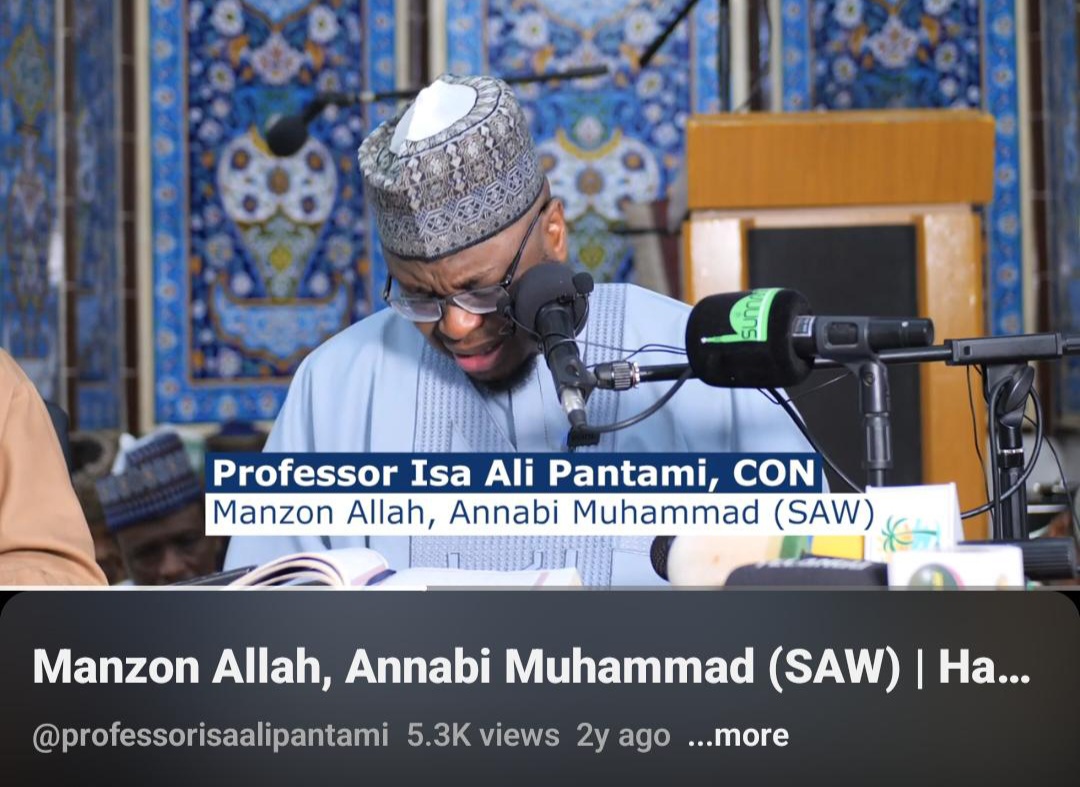
    In the original video posted on Pantami’s own social media, he was crying during an Islamic teaching session. The crying incident occurred in a sub-5-minute sermon, not a political reaction.

    WITHIN NIGERIA discovered that two unrelated events were stitched together. The viral video emerged from the 2024 sermon clip with separate image showing the endorsement of Gwamna by Gov. Inuwa Yahaya and other APC stakeholders.

    The endorsement image was overlaid on the left side of the video to create a false connection.

    VERDICT

    Misleading.

    The video of Pantami’s shedding tears is genuine, but the footage is from 2024 and unrelated to the APC governorship process. The caption linking the video to his exclusion from the 2027 race is false.

  • Rivers 2027: How Fubara Lost the APC Ticket To Wike (What We Know)

    Rivers 2027: How Fubara Lost the APC Ticket To Wike (What We Know)

    Rivers State Governor Siminalayi Fubara appears set to join the list of governors who served only a single term. The political climate in the state remains tense, fueled by shifting alliances and realignments among key actors.


    According to sources close to the presidency, Fubara’s relationship with President Bola Tinubu and the APC soured after he allegedly breached the reconciliation terms agreed with Nyesom Wike.

    What We Know About How Fubara Lost Tinubu’s Backing In Rivers

    Alleged Breach of Agreement

    WITHIN NIGERIA gathered that Governor Siminalayi Fubara, during Tinubu-brokered talks agreed that he would not seek a second term.

    According to sources, the deal – not contesting for a second term was part of the settlement to end the first impeachment crisis in late 2023.

    Insiders claimed that Governor Fubara later tried to sideline Wike after joining the APC, hoping to secure the party structure for 2027.

    “The President handed over the political structure of Rivers State to Wike. Fubara joined the party to outsmart Wike, but the party leadership knew the President’s body language. That was why no official reception was given.”

    No Official Welcome, No Screening Clearance

    Governor Siminalayi Fubara, on December 9, 2025, decamped from the PDP to APC, and visited the APC secretariat on December 17, pledging to work for Tinubu’s 2027 victory.

    WITHIN NIGERIA learned that Fubara was never formally received unlike other PDP governors who defected — Sheriff Oborevwori, Umo Eno, Douye Diri, and Peter Mbah.

    However, the APC National Chairman, Yilwatda attributed the delay to “regional sensitivities” and the party’s focus on northern governors during Ramadan.

    Insider told WITHIN NIGERIA that Fubara was also not cleared by the governorship screening committee led by Yilwatda and National Secretary Ajibola Basiru.

    “He was told he could not contest under the party. That means he was disqualified. Fubara left the screening venue angrily”, WITHIN NIGERIA gathered.

    Three Impeachment Plots

    Governor Siminalayi Fubara survived three impeachment plots. The last intervention by President Bola Tinubu brokered peace between him and aggrieved Rivers lawmakers.

    October 30, 2023: 24 lawmakers signed an impeachment notice five months into his term. It triggered chaos at the Assembly and was withdrawn in December after Tinubu brokered peace.

    March 2025: Lawmakers led by Speaker Martin Amaewhule moved again to impeach Fubara and his deputy. On Mar 18, 2025, Tinubu declared a state of emergency, suspending Fubara, Deputy Gov. Ngozi Odu, and the Assembly for six months. Retired Rear Adm. Ibok-Ete Ibas was appointed administrator. The emergency ended Sept 17, 2025.

    Jan 8, 2026: Lawmakers began a third impeachment process over alleged gross misconduct. Tinubu intervened again despite being out of the country at the time.

    Backlash in Rivers and the South-South

    Following the withdrawal of Governor Siminalayi Fubara from the 2027 guber race, some Ijaw leaders and youth groups in Rivers have expressed their dissatisfaction and concerns over the development.

    Anabs Sara-Igbe, pioneer spokesman of Pan Niger Delta Forum (PANDEF), while reacting to the development said: “I’ve never seen anything like this. One man thinks he can do and undo as he pleases, and no one dares challenge him. Rivers people, open your eyes.”

    Ibim Ibiwari, Chairman of IYC Eastern Zone, said Ijaw people were “disappointed” and noted they had supported every Rivers governor since 1999, including Wike. He said the decision left supporters in a “mourning mood.”

    Savior Imeabe, South-South Youths Initiative President, said Fubara holds office “in trust for the people” and should not decide alone.

    Chris Itamunola, former Fubara aide called the withdrawal “unacceptable” and questioned the claim of maintaining peace after nearly four years of crisis.

    The Current State of Play

    APC insiders say the party structure for Rivers primaries was handed to Wike, and none of Fubara’s candidates were cleared for House of Assembly or National Assembly tickets.

    “Wike is in control of Rivers politics and, until something changes, he will continue to hold sway,” a source told WITHIN NIGERIA.