Category: Education

Latest news spanning education sectors, Universities, Polythecnics, Colleges Primary / Secodary schools and campus updates.
EXAMINATIONS: WAEC, NECO, JAMB and others

  • How to Get WAEC Certificate Online After Losing Your Original Document

    How to Get WAEC Certificate Online After Losing Your Original Document

    Every year, thousands of Nigerians discover that their WAEC certificate is missing. It might have been destroyed in a flood, lost during a relocation, or simply misplaced over the years. The document is not easy to replace the traditional way: WAEC does not reissue physical certificates once they have been issued. For a long time, that was essentially the end of the road. Today, it is not.

    WAEC launched its digital certificate platform, now formally branded as WAEC DigiCert, which allows verified candidates to access a legally recognised digital copy of their original certificate entirely online. The process does not require visiting any WAEC office, and it is available to candidates who sat for exams going as far back as 1999. This guide explains exactly how it works, what you need, and what to expect.

    What the WAEC Digital Certificate Actually Is

    List of Items Banned from WAEC Examination Halls in Nigeria

    There is a distinction worth clarifying before going into the process. The document many candidates print from the WAEC results checker website is called a Statement of Results. It lists your grades and carries your exam number. It is not the same thing as your WAEC certificate.

    The actual WAEC certificate contains more information: your name, date of birth, passport photograph, examination number, and certificate number. This is the document that universities, employers, immigration offices, and foreign institutions ask for during verification. The digital version produced through the WAEC portal is the same document, rendered in PDF format and carrying the same legal weight as the original paper copy.

    WAEC itself has confirmed this. When it launched WAEC DigiCert, the council stated that the digital certificate allows candidates to access, share, and confirm their certificates with educational institutions around the world, with guaranteed authenticity. The physical certificate is not being phased out, but the digital version now serves the same purpose.

    What WAEC Does and Does Not Offer When You Lose the Original

    This is a point that confuses many people: WAEC does not replace lost physical certificates. Once the paper copy is issued, it is issued once. The council does not print a second physical copy if yours is lost, damaged, or destroyed.

    What WAEC offers instead is the digital certificate through its portal. For candidates who have lost their originals, the digital certificate is the only official route available, and it is a legitimate one. Institutions that use WAEC’s verification tools can confirm its authenticity in real time directly through the platform.

    If you are outside Nigeria or in a situation where you cannot receive the physical certificate from your school or a WAEC office, the digital route is even more practical. The certificate downloads as a PDF and can be shared securely with any institution.

    How to Get WAEC Certificate Online After Losing Your Original Document (2026)

    The question of how to get a WAEC certificate online became significantly more answerable after WAEC built out its digital infrastructure. In February 2026, the council officially expanded WAEC DigiCert across all five member countries including Nigeria, positioning the digital version as a full alternative to the physical copy for candidates in any part of the world.

    What You Will Need Before You Start

    There are a few requirements to have ready before you begin the process on the WAEC portal. Missing any of them will stall your application.

    • An email address, which will be used to create your WAEC portal account and receive a one-time verification code
    • Your WAEC examination number, which identifies the specific exam record on WAEC’s system
    • Your year of examination and the exam type, either WAEC May/June SSCE or November/December GCE
    • A means of identity verification: this can be your National Identification Number (NIN), Bank Verification Number (BVN), or international passport number
    • A payment method: bank transfer or debit/credit card processed through Flutterwave

    On the exam number requirement: if you have lost both your certificate and your exam number, the platform has a retrieval option. You can recover your exam number by providing additional personal details and paying a separate fee of 3,000 naira through the platform’s wallet system. This is useful for older candidates who may not have kept any exam-related paperwork.

    Step-by-Step: How to Access Your WAEC Certificate Online

    The process runs through WAEC’s official portal at portal.waec.org. Here is how it works:

    Go to the portal and select ‘Certificate Access (Candidate)’ as your user category. If you do not have an account, click ‘Create Account’ and fill in your details, including your email address and a password. An OTP will be sent to your email to confirm registration. Paste the code into the verification field to complete sign-up.

    Once logged in, provide your examination details: the year you sat for the exam, the type of exam (May/June or November/December), and your candidate number. Review the information and confirm it is correct before proceeding.

    You will then be directed to fund your WAEC digital wallet. The fee to access the certificate is 7,500 naira. Payment can be completed via bank transfer or card through the Flutterwave checkout interface. If you cannot access your certificate after payment for any reason, WAEC’s stated policy is to issue a refund.

    After funding the wallet, the platform will request identity verification. You will need to provide your NIN, BVN, or international passport number. WAEC uses this step to confirm that the person requesting the certificate is the actual candidate. The BVN method is widely reported to be the fastest among the three options.

    Once verification is confirmed, your certificate appears in PDF format. You can download it immediately. It is advisable to save a copy to cloud storage, Google Drive or iCloud for instance, so that you do not lose access if your device is changed or wiped.

    How Much the Online Certificate Costs in Practice

    Based on current information from WAEC’s portal and multiple independent sources, the standard cost to access the digital certificate is 7,500 naira. This is the fee to load the digital wallet and unlock the certificate.

    There is an additional cost of 3,000 naira if you need to recover a lost exam number before you can proceed. That fee is charged separately and applies only to candidates who do not already have their candidate number.

    These figures reflect the most recently available information, but WAEC reserves the right to adjust its fee structure. It is worth checking the portal directly before initiating payment, since fees on government and institutional platforms do shift periodically.

    Coverage: Which Exams and Which Years Are Eligible

    The WAEC digital certificate platform covers exam records going back to 1999. This means candidates who sat for WAEC in any year from 1999 onwards can access their certificate through the portal, regardless of how old the record is.

    The platform covers both types of WAEC examinations conducted in Nigeria: the internal WASSCE for school candidates, taken in May/June, and the external GCE for private candidates, taken in November/December. When filling in the form on the portal, you will need to specify which exam type applies to your record.

    Candidates who sat before 1999 cannot access their certificates through the digital platform. For those records, the only option remains a physical visit to the WAEC state office where the exam was registered, with no guarantee of availability depending on how the records were archived.

    If You Have Also Lost Your Exam Number

    Losing both the certificate and the exam number is more common than it sounds, especially among older candidates or those who finished secondary school before digital record-keeping became standard practice.

    The WAEC portal has a built-in recovery function for this. By providing enough personal identifying information, such as your full name, date of birth, and school details, you can request exam number retrieval through the same platform. The fee for this service is 3,000 naira and it is processed through the platform’s digital wallet using the same payment methods available for the certificate itself.

    The recovery process involves cross-referencing your personal details against WAEC’s database. It does not always work if the information you provide does not match the original registration data exactly, particularly for candidates whose names were entered differently on the exam form. In those cases, a visit to the relevant WAEC state office may be necessary to resolve the discrepancy in person.

    When Physical Visits Are Still Necessary

    The digital certificate handles the majority of situations where someone has lost their WAEC document. But there are cases where the online route cannot fully substitute for a physical office visit.

    If your secondary school has closed down and your certificate was never collected before the closure, the WAEC state office where the exam was registered is the right starting point. Staff at that office can advise on what records remain available and how to proceed. You would typically need to come with a valid identification document, a printout of your online result, and a passport photograph, alongside the relevant certificate fee.

    If there is a name discrepancy between your WAEC records and your current identification documents, the digital portal cannot resolve this. Name correction procedures involve a formal application to WAEC with supporting documents and are handled at the state or national office level.

    What the WAEC DigiCert Launch Means for Nigerians

    In February 2026, WAEC expanded WAEC DigiCert from a Nigerian pilot to a full rollout across all five member countries. The council reported that the Nigerian pilot had already received positive feedback from candidates and educational institutions. WAEC’s official position is that the digital version does not replace the physical one for candidates who want the paper copy, but it is a fully functional parallel route.

    For Nigerians specifically, the timing matters. Certificate verification has historically been a bureaucratic bottleneck in university admissions, employment, professional licensing, and applications for foreign scholarships or visa processes. The ability to share a verifiable digital certificate directly with institutions, rather than submitting paper copies that can be questioned or lost in transit, removes one layer of that friction.

    WAEC’s own statement when launching the platform described it as designed to address challenges including lost, damaged, and burnt certificates. Given how often such situations arise in a country with irregular infrastructure and significant migration between states, that framing is accurate. The platform is a practical answer to a problem that has derailed processes for many Nigerians over the years.

    What to Do Next If You Have Lost Your Certificate

    If your original WAEC certificate is lost, the most direct path forward is the WAEC digital certificate portal at portal.waec.org. Create an account, confirm your exam details, pay the 7,500 naira fee through the wallet, verify your identity with your NIN or BVN, and download the PDF. That process, done correctly, gets you a legally valid document you can present to any institution that accepts it.

    Keep what you have retrieved. Save the PDF to cloud storage immediately after downloading. Store your exam number somewhere accessible, whether in a note on your phone, a spreadsheet, or a document you back up regularly. The digital certificate resolves the immediate problem. Protecting it is a step that many people skip until they find themselves in the same situation again.

    If the portal cannot resolve your situation because your records predate 1999, or because there is a name mismatch in the system, the relevant WAEC state office is the next step. The process is slower, but the option exists.


  • Best WAEC Past Questions and Answers Websites for Free Download 2026

    Best WAEC Past Questions and Answers Websites for Free Download 2026

    Every year, hundreds of thousands of Nigerian secondary school students sit the West African Senior School Certificate Examination, and every year, a significant number of them walk into those halls underprepared. Not because they are not intelligent, but because they studied the wrong things, in the wrong order, without any real sense of what the exam actually demands. The candidates who consistently score A’s are rarely the ones who read the most. They are usually the ones who practised the most, specifically, with past questions.

    Past questions do something that no textbook or teacher summary can fully replicate: they show you exactly how WAEC thinks. The patterns of repetition, the way questions are constructed, the topics that keep surfacing year after year, all of that intelligence is baked into those papers. A student who understands how WAEC frames a quadratic equation question will always outperform one who simply memorised formulas. The same logic applies to English comprehension, Biology objectives, and Government essays.

    The challenge, historically, has been access. Physical past question booklets are not always available, especially for students in areas where educational resources are thin. But that problem has largely been solved. A cluster of Nigerian platforms now offer WAEC past questions and answers for free, spanning decades of examinations across dozens of subjects. The issue now is knowing which platforms are actually reliable, and which ones are either poorly maintained, riddled with errors, or quietly nudging candidates toward paid services under a free label.

    Best WAEC Past Questions and Answers Websites for Free Download in 2026

    List of Items Banned from WAEC Examination Halls in Nigeria

    Finding the best WAEC past questions and answers websites for free download requires more than a Google search and clicking the first result. The platforms covered in this article have been evaluated for depth of question coverage, accuracy of answers, ease of access, and whether they genuinely offer free content or use free as a hook. What follows is a practical guide to the platforms worth your time, and a few warnings about what to avoid.

    Why Past Questions Still Outperform Every Other Study Method

    There is a straightforward reason past questions are effective: they shift your preparation from passive reading to active recall. When you sit with a textbook, your brain is in reception mode. When you attempt a past question, your brain is forced to retrieve information, apply it, and evaluate whether your reasoning is correct. That retrieval process is what builds durable memory, and exam confidence.

    WAEC has been conducting examinations across West Africa since 1952. In that time, the examination body has developed fairly consistent patterns in how it tests specific subjects. Mathematics questions tend to revisit the same core topics, simultaneous equations, geometry, statistics, indices, with varying levels of complexity. English Language comprehension passages follow recognisable formats. Biology theory questions on genetics and ecology have clear recurring structures. A student who works through ten years of past papers for any subject will begin to see these patterns clearly, and that recognition gives them a significant advantage.

    Beyond pattern recognition, past questions also train time management. The 2026 WAEC SSCE May/June examination, which runs from April 21 to June 19, 2026 according to the officially released timetable, covers multiple subjects within fixed time windows. Candidates who have regularly timed their past question practice are significantly better positioned to pace themselves under exam conditions than those encountering real time pressure for the first time in the hall.

    There is also a diagnostic function. Working through past questions before you have covered all your content will quickly reveal the subjects and topics you are weakest in. That visibility allows you to concentrate your remaining study time where it matters most, rather than spending equal hours on topics you already understand well.

    Myschool.ng, The Most Complete Free WAEC Practice Platform in Nigeria

    Myschool.ng is the most comprehensive free platform for WAEC past questions currently available to Nigerian students. The platform offers a browser-based CBT simulator that gives candidates access to over 60,000 past questions spanning WAEC, JAMB, NECO, Post-UTME, and NABTEB. For WAEC specifically, the question bank covers both objective and theory papers, organised by subject and by year.

    The browser version is entirely free. Students can select a subject, choose a year, and work through questions with instant answers and explanations displayed after each attempt. There is no sign-up required to access the basic question bank, which removes a common friction point that other platforms use to collect user data before granting access.

    Beyond the browser experience, Myschool has a mobile app available on both Android and iOS, as well as a Windows software version for candidates studying from desktop computers or laptops. The app version, which runs on version 8.1.0 as of 2026, works fully offline once downloaded, making it viable for students in areas with poor internet connectivity. The app covers WAEC past questions from 1978 to date, which represents one of the deepest question archives available on any Nigerian platform.

    The app also includes AI-powered study assistance, lesson notes, and video lessons alongside the past questions, features that go beyond simple question drilling. It is worth noting that while the browser version of Myschool is free, the downloaded app and software require activation. The free content is genuinely substantial, however, and most WAEC candidates will find the browser access sufficient for thorough preparation.

    MySchoolGist, PDF Downloads for Every WAEC Subject

    MySchoolGist takes a different approach from Myschool. Rather than an interactive CBT simulator, it offers direct PDF downloads of WAEC past questions and answers across all subjects. This makes it particularly useful for candidates who prefer to print their practice materials or who study from physical papers rather than screens.

    The platform covers both WASSCE May/June and GCE past questions, making it relevant to school candidates and private candidates alike. Subject-specific download pages are clearly organised, and the site has a WhatsApp support contact, 0915 526 9270, for candidates who need guidance navigating the resources. The content is managed by Olusegun Fapohunda, the site’s founder, who has maintained the platform’s Nigerian education focus for over a decade.

    MySchoolGist also hosts a CBT practice app for Android and iOS, extending the platform’s utility beyond PDF access. For candidates who want downloadable files they can study offline without needing an app, the PDF section is one of the most straightforward and consistently updated options available. The site also covers WAEC sample questions and marking schemes, official documents that are often harder to find than past questions themselves and are valuable for understanding exactly how WAEC awards marks.

    ExamQuestions.ng, A Broad Question Bank With Nigerian-Specific Context

    ExamQuestions.ng operates as a general examination resource hub with a clear focus on Nigerian candidates. The platform hosts WAEC past questions alongside materials for BECE, NECO, and other Nigerian and West African examinations. Its coverage includes subjects from WAEC GCE and WASSCE, with questions organised by subject and year.

    What makes ExamQuestions.ng slightly different is its attempt to provide contextual framing around Nigerian education changes. The site acknowledges, for instance, that subject combination requirements are subject to revision and that changes may not take effect immediately, a level of editorial awareness that distinguishes it from platforms that simply dump questions without context.

    The site covers an extensive range of subjects including Commerce, Civic Education, Mathematics, English Studies, and Christian Religious Knowledge, among others. It also covers BECE materials for Junior Secondary School candidates preparing for their own board examinations. For WAEC candidates, it functions as a supplementary resource, particularly useful when combined with one of the CBT-focused platforms for interactive practice.

    SchoolNGR, Topic-by-Topic Practice for Targeted Study

    SchoolNGR.com offers WAEC past questions organised by topic rather than by year, which is a meaningful difference in study approach. While year-by-year practice helps candidates simulate full exam conditions, topic-based drilling is better suited to the early and middle stages of revision when a student is still building competence in specific subject areas.

    If you are weak in organic chemistry, for example, pulling every WAEC organic chemistry question from the past fifteen years in one sitting is more targeted than working through a 2019 full-paper that mixes questions across all chemistry topics. SchoolNGR’s structure supports that kind of focused practice. The platform provides detailed answers and step-by-step explanations designed to improve understanding rather than just answer recall.

    The site covers WAEC, JAMB, and NECO questions and is particularly strong for candidates who are using past questions diagnostically, trying to identify and close specific knowledge gaps rather than simply rehearsing the exam format. It works well as a companion to Myschool.ng, with one platform handling timed full-paper simulation and the other handling targeted topic work.

    WAEC eStudy, The Official Platform From the Examination Body Itself

    WAEC eStudy at estudy.ng is notable for one reason above all others: it is powered and endorsed by the West African Examinations Council itself. The platform describes itself as an AI-powered exam preparatory tool that offers candidates access to official WAEC past questions, marking guides, and mock tests.

    The significance of the source cannot be overstated. One persistent problem with third-party past question platforms is answer accuracy. Unofficial sites occasionally carry incorrectly transcribed questions or wrong answers, particularly for older papers. Content from eStudy, coming directly from the examination council, eliminates that concern. The marking guides in particular, which show how marks are distributed across theory answers, are documents that unofficial platforms rarely carry in their original form.

    The platform’s AI-powered framing suggests a more interactive study experience than simple PDF downloads, though it is worth verifying the current scope of free content on eStudy before planning your study schedule around it. What is clear is that any platform with direct WAEC institutional backing deserves to be on a serious candidate’s list, particularly for official sample questions and scheme documents.

    Greenspek Exam Study App, Free Practice for Candidates With Limited Internet

    The Greenspek Exam Study app, available at greenspek.com, positions itself as a free tool for WAEC, NECO, JAMB, and Post-UTME preparation. The app covers past questions and answers from 2015 to 2025 across subjects including Mathematics, English Language, Literature in English, Biology, Physics, Economics, Government, Christian Religious Knowledge, Accounting, Commerce, Chemistry, and General Paper.

    The app’s main strength is its timing function, which allows candidates to set time limits on their practice sessions in the same format as the actual examination. This is important because exam timing is a skill that must be trained separately from content knowledge. Candidates who know their subject material but have not practised under time pressure routinely run out of time in the actual hall, particularly in Mathematics and Physics where complex calculation questions can consume large blocks of time if not managed efficiently.

    Greenspek is available in Android, computer, Java, and Blackberry formats, an unusually wide range of device compatibility that makes it accessible to candidates using older or budget devices. The platform is free, and its multiple format availability makes it worth noting for students in areas where smartphone access is limited but basic mobile phones or older devices are available.

    How to Get the Most Out of WAEC Past Questions Without Wasting Study Time

    Having access to past questions is only half the work. The way you use them determines how much you actually gain. A common mistake is treating past questions as a final revision activity, something you do in the last two weeks before the exam after covering all your content. That approach wastes much of the diagnostic value these materials offer.

    A more effective approach is to use past questions from the start of serious revision. Pick a subject, attempt a full past paper under timed conditions before you have reviewed the material, and score yourself honestly. The questions you get wrong are your study roadmap. You now know precisely which topics to prioritise in your content review, rather than working through a syllabus chapter by chapter regardless of your existing knowledge gaps.

    After completing content review for a topic, return to past questions in that area specifically. Use a topic-organised platform like SchoolNGR for this phase. Once you feel confident at the topic level, shift back to full-paper timed practice on Myschool.ng to rebuild your sense of the overall exam format and time distribution. This cycling between topic drills and full-paper simulation is more effective than either approach used in isolation.

    Pay particular attention to theory questions. Nigerian students preparing for WAEC often focus heavily on objective practice because it is easier to self-assess. But the theory section carries significant marks, and many candidates lose points not because they lack knowledge but because they do not understand how WAEC expects answers to be structured. Studying the marking guides on WAEC eStudy will clarify exactly what an examiner is looking for, that knowledge is worth more than additional objective drilling.

    Finally, do not attempt to work through every year of past papers for every subject. A well-structured practice plan covering the most recent ten to fifteen years for each subject will expose you to the full range of question types WAEC currently uses. Going back further than fifteen years may introduce question formats and syllabus content that WAEC has since revised, which can cause confusion rather than preparation.

    What to Watch Out for: Sites That Sell Expo, Not Preparation

    Any honest guide to WAEC past question websites must address the ecosystem of fraudulent platforms that operate alongside legitimate ones. These sites present themselves as past question resources but their actual business is selling examination runs, purported real-time answers to the current year’s exam questions. They frequently use past question keywords to attract traffic, then redirect visitors toward paid expo or runz services.

    The WAEC 2026 May/June examination, like all WAEC sittings, involves thousands of different question variants distributed across examination centres specifically to prevent mass leakage. Any website claiming to provide live answers on the day of an active WAEC exam is either selling fabricated content or engaging in illegal activity that exposes candidates to serious consequences, including outright cancellation of results.

    Beyond the ethical and legal issues, expo dependence is practically unreliable. Candidates who enter the hall expecting leaked answers and find different questions, which is what almost always happens, are left in a far worse position than those who prepared with genuine materials. The sites listed in this article have been identified because they offer real past question content. They are preparation tools, not shortcuts, and that distinction matters enormously.

    A useful rule: if a website is prominently advertising ‘2026 WAEC answers’ or ‘exam runz’ alongside past question downloads, treat everything on that site with caution. Legitimate past question platforms do not run those services. The crossover between fake expo sites and real academic resources is deliberate, it is designed to lend credibility to fraudulent offerings by associating them with genuine study materials.

    Choosing the Right Platform for Your WAEC Preparation

    The landscape of free WAEC past questions resources in Nigeria has improved significantly. Candidates no longer need to pay for physical booklets or rely on informal sharing of scanned documents. Myschool.ng, MySchoolGist, ExamQuestions.ng, SchoolNGR, WAEC eStudy, and Greenspek each offer genuine value at no cost, and together they cover the full range of preparation styles, from interactive CBT simulation to PDF downloads to topic-by-topic drilling.

    The smartest approach is to use more than one platform. No single resource covers everything optimally. Combine Myschool.ng for timed full-paper practice, SchoolNGR for topic-level drilling, WAEC eStudy for official sample questions and marking guides, and MySchoolGist for downloadable PDFs you can study offline. That combination gives you depth, variety, and the official perspective, which is everything you need to walk into the 2026 WAEC examination properly prepared.

    Past questions are not a magic shortcut. They are a study tool that works in proportion to how seriously you use them. The candidates who benefit most are those who treat practice sessions like real exams, timed, marked honestly, and followed by focused review of every wrong answer. Do that consistently across your subjects, and the investment in past question practice will show clearly in your results.

  • University of Ibadan Reclaims Best University in Nigeria 2026 THE Ranking

    University of Ibadan Reclaims Best University in Nigeria 2026 THE Ranking

    For the first time since 2023, the University of Ibadan sits at the top of Nigeria’s university rankings. The institution, which spent two years watching Covenant University hold the national crown, has returned to a position many believe it never truly vacated. The Times Higher Education World University Rankings 2026, released in October 2025, placed UI back at number one in Nigeria, and the margin of the statement it makes extends well beyond a single table.

    This is not a minor reshuffle. UI climbed from fourth place in the 2025 edition, leapfrogging three institutions, including the reigning champion, to reclaim its position in Nigeria’s most widely cited academic ranking. The shift reflects changes in how the institution is performing against the specific metrics that THE measures, and it raises real questions about the direction of Nigerian higher education in the years ahead.

    The University of Ibadan Reclaims Best University in Nigeria 2026 THE Ranking

    The University of Ibadan Reclaims Best University in Nigeria 2026 THE Ranking
    The University of Ibadan

    The University of Ibadan best university in Nigeria 2026 THE ranking designation marks the school’s return to a position it has now held in 2020, 2021, 2022, and 2023, before losing ground to Covenant University in 2024 and 2025. With 51 Nigerian institutions assessed this cycle, the competition is broader than it has ever been, which makes UI’s leap from fourth to first all the more significant.

    What the 2026 THE Rankings Actually Measure

    Times Higher Education is a UK-based organisation that has published its World University Rankings annually since 2004. For the 2026 edition, it assessed 2,191 institutions from 115 countries, making it one of the most comprehensive global surveys of higher education in existence.

    The ranking methodology rests on five broad performance pillars: teaching, research environment, research quality, industry engagement, and international outlook. These five areas are broken down further into 18 specific performance indicators, covering everything from staff-to-student ratios and doctoral degree awards to citation impact, industry income, and the proportion of international students and staff on campus.

    Crucially, THE draws on a massive dataset. The 2026 edition analysed over 174.9 million citations drawn from 18.7 million research publications worldwide, and collected survey responses from more than 108,000 academics globally. That scale is what gives the ranking its credibility with recruiters, governments, and postgraduate applicants across the world.

    UI’s Position: What the Numbers Say

    In the 2026 rankings, the University of Ibadan was placed in the 801–1000 global band, a range it shares with just one other Nigerian institution: the University of Lagos. Both UI and UNILAG broke into the global top 1000 bracket in 2026, a notable achievement given that Covenant University was the only Nigerian institution to achieve that threshold in the 2025 edition.

    Within Nigeria, UI leads the national table, followed by UNILAG in second place, Bayero University Kano (BUK) in third, Covenant University in fourth, and Landmark University in fifth. This represents a significant reordering from 2025, when Covenant topped the list, ABU came second, Landmark was third, and UI sat in fourth place.

    The category-level data adds important texture to UI’s overall position. According to THE’s 2026 results, UNILAG achieved the highest research quality score among Nigerian universities, recording a score of 66.7. BUK led the national table in international outlook, reflecting its broader network of cross-border academic partnerships. Covenant University scored highest for industry engagement. UI’s aggregate performance across all five pillars was strong enough to place it first nationally, even as other institutions led in individual categories.

    Both UI and UNILAG achieved an overall score range of between 35.5 and 38.9, according to Professor Emeritus Peter Okebukola, chairman of the Nigerian Universities Ranking Advisory Committee, who described the result as a meaningful step forward for Nigerian higher education internationally.

    A Brief History of Nigeria’s Top Spot

    The University of Ibadan’s return to the top is best understood against the background of how this particular ranking has shifted over the past six years. Covenant University, founded in 2002 and located in Ota, Ogun State, has been one of the most consistent performers in THE rankings among Nigerian institutions, topping the national table in 2020, 2023, 2024, and 2025.

    UI, founded in 1948 as the first university established in Nigeria, held the national top spot in 2021 and 2022 before Covenant reclaimed it. For the 2024 edition, both Covenant and UI sat within the 801–1000 global band, but Covenant ranked higher nationally. In 2025, Covenant retained its position while UI slipped to fourth.

    The 2026 edition marks the end of Covenant’s two-year run at the top and the beginning of what will be closely watched as a competition between the legacy of Nigeria’s premier federal institution and the rapid research-focused rise of a newer private university that has built an unusually structured academic environment specifically designed to produce ranking metrics.

    Why UI Moved Up

    No single factor explains a move from fourth to first in one edition, but the nature of THE’s methodology offers clues. The ranking places considerable weight on research quality, which is partly driven by citation impact. Universities whose publications are frequently cited by other researchers globally perform better on this metric over time, and improvements in this area tend to compound as a university’s research output gains international visibility.

    UI’s research environment has been bolstered by its status as Nigeria’s oldest university, a position that comes with faculty depth, postgraduate volume, and institutional history that newer universities are still building. The university’s College of Medicine, widely regarded as one of the most rigorous in West Africa, contributes significantly to research output across health and sciences, which are fields with high citation activity globally.

    Analysts at The Guardian noted that UI’s strong research culture, experienced faculty, and expanding international collaborations have continued to support its ranking performance. While specific score breakdowns for UI across all five pillars were not released at the category level in available reports, the aggregate improvement from fourth to first nationally suggests movement across multiple indicators rather than a single standout category.

    The Private vs Federal University Debate

    One of the undercurrents in any discussion of Nigerian university rankings is the question of what Covenant University’s repeated appearances at the top of the national table say about the Nigerian public university system, and whether UI’s return changes that conversation.

    Covenant operates under a highly controlled academic environment, with strict student conduct policies and a structured campus life that critics have sometimes pointed to as producing artificial conditions for research and industry metrics. Its industry engagement score, which has consistently been among its strongest national category results, reflects genuine partnerships with the private sector, built partly through its institutional design.

    Federal universities like UI, ABU, UNILAG, and the University of Nigeria face structural pressures including ASUU strikes, infrastructure deficits, and underfunding that private institutions with different financing models do not. The fact that UI returned to the top of a globally credible ranking in spite of those structural conditions is the part of this story that matters most to public education advocates.

    The 51 Nigerian universities that participated in the 2026 ranking represent a range of outcomes. Only UI and UNILAG reached the 801–1000 global band. BUK, Covenant, and Landmark fell in the 1001–1200 range. Ahmadu Bello University, Federal University of Technology Minna, University of Ilorin, University of Jos, and the University of Nigeria Nsukka were placed in the 1201–1500 range. Fourteen universities fell above 1501, and 27 institutions were not ranked at all.

    Global Context: Oxford Holds, Harvard Slips

    Globally, the 2026 edition of the THE World University Rankings continued a pattern that has defined the top of the table for the past decade. The University of Oxford retained first place for the tenth consecutive year, driven primarily by its research environment scores. The Massachusetts Institute of Technology ranked second, followed by Princeton University, the University of Cambridge, and Harvard University, which slipped to fifth place.

    That detail, Harvard dropping to fifth, drew attention from academics globally because Harvard had maintained a dominant position near the very top of THE rankings for years. Oxford’s continued hold on first reflects the weight THE gives to research environment, an area where Oxford’s combination of scale, funding, and doctoral volume remains largely unmatched.

    For Nigerian universities to appear in the same global table that includes Oxford, MIT, and Harvard, even at the 801–1000 band, represents a reference point for how Nigerian institutions are performing relative to the world’s most heavily resourced academic systems.

    What Nigerian Students Should Know

    For prospective students weighing their options, the THE ranking provides one useful data point among several. UI’s return to the national top does not change the fundamental academic landscape overnight, but it reinforces what the institution has always been able to offer: research-active faculty, a multi-disciplinary structure across 16 faculties, postgraduate opportunities across medicine, engineering, law, the sciences, and the humanities, and a degree with strong historical recognition from employers across Nigeria and internationally.

    JAMB cut-off marks for UI’s most competitive programmes typically require scores of 250 and above for courses such as Medicine, Law, and Pharmacy, with a general minimum of around 200 for less competitive departments. Admission remains highly competitive given the volume of applicants the university attracts annually.

    For students interested in research quality as a primary criterion, UNILAG’s 66.7 research quality score was the highest in Nigeria this cycle. For those focused on international connections, BUK led the national table. Students weighing industry partnerships may find Covenant University’s category-leading industry score relevant depending on their field of study. The 2026 rankings, in other words, contain a national story that goes beyond the single headline of who came first.

    What Comes Next for Nigerian Universities in Global Rankings

    Nigeria’s footprint in the 2026 THE rankings is larger than it has been. Fifty-one institutions appeared this cycle, which is three more than in the previous edition. The expansion of the field means more Nigerian universities are being held to an internationally comparable standard, which creates long-term incentives for institutions that have historically not invested in the kind of research output and partnership infrastructure that rankings like THE reward.

    Whether UI can hold its national position in 2027 will depend in part on sustaining the research environment and citation performance that drove this edition’s result. Covenant University, which has a clear institutional strategy built around ranking performance, is unlikely to concede its competitiveness quietly. ABU, which held second place nationally in 2025, remains a significant institution with research capacity that can shift under the right conditions.

    What the 2026 result confirms is that the competition within Nigerian higher education for international recognition is genuinely multi-institutional and increasingly complex. UI’s return to the top is real, and it carries the weight of history behind it. What it produces in research output, faculty scholarship, and student outcomes over the next two to three years will ultimately determine whether the 2026 ranking marks a return or simply a visit.

    Conclusion

    The University of Ibadan’s position as Nigeria’s best university in the 2026 THE World University Rankings is the result of aggregate performance across five pillars measured against 2,191 institutions worldwide. It ends a two-year run at the top for Covenant University, elevates two Nigerian institutions into the global top 1000 bracket simultaneously, and provides the clearest picture yet of where Nigeria’s universities stand in an international comparison framework that is taken seriously by students, academics, and policymakers across the world.

    UI’s history gives the result meaning. Its research capacity gives it substance. Whether the ranking reflects a sustainable trajectory or a high point in a cycle is the question that 2027’s edition will begin to answer.

  • How to Check If Your Name Is on WAEC Registration List Before Exam

    How to Check If Your Name Is on WAEC Registration List Before Exam

    Every year, hundreds of thousands of Nigerian students sit for the West African Senior School Certificate Examination, WASSCE, produced by the West African Examinations Council, WAEC. For many of them, this exam is the gateway to university, polytechnic, or a first professional credential. Yet a surprising number of candidates walk into the exam hall without verifying one basic thing: that their name is correctly captured on the WAEC registration list.

    A name discrepancy on your registration record, whether a misspelling, a transposed surname, or an entirely missing entry, is not a minor inconvenience. It can affect your photocard, invalidate your result slip, or create complications when you later try to verify your certificate for admission or employment. Catching the problem before exam day gives you time to fix it. Discovering it after does not.

    How to Check If Your Name Is on WAEC Registration List Before the Exam

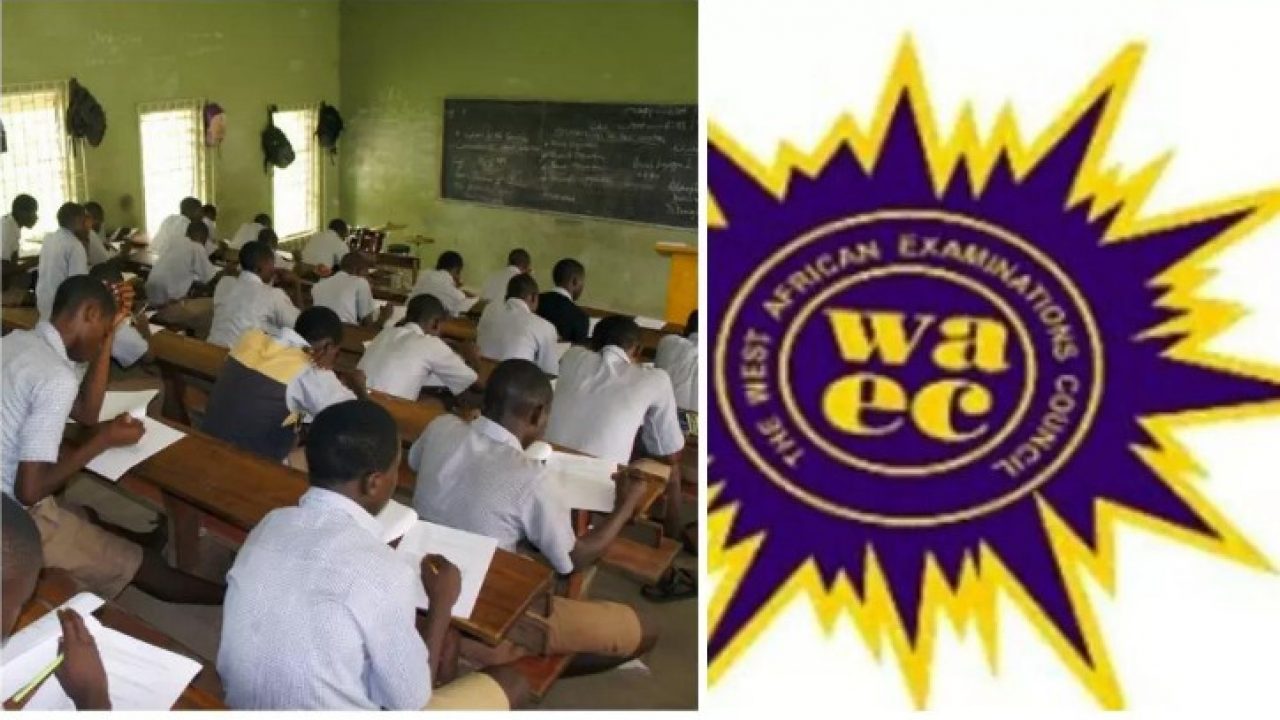
    Students writing WAEC

    Whether you registered as a school candidate through your principal, or independently as a private GCE candidate via the WAEC portal, the process of checking your name on the WAEC registration list before the exam is straightforward. Both routes involve different portals but lead to the same outcome: a printed or downloadable photocard that confirms your registration status, examination number, centre, and name exactly as they appear in WAEC’s system.

    School Candidate or Private Candidate: Know Which Category Applies to You

    Before you know where to check, you need to know how you registered. WAEC handles two separate registration tracks, and each one works differently.

    School candidates are students in their final year of secondary school, typically SS3, who are registered in bulk by their school’s principal or examination officer. The school logs into the e-Registration portal at registration.waeconline.org.ng, enters each student’s details, uploads passport photographs, and submits the class list to WAEC. Individual students do not create their own portal accounts in this process. Your interaction with the registration is limited to what your school collects and submits on your behalf.

    Private candidates, often called GCE candidates, are those who are not currently enrolled in a recognized secondary school or who sat a previous WASSCE and need to improve their results. They register independently through the separate private candidate portal at registration.waecdirect.org. Each private candidate creates their own account, fills in their own data, and downloads their own photocard after submission.

    The distinction matters because your name verification method is completely different depending on which track you used.

    How School Candidates Can Check Their Name on the WAEC Registration List

    If your school registered you, the most direct way to confirm your name is through your school’s examination officer. After submitting candidate data to WAEC, schools are supposed to provide each student with a printed admission notice or photocard. This document carries your full name, your examination number, your assigned centre, and the subjects you have been registered for. If you have not received this document, follow up with your school immediately.

    Schools can log into the WAEC e-Registration portal and pull up each candidate’s record for verification before the final submission deadline. If your school has already submitted and generated exam numbers, the examination officer can reprint your admission notice from the portal. Ask your principal or school exam coordinator to confirm that your name was correctly submitted and that your admission notice is ready for collection.

    What to Check on Your Admission Notice

    When you collect your document, look carefully at the following:

    • Your full name, and that it matches your birth certificate or NIN record exactly
    • Your examination number, which is a unique identifier you will use to check your results
    • Your examination centre name and location, since the system assigns this automatically and you cannot change it after submission
    • The subjects listed, and that they reflect the minimum of eight and maximum of nine you were meant to register for
    • Your passport photograph, so it is recognizable and matches your appearance

    Any error on this document should be reported to your exam officer immediately. Corrections before the final submission window closes are processed by the school through the portal. After WAEC closes the registration window, corrections require a formal request to WAEC’s Nigeria office.

    How Private Candidates Can Verify Their Name on the WAEC Registration List

    Private candidates have direct access to their own records through the portal at registration.waecdirect.org. Once you have completed and submitted your registration, the system generates an examination number and produces a downloadable photocard. This is your primary proof of registration and the document that confirms your name as WAEC has captured it.

    Steps to Download and Check Your WAEC Photocard

    • Go to registration.waecdirect.org in your browser
    • Click on “Candidate Login” and log in with the email address and password you created during registration
    • Navigate to your registration summary or photocard section
    • Download or print your photocard
    • Confirm that your surname, first name, and other names appear exactly as they should

    If you registered through a centre rather than online independently, the centre administrator should provide you with a printed copy of your photocard. Do not leave the registration centre without verifying this document yourself.

    What to Do If Your Name Is Wrong or Missing from the WAEC Registration List

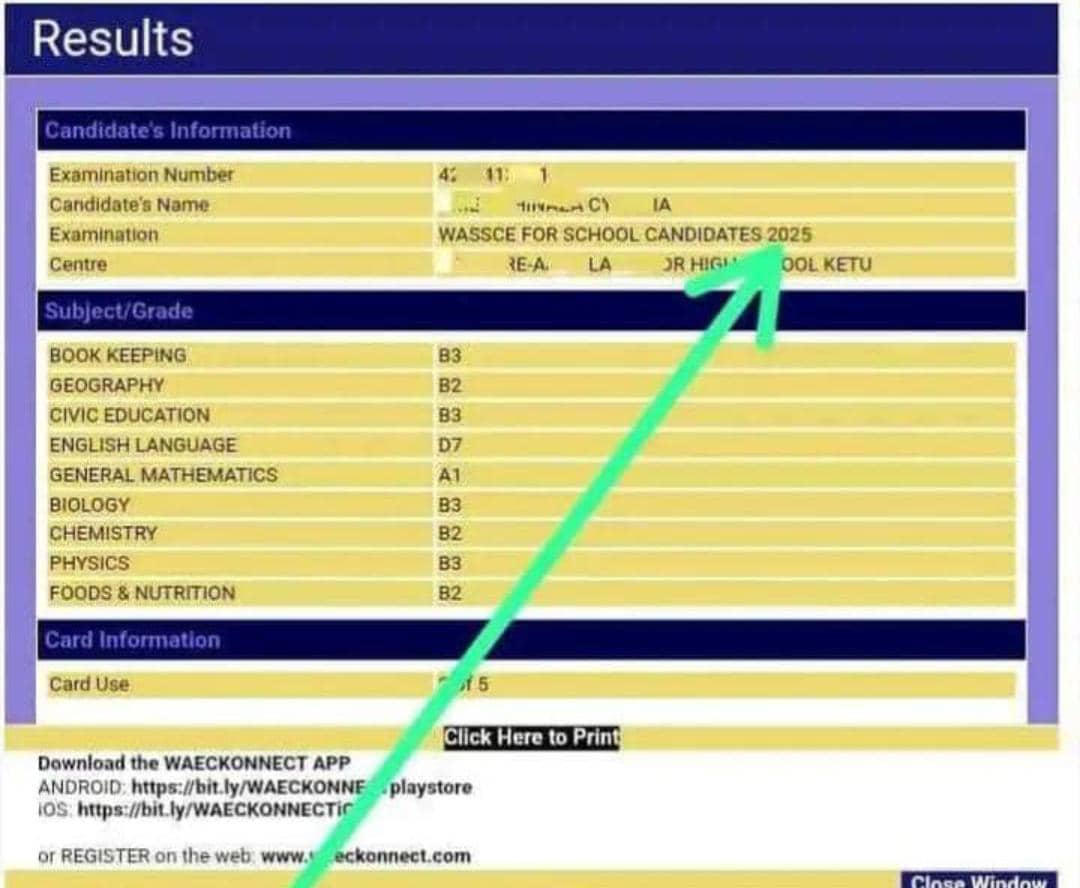
    WAEC Private candidates result

    Finding an error in your name before the exam is genuinely the best-case scenario, even if it feels alarming in the moment. There are clear channels for addressing it.

    Name Errors for School Candidates

    If your school has not yet made its final submission to WAEC, the examination officer can edit your details directly in the portal. This is the simplest fix. If the submission has already been finalized, the school needs to contact WAEC formally. The principal or exam officer writes a letter to the relevant WAEC state or zonal office, identifying the error and requesting correction. Schools have done this for misspelled names, merged names, and completely missing candidates. The process takes time, so urgency is important.

    Name Errors for Private Candidates

    Private candidates who discover a name error after submission should contact WAEC’s Nigeria national office through the official request portal at request.waec.ng. WAEC introduced this self-service portal to reduce the need for physical office visits. You can raise a request for a correction, attach supporting documents such as your NIN slip or birth certificate showing the correct name, and track the status of your request online.

    Where the error is significant and cannot be resolved through the online portal before the exam date, you may need to visit the nearest WAEC state or zonal office in person with valid identification and your registration details.

    If Your Name Is Completely Absent

    This is a more serious situation. For school candidates, it usually means your school did not submit your details, or they submitted incomplete data. Your exam officer needs to verify whether your entry was ever uploaded to WAEC and, if not, determine whether it can still be added. WAEC typically does not allow new registrations after the official window closes, so timing is critical.

    For private candidates, a missing record usually means the registration was not completed successfully, often because the final submission step was skipped, payment was not confirmed, or the form was saved but never submitted. Log back into the portal and check whether your status shows as “submitted” or “incomplete.”

    Why Your Name on the WAEC Registration List Matters Beyond the Exam

    The name WAEC prints on your certificate is taken directly from your registration record. It does not get corrected automatically after results are released. If your name on the certificate does not match your other identification documents, you will face problems when presenting the certificate for JAMB admission, post-secondary applications, or employment background checks.

    Nigerian universities and polytechnics require that the name on your O-level certificate matches what is on your JAMB profile. Any discrepancy creates an admission bottleneck. Employers conducting certificate verification through WAEC’s verification portal at verify.waeconline.org.ng will also flag a name mismatch as a potential integrity issue. Correcting your certificate after results are released is possible but significantly harder and more expensive than preventing the error in the first place.

    The 2025 WASSCE cycle also introduced additional scrutiny after widespread concern about result anomalies. WAEC withheld some results for malpractice investigations. In that climate, any irregularity tied to your registration, including a name that does not match your official documents, invites unnecessary complications.

    The NIN Requirement and What It Means for Name Accuracy

    WAEC now requires all candidates to provide their National Identification Number, NIN, during registration. The NIN is linked to your full legal name as stored in the NIMC database. This requirement was introduced partly to reduce the kind of name discrepancies that have historically caused certificate problems.

    If the name on your NIN does not match the name your school submitted, or the name you entered during private candidate registration, the discrepancy needs to be resolved before your registration can be considered complete. The safest approach is to ensure that the name you enter into the WAEC system is exactly the name on your NIN, in the same order and spelling. Verify your NIN details at any NIMC office or through the NIMC self-service portal before your school submits your registration.

    When to Check and How Much Time You Actually Have

    Ideally, you should check your registration details as soon as your school indicates that the submission is done. School candidates in Nigeria were registered for the 2026 WASSCE cycle during an open window that began in late 2025. If you are a private candidate preparing for the GCE series, your window depends on the specific series, either the first or second, and WAEC publishes those dates on its official portals.

    Do not wait until a week before the exam. Name correction requests, especially for school candidates, require correspondence between the school and WAEC, and that process can take days or weeks depending on how busy the relevant WAEC office is. The earlier you identify a problem, the more options you have.

    At a minimum, collect and check your admission notice or photocard at least four to six weeks before your first paper. If something is wrong, you want enough runway to escalate through the school, reach the WAEC office, and still get a corrected document before exam day.

    Official WAEC Channels to Use for Name Verification and Corrections

    For school candidate registration and school-side queries, the portal is registration.waeconline.org.ng. Only school exam officers have login access to this portal.

    For private candidate registration and self-service verification, the portal is registration.waecdirect.org. Candidates log in with the credentials they created during registration.

    For formal requests and corrections after submission, including name amendments, WAEC operates a dedicated request management system at request.waec.ng. This is the correct place to raise post-submission issues without visiting a physical office.

    For result verification after the exam, the portal is verify.waeconline.org.ng. Schools, employers, and institutions use this to confirm the authenticity of certificates from 1980 to date.

    WAEC also maintains an official announcements handle on X at @waecnigeria. Significant updates about portal issues, result releases, and registration changes are communicated there, as happened when the result checker portal went offline after the August 2025 release.

    Confirm Your Name Now, Not After the Exam

    Checking your name on the WAEC registration list before the exam is a five-minute task that can prevent months of administrative headaches. If you are a school candidate, go to your exam officer today and collect your admission notice. Read it carefully. If you are a private GCE candidate, log back into registration.waecdirect.org and download your photocard. Compare every character of your name against your NIN, birth certificate, or any official document you plan to use for future applications.

    If something does not match, report it immediately. WAEC’s systems are not infallible, and names get entered incorrectly or get truncated. The registration portals exist precisely to allow verification and correction. The only mistake you can make at this point is to assume everything is fine without checking.

  • JAMB Mop-Up Slip 2026 is Out — Print Yours Now Before the June 13 Exam

    JAMB Mop-Up Slip 2026 is Out — Print Yours Now Before the June 13 Exam

    If you missed the 2026 UTME and have been waiting on JAMB to say something, the wait is over. The Joint Admissions and Matriculation Board officially opened its portal on Sunday, June 7, 2026, for eligible candidates to print their 2026 Mop-Up UTME notification slips. The exam holds this Saturday, June 13. You have less than a week.

    This is not a drill. JAMB’s Public Communication Advisor, Dr. Fabian Benjamin, confirmed the announcement through an official statement on his verified X (formerly Twitter) handle, telling affected candidates to stop waiting for SMS alerts and go directly to the JAMB website.

    What Is the JAMB Mop-Up Exam — and Why Does It Exist?

    Not everyone who registered for the 2026 UTME got to sit it. Technical failures at CBT centres, biometric verification errors, and other system-related disruptions left a number of candidates stranded during the main April examination cycle.

    JAMB’s mop-up exercise is the board’s official remedy for that, a second sitting arranged for candidates who missed the main exam through no fault of their own. It is not an open re-sit. You cannot simply decide you want a better score and sign up. Only candidates that JAMB has internally verified and flagged as eligible will appear on the mop-up list.

    The board has been clear about this from the start.

    Who Is Eligible for the 2026 UTME Mop-Up?

    JAMB has defined eligibility narrowly. According to official communications, only candidates in the following categories qualify:

    • Candidates who experienced technical failures at their assigned CBT centres during the main UTME in April 2026
    • Candidates whose biometric verification could not be completed during the main examination — whether due to system errors or equipment failure at the centre
    • Candidates affected by examination centre disruptions that were documented and validated by JAMB

    If you simply did not show up, or you showed up late, or you sat the exam but are unhappy with your score, you are not eligible. The board has been explicit that this exercise is reserved for those who were unable to sit through circumstances they could not control.

    One important note already circulating online: JAMB will not publish a downloadable PDF list of names. The only way to confirm eligibility is to attempt printing the slip on the portal. If your name appears and the slip generates successfully, you are on the list. If you get a “not eligible” message, you were not captured, and the next step would be to contact JAMB directly or visit an accredited CBT centre with your registration documents.

    JAMB Mop-Up Slip Printing Portal — Step-by-Step Guide

    Printing the slip is straightforward. Here is exactly how to do it:

    1. Go to the official JAMB website: www.jamb.gov.ng
    2. On the homepage, scroll down to the e-Facility section and click on it
    3. Log in with your JAMB registration number, email address, and password
    4. Once logged in, look for and click “Print 2026 Mop-Up UTME Slip”
    5. Your examination notification slip will load — download it as a PDF
    6. Print it on A4 paper. If you do not have a printer at home, save it to Google Drive or your email and take it to a nearby business centre or accredited CBT centre

    Print at least two copies. Keep one for yourself and take the other to the exam venue on June 13.

    If you run into issues logging in or the slip fails to generate, do not contact third parties or random “JAMB agents” online. Visit your nearest JAMB office or accredited CBT centre in person with your registration details and a valid ID.

    What Your Mop-Up Slip Contains

    The notification slip is not just a formality. It is your entry document for the June 13 exam and contains:

    • Your assigned examination centre and address
    • Your examination date (Saturday, June 13, 2026)
    • Your scheduled time slot
    • Other specific instructions for the day

    JAMB’s statement was firm: “Candidates are strongly advised to print their slips well ahead of the examination date and familiarise themselves with their examination centres to avoid last-minute difficulties.”

    Knowing your centre location ahead of time matters more than most candidates realise. Traffic, unfamiliar routes, and late arrivals at JAMB exams rarely end well.

    This Is Your Last Chance — JAMB Has Said So Directly

    If there is one thing JAMB has repeated in every statement about this mop-up, it is this: there will be no third opportunity.

    The board confirmed that the June 13 mop-up examination is the final sitting for the 2026 UTME cycle. No further examination will be conducted after this exercise. Any eligible candidate who misses June 13 will have to wait for the 2027 admission cycle and start the entire process again.

    The delay in activating the regular 2026 UTME result slip printing, which JAMB had earlier paused, linking it to ongoing foreign examinations and mop-up preparations, also means many candidates are navigating two different anxieties at once. JAMB has assured that the result slip printing portal will be activated separately, with official notification to follow.

    Quick Facts: JAMB Mop-Up 2026

    Detail Information
    Exam Date Saturday, June 13, 2026
    Slip Printing Start Date June 6, 2026
    Portal www.jamb.gov.ng
    Button to Click “Print 2026 Mop-Up UTME Slip”
    Eligibility Technical failures / biometric issues during main exam
    Further Sittings After This? No — this is the final opportunity

    Frequently Asked Questions

    Can I use my phone to print the mop-up slip? Yes. You can log into the portal via your mobile browser, download the PDF, and then print it at a business centre or CBT centre. Just make sure the file is printed on A4 paper before exam day.

    My portal says “not eligible” but I genuinely missed the exam. What do I do? Go to the nearest JAMB office or accredited CBT centre in person. Bring your registration slip, proof of registration, and a valid ID. Do not attempt to resolve this through unofficial channels online.

    Does this mop-up exam use the same syllabus as the main UTME? Yes. The syllabus, subject structure, and scoring system are the same as the main examination. The question combinations will differ, but the difficulty level is expected to be consistent.

    Is there a fee to print the mop-up slip? JAMB has not announced any fee specifically for mop-up slip printing. The regular result slip (separate document) carries a fee of ₦1,500. Confirm current requirements on the official JAMB portal.

    Bottom Line

    The JAMB mop-up slip portal is live. June 13 is six days away. If you were affected by the technical issues that disrupted the April 2026 UTME, this is the moment you have been waiting for, and it will not come around again.

    Go to www.jamb.gov.ng, log into e-Facility, and print your slip today. Do not leave it until Friday night.

  • Enugu Residents Raise Concern Over Poor State Of Smart Green Schools

    Enugu Residents Raise Concern Over Poor State Of Smart Green Schools

    Residents of Enugu state have continued to raise concerns over increasing rate of collapse of many Green Smart Schools across 260 wards in the state.

    WITHIN NIGERIA findings showed that more than half of both completed smart school buildings and those awaiting completion are said to be in bad state.

    Residents also accused the contractors of using substandard and inferior building materials on the structures.

    Prince Donatus is a native of Awgu local government area of the state.

    According to him, the situation is quite alarming.

    “I’m raising an urgent alarm about the condition of the building at Smart Green School, Ohaja Awgu Campus.

    “The structure was built with substandard materials and is now showing serious signs of distress – it’s creaking and visibly deteriorating.

    “In its current state, it is unsafe for pupils to learn in. The risk of collapse is real if nothing is done.”

    Submerged classroom of one of the smart schools

    Appealing to the state government, Donatus said ” I am calling on the state Governor Peter Mbah and the Enugu State Government as well as the State Education Board/Ministry of Education to urgently send engineers and inspectors to assess the building before students are moved in or allowed to continue classes there.

    “Our children’s lives cannot be gambled with. A prompt inspection can prevent a tragedy.”

    Ikenna Nnaji is a native of Umunko community in Igbo-Etiti local government area of the state. He told our reporter that the Umunko incident is the 29th of Smart School collapses in less than a year of its existence.

    “The 29th Smart School collapses in Enugu after today’s rainfall. This is Umunko Smart School at Igbo Etiti, Enugu State. The collapse brings the total number of collapsed Smart Schools under construction to 29.

    “It is quite disturbing that these smart schools are collapsing In the first year of their construction. This is an initiative that is supposed to stand the taste of time since the government policy like ‘Smart things’.

    “Can we guarantee the safety of our kids in these structures?

    “Someone said we should blame the contractor not the governor. Ok. Who contracted the contractor?

    “The last contractor we heard of was Sujimoto and we knew how the matter ended. It wasn’t a pleasant scenario both for the good people of Enugu State, the govt and even Sujimoto.”

    Explaining further, he said “if the contractors are using substandard materials to build or are not adequately funded, then the government who is their employer have failed to do their job.

    “If it is juju that is falling the smart schools then the govt should kindly reduce the tax of traditionalists, maybe they can help.”

    Joseph Eze is a resident of Ovoko, Igbo-Eze South local government where one of the smart schools was built.

    He told our reporter that one of the smart school in his community is in dire emergency need.

    “A smart green school in my community in Ovoko town precisely located at Umulolo ward is leaking water from the roof top.”

    Explaining further he said “last week Friday,  the head teacher called a PTA meeting and told all the parents to contribute money so that they can repair it. The parents who attended the meeting kicked againt it and said no.

    “As of yesterday,  they have started taxing every student to pay 1000 each telling them the 1000 is for their school uniform and repair of the damaged and leaking roofs.

    “Government can do better by not taxing these poor parents to death.

    “What does it take to the local government chairman or the state govt to carry out this project and repair it for them and even give every child in that school a free school uniform with the money they receive monthly?

    One of the affected smart schools

    “A local govt Chairman that receives nothing less than 600 to 700 million every month as monthly allocation can do it.”

    At Obimo community, Nsukka local government area of the state, the story is still the same.

    On Saturday, it was gathered that the roof of the building has been blown off by little windstorm during rain fall in the area.

    An eyewitness told our reporter that “Yesterday’s rain also exposed the poor quality of these newly built Enugu Smart School and the Health Centre in Obimo, Nsukka LGA.

    “Government should fix this before tragedy happens. We demand immediate structural integrity assessments on all these new buildings to protect our children, teachers, and patients.”

    All the efforts to get the reaction of the state government on the issue proved abortive as the commissioner for Education Prof. Ndubueze Mbah could not be contacted as he was not picking his calls.

  • NYSC Registration for Foreign-Trained Graduates: A Complete 2026 Guide

    NYSC Registration for Foreign-Trained Graduates: A Complete 2026 Guide

    Every year, thousands of Nigerians who earned their degrees outside the country return home and face a process that their locally trained peers do not. The NYSC registration pathway for foreign-trained graduates is longer, more document-heavy, and involves an additional layer of federal scrutiny. The Ministry of Education sits between you and your NYSC dashboard, and getting that step wrong means delays that can push you to the next batch entirely.

    This guide walks through exactly what the process requires in 2026, from eligibility through physical verification and camp clearance. All requirements referenced here are drawn from the official NYSC portal and verified sources.

    NYSC Registration for Foreign-Trained Graduates

    NYSC Registration for Foreign-Trained Graduates: A Complete 2026 Guide
    Foreign-trained student

    NYSC registration for foreign-trained graduates follows a different sequence from local registration. Before you can complete your online profile, Nigeria’s Federal Ministry of Education must confirm that your institution was properly accredited in the country where you studied. That evaluation is the gateway. Everything else depends on it.

    The NYSC has tightened this process noticeably since 2024, when an investigative journalist was able to register and receive a call-up letter using a fraudulent certificate obtained from Benin Republic. The fallout from that exposé pushed both the NYSC and the Ministry of Education to enforce evaluation requirements more strictly, particularly for graduates from African countries.

    Who Counts as a Foreign-Trained Graduate for NYSC Purposes

    In NYSC’s classification, any Nigerian citizen who earned their first degree or HND from an institution outside Nigeria is a foreign-trained graduate. This applies regardless of how long they lived abroad, whether they left Nigeria at age seven or twenty-five. The determining factor is where the institution issuing the degree is located.

    Online and distance learning degrees fall into a separate category. Programmes from institutions like Oxford Brookes through the ACCA pathway, correspondence courses, and purely online qualifications are explicitly not recognised for NYSC mobilisation. Graduates of these programmes are excluded from service, not mobilised. If your degree was earned through a part-time or distance learning mode, you will receive an exclusion letter rather than a call-up letter after registration.

    To be mobilised for the 12-month service year, you must have completed a full-time programme at a recognised, accredited institution. The NYSC mobilisation page confirms this directly: only accredited institutions qualify.

    The Age Rule and What It Actually Means

    The age eligibility threshold is widely misunderstood. The NYSC does not bar graduates who are currently over 30 from completing their service year. The relevant question is your age at the time of graduation, not your current age.

    If you graduated before your 30th birthday, you remain eligible for mobilisation regardless of how old you are now. NYSC verifies this by cross-referencing the graduation date on your institution’s senate list submission with the date of birth recorded in the JAMB system. Graduates who were 30 or older at the time their degree was awarded will receive an exemption certificate instead of a call-up letter.

    There is also a lower bound: graduates who were under 18 at graduation are not eligible for NYSC.

    The Evaluation Letter: What It Is and Why It Cannot Be Skipped

    The evaluation letter is issued by the Federal Ministry of Education in Abuja. It confirms that the university where you studied was duly accredited by the relevant educational authority in that country, and that the programme you completed meets Nigeria’s recognition standards.

    This letter became compulsory registration for all foreign-trained graduates, not just those from lesser-known institutions. If your NYSC dashboard displays a message stating you have not yet been evaluated, you must obtain this document and upload it before your registration can proceed.

    The process for getting the evaluation letter requires a physical visit to the Ministry of Education headquarters in Abuja. Graduates should bring originals and photocopies of their degree certificate, official transcript, O’level certificate, admission letter, and all relevant pages of the international passport used during their period of study. Processing timelines vary. Candidates who have gone through this process report that only 80 applications are attended to per day. Arriving early is more effective than keeping to your scheduled appointment slot.

    For graduates who encounter persistent delays at the Ministry, contacting your foreign institution directly is sometimes faster. Some universities can scan and forward their own accreditation verification, which the Ministry may accept. If you face specific difficulties, published contact numbers for the Ministry’s evaluation unit include 07033778053 and 09069529414, though these should be confirmed through the NYSC portal before use.

    Required Documents for Online Registration

    Foreign-trained graduates must upload clear digital copies of originals during online registration. Scanned photocopies, downloaded result prints, statement of results, and attestation letters are not acceptable in place of actual certificates. The following documents are required:

    Your O’level certificate from WAEC, NECO, NABTEB, GCE, IGCSE, or an equivalent qualification. Candidates must show a minimum of five credits, including English Language and Mathematics, obtained in no more than two sittings. For graduates who attended secondary school in the United States, a high school diploma with equivalent standing is accepted.

    Your first degree certificate or HND certificate, showing your name, course of study, class of degree, and graduation date. The original must be produced at physical verification. Statement of results is not a substitute.

    A complete official transcript from your graduating institution, signed and stamped by the institution’s authority. Downloaded transcripts are not acceptable.

    All relevant pages of the international passport used during your study period: the personal data page, the entry visa to the country of study, the date of first departure from Nigeria, and the date of return to Nigeria.

    The evaluation letter from the Federal Ministry of Education, as described above.

    If any of your certificates or transcripts are not written in English, they must be translated before submission. NYSC specifies that translation should be done at the embassy of the country where you studied, or at a Nigerian university where that language is offered as a subject of study.

    Graduates who completed a top-up degree programme, such as one that built on an OND, APTECH, or NIIT foundation, must also upload that foundation certificate. Candidates with dual nationality must upload the data pages of both international passports, particularly if more than one passport was used during the study period. Residents of ECOWAS countries and Cameroon during their study period must also provide their residence permit.

    Additional Requirements for Health Professionals

    Medical and healthcare graduates face a more extensive documentation requirement. Medical doctors and optometrists must present evidence that they have completed housemanship, along with a certificate of registration from the Medical and Dental Council of Nigeria or the Optometrists Association of Nigeria, as applicable.

    Pharmacists must produce evidence of internship completion, a certificate of registration from the Pharmacists Council of Nigeria, an oath certificate, and a letter of introduction from the Pharmacists Council. Nurses, medical laboratory scientists, radiographers, physiotherapists, and other health professionals must provide their certificate of registration and a valid practising licence from the relevant professional body.

    These documents must be presented in originals at the orientation camp, not only during pre-camp verification.

    How to Register on the NYSC Portal

    The official NYSC registration portal is portal.nysc.org.ng. This is the only legitimate platform for registration. Third-party websites or agents offering ‘assisted registration’ or ‘special posting’ have no official standing and should be avoided.

    First-time registrants should click ‘Fresh Registration’ on the portal. Graduates who started a previous registration but did not complete it should log back in using their existing credentials rather than creating a new account. Creating duplicate accounts can lead to complications that are difficult to resolve.

    During registration, you will fill in your personal biodata, contact details, next-of-kin information, educational history, and language and sizing details. You will also upload your documents at the appropriate stage. A Nigerian GSM phone number and a functional email address are both required and must be kept active throughout the service year, as communications and notifications are sent through these channels.

    A National Identification Number (NIN) is mandatory for registration. Graduates who do not have a NIN should visit the nearest NIMC enrolment centre before beginning the NYSC registration process.

    After submitting, the portal allows you to select your preferred states for deployment. You can indicate up to four states, though NYSC is not bound to assign you to any of them. The system allocates postings randomly across the country.

    Physical Verification: What Happens and What to Bring

    All foreign-trained graduates are required to undergo physical verification of their credentials before receiving a call-up number. This verification can take place at designated pre-camp centres or at the orientation camp itself, depending on what your dashboard shows after registration.

    Your NYSC dashboard will display the assigned verification centre, date, and duration. Candidates who are assigned a pre-camp verification date should attend it. Those who are not assigned a pre-camp slot will be verified on arrival at orientation camp.

    During physical verification, candidates must appear in person. Verification cannot be done by proxy. Officials from the NYSC National Directorate Headquarters in Abuja will check your original documents against what was uploaded during online registration. Every document uploaded during registration must be brought in original form. Fingerprinting, referred to as thumbprinting, must also be completed within Nigeria before proceeding to camp.

    Foreign-trained corps members must not send their credentials home or leave camp before physical verification by NYSC officials is completed, even if they have been given other clearances. This is explicitly stated in NYSC’s official foreign requirements page.

    What Happens if You Lose Your Documents

    Lost international passport requires a police report from the country where it was lost, a sworn court affidavit attesting to the loss, and the personal data page of a newly obtained passport. These must be uploaded in place of the original.

    For lost O’level certificates, confirmation of results must be obtained from the relevant examination body, such as WAEC or NECO. For lost degree or HND certificates, a certified true copy or confirmation of results from the graduating institution must be obtained. The NYSC portal can accommodate these substitute documents, but the process of getting them will take time. Graduates in this situation should begin that process well before any registration window opens.

    Married Female Corps Members: Additional Steps

    Married female foreign-trained graduates who want to be deployed to the state where their husband resides must upload a marriage certificate, evidence of change of name if applicable (a newspaper publication and a court affidavit), and their husband’s valid means of identification such as a driver’s licence, international passport, or national identity card. There is no equivalent concessional posting provision for married male graduates.

    What the Process Asks of You

    The NYSC registration process for foreign-trained graduates is not designed to be convenient. It involves a visit to a federal ministry in Abuja, a document trail that spans multiple countries, and a physical verification requirement that cannot be delegated. For graduates coming in from the diaspora, planning needs to start months before a batch opens, not weeks.

    The most common source of delay is the evaluation letter. Graduates who arrive at verification without it are turned back. Getting it done early, before the registration portal opens for your intended batch, removes the single biggest variable in the process.

    There was no separate Batch B registration window. PCMs being mobilised for Batch B Stream 1 are those who registered during the Batch A Stream 2 portal window, which ran from March 12 to April 11, 2026. Graduates who missed that window should monitor the official NYSC portal at portal.nysc.org.ng for when the next registration opens. The NYSC portal remains the only authoritative source for dates, updates, and batch-specific instructions. For questions specific to foreign graduate processing, the official support email is foreigntrained@nysc.gov.ng.

  • Commonwealth Scholarship for Nigerians: Complete Application Guide and Requirements

    Commonwealth Scholarship for Nigerians: Complete Application Guide and Requirements

    Every year, the Commonwealth Scholarship Commission in the United Kingdom awards full funding to postgraduate students from low and middle-income Commonwealth countries, including Nigeria. The scholarship is administered by the UK Foreign, Commonwealth, and Development Office and is explicitly designed for people who cannot afford to study in the UK on their own. For Nigerian applicants, this is not a vague international opportunity buried in a government database. It is a structured, well-funded program with a clear application pathway, and thousands of Nigerians have used it to pursue master’s and PhD degrees at British universities.

    The process for Nigerian applicants runs through two channels simultaneously: the Commonwealth Scholarship Commission’s own online portal and the Federal Scholarship Board, which serves as Nigeria’s national nominating agency. Understanding how both sides work is the difference between a well-prepared application and one that gets stuck before it leaves the country.

    Commonwealth Scholarship for Nigerians

    Commonwealth Scholarship for Nigerians: Complete Application Guide and Requirements
    Commonwealth Scholarships

    The Commonwealth Scholarship for Nigerians is a fully funded postgraduate award covering tuition fees, monthly living allowances, and return airfare from Nigeria to the UK. It sits under the Commonwealth Scholarship and Fellowship Plan, which the UK government has operated since 1960. For Nigerian students, the route into this program runs through the Federal Scholarship Board before reaching the Commission itself, and the selection criteria are strict on both academic standing and demonstrated commitment to contributing to Nigeria’s development after the degree is completed.

    What the Commonwealth Scholarship Actually Is

    The Commonwealth Scholarship Commission runs several distinct scholarship programs, and Nigerian applicants can qualify for more than one depending on their circumstances. The main routes are the Commonwealth Master’s Scholarships, the Commonwealth PhD Scholarships, and the Commonwealth Shared Scholarships.

    Commonwealth Master’s Scholarships are agency-nominated awards for candidates from low and middle-income Commonwealth countries who want to pursue full-time taught master’s degrees at UK universities. These scholarships are specifically aimed at people who could not otherwise afford UK study. Applications do not go directly to the Commission but through a national nominating agency, which for Nigeria is the Federal Scholarship Board.

    Commonwealth PhD Scholarships follow a similar structure but are restricted to candidates from least developed countries and vulnerable states. Nigeria qualifies for this category. PhD applicants must already have a confirmed connection with a UK university before nominating agencies will forward their applications.

    Commonwealth Shared Scholarships operate differently. They are jointly funded by the Commission and participating UK universities and are targeted at development-related master’s courses. Unlike the main Master’s Scholarships, these have a direct application route to the Commission without going through a national nominating agency, though Nigeria must still be on the eligible countries list, which it is.

    What the Scholarship Covers

    The financial package is comprehensive. Tuition fees are fully paid, and the scholar is not liable for any portion of the cost. On top of that, the Commission pays a monthly living allowance to cover accommodation, food, and daily expenses while the scholar is in the UK.

    For the 2025-2026 academic year, the Commonwealth Master’s Scholarships stipend was set at GBP 1,452 per month, with a higher rate of GBP 1,781 per month for scholars based at universities in the London metropolitan area. The Commission updates these figures periodically, and applicants should verify the current rates on the official CSC website before budgeting.

    Commonwealth Scholarship for Nigerians: Complete Application Guide and Requirements
    Scholarship applicant

    Beyond the monthly allowance, the package includes economy-class return airfare from Nigeria to the UK and back at the end of the award period. There is a warm clothing allowance for scholars arriving from tropical climates, a study travel grant for academic trips within the UK or overseas, and a thesis grant to help with dissertation preparation costs. Scholars who are single parents with children under 16 may also qualify for a child allowance.

    The Commission also covers the cost of the mandatory tuberculosis test required for UK visa applications, which is a detail many Nigerian applicants overlook until they are deep into the process.

    Who Can Apply: Eligibility Criteria

    The core eligibility requirements come from the Commission and apply to all applicants regardless of which nominating route they use. The first is Nigerian citizenship and residency. You must hold a Nigerian passport or national ID and must be a permanent resident in Nigeria at the time of applying. The scholarship is designed for people studying from within a Commonwealth country, not those who have already relocated abroad.

    For Master’s Scholarships, the academic minimum is a first degree with at least Second Class Upper Division, which in Nigerian university grading means a 2:1. For PhD Scholarships, the Commission and the Federal Scholarship Board have stated that Second Class Lower Division is accepted at the first-degree level. The FSB announcement for the 2026/2027 cycle confirmed these thresholds.

    NYSC discharge or exemption certificate is required. This is mandatory for Nigerian applicants applying through the Federal Scholarship Board and reflects the national requirement that eligible graduates have completed or been formally excused from the National Youth Service Corps.

    Applicants must also be unable to fund UK study independently. This financial need criterion is written into the scholarship’s stated purpose. The program is for people who would not otherwise have access to UK postgraduate education, not as a supplement for those who could cover costs through other means.

    There is no upper age limit set by the Commission, though the FSB advises checking employer requirements for leave of absence if relevant. Applicants must also be available to begin UK study in September or October of the relevant academic year.

    The Two-Stage Nigerian Application Process

    Nigerian applicants deal with two separate processes running in parallel: the Federal Scholarship Board’s national nomination process and the Commonwealth Scholarship Commission’s own online system, CSC Central.

    The FSB handles Nigeria’s end. When the Commission opens applications for a new cycle, the Federal Ministry of Education announces the opening through the FSB, publishing a formal notice on the education.gov.ng website. Nigerian applicants must complete the FSB’s Electronic Application System (EAS) during the window the Board specifies. For the 2026/2027 cycle, the FSB opened applications on September 2, 2025, with a deadline of October 14, 2025.

    Candidates who meet the FSB’s initial screening then progress to a nomination interview, which the Board holds in Abuja. For the 2026/2027 cycle, interviews ran from November 3 to 7, 2025, at the Federal Scholarship Board’s offices opposite the Federal Ministry of Justice. Candidates were split across days by geopolitical zone. The FSB then nominates successful candidates to the Commission, with nominations submitted by December 2025.

    Simultaneously, all applicants must apply through CSC Central, the Commission’s own online portal at portal.csccentralonline.org.uk. The Commission cannot accept applications submitted outside this system. The form requires two-factor authentication, and applicants should use the save function frequently as refreshing the browser window causes unsaved data to be lost. Applications cannot be edited after submission.

    A nomination from the FSB is not the same as a scholarship offer. The Commission makes its own selection from the pool of nominated candidates, and applicants are notified of outcomes by July in the award year.

    Documents You Need to Submit

    The Commission’s mandatory documents are specific, and missing any of them makes an application ineligible. These are the documents that must be uploaded to CSC Central:

    A valid passport or national ID showing photograph, date of birth, and Nigerian citizenship. Full academic transcripts covering all higher education qualifications, including in-progress transcripts if currently enrolled. Where any transcripts are missing or incomplete, the application is automatically disqualified. Two reference letters from academic or professional contacts, in PDF format, signed and either on institutional letterhead or sent from an official email address that clearly identifies the sender.

    PhD applicants have an additional requirement: a supporting statement from the UK university where they intend to carry out their research. This means PhD candidates must already have established contact with a potential supervisor at a UK institution before applying.

    The FSB also requires proof of NYSC completion or exemption and, for its nomination process, evidence of admission from at least two UK universities. This two-admission requirement is specific to the Nigerian nomination process and is not a Commission-wide rule, but it applies to all applicants going through the FSB route.

    What the Selection Committee Is Looking For

    The Commission is explicit about its selection criteria. Academic merit matters, but it is evaluated alongside two other factors: the applicant’s potential to contribute to Nigeria’s development after returning, and the relevance of the proposed area of study to Nigeria’s development needs.

    The Commission’s six development themes guide what counts as relevant: science and technology for development, strengthening health systems and capacity, promoting global prosperity, strengthening global peace, security and governance, strengthening resilience and response to crises, and access, inclusion and opportunity. Applications that connect proposed study to one of these areas are more competitive than those with no clear development rationale.

    References play a more significant role than many applicants expect. The Commission gives referees a detailed list of what their letters should address, including the applicant’s analytical capacity, capacity for original thought, and potential to drive development in Nigeria. A reference that does not speak to these dimensions is weaker than one written with the Commission’s stated criteria in mind. Applicants should provide referees with the Commission’s guidance notes before asking them to write.

    The personal statement is where the development commitment must come through clearly. Nigerian applicants have performed well in recent cycles with proposals in fields like renewable energy, public health, data science, education policy, and financial technology, because each of these connects directly to documented challenges in Nigeria. A proposal that could apply to any country, without specific grounding in Nigerian conditions or challenges, tends to be less convincing.

    Application Timeline and Deadlines

    The schedule runs on a fixed annual cycle. The Commission opens applications in September each year for the following academic year’s cohort. For the 2027/2028 cycle, applications are expected to open in September 2026, following the same pattern as previous years.

    The FSB typically publishes its own announcement shortly after the Commission opens the cycle and runs its national application window through October. Nomination interviews follow in November, with the FSB forwarding nominations to the Commission by December. The Commission then runs its selection process through the first half of the following year, with results communicated to applicants by July.

    One practical implication of this timeline is that Nigerian applicants need to begin securing UK university admissions well before September, since the FSB requires evidence of two admissions when submitting through the national process. This means applicants should be approaching UK universities for conditional or unconditional offers in the months before the scholarship cycle opens.

    Mistakes That Get Nigerian Applications Rejected

    Incomplete transcripts are the single most common eligibility-disqualifying error. The Commission’s rules are categorical: if any transcript pages are missing, the application is ineligible. Nigerian applicants dealing with universities that issue incomplete or delayed academic records need to resolve those issues before applying, not after.

    Uploading reference letters as Word documents or in formats other than PDF also causes rejections. All supporting documents must be in PDF. Letters that arrive directly from referees to the Commission outside the online portal are not accepted regardless of timing.

    Attempting to apply directly to the Commission without going through the FSB is another error specific to Nigerian applicants. Nigeria is a national nominating agency country, which means the CSC requires applications to come through the FSB first. A Nigerian who submits through CSC Central but is not nominated by the FSB is applying outside the correct channel.

    On the FSB side, not having two UK university admissions secured by the time of the nomination application is a frequent disqualifier. Applicants should approach UK universities early, apply to multiple institutions where possible, and ensure they have at least conditional offers before the FSB window opens.

    What Happens After You Win

    Scholars who receive the award join a community that the Commission takes seriously as a long-term network. Upon completing the scholarship, recipients are expected to return to Nigeria for at least two years. This return obligation is a formal condition of the award, not a preference, and it reflects the program’s development mandate.

    After returning, scholars join the Commonwealth Alumni network, which includes former awardees working across government, academia, civil society, and the private sector in Nigeria and across the Commonwealth. The network includes alumni who have gone on to hold senior government positions, lead research institutions, and run development-focused organizations. For Nigerian scholars returning to careers in fields like health policy, education reform, or technology, the network has practical professional value.

    The Commission also runs a mentoring program and an Alumni Community Engagement Fund, which provides small grants for alumni-led projects that connect scholarship outcomes to development work in their home countries. Nigerian alumni who return with a clear plan for applying their UK training have access to this additional support.

    Conclusion

    The Commonwealth Scholarship is one of the most structured fully funded pathways available to Nigerian postgraduate students who want to study in the UK. The financial package is generous, the academic communities involved are among the strongest in the world, and the process, while demanding, is clearly documented. What distinguishes successful Nigerian applicants is not just their academic record but the clarity with which they connect their proposed study to real, verifiable challenges in Nigeria and the credibility of their plan to bring that training home.

    The FSB nomination interview and the Commission’s own selection process both assess development impact, not just grades. Nigerian applicants who understand this from the beginning and build their applications accordingly will find themselves significantly better positioned than those who treat this as a generic scholarship competition. The next cycle is expected to open in September 2026. Applicants should begin preparing their UK university applications now.

  • Complete List of Items Banned from WAEC Examination Halls in Nigeria

    Complete List of Items Banned from WAEC Examination Halls in Nigeria

    Every year, thousands of Nigerian candidates walk into WAEC examination halls carrying items they should not have. Some do it knowingly. Many do not. Either way, the outcome is the same: results withheld, results cancelled, and futures put on hold over items that could have simply been left at home.

    The West African Examinations Council is not lenient on this. In 2025 alone, results from over 190,000 candidates were withheld following malpractice allegations, with banned mobile phones among the leading cited infractions. The numbers have been consistently high for years, and WAEC has made clear it intends to keep tightening enforcement.

    If you are sitting WAEC this year or next, or if you have a child or sibling preparing for WASSCE, this article covers every category of item banned from WAEC examination halls in Nigeria and explains the reasoning behind each restriction.

    List of Items Banned from WAEC Examination Halls in Nigeria

    Students writing WAEC

    The rules governing what candidates can and cannot bring into a WAEC examination hall are not new, but they evolve as technology does. Items banned from WAEC examination halls in Nigeria now extend well beyond the obvious to include wearable technology, communication accessories, and even certain types of stationery that can be used to conceal written material. Understanding these prohibitions in full is the single most practical thing a candidate can do before exam day.

    Electronic and Communication Devices

    This is the category WAEC enforces most aggressively, and it accounts for the majority of malpractice infractions recorded each year. The following are prohibited without exception:

    • Mobile phones (any type, including basic phones and smartphones)
    • Smartwatches and smart fitness bands
    • Bluetooth earphones and earbuds
    • Wireless earpieces and microphones
    • Tablets and iPads
    • Laptops and portable computers
    • Pagers and personal digital assistants (PDAs)
    • Pen drives and USB storage devices
    • Electronic pens and scanners
    • Smart glasses

    The instruction is unambiguous: possession of any of these items in the examination hall, even if the device is switched off and untouched, is treated as a malpractice offence. WAEC does not require proof of use. Presence alone is sufficient grounds for sanctions.

    Ordinary, non-programmable scientific calculators are permitted for subjects that require them, such as Mathematics and Physics. However, programmable calculators and any calculator with wireless capability are banned.

    Printed and Written Materials

    Any text-based material that was not issued by WAEC in the examination hall itself falls under this prohibition. This includes:

    • Textbooks, reference books, and exercise books
    • Handwritten notes and study summaries
    • Prepared answer sheets or pre-written responses
    • Cribs, cheat sheets, or memoranda
    • Loose paper or blank sheets not provided by WAEC
    • Printed materials from external sources

    Candidates are also specifically warned against tearing any portion of their question papers or attempting to remove answer booklets from the examination hall. These constitute separate offences.

    Unauthorised Stationery and Writing Instruments

    WAEC provides answer booklets, and candidates are expected to come with only the approved stationery. The following are either prohibited or subject to strict conditions:

    • Correction fluid (Tipp-Ex) and correction tape
    • Pencil boxes and pencil pouches
    • Writing pads
    • Erasable ink pens

    For the objective (multiple choice) section, candidates are required to use HB pencils only. For essays and written responses, black or blue ballpoint pens are the accepted standard. Felt-tip pens and ink pens that smear or bleed through pages are generally discouraged by supervisors.

    Geometry sets and mathematical sets are permitted for subjects that require them, but only the instruments inside. Candidates should not bring cases that contain concealed notes or foreign materials within the packaging.

    Food, Drinks, and Personal Items

    The examination hall is not a space for personal comfort items. WAEC prohibits:

    • Food items in any form, packaged or otherwise
    • Personal water bottles and drinks
    • Handbags and backpacks
    • Wallets and purses
    • Caps, hats, and head coverings (except on religious grounds, subject to supervisor discretion)
    • Sunglasses and tinted eyewear not prescribed medically
    • Belts with metallic components that may contain concealed items

    Candidates with medical conditions that require them to carry items such as water, food, or medication into the hall must obtain prior written clearance from the examination centre supervisor. Ad hoc requests on exam day are typically not accommodated.

    Personal Accessories and Wearables

    The expansion of wearable technology has prompted WAEC and examination bodies across the region to tighten rules on what candidates wear into the hall. The following are prohibited:

    • Smartwatches of any brand or model
    • Fitness trackers with data storage or wireless capability
    • Jewellery or accessories that could conceal written text
    • Metallic wristbands or bangles that could interfere with electronic detection

    A standard, non-electronic wristwatch with no data storage capacity is generally permitted, as it cannot store or transmit information. However, any watch that connects to a phone, stores notes, or runs applications falls squarely in the prohibited category. When in doubt, leave it at home.

    Online and Social Media Conduct During Exams

    The ban on communication devices extends beyond the physical hall into online behaviour. WAEC has explicitly warned candidates against:

    • Posting live exam questions or answers on social media platforms
    • Receiving exam questions or answers via any online channel
    • Accessing or patronising websites that claim to offer leaked questions
    Complete List of Items Banned from WAEC Examination Halls in Nigeria
    Student taking an educational test with a smartphone

    WAEC has confirmed it uses technological tools to identify candidates who interact with such platforms during examination periods. The consequence is immediate: results withheld pending investigation, and if culpability is established, full result cancellation. In serious cases, WAEC has stated that matters may be referred to the Nigeria Police Force for criminal investigation and prosecution.

    What Candidates Are Required to Bring

    Understanding what is banned is only useful alongside knowing what is permitted and required. Candidates must come to the examination hall with:

    • Original printed photo card (admission notice)
    • HB pencils for the objective paper
    • Black or blue ballpoint pens for essay sections
    • Eraser and pencil sharpener
    • Mathematical set (for relevant subjects)
    • Approved scientific calculator (for subjects that require it, non-programmable only)

    Candidates should arrive at least 30 minutes before their scheduled paper time. WAEC supervisors are authorised to conduct physical searches at the entrance to the hall, and candidates are expected to submit to this without objection.

    Consequences of Bringing Banned Items

    The penalties are not minor administrative slaps. WAEC operates a graduated consequence system, and the outcomes are serious:

    • Results withheld pending investigation for the subject(s) affected, or in some cases the entire WASSCE result
    • Full cancellation of results if the candidate is found culpable
    • Ban from sitting future WAEC examinations
    • Referral to law enforcement for criminal investigation in severe cases

    In 2025, nearly 192,000 candidates had their WASSCE results withheld over malpractice allegations, according to WAEC’s official announcement at its Lagos headquarters. The figure had been as high as 215,267 in 2024. WAEC’s Head of Nigeria National Office, Dr. Amos Dangut, described the persistence of malpractice as a structural problem and emphasised the council’s zero-tolerance position.

    Schools whose supervisors or staff are implicated face their own consequences. Teachers can be reported to their State Ministries of Education, and supervisors who aid candidates may be permanently barred from serving WAEC functions.

    Why WAEC Tightened Enforcement in Recent Years

    Several shifts have driven WAEC’s intensified approach to examination security. Widespread smartphone ownership among secondary school students made mobile phone-assisted cheating far easier than it was a decade ago. The proliferation of social media platforms created channels for the rapid sharing of question papers, even as exams were in progress.

    A teacher holding cellphone in a classroom

    In response, WAEC introduced the Candidate Identity Verification, Attendance, Malpractice, and Post Examinations Management System, known as CIVAMPEMS, to verify candidate identities at the point of entry, capture attendance records digitally, and flag malpractice incidents for post-examination review. The council also introduced paper serialisation in 2025, meaning that candidates sitting the same subject at the same time receive slightly different versions of the objective questions, making coordinated cheating less effective.

    The biometric verification system now used at most examination centres means impersonation is considerably harder than it was. Fingerprint data captured during registration is cross-checked at entry.

    Practical Steps Before Your Exam Day

    The simplest approach is one of removal rather than judgment. Before exam day:

    • Empty your bag completely and repack only approved items
    • Remove your SIM card from any phone you might accidentally carry into the hall, then leave the phone at home entirely
    • Remove any smartwatch and replace it with an analogue watch if you need to track time
    • Do not carry any handwritten materials, even if they are unrelated to your subjects
    • Confirm with your school’s exam coordinator which calculators are permitted for your specific subjects

    If you have any doubt about whether an item is permitted, the safest choice is to leave it outside. WAEC does not provide storage facilities at examination centres. Once you enter the hall with a prohibited item, regardless of your intent, you carry the risk.

    The Stakes Are Real

    What makes this worth taking seriously is that the consequences fall entirely on the candidate. A withheld result delays university admission, affects scholarship eligibility, and in some cases forces candidates to re-sit a full examination cycle. The WAEC certificate carries weight precisely because it is treated as a credible, independently administered qualification. That credibility depends on the integrity of the examination process.

    Nearly two million candidates sat the 2025 WASSCE. Of those, roughly 38 percent obtained the five credits with English and Mathematics that most Nigerian universities require for admission. For anyone sitting WAEC, the exam itself is the challenge, and it is entirely manageable without the items on the banned list. There is no strategic advantage in the risk.

    Bring what WAEC says to bring. Leave everything else at home.

  • How Long Does It Take WAEC to Release Results After Exams (2026 Timeline)

    How Long Does It Take WAEC to Release Results After Exams (2026 Timeline)

    Every year, close to two million Nigerian secondary school students finish their WAEC exams and immediately start asking one question: when will the results come out? The waiting period between the last paper and result release is one of the most anxiety-inducing stretches in any Nigerian student’s academic life. Knowing exactly what happens during that window makes the wait more bearable and helps candidates plan their next steps with confidence.

    How Long Does It Take WAEC to Release Results After Exams

    WAEC results for the 2026 WASSCE are expected within 45 days after the last paper, which falls on June 19, 2026. That puts the earliest plausible release date in early August 2026. Understanding how WAEC arrives at that timeline and what has happened in previous years gives candidates a clearer picture of what to realistically expect.

    The Official 45-Day Standard

    The West African Examinations Council has a stated policy of releasing WASSCE results within 45 days of the final examination paper. This is not an unofficial estimate or a figure circulating on social media. It is a commitment WAEC communicates publicly each year. Dr. Amos Josiah Dangut, Head of the WAEC Nigeria National Office, confirmed this standard specifically for the 2026 examination during a press briefing in Lagos in May 2026.

    For the 2026 school candidates’ exam, which started on April 21 and is scheduled to conclude on June 19, counting 45 days forward from the last paper brings the earliest projected release window to approximately early August 2026. Based on historical patterns, results have consistently landed between the first and second week of August for the May/June diet.

    It is worth being clear about what “45 days” actually covers. This period is not idle time. It encompasses the coordination and collation of answer scripts, the marking exercise itself across multiple centres, result processing, quality checks, and any malpractice screening before final publication.

    What WAEC Does Between the Last Paper and Result Release

    The process that runs between the close of exams and result release is more intensive than most candidates realize. Immediately after the final paper, WAEC collects and transports scripts from thousands of examination centres nationwide to designated marking venues. For the 2026 First Series private candidate exam, this coordination took place across three centres located in Lagos, Enugu, and Kaduna.

    Examiners are deployed at these marking centres, with WAEC mobilizing hundreds of subject specialists to work through the papers. For the 2026 First Series, 608 examiners were assigned across the three marking venues. Each examiner handles batches of scripts within a tight schedule, and WAEC maintains quality control systems throughout the process to ensure consistency in scoring.

    After marking is completed, raw scores are entered into the results processing system. WAEC cross-checks scores, applies the grading scheme, screens for malpractice flags, and compiles performance statistics before the release is authorized. In recent years, WAEC has deployed a real-time digital scoring system during the marking phase to speed up processing. The 2025 exam used this system, and WAEC has extended its use into the 2026 cycle.

    2026 CB-WASSCE School Exam: Key Dates

    The 2026 Computer-Based West African Senior School Certificate Examination for school candidates began on April 21, 2026, with practical papers and runs through to June 19, 2026, spanning eight weeks and three days. WAEC has registered 1,959,636 candidates from 24,207 schools for this examination. This is the second year WAEC has conducted the school candidates’ exam in computer-based format, following the maiden CB-WASSCE in 2025.

    Based on the official 45-day timeline from the June 19 close date, candidates can expect results to be released on or around early August 2026. If WAEC follows the 2025 precedent, August 4 or within the first two weeks of August is a reasonable reference point. However, this remains a projected window, not a confirmed date. Candidates should monitor the official WAEC portal at waecdirect.org and watch for announcements from the Nigeria National Office.

    How the 2025 Timeline Played Out

    Looking at the previous year provides the most reliable benchmark. The 2025 WASSCE for school candidates ran from April 24 to June 20, 2025. WAEC officially released the results on Monday, August 4, 2025. Coordination and marking took place from July 3 to July 21, 2025. That result release came approximately 45 days after the last paper.

    Not all results were fully processed on release day. Of the 1,969,313 candidates who sat the 2025 exam, 1,517,517 received their full results immediately. The remaining 451,796 had results still in processing due to technical issues, and WAEC stated those would be resolved within days. Additionally, 192,089 candidates had their results withheld over examination malpractice, a figure that represented 9.75 percent of the total. This pattern, where the bulk of results go live on release day and a portion follows within days, is consistent with previous years.

    The GCE (Private Candidate) Timeline Is Different

    The 45-day timeline discussed above applies to the main May/June WASSCE for school candidates. For private candidates sitting the WAEC GCE, the timeline works differently because the examination itself runs on a different calendar.

    Students writing a computer-based test

    The 2026 First Series GCE for private candidates was conducted between January 28 and February 14, 2026. Marking took place from February 26 to March 13 at centres in Lagos, Enugu, and Kaduna. WAEC officially released those results on March 27, 2026, approximately 41 days after the last paper. This quick turnaround reflects the significantly smaller candidate population for the GCE. Only 10,523 candidates registered for the 2026 First Series, compared to nearly two million for the school candidates’ exam.

    The Second Series GCE, which runs in November and December, follows a similar pattern. Results for that series are typically published by late December or early January. Candidates planning around either GCE series should note that the smaller scale allows WAEC to complete marking and processing faster than it does for the main May/June diet.

    Withheld Results: What They Mean and How Long They Take

    A portion of candidates each year find that their results have been withheld, not because they failed, but because their centre or their specific papers have been flagged for investigation. WAEC withholds results in cases involving reported examination malpractice, including use of banned devices, collusion, and impersonation.

    The review of withheld results goes through the Nigeria Examinations Committee (NEC), which convenes after the general release to examine malpractice cases. There is no fixed public timeline for how long this review process takes. Some withheld results are released within weeks; others remain under review for months. Candidates whose results are withheld are advised to contact WAEC directly and await formal communication from the council.

    In 2025, WAEC withheld the results of 192,089 candidates, which was 9.75 percent of those who sat the exam. In the 2026 First Series GCE, 75 candidates had results withheld, representing 0.72 percent of participants. Candidates in this situation should check the official WAEC portal and, where necessary, visit their nearest WAEC state office to follow up on the status of their results.

    Certificates: When and How You Get Them

    Receiving your results online is different from receiving your certificate. WAEC has set a 90-day timeline for printing and distributing physical certificates to schools after the last paper. For the 2026 school candidates’ exam, this puts physical certificate distribution at approximately September 2026, give or take.

    WAEC now also provides digital certificates through its Digital Certificate Platform at portal.waec.org. For the 2026 First Series private candidates, digital certificates were made available at the same time results were released on March 27, 2026. For school candidates, digital certificates are expected to follow the same pattern, becoming accessible shortly after results are published on waecdirect.org. Hard copy certificates can also be requested through the eCertMan portal at certrequest.waec.ng. Note that certificate processing through that portal can take between 10 and 30 days after a request is submitted.

    How to Check Your 2026 WAEC Result

    Once WAEC publishes the results, candidates can verify their performance through the official portal. The process requires an examination number, which is the 7-digit centre number followed by the 3-digit candidate number, as well as a scratch card PIN and serial number. The result-checking portal is at waecdirect.org. SMS checking is also available using the format: WAEC*ExamNo*PIN*ExamYear, sent to the short code 32327 on MTN, Airtel, or Glo. Note that each scratch card is valid for a maximum of five checking attempts.

    Scratch cards can be purchased from WAEC-accredited vendors, CBT centres, or selected bank branches. Candidates who have lost their examination ID cards should proceed directly to a vendor or WAEC office for scratch card purchase rather than waiting on the ID card itself.

    What 2026 Candidates Should Expect

    The short answer is: results within 45 days of June 19, which points to early August 2026 as the release window. This is consistent with the official commitment from WAEC’s Nigeria National Office, backed by the historical precedent of the 2025 release on August 4. Certificates should arrive at schools within 90 days, and digital copies will be accessible online alongside the results.

    The waiting period is the right time for candidates to prepare what comes next, whether that is JAMB registration, direct entry applications, or GCE remediation if needed. Planning around the August window rather than waiting passively means candidates are ready to move the moment results drop.