Tag: corruption

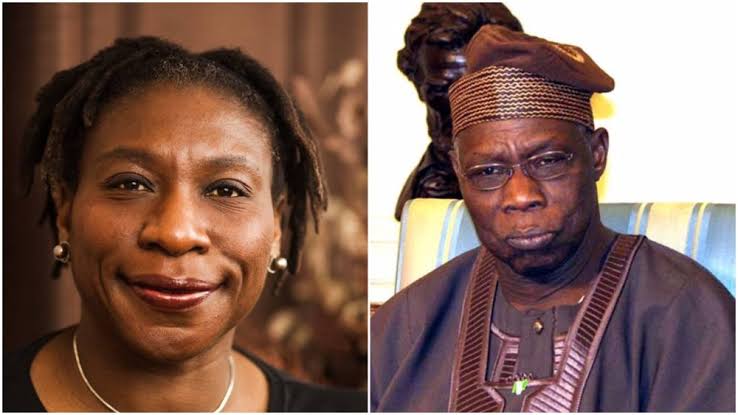
  • April 8: Today in history, Nigeria ex-president’s daughter, Iyabo Obasanjo charged with graft, other events

    April 8: Today in history, Nigeria ex-president’s daughter, Iyabo Obasanjo charged with graft, other events

    • Nigeria ex-president’s daughter charged with graft
    • Deadly bombing marred attempt at Nigerian poll, killed eight
    • Bomb killed at least 16 in a car bomb blast outside a church in Kaduna

    According to Gore Vidal, history is nothing but gossip about the past, with the hope that it might be true.

    In a sense, history acts as a moral compass. It can also be seen as a guide for historical occurrences that, if attentively read, could serve as a lesson for any errors or flaws that might have happened.

    WITHIN NIGERIA highlighted three notable historical events that happened on April 8 in the history of this country, Nigeria in an effort to increase awareness for educational purposes.

    Here are the flashbacks:

    Nigeria ex-president’s daughter charged with graft

    On this day, April 8 in 2008, a daughter of former Nigerian President Olusegun Obasanjo and two former health ministers were charged in court with embezzling around 470 million naira ($4 million) of public health funds.

    Many requests for the former president to be brought as a witness in the investigation have grown as a result of a parliamentary inquiry looking into claims that during Obasanjo’s administration, billions of dollars were allegedly wasted on dubious unfinished power projects.

    The Senate health committee’s chair, Iyabo Obasanjo-Bello, was charged with the first offense against a member of Obasanjo’s family since he resigned by prosecutors at the High Court in the nation’s capital, Abuja.

    Adenike Grange and Gabriel Aduku, two former ministers accused of misusing funds from the Health Ministry, were forced to quit last month as a result of the scandal. They were the first members of the new administration’s cabinet to lose their jobs; they were the minister and minister of state for health.

    The Economic and Financial Crimes Commission (EFCC), which alleges that a total of 471 million naira was embezzled, filed 54 counts of charges against the former ministers and nine top health officials, and they all entered not guilty pleas in court.

    Obasanjo-Bello, who was not present in court, was charged with receiving $10,000 of the money illegally.

    Iyabo Obasanjo-Bello denied wrongdoing and said she only intended to use the funds to cover the senators on the Senate health committee’s trip to Ghana’s travel costs.

    The judge mandated that the remaining 11 defendants be detained by the EFCC. He set the trial date of April 29 and continued the matter until Friday, when he would consider the bail requests. (Credits: Reuters).

    Deadly bombing marred attempt at Nigerian poll, killed eight

    On this day, April 8 in 2011, a bomb blast ripped into INEC office which led to the killing of 10 people and wounded a dozen more just hours before a new attempt to hold a delayed ballot.

    The explosion, and a political shooting in which four people died, shattered hopes of a smooth start to elections in Africa’s most populous nation, holding its parliamentary ballot a week later than planned on Saturday because of logistical chaos.

    According to emergency workers, at least 10 people were killed in the explosion in Suleja, on the northwestern edge of the capital Abuja.

    Ambulances ferried dozens of wounded to local hospitals, but there were not enough medics to treat them.

    “That is my cousin,” said customs officer Zayyed Saidu, holding back tears and pointing to the barely recognisable remains of a corpse at Suleja’s General Hospital. The families of the dead and wounded wept and prayed outside.

    “Nigeria has become a place where no one is safe. No we can’t have elections. If elections should go ahead how will anyone know they are safe?” said Said. (Credits: REUTERS).

    Bomb killed at least 16 in a car bomb blast outside a church in Kaduna

    On this day, April 8 in 2012, a car bomb killed at least 16 people and wounded dozens more in the northern Nigerian town of Kaduna on Easter Sunday, after security officers stopped the vehicle carrying it from approaching a church.

    According to the national emergency management agency, there was also an explosion around 200 km (125 miles) southeast in the central town of Jos on Sunday evening.
    A military spokesman said it was a “minor explosion” and nobody was killed.

    No group claimed responsibility for the Kaduna attack, but the apparent targeting of a Christian place of worship will stir memories of a string of deadly assaults by Islamist militants Boko Haram on Christmas Day last year.

    A spokesman for the Kaduna state emergency management agency said 16 people had so far been confirmed dead, while 35 more were critically injured and receiving treatment in hospitals.

    Kaduna police commissioner, Mohammad Jinjiri Abubakar, said police were pursuing a suspect vehicle when it crashed into another car and caused a massive explosion.

    Abubakar did not say whether they knew who was behind the attack or what the bomb was intended for. Local residents said the bomber had tried to approach a church with his vehicle but was turned back at a police roadblock and then pursued.

    “A suicide bomber in a vehicle was moving towards the ECWA Church and the All Nations Christian Assembly,” said Tony Udo, a Kaduna resident.

    “Security agents accosted and repelled him. While he was driving away, the bomb went off at Junction Road, near the Stadium roundabout, killing the bomber and some commercial motorcyclists,” Udo told Reuters.

    He said the blast shattered windows in the church and nearby houses and vehicles.

  • Betrayal of Trust? Obi’s Visit to Malami Raises Eyebrows

    Betrayal of Trust? Obi’s Visit to Malami Raises Eyebrows

    The visit of Peter Obi, the Labour Party’s presidential candidate for the 2023 election, to Abubakar Malami, former Minister of Justice and Attorney General of the Federation (AGF), has sparked controversy, particularly in the South-East, according to WITHIN NIGERIA.


    A video obtained by WITHIN NIGERIA showed Obi visiting the former AGF on Tuesday, just after Malami was released after days in detention on corruption charges.

    On Friday, March 13, the Federal High Court in Abuja granted bail to Malami, his wife, and their son in the EFCC’s ongoing N9 billion money laundering trial.

    Recall that Malami, the former Justice Minister, is being charged alongside his wife and son on a 16-count indictment related to alleged money laundering.

    Although Malami Abubakar, former AGF, was granted bail on Friday, he was released from Kuje Prison after meeting all of the court’s bail requirements, and the trial judge, Justice Emeka Nwite, ordered his release from detention.

    Reliable sources told WITHIN NIGERIA that Obi’s visit to Abubakar Malami, the Attorney General of the Federation (AGF) and Minister of Justice during the prosecution and extraordinary rendition of the imprisoned leader of the Indigenous People of Biafra (IPOB) Nnamdi Kanu from Kenya in 2021, has angered some of Nnamdi Kanu’s supporters and core Biafra supporters.

    WITHIN NIGERIA gathered that Malami was the first person to announce that Nnamdi Kanu, leader of Independent People of Biafra (IPOB) was intercepted through the collaborative efforts of the Nigerian intelligence and Security Services” and consequently extradited to Nigeria.

    Malami, while speaking at a press conference held on June 29, 2021, narrated the steps taken by the Nigerian Government led to the interception of the “fugitive Kanu” on Sunday, June 27, 2021.

    In a phone interview with WITHIN NIGERIA, activist Ofia Chukwu of Enugu voiced his concerns about Obi’s visitation to former minister Abubakar Malami, who was charged with embezzling and misusing public monies.

    “Obi has consistently maintained that Nigeria’s underdevelopment stems from corruption. He denounced corruption and misappropriation of public finances during Muhammadu Buhari’s administration, in which Malami Abubakar played a significant role”.

    He added that the same Obi recently visited Malami, who was reminded of corrupt behaviors by a judge, and he is also denouncing corruption under the Tinubu-led government, according to a pretty concerned Ofia”.

    Another Biafran, Sofia Nnaji, expressed her disgust with Obi’s visit to Abubakar Malami, the Federation’s former Attorney General and Minister of Justice.

    Nnaji alleges that as soon as Obi entered Malami’s home—who had been held on remand owing to corruption allegations—he violated both his conscience and the faith of those who relied on his testimony.

    Nnaji claimed Obi had criticized Buhari’s administration for focusing too much on anti-corruption rhetoric rather than enacting rules to prevent financial leaks and guarantee funding reach intended projects.

    “Malami was the ringleader of Buhari’s crew that set Nnamdi Kanu up in his current condition. The same Malami is being tried in court for embezzling state monies. Obi is associated with such a person. “It’s confusing.”

  • 2025 Nigeria TI Corruption Index Rating: Socioeconomic Impacts On The Country

    2025 Nigeria TI Corruption Index Rating: Socioeconomic Impacts On The Country

    On Tuesday, February 10, 2026, Transparency International (TI) ranked Nigeria in the Corruption Perceptions Index (CPI) as 142nd out of 182 countries, scoring 26 out of a maximum 100 points.

    According to the report Nigeria drops two places to 142nd in 2025 corruption ranking, trails 33 African countries.

    Nigeria ranked 142nd out of 182 countries in the 2025 Corruption Perceptions Index (CPI), scoring 26 out of 100, according to Transparency International’s latest assessment of public sector corruption.

    The new position is down two places from the nation’s 140th spot on the 2025 CPI ranking.

    The breakdown of the ranking showed that Nigeria is trailing behind 33 other African countries. The current ranking shows that the country is struggling persistently with challenges of corruption.

    With this ranking, Nigeria’s score remains well below the global average of 43.

    According to the CPI, to countries on a scale from 0 (highly corrupt) to 100 (very clean). Transparency International reported that the global average dropped to 42, with more than two-thirds of countries scoring below 50.

    In any case, the report showed that Nigeria retained its score from 2024 but fell from 140th to 142nd place, reflecting stagnation in anti-corruption efforts.

    However, in Africa, Seychelles topped the ranking with 68 points, followed by Cabo Verde with 62, Botswana 58, and Rwanda 58.

    Other countries ahead of Nigeria include Mauritius, Namibia, Senegal, Ghana, South Africa, Tanzania, Morocco, Tunisia, Kenya, and Egypt.

    Nigeria shares its 142nd position with Cameroon, Guinea, Kyrgyzstan, Guatemala, and Papua New Guinea.

    Transparency International’s warning on corruption

    Giving the report, Transparency International warned that corruption remains a serious global threat.

    According to the world body, this is fuelled by declining political will, weakening democratic institutions, and lack of decisive leadership.

    Maira Martini: Transparency International Chief

    In her words while giving the report, Maira Martini, Chief Executive Officer of Transparency International said, “We’re seeing a concerning picture of long-term decline in leadership to tackle corruption.

    “At a time of climate crisis, instability, and polarisation, the world needs accountable leaders and independent institutions to protect the public interest—yet, too often, they are falling short.”

    According to the organisation 148 countries have either stagnated or worsened since 2012, while only 32 countries have significantly reduced corruption.

    On the negative effects of corruption in a country, TI stated that corruption diverts resources from essential services, undermines climate action, and erodes human rights worldwide.

    Nigeria’s corruption cases

    WITHIN NIGERIA findings showed that Nigeria’s CPI scores have over the years fluctuated.

    However, it had remained consistently low for sometime now. A quick look at the previous years showed that in 2019, the country ranked 146th with 26 points. It dropped to 154th with 24 points in 2021, improved slightly to 145th with 25 points in 2023, and rose to 140th with 26 points in 2024.

    It also showed that over the years from 1996 to 2023, Nigeria’s CPI average score stood at 21.48, reaching an all-time high of 28 points in 2016 and a record low of 6.9 points in 1996.

    The country remains below the sub-Saharan African average of 33, reflecting entrenched governance challenges, selective enforcement, and institutional weaknesses.

    High-profile corruption cases

    Corruption scandals involving top officials continue to dominate public discourse.

    The case of former Attorney General and minister of Justice, Abubakar Malami is still very much ongoing.

    As of February 2026, former Attorney General of the Federation and Minister of Justice, Abubakar Malami, SAN, is in detention amid serious allegations, including money laundering and ₦212.8 billion in assets forfeiture cases.

    After being initially detained by the EFCC on December 8, 2025, and later rearrested by the DSS, he has faced multiple court proceedings, with judges recently withdrawing from his cases.

    Also, Yahaya Bello, former governor of Kogi State, faces charges for misappropriating over N110 billion in public funds.

    He was arraigned in two Abuja courts in November 2024, pleaded not guilty, and was remanded at the EFCC facility before being granted bail.

    Former EFCC Chairman Abdulrasheed Bawa was suspended in 2023 over corruption allegations, raising questions about accountability within anti-graft agencies.

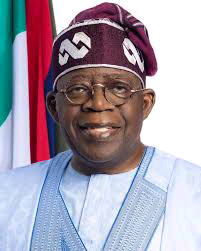
    Bola Ahmed Tinubu: Nigeria President

    Again, investigations into the misuse of COVID-19 relief funds, electoral fraud, and fuel subsidy scams continue, while former Central Bank Governor Godwin Emefiele was still very much on the course.

    Civil society organisations, including CISLAC, continue to push for strict enforcement of the Proceeds of Crime Act and reforms to strengthen Nigeria’s anti-corruption framework

    Effects of TI ranking on Nigeria

    There is no gainsaying the fact that there are so much negative effects of Transparency International ranking of Nigeria with regards to corruption index.

    WITHIN NIGERIA findings showed that these effects are so much damaging as much as they have international connotations.

    Foreign Investment: The poor ranking of any country is a sign danger line.

    It signals a high-risk, unstable economic environment. The effect of this is that it has effect of causing investors to avoid the country, which limits economic growth and reduces the inflow of foreign direct investment.

    Image/reputational damage: Since the country has continued to record poor performance in the ranking, Nigeria is frequently highlighted as one of the most corrupt nations, causing reputational damage. To this effect, it  affects diplomatic relations, international trade, and the willingness of international partners to engage in businesses with the country.

    High cost of business transaction:  A country like Nigeria with high corruption index, the perception of rampant corruption acts as a “hidden tax,” increasing the cost of transactions and compliance for businesses, as highlighted by many corruption rating experts.

    Low moral in governance: With the persistent low scores in corruption index rating, this has eroded the confidence of the citizenry on the governance. It reduces public trust in the ability of the government, including key agencies like the EFCC and ICPC, to effectively combat corruption, reinforcing a cycle of cynicism.

    Financial assistance: Countries with low rating in corruption index will definitely attract the wrath of international bodies especially in terms of finance.
    To this effect, the international financial institutions may impose stricter conditions, higher interest rates, or restrictions on loans due to the high risk associated with corruption in the country, as opined by some experts.

  • A Life of Luxury or Corruption? What To Know About Diezani Alison-Madueke’s trial

    A Life of Luxury or Corruption? What To Know About Diezani Alison-Madueke’s trial

    Diezani Alison-Madueke, the former Nigerian petroleum minister, was seen departing the Southwark Crown Court in London on Thursday, the 29th of January after her bribery trial.


    Recall that Alison-Madueke, who served as petroleum resource minister from 2010 to 2015, is currently facing five counts, such as bribery and conspiracy to commit bribery, among others.

    According to British prosecutors, Diezani took luxury goods and the use of high-end properties from industry executives looking for lucrative oil and gas contracts with Nigerian state-owned enterprises.

    Diezani is currently on trial alongside oil executive Olatimbo Ayinde and her brother, Doye Agama, both of whom have disputed the charges against them.

    Who is Diezani Alison-Madueke?

    She was born on December 6, 1960, in Port Harcourt, Rivers State. She attended Shell camp schools and Hussey Model School. She also attended Holy Rosary Government Girls Secondary School before studying architecture in the United Kingdom and United States. She graduated from Howard University in 1992.

    She worked at Shell Petroleum Development Corporation, becoming the first female executive director in 2006. She served as Minister of Transportation (2007-2008), Minister of Mines and Steel Development (2008-2010), and Minister of Petroleum Resources (2010-2015).

    She is also the first female president of OPEC. She’s married to Admiral Allison Madueke (retired), with six children, and has been living in the UK since 2015.

    Alison-Madueke’s arrest?

    Diezani Alison-Madueke was detained by the UK’s National Crime Agency (NCA) in October 2015 on suspicion of money laundering and corruption.

    WITHIN NIGERIA discovered that the arrest was part of a larger probe on allegations of bribery and corruption during her time as Nigeria’s Minister of Petroleum Resources from 2010 to 2015.

    It was also revealed that the NCA seized assets worth millions of pounds, including luxury items and cash, as part of the probe.

    How did Alison-Madueke’s trial begin?

    Eight years after her detention, Alison-Madueke was formally accused with taking millions of pounds in bribes from energy corporations in exchange for favorable treatment.

    WITHIN NIGERIA gathered that the allegations include five counts of receiving bribes and one count of conspiracy to conduct bribery stemming from her stint as Nigeria’s Minister of Petroleum Resources from 2010 to 2015.

    According to prosecutors, she received expensive products, private jet flights, and access to high-end residences, including a £3.25 million mansion outside London.

    Diezani was also accused of spending more than £2 million at Harrods, with the funds reportedly tracked back to oil executives who benefited from contracts with Nigeria’s state-owned oil business.

    Jury?

    The jury selection for Diezani Alison-Madueke’s corruption trial was initiated and completed on January 19, 2026.

    Diezani, who has been on bail since 2015, will be facing six charges, including five counts of accepting bribes and one count of conspiracy to commit bribery, related to her tenure as Nigeria’s Minister of Petroleum Resources from 2010 to 2015.

    WITHIN NIGERIA learned that the trial, which involves co-defendants Doye Agama and Olatimbo Ayinde, is expected to last 10-12 weeks.

    However, the corruption trial of Diezani Alison-Madueke officially started on January 26, 2026, at Southwark Crown Court in London.

    Prosecutors have stormed the Southwark Crown Court in London to present evidence of Diezani’s alleged lavish lifestyle funded by bribes from oil industry figures.

    A check revealed that the evidence presented by prosecutors against Diezani includes luxury shopping at Harrods with payment cards linked to Nigerian businessman Kolawole Aluko and his company, Tenka Limited.

    Another piece of evidence showed the use of luxury properties in London and Buckinghamshire, with £4.6 million spent on refurbishments and multiple flights, including to Nigeria, paid for by businessmen seeking contracts with Nigerian state-owned oil companies, among others.

    Evidence such as £100,000 in cash and salaries paid for domestic staff, including a housekeeper, nanny, gardener, and window cleaner, among others.

    The Diezani jury, which started on January 26, is expected to end on April 24, 2026.

  • From Chief Law Officer to Top Suspect: Malami’s long road to EFCC custody

    From Chief Law Officer to Top Suspect: Malami’s long road to EFCC custody

    On December 24, 2025, the Economic and Financial Crimes Commission (EFCC) formally tracked 41 high-value assets worth N212.89 billion to former Attorney General and Minister of Justice Abubakar Malami.


    According to the anti-graft agency, the properties, which are spread across Kebbi, Kano, and the Federal Capital Territory (FCT), were allegedly purchased with proceeds from illegal activities while he was Nigeria’s attorney general.

    Who is Abubakar Malami?

    He formerly served as Nigeria’s Attorney General and Minister of Justice. He was born on April 17, 1967, in Birnin, Kebbi State. He received his law degree from Usmanu Danfodiyo University (1991). He also holds a master’s degree in public administration from the University of Maiduguri (1994). He is a lawyer who has served as a magistrate in Kebbi State. He is a senior advocate of Nigeria (SAN).

    Malami as a chief law officer?

    On November 11, 2015, President Muhammadu Buhari (now late) named Abubakar Malami as Attorney-General and Minister of Justice. He was sworn in after being confirmed by the Senate.

    In August 2019, the late President Muhammadu Buhari reappointed Malami to the same position.Malami, as Minister of Justice, oversaw anti-corruption prosecutions, asset recovery (returning nearly $3 billion in looted monies), and legal reforms like as the Whistleblower Protection Act, among others.

    During his tenure as minister of justice, he oversaw numerous legal reforms, including the National Judicial Policy, the Administration of Criminal Justice Act, the Virtual Automated Case Management System, the Justice Sector Reform Committee, and the National Anti-Corruption Strategy Framework, among others.

    Malami’s initial escape?

    Abubakar Malami’s trip to EFCC detention began in late 2022. WITHIN NIGERIA gathered that a confidential tip landed on the desk of the Economic and Financial Crimes Commission (EFCC).

    According to the tip, Malami was allegedly laundering money through construction firms and hotel chains.

    However, the anti-graft agency did not work on the tip because Malami was still the Attorney General and Minister of Justice.

    Malami as a top suspect?

    A former adviser to the previous minister of justice became a whistleblower just two years after a sensitive report was rejected.

    In March 2024, the former aide strolled into the EFCC’s Abuja offices with bank statements, wire transactions, and audio recordings.

    The report states that he provided evidence to support a 16-count money-laundering indictment.

    The documents as released by the EFCC showed that Malami used his office as a minister to funnel public funds into private ventures—N1.01 billion through Metropolitan Auto Tech Ltd, N1.36 billion via Meethaq Hotels Ltd, and dozens of properties worth over N212 billion.

    EFCC’s Reaction?

    The anti-graft agency in November 2024 opened a formal probe after whistleblower documents surfaced.

    The agency in mid-December 2025 launched coordinated raids on his homes and offices in Abuja and Kebbi.

    The agency on 23rd December 2025 also filed a 16-count money-laundering charge against Malami, his son Abdulaziz, and an associate, Hajia Bashir Asabe.

    It also alleged that Malami, his son, and his associate used firms like Metropolitan Auto Tech Ltd to conceal over ₦1 billion in a Sterling Bank account and launder ₦9 billion to acquire 30+ properties worth ≈ ₦212.8 billion across Abuja, Kano & Kebbi.

    What did Malami illegally acquire?

    Kebbi State—N162.19 billion—Rayhaan University campuses (permanent, temporary, and third sites), Rayhaan Model Academy & Primary/Secondary School, industrial assets like Al‑Afiya Energy Tanker Garage, Amasdul Oil & Gas structure, a printing press, and residential houses for Malami and his sons, plus foundation buildings.

    Kano State—₦16.01 billion in assets, including Zeennoor Hotel (₦11.2bn), Rayhaan Hotel (₦2.24bn), Rayhaan Gym, and a luxury residence for his wife on Ahmadu Bello Way.FCT Abuja: ₦34.69 billion in prime locations: a duplex on Amazon Street, Maitama (₦5.95 bn); two branches of Meethaq Hotel (Jabi & Maitama) worth over ₦21 bn combined; Harmonia Hotels in Garki (₦7 bn); and 42 bungalows at Efab Estate.

    Malami’s Arrest?

    Operatives of the Economic and Financial Crimes Commission (EFCC) stormed the estate of Malami situated in Abuja’s Maitama district around 6:30 a.m.

    They took control of the estate, apprehended Malami, and took him to the commission’s headquarters, where he was formally charged with 16 counts of money laundering, conspiracy, and abuse of office.

    The Legal Tussle?

    Justice Oriji granted a 14-day remand on December 10. Malami’s lawyers filed for bail, citing his status as a former public servant.

    Another judge identified as Justice Hassan also denied bail, citing the gravity of the charges.

    Justice Bello Kawu was approached with a fresh application, who later granted interim bail on December 23, 2025.

    However, the EFCC claimed that it was never served.

    WITHIN NIGERIA gathered that Malami and his son, Abdulaziz, are facing a 16‑count money‑laundering charge under Sections 15, 18, and 21 of the Money Laundering (Prevention and Prohibition) Act.

    According to the EFCC, the assets will likely be subject to forfeiture proceedings pending the outcome of the case.

    Aides of Malami Abubakar, ex-Justice Minister, have accused the anti-graft agency, EFCC, of deliberate disobedience of court orders.

    The EFCC claimed that no bail order had been officially served. However, his case is set for hearing on Jan. 5, 2026. A check revealed that Malami could face up to 14 years in prison if convicted.

  • Farouk Ahmed: Meet ‘NMDPRA CEO’ accused of spending $5 million on his children’s secondary education

    Farouk Ahmed: Meet ‘NMDPRA CEO’ accused of spending $5 million on his children’s secondary education

    Aliko Dangote, the president and chief executive officer of Dangote Group, has accused Farouk Ahmed, the CEO of the Nigerian Midstream and Downstream Petroleum Regulatory Authority (NMDPRA), of economic sabotage driven by corruption.


    According to Dangote, Ahmed spent $5 million on his children’s secondary school education in Switzerland, which he claims is inconsistent with a public servant’s income.

    He called for a full investigation by the Code of Conduct Bureau, stating that such expenditure amounts to economic sabotage.

    He went further to threaten that he will approach the court to take legal actions that will compel the schools to disclose payments made by Ahmed if he denies the allegation.

    14 things you probably did not know about Farouk Ahmed, CEO of NMDPRA

    He was born in Wangara, Dutse, Jigawa State.

    He was nicknamed ‘the Petroleum Regulator.’

    He also attended Southern Illinois University Carbondale, USA, where he earned a Bachelor of Science Degree in Engineering Technology.

    He also attended several executive and management training programs globally.

    He is a Fellow of the Nigerian Society of Engineers (NSE) and a member of the Institute of Electrical and Electronics Engineers (IEEE-USA).

    He is a Fellow of the Council for the Regulation of Engineering in Nigeria (COREN).

    He served as a senior crude oil trader at Duke Oil Incorporated.

    He served as a manager of crude oil export programming and nominations at NNPC.

    He served as an Executive Director, Commercial, at Petroleum Products Marketing Company (PPMC).

    He served as a managing director at NiDAS Marine Limited.

    He has over 34 years of experience in the oil and gas industry.

    He served as an executive secretary at the Petroleum Products Pricing Regulatory Authority (PPPRA).

    He was appointed as the CEO of the Nigerian Midstream and Downstream Petroleum Regulatory Authority (NMDPRA) on September 29, 2021.

    When he was appointed, he vowed that Nigeria can attract $575 billion in investments through the NMDPRA’s Industry Sustainability Initiative (ISI).


  • LEGAL FLASHPOINTS: The corruption trials and political fights that dominated 2025

    LEGAL FLASHPOINTS: The corruption trials and political fights that dominated 2025

    2025 has been a busy year for Nigerian courts as several high-profile cases moved through different stages of inquiry and prosecution.

    These cases have drawn national interest because they involve former senior officials, regulatory agencies, and disputes between state and federal authorities.

    Each matter has tested legal boundaries and has shown how the courts continue to shape accountability and governance in the country.

    Many of these cases also raised questions about investigative standards, constitutional interpretation, and the pace of justice delivery.

    EMEFIELE’S CORRUPTION TRIAL

    The former governor of the Central Bank of Nigeria, Godwin Emefiele, has remained at the centre of one of the country’s most widely followed corruption trials.

    His legal troubles began after his suspension on 9 June 2023 by President Bola Tinubu and his arrest a day later by the Department of State Services.

    He later faced several charges brought by the Economic and Financial Crimes Commission, including allegations of procurement fraud, breach of trust, and illegal allocation of foreign exchange.

    Court records show that the EFCC tendered documents, bank records, and digital materials that the agency described as evidence of irregular financial decisions.

    The defence has repeatedly challenged the admissibility of the digital evidence, arguing that the data was not extracted using approved forensic procedures.

    The courts have also handled multiple forfeiture cases linked to the former central bank governor, with rulings ordering the temporary and permanent forfeiture of money and property.

    In 2025, the trial entered a mini-trial phase after defence lawyers queried the voluntariness of statements made by one of the co-defendants.

    During a December 2025 sitting, EFCC operative Alvan Gurumnaan insisted that the statements were given freely and in the presence of a lawyer.

    The trial continues, and Emefiele maintains that all decisions made during his tenure were lawful and approved by appropriate authorities.

    BINANCE OFFICIAL’S RIGHTS CASE

    The arrest of former Binance executive, Tigran Gambaryan, in February 2024 also generated significant attention.

    Gambaryan travelled to Nigeria with a colleague to honour an invitation from the Office of the National Security Adviser and the EFCC.

    He was detained and later charged with money-laundering offences linked to alleged foreign exchange infractions by the company.

    His colleague, Nadeem Anjarwalla, escaped from custody, leaving Gambaryan to face the proceedings alone.

    In late 2024, a Federal High Court struck out the criminal charges, citing diplomatic concerns and clarifying that the allegations were tied to the corporate entity rather than the individual.

    Gambaryan later filed a suit alleging unlawful detention and seeking damages and an apology.

    On 27 November 2025, Justice Umar Mohammed dismissed the suit, explaining that the court could not interfere with ongoing investigations by Nigerian authorities.

    OSUN GOVERNMENT’S BATTLE OVER LOCAL GOVERNMENT FUNDS

    A major constitutional dispute also played out in 2025 as the Osun State Government challenged the Federal Government’s decision to withhold allocations to its 30 local government areas.

    The funds were stopped following a petition from the All Progressives Congress, which questioned the legality of the February 2025 local council elections.

    The federal authorities argued that unresolved issues surrounding the removed officials elected in 2022 warrant caution.

    Osun insisted that the 2025 elections were valid and that withholding the funds violated constitutional guarantees of local government autonomy.

    The matter went before the Supreme Court, where the state sought an order compelling the Federal Government to release the funds.

    On 5 December 2025, the apex court struck out the suit, holding that only the affected local governments could institute the action.

    The court, however, urged the Federal Government to comply fully with earlier judgments on fiscal autonomy for local councils.

    SIRIKA’S AVIATION-SECTOR FRAUD CASE

    Former minister of aviation, Hadi Sirika, is also facing a corruption trial involving allegations of contract fraud amounting to ₦2.7 billion.

    The EFCC claims that he awarded contracts linked to his daughter and son-in-law in breach of procurement rules.

    Prosecution witnesses have told the court that payments were made for airport projects that were never executed.

    The trial has entered a phase where the court is reviewing whether statements made by some of the accused persons were voluntary.

    Sirika and his co-defendants have pleaded not guilty throughout the proceedings.

    FAYOSE’S LONG-RUNNING MONEY-LAUNDERING CASE

    A former Ekiti State governor, Ayodele Fayose, secured a major victory in July 2025 after the Federal High Court in Lagos discharged and acquitted him.

    Fayose had faced allegations of laundering ₦6.9 billion said to have been linked to the former Office of the National Security Adviser.

    Justice Chukwujekwu Aneke ruled that the EFCC failed to prove essential elements of the alleged offences.

    The court also noted gaps in documentary evidence and inconsistencies in witness statements.

    The acquittal brought an end to one of the longest corruption cases involving a former governor.

    A DEFINING YEAR FOR THE JUDICIARY

    Across these cases, the Nigerian courts have handled issues involving constitutional powers, asset forfeiture, digital evidence, procurement rules, and human rights claims.

    The outcomes of these cases highlight the central role of the judiciary in managing complex disputes in a politically active year.

    They also show how legal outcomes can influence public confidence in anti-corruption efforts and democratic governance.

  • From Ribadu to Waziri to Lamorde to Magu to Bawa: Meet ‘All’ Nigeria’s heads of anti-graft agency who left office over alleged corruption

    From Ribadu to Waziri to Lamorde to Magu to Bawa: Meet ‘All’ Nigeria’s heads of anti-graft agency who left office over alleged corruption

    Friedrich Wilhelm Nietzsche was a German philosopher, prose poet, and cultural critic. When he put his ideas about corruption and those hired to fight it on paper, he probably had Nigeria in particular, the leadership of the Economic and Financial Crimes Commission (EFCC), an anti-graft organization, in mind.

    Nietzsche, a German, must have learned from older Africans who taught that if you view the pursuit of witches as a profession, you are likely to become a witch and become the pursued.

    In one of his many works, Wilhelm Nietzsche, who is best known for his critique of morality and religion, said: “Whoever fights monsters should take care that in the process he does not become a monster.” And if you stare into an abyss long enough, it will stare back at you.

    Anti-graft agency leaders like the EFCC have a history of having successful starts but unsuccessful finishes. Since the creation of the anti-corruption organization, the Economic and Financial Crimes Commission (EFCC), they have either been ousted on the basis of alleged corruption scandals or abuse of constitutional powers.

    Recall that on December 12, 2002, President Olusegun Obasanjo signed an act into law creating the Economic and Financial Crimes Commission, or EFCC.

    Following the Senate’s appointment and approval of the first Executive Chairman, Mallam Nuhu Ribadu, and other administrative officers, the anti-graft agency’s operational activities started on April 13, 2003, according to findings by WITHIN NIGERIA.

    However, due to deficiencies in the 2002 Establishment Act that were discovered, the National Assembly annulled it and re-enacted the 2004 Establishment Act, which President Obasanjo signed into law on June 4, 2004.

    While compiling this report, WITHIN NIGERIA made the deduction that five people had acted in the Chairman’s position of the anti-graft agency and they were all removed from their positions. With accusations of corruption and misuse of office, they all unceremoniously exited the building.

    Here are brief biographies of five people who served as chairmen of the EFCC, an organization that fights corruption.

    Mallam Nuhu Ribadu AIG (rtd.), Executive Chairman, [2003-2007]

    Nuhu Ribadu served as the first Chairman of the Economic and Financial Crimes Commission (EFCC).

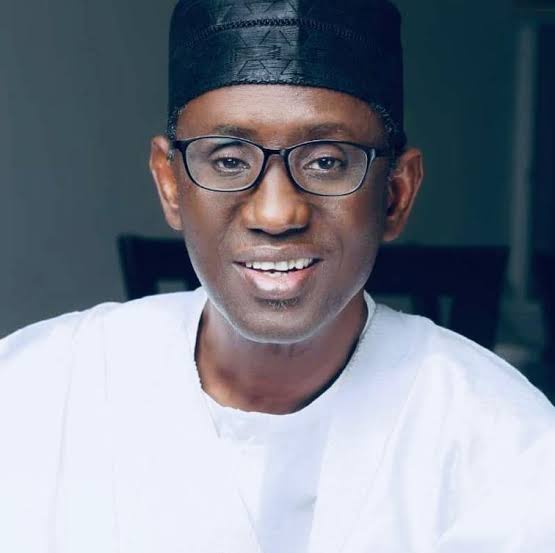
    Nuhu Ribadu

    Ribadu earned a Bachelor of Laws degree from Ahmadu Bello University in Zaria, Kaduna State, where he studied law from 1980 to 1983. 1984 saw his admission to the bar after spending a year at the Nigerian Law School. From the same university, he also obtained a Master of Laws degree.

    In 2003 and 2007, respectively, by then-President Olusegun Obasanjo, Nuhu Ribadu was named as the chairman of the EFCC. On April 9, 2007, only days before Umaru Musa Yar’Adua took office as President, he was also given a promotion to the position of Assistant Inspector General of Police.

    In addition to portraying the promotion as unlawful, unconstitutional, null and void, and having no legal bearing, Nuhu Ribadu was removed from office by Umaru Yar’Adua on charges of bribery, double standards, insincerity, failure to disclose assets, and witch-hunting alleged rivals of his principal, Olusegun Obasanjo.

    Farida Waziri. AIG (rtd.) Executive Chairman, 2008-2011

    Farida Mzamber Waziri, a police office and an assistant inspector general of police (AIG), served as the Economic and Financial Crimes Commission’s (EFCC) executive chairperson for three years. After Nuhu Ribadu was fired in 2007, the late President Umaru Musa Yar’Adua nominated her.

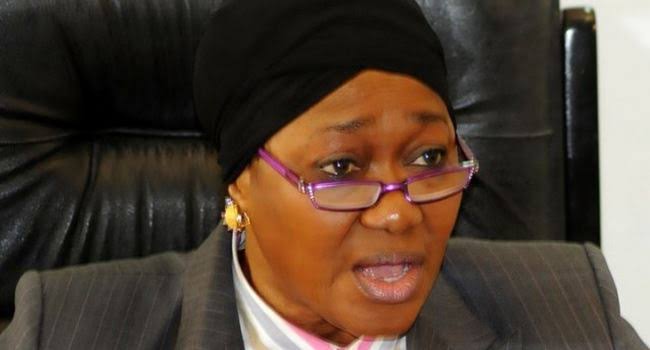
    Farida Waziri

    The Gboko native graduated from the University of Lagos with a law degree and the Lagos State University with a master’s in law. She graduated from the University of Ibadan with a master’s in strategic studies in 1996, and she also wrote a book titled Advance Fee Fraud, National Security, and the Law.

    Five days after President Goodluck Jonathan fired Farida Waziri on November 23rd, Ibrahim Lamorde took her position.

    Reports state that she was removed from office due to allegations of selective investigation, a disagreement with Micheal Aondokaa, Minister for Justice, regarding the prosecution of cases, and corruption via a potential compromise in the investigation of financial misappropriation against Timipreye Sylva, a former governor of Bayelsa State.

    According to reliable sources, the president had her removed from office due to her allegedly trying to have cases against corrupt people dismissed.

    Ibrahim Lamorde DIG (rtd.) Executive Chairman, 2012-2015

    Former Economic and Financial Crimes Commission (EFCC) Chairman Ibrahim Lamorde served as a police officer in Nigeria for three years.

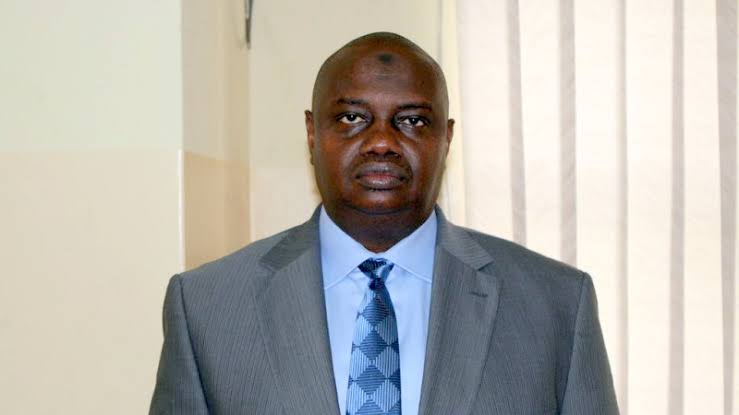
    Ibrahim Lamorde

    On 23 November 2011, he was originally named as the anti-graft agency’s acting chairman after President Goodluck Jonathan fired Farida Waziri from her position. Later, on February 15th, 2012, the Senate confirmed Lamorde as Chairman.

    The officer, who was born in Mubi, attended Ahmadu Bello University in Zaria and earned a B.A. in sociology there in 1984. In 1986, he became a police officer in Nigeria. After Tiyamiyu Oluwagbemiga retired in 2006 as the first Director of Operations and Strategy following the establishment of the EFCC, Lamorde was appointed Director of Operations.

    Lamorde took over as Acting Chairman in January 2008, holding this position until Farida Waziri was appointed chairperson in May 2008. On 9 November 2015, President Buhari sacked Ibrahim Lamorde, replacing him with Ibrahim Magu as the new EFCC chairman after the Nigerian Senate alleged that $5bn (£3.2bn) had gone missing at the EFCC among other allegations of corruption.

    A Senate committee led by Senator Peter Nwaboshi at the time alleged Lamorde diverted assets and cash recovered by the Economic and Financial Crimes Commission.

    Ibrahim Magu Executive Chairman, 2015-2020

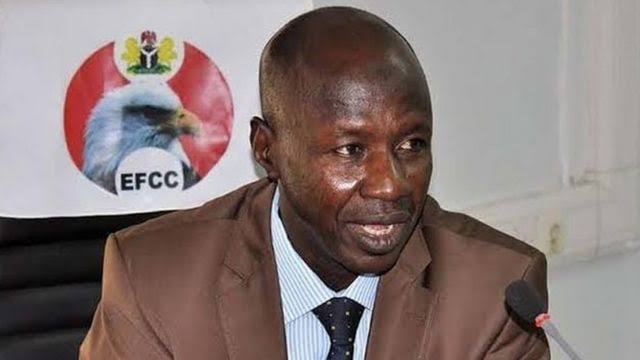
    Former acting Chairman of the Economic and Financial Crimes Commission (EFCC) and police officer Ibrahim Magu.

    Ibrahim Magu

    After President Muhammadu Buhari fired Ibrahim Lamorde, he was appointed as the interim Chairman. Magu presided over the EFCC in an interim capacity from 9 November 2015 to 7 July 2020.

    The officer, who was born in Maiduguri, attended Ahmadu Bello University in Zaria from 1982 to 1986 and earned a B.Sc. in accounting there. In 1990, he left his position as a zonal accountant in the civil service to become an assistant superintendent of police with the Nigeria Police Force.

    He participated in the investigation committee set up by the National Security Adviser (NSA), Babagana Monguno, at President Muhammadu Buhari’s request to look into the purchase of weapons by the Armed Forces between 2007 and 2020. Magu was not confirmed by the Senate as the substantive Chairman of the anti-graft agency until President Buhari removed him from office.

    On July 6, 2020, Magu was detained on suspicion of corruption in connection with money he is said to have embezzled to pay for his opulent lifestyle and travel expenditures, among other things. In June 2020, there were also 22 claims of corruption against Magu.

    Due to accusations of corruption, Magu’s position as chairman of the Economic and Financial Crimes Commission (EFCC) was suspended on July 7, 2020.

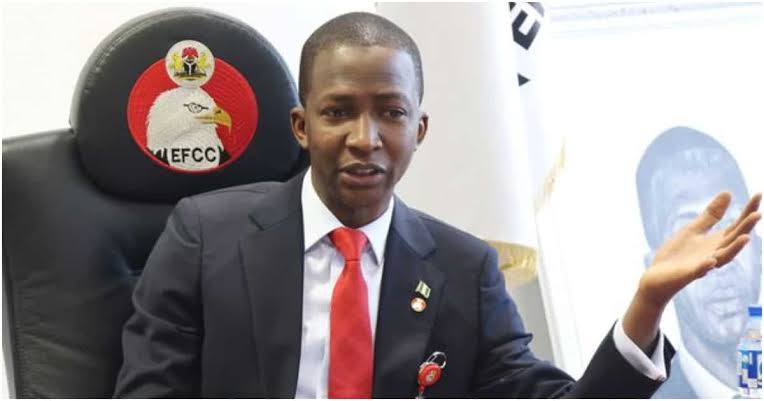
    Abdulrasheed Bawa, Executive Chairman, 2021-2023

    AbdulRasheed Bawa is a Nigerian detective and suspended Chairman of the Economic and Financial Crimes Commission (EFCC).

    Abdulrasheed Bawa

    He replaced Umar Mohammed Abba, the acting chairman of the anti-graft agency from 24 February 2021 to 14 June 2023. Until his appointment, he was the Deputy Superintendent of the anti-graft agency.

    The officer from Jega received a Bachelor of Science in Economics from Usmanu Danfodio University in Sokoto. He graduated with a Master’s in International Affairs and Diplomacy from the same institution in 2012, and he is currently enrolled in the University of London’s Bachelor of Laws program.

    Recall that in September 2020, while in charge of the Port Harcourt office of the Economic and Financial Crimes Commission, Bawa was accused of stealing, selling, and auctioning off dozens of petrol-bearing vehicles seized from suspected thieves to his proxies at exorbitant prices.

    Notwithstanding protests from civil society, the Senate confirmed him notwithstanding his denial of this accusation.

    However, due to serious accusations of abuse of power, corruption, and the diversion of confiscated property, among other things, President Bola Tinubu has suspended Abdulrasheed Bawa as the chairman of the EFCC and has directed a thorough investigation.

  • Group Drags Buhari, Head of Service To Fight Corruption

    Group Drags Buhari, Head of Service To Fight Corruption

    A group named Joint Action Coalition of Civil Society (JACCS) has dragged President Muhammadu Buhari to fight corruption in Nigeria, WITHIN NIGERIA gathered

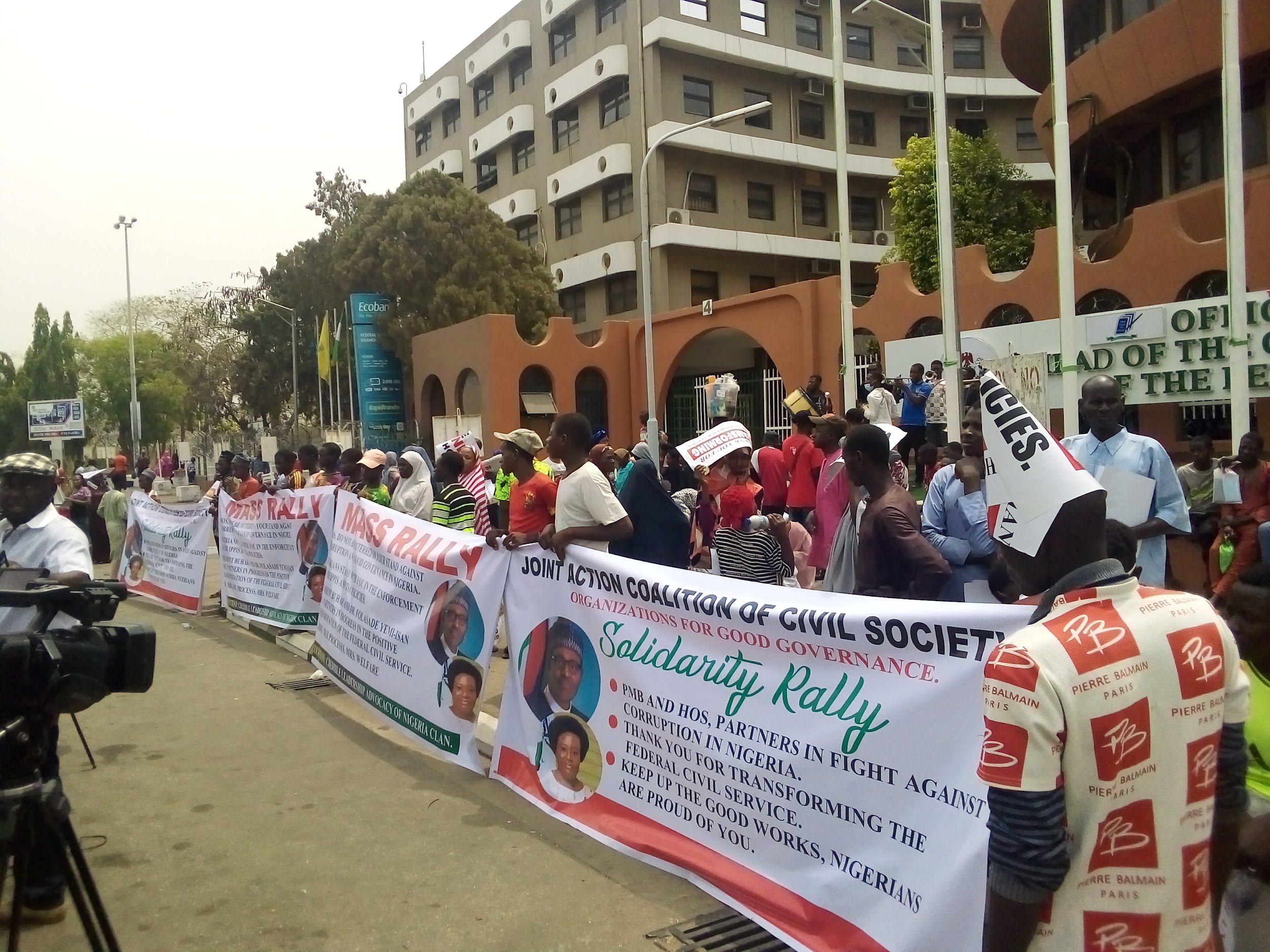
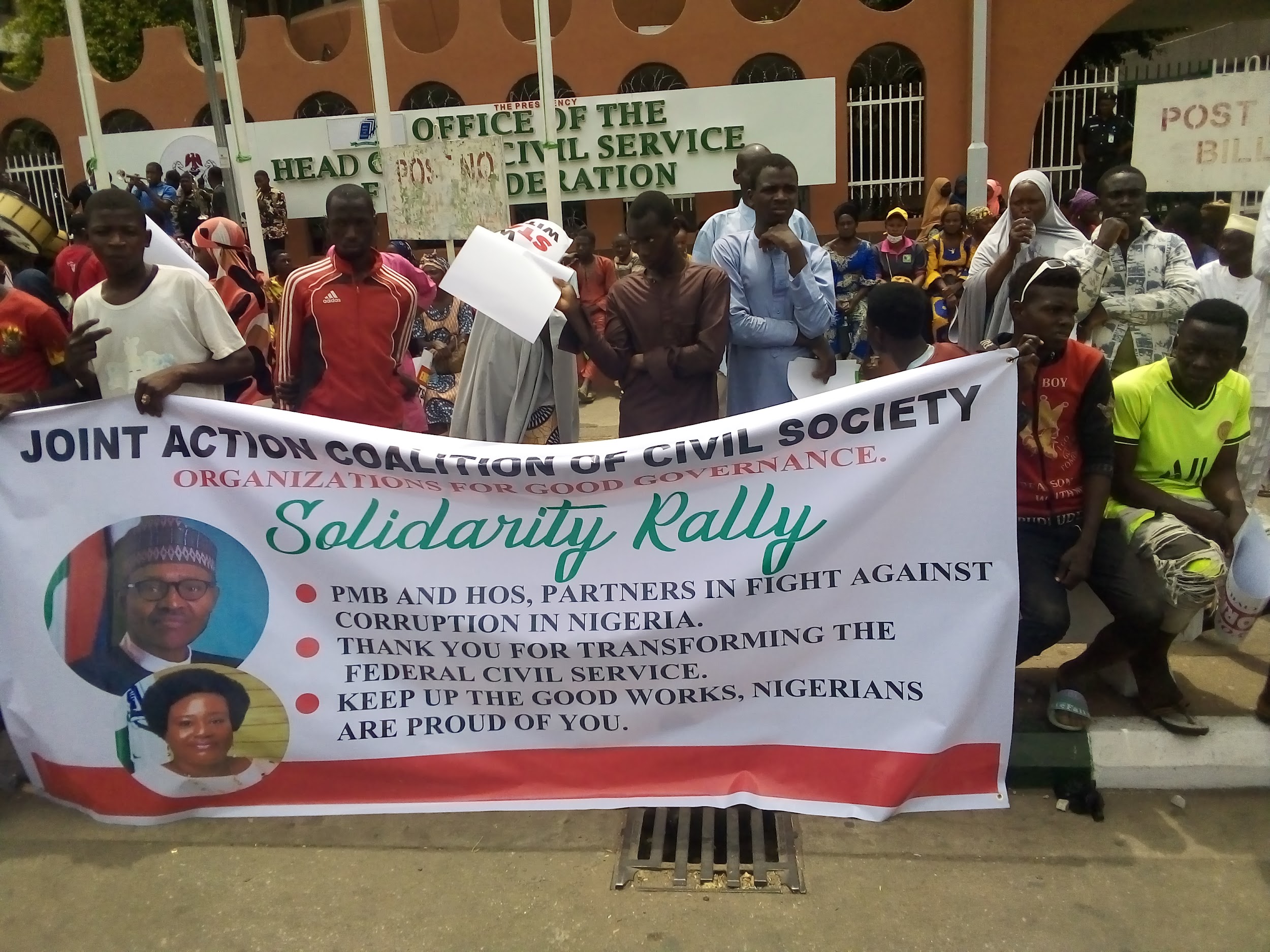
    The group gathered at the office of the Head of Civil Service of the Federation in Abuja on Monday in a mass rally to demand for good governance and continued fight against corruption.

    According to the group, the Head of Civil Service in Nigeria, Dr. Mrs. Folashade Yemi-Esan should partner with the federal government in the fight against corruption. the coalition is praising President Buhari and Mrs. Yemi-Esan in their action against corrupt practices within the system.

    This mass rally against corruption and demand for good governance is coming few days after another group had demanded the sack of the Head of Civil Service over reports of corruption and mismanagement.

    Mrs. Yemi-Esan is a Nigerian civil servant and the current head of the civil service of the federation, since 28 February 2020. She was sworn in by the president of Nigeria, Muhammadu Buhari on 4 March 2020.

    Meanwhile, several corruption cases in Nigeria are yet to be completed despite President Buhari’s claim to fight corruption.

    In 2019, the trial of a former Secretary to the Government of the Federation, Babachir Lawal suffered setbacks. Lawal was reportedly facing a N544 million grass-cutting contract awarded to a company linked to him, Rholavision Engineering Ltd and Josmon Technologies Ltd, by the Presidential Initiative for the North-East (PINE).

    Former National Security Adviser, Colonel Sambo Dasuki (retd) was charged with misappropriation of $2.1bn arms purchase funds in 2015.

    A former Minister of Petroleum, Diezani Alison-Madueke was being charged with 13 counts of money laundering by the EFCC since November, 2018, before a Federal High Court in Abuja. She was alleged to have unlawfully diverted $39.7m and N3.32bn during her tenure as minister between 2010 and 2015.

    Some of the corruption cases are not well treated.

    However, in the rally monitored by WITHIN NIGERIA’s reporter, some of the placards reads “continue the good word”, “thanks for transforming the civil service.”

    Some pictures at the mass rally below:


  • ICPC uncovers budget fraud in MDAs

    ICPC uncovers budget fraud in MDAs

    The Independent Corrupt Practices and Other Related Offences Commission (ICPC) has uncovered how civil servants manipulate budget to fleece the system.

    ICPC Chairman, Prof. Bolaji Owasanoye (SAN) on Wednesday in Abuja said the Commission has uncovered multiple layers of corrupt practices perpetuated by civil servants across Ministries Departments and Agencies (MDAs).

    He disclosed this at the Budget Office/ICPC Interactive Forum with Directors of Finance and Accounts and Directors of Internal Audit.

    Owasanoye said the Commission stumbled on these infractions while carrying out a System Study Review of Budget Implementation.

    According to him, “there was budget manipulation by most MDAs which resulted in MDAs receiving both appropriation and releases beyond their actual needs. While these surpluses were open to the risk of being misappropriated as is tradition.”

    According to him “in 2019 ICPC reviewed 208 agencies of government that are funded from the Federal Treasury and came up with outstanding results which included discovery of N31.8 billion personnel cost surpluses for 2017 and 2018, and misapplication of N19.8 billion and N9.2 billion from Personnel Cost and Capital Fund respectively.”

    Owasanoye said with these discoveries, “N42 billion unspent surplus allocations for Personnel Cost for 2019 alone was blocked from possible abuse and pilfering mostly from health and some educational institutions.”

    The ICPC boss lamented that “despite confronting erring ministries and MDAs with federal circulars prohibiting these activities, the infractions continue thus stronger measures on the part of government and anti-corruption agencies are inevitable”.

    With regards to manipulations of the 2020 budget implementation, Owasanoye said, “a number of investigations are on-going on this as we have instituted a mechanism for continuous review of current and subsequent Annual Audit Reports.”

    Owasanoye disclosed that while investigating infraction on Personnel Cost allocation, “we found that quite a substantial part of the Personnel Cost Budget was expended on matters not related to Personnel Cost.

    “These expenditure types included Duty Tour Allowance (DTA) and estacode, electricity, water and sewage bills, procurement of diesel and stationery, payment of transport allowance and flight fares, payment of wages for outsourced services and ad hoc (locum, visiting and at times illegal employees), as well as illegal allowances”.

    For Capital Development Fund, Owasanoye said the investigation “established huge expenditure on both personnel and overhead related items thus frustrating government’s capacity for infrastructural development.

    He was concerned “that the budgeting system for Capital Fund had shifted heavily to overhead related activities such as empowerment, sensitizations, trainings, etc thus reducing the visibility of government assets and infrastructural projects commensurate with the value of capital appropriation.”

    He said “some agencies of government engaged in massive capital project implementation through direct labour with attendant implication for corruption and loss of project quality and tax revenues”.

    Specifically, the ICPC discovered from 51 Health Sector Institutions incidences of: padding of nominal rolls including inclusion of outsourced staff; warrant releases in excess of actual personnel cost needs; inadequate budgetary overhead allocation; inadequate or non-budgetary allocation for outsourced services and widespread misuse of Personnel Cost allocation on non-personnel related expenditure especially on outsourced services (N4.5 billion).

    The ICPC investigations also discovered unspent excess balances despite abuses and misuse (N4.86 billion); fraudulent diversion by role players of funds through manipulation of account numbers of beneficiaries on the GIFMIS Platform; REMITA payment system not allowing for the matching of account numbers with account names and thus making fraud easy and inordinate balance staffing levels between Teaching Hospitals and Federal Medical Centres”.

    Owasanoye noted that while many MDAs defended their indictments before both the Ministry of Finance (MoF) and the Public Accounts Committee (PAC) of the National Assembly thus substantially reducing the indictments, many still remained on misapplication of funds which could not be explained”.

    Other infractions include: award of contract and payment without contract agreement and job completion certificates; award of contract without due process; bulk payments to microfinance banks; cash withdrawal without explanation; contract splitting; conversion of public property; deductions paid into individual’s accounts due to challenges with GIFMIS Platform.

    From the revelations made by the ICPC chairman, it appears it is still business as usual in the MDAs

    The recently established Open Treasury Portal (OTP) was also not spared from the activities of unscrupulous civil servants.

    The ICPC boss revealed that they uncovered payment of advances beyond approved limit of N200, 000 to individuals’ accounts; advances for projects paid into project accountants’ personal accounts with commercial banks; payments to individual staff/accountants for disbursement to ad hoc employees/outsourced services and other employees (say those on transfer to the MDAs who were yet to be captured/not on the agencies’ GIFMIS Platform).

    There were payments to contractors/vendors who were not on the GIFMIS Platform through staff and/or third parties; payments to staff for procurement of welfare and palliatives for staff; MDAs having problems with GIFMIS Platforms and finding it difficult to pay third party deductions and thus the third parties requested that their payments be made into nominated personal accounts of individuals.

    In order to circumvent the rule, some MDAs had many payments below the N5 million thresholds such as multiple payments of N4.9 million, N4.8 million ostensibly that such transaction will not be captured and uploaded on the OTP.

    Owasanoye stated that part of the outcome from the 2019 System Study and Review of the Commission “is the mopping up of N42 billion (Personnel Cost) in 2019 and N147 billion in 2020 respectively. The Minister of Finance through findings of the Commission of the wrong application of Personnel Cost on Overhead and Capital item issued a negative Warrant to mop up excess cash available in the Personnel Cost of the MDAs to forestall further misapplication of funds”.

    Similar warrant he said was issued in 2020 totalling N147 billion which was resulted in significant savings to the government.