Tag: EFCC

  • Blessing CEO’s growing legal troubles: Inside the new ₦69m fraud case & separate ₦36m trial

    Blessing CEO’s growing legal troubles: Inside the new ₦69m fraud case & separate ₦36m trial

    For years, social media personality and self-styled relationship therapist Blessing CEO built a reputation as one of Nigeria’s most outspoken online commentators. Whether discussing relationships, celebrity controversies, or personal development, she rarely stayed away from the headlines.

    Now, however, the influencer born Blessing Nkiruka Okoro is making news for a different reason.

    Within the space of a single day, Blessing CEO found herself at the centre of two separate fraud-related proceedings instituted by the Economic and Financial Crimes Commission (EFCC), with allegations involving more than ₦105 million combined. While one court granted her bail in an alleged ₦36 million fraud case, another court arraigned her on fresh allegations involving ₦69.15 million.

    In both matters, she pleaded not guilty.

    As the legal battles unfold, the cases have become one of the most closely watched celebrity court stories in Nigeria, raising questions about the allegations against the influencer, the similarities between both prosecutions, and what lies ahead as the courts begin to examine the evidence.

    The Fresh ₦69.15 Million Fraud Case

    The latest development came on June 9, 2026, when the Lagos Zonal Directorate 1 of the EFCC arraigned Blessing CEO before Justice R.A. Oshodi of the Special Offences Court sitting in Ikeja, Lagos.

    According to the anti-graft agency, the influencer is facing a two-count charge bordering on obtaining money by false pretence and stealing involving the sum of ₦69,150,000.

    At the commencement of proceedings, prosecution counsel C.C. Okezie informed the court that the defendant had been properly served with the charge and urged the court to proceed with the arraignment.

    However, Blessing CEO’s counsel, Nneka Nkama, argued that service of the charge had only recently been effected. Justice Oshodi ruled that the arraignment should proceed, after which the charges were read to the defendant.

    According to the EFCC, Blessing CEO allegedly induced Hope Chiropractic Health Clinic Limited to part with ₦69.15 million under the representation that a property located at No. 1 Tunbosun Osobu Street, Lekki, Lagos belonged to her and had been leased to the company for a period of five years.

    The first count states in part:

    “That you, OKORO BLESSING NKIRUKA, on or about March 21, 2025, in Lagos, within the jurisdiction of this Honourable Court, by false pretence and with intent to defraud, induced Hope Chiropractic Health Clinic Limited to confer a benefit of N69,150,000 on you under the representation that the property located at No. 1 Tunbosun Osobu Street, Lekki, belonged to you and was leased to the company for a period of five years, a representation you knew to be false.”

    The second count alleges that she dishonestly converted the ₦69.15 million to her personal use. Blessing CEO pleaded not guilty to both charges. Following her plea, the prosecution requested a trial date and urged the court to remand her in EFCC custody pending her appearance before the Federal High Court in Ikoyi for another alleged fraud matter. Justice Oshodi subsequently ordered that she be remanded in EFCC custody and adjourned the case until July 16, 2026, for hearing of her bail application and commencement of trial.

    The Earlier ₦36 Million Trial

    Blessing CEO

    Even before the fresh ₦69.15 million charges emerged, Blessing CEO was already standing trial in a separate matter before the Federal High Court in Ikoyi, Lagos.

    In that case, the EFCC alleges that she obtained ₦36 million from Mrs. Ifeyinwa Nonye Okoye under false pretences. According to the commission, the transaction took place between July 14 and July 17, 2024.

    The anti-graft agency alleges that Blessing CEO represented that she had authority to lease a six-bedroom duplex located on Tunbosun Osobu Street in Lekki, Lagos. The complainant allegedly paid the money and subsequently commenced renovation works on the property.

    However, the EFCC claims that the situation changed dramatically when the actual owner of the property appeared and allegedly removed the complainant from the premises. The commission subsequently filed charges of obtaining money by false pretence and stealing.

    Like in the fresh ₦69.15 million case, Blessing CEO pleaded not guilty to the allegations. The case remains before the court and has been adjourned until June 22, 2026, for continuation of trial.

    The Bail Decision That Did Not Lead to Immediate Freedom

    On June 9, 2026, Justice D.I. Dipeolu of the Federal High Court in Ikoyi granted Blessing CEO bail in the sum of ₦10 million in relation to the ₦36 million case.

    The court ordered her to provide two sureties in like sum. In addition, one of the sureties must be a family member and provide proof of employment, Bank Verification Number (BVN), National Identification Number (NIN), a valid telephone number, a valid international passport, tax clearance certificates for the previous two years, and six passport photographs.

    During the proceedings, defence counsel Nneka Nkama requested that her client be allowed to remain in EFCC custody while efforts were made to fulfil the bail conditions.

    However, EFCC counsel Suleiman Suleiman opposed the request, informing the court that the commission’s facility was already filled to capacity and could no longer accommodate her.

    Following the objection, Justice Dipeolu ordered that the defendant be remanded in a correctional centre pending the perfection of her bail conditions.

    As a result, despite being granted bail, Blessing CEO was not immediately released.

    A Common Thread Running Through Both Cases

    Blessing CEO

    Although the two cases involve different complainants, different sums of money, and separate court proceedings, there are notable similarities. Both prosecutions revolve around properties located in Lekki, Lagos.

    Both involve allegations that Blessing CEO represented herself as having authority over properties that the complainants subsequently paid substantial sums to occupy or lease.

    Both cases contain charges of obtaining money by false pretence and stealing. And in both matters, the influencer has denied wrongdoing and entered not guilty pleas.

    The similarities have inevitably drawn public attention, particularly because the fresh ₦69.15 million arraignment came while the earlier ₦36 million case was still active before the courts. Despite this, they are separate criminal proceedings and will be determined independently by their respective courts based on the evidence presented.

    What Happens Next?

    For now, Blessing CEO remains focused on defending herself against both sets of allegations.

    The ₦36 million case before Justice D.I. Dipeolu of the Federal High Court in Ikoyi is scheduled to continue on June 22, 2026.

    Meanwhile, the ₦69.15 million case before Justice R.A. Oshodi of the Special Offences Court in Ikeja has been adjourned until July 16, 2026, when the court is expected to hear her bail application and commence trial.

    The outcomes of those proceedings will likely determine the next chapter in a legal saga that has already attracted significant attention.

  • Saleh Mamman: How N33.8bn Was Allegedly Diverted from Power Projects

    Saleh Mamman: How N33.8bn Was Allegedly Diverted from Power Projects

    Nigeria’s anti-corruption court handed down one of its heaviest sentences yet on Wednesday. Saleh Mamman, a former Minister of Power under the Muhammadu Buhari administration, was sentenced to 75 years in prison for laundering and diverting N33.8 billion in public funds. The money was supposed to build hydroelectric power plants that millions of Nigerians are still waiting for.

    He wasn’t in court to hear the verdict.

    Who Is Saleh Mamman?

    Saleh Mamman served as Nigeria’s Minister of Power from August 2019 to July 2021. Buhari appointed him as part of a cabinet that came into office promising to fix the country’s decades-long electricity crisis, a promise the administration, like several before it, never came close to keeping.

    Mamman was removed from office in 2021 during a cabinet shake-up. The Economic and Financial Crimes Commission (EFCC) arrested him four months later. Charges were formally filed at the Federal High Court in Abuja in July 2024, and he pleaded not guilty to all 12 counts.

    Before his conviction, he had reportedly filed forms to contest the Taraba State governorship election in 2027 under the All Progressives Congress. That ambition appears to be on indefinite hold.

    The Verdict: 12 Counts, 75 Years, No Concurrent Terms

    Justice James Omotosho of the Federal High Court in Abuja convicted Saleh Mamman on all 12 counts of fraud and money laundering on Wednesday. The sentences were structured as follows:

    • Counts 1, 2, 3, 6, 7, 8, 9, 10, 11, and 12: Seven years each, with no option of a fine
    • Count 4: Three years, with an option of a N10 million fine
    • Count 5: Two years, with no option of a fine

    The math adds up to 75 years only because Justice Omotosho ordered that the terms run consecutively, not concurrently. This was a deliberate choice. Had the sentences run concurrently, the effective penalty would have been just seven years, the highest term on any single count.

    The judge was direct about why. His verdict noted that the prosecution’s evidence was “overwhelming” and accused Mamman of choosing personal enrichment over public duty at a time when Nigeria’s electricity infrastructure was crumbling.

    “Rather than creating a legacy to tackle the epileptic power supply in the country, the defendant was living large at the expense of ordinary citizens,” Justice Omotosho stated.

    The sentence takes effect from the date Mamman is apprehended. He is currently at large.

    Where Did the N33.8bn Go?

    The fraud, as established by the EFCC’s prosecution, centered on money earmarked for two major hydroelectric power projects: the Mambilla Hydroelectric Power Project and the Zungeru Hydroelectric Power Project.

    Both are significant national infrastructure investments. Mambilla, located in Taraba State, has been on the drawing board since the 1970s and is designed to generate 3,050 megawatts of electricity when completed, which would represent a major boost to Nigeria’s current generation capacity. Zungeru, in Niger State, was intended to add 700 megawatts to the grid.

    According to the EFCC’s charge sheet, during his time as minister Mamman conspired with officials in the Ministry of Power and unnamed private companies to divert the total sum of N33,804,830,503.73.

    The prosecution traced how the money moved:

    • Large sums were routed through Bureau de Change (BDC) operators, who converted the funds into foreign currencies before passing them to Mamman and associates.
    • Transactions were carried out outside the regulated banking system, in violation of Nigeria’s Money Laundering (Prohibition) Act, 2011.
    • Properties in Abuja were purchased in cash, bypassing any financial institution.

    One transaction that the court examined closely: a cash payment of $655,700, roughly N200 million at the time, made in December 2019 to a company called Mohiba Investment Ltd for a piece of land in Abuja. The payment was made through an associate named Samson Bitrus, with no involvement of a bank or any licensed financial intermediary.

    The court also directed Mamman to refund the outstanding balance of the N22 billion the prosecution specifically traced to the Mambilla and Zungeru projects, after the forfeiture of recovered funds and properties.

    A Trial That Lasted 671 Days

    The case had a winding legal path. Mamman was arraigned in July 2024 and pleaded not guilty. After the prosecution closed its case, his legal team filed a no-case submission in November 2025, arguing the EFCC’s evidence wasn’t strong enough to require him to mount a defence.

    Justice Omotosho dismissed that application on December 11, 2025, ruling that the prosecution had established a prima facie case. The judge was careful to note that dismissing the no-case submission was not a declaration of guilt, but there was clearly enough on the record to proceed.

    Then Mamman stopped appearing in court.

    The judge convicted him in absentia on May 7, 2026, after rejecting the explanations his defence team gave for his continued absence. By the time Wednesday’s sentencing arrived, the former minister was nowhere to be found. The entire trial, from arraignment to sentencing, stretched across 671 days.

    Justice Omotosho subsequently ordered all security agencies, including Interpol, to arrest Mamman wherever he is found and transfer him to the Nigerian Correctional Service to begin serving his sentence.

    Assets Forfeited

    Beyond the prison sentence, the court ordered the final forfeiture of all funds, foreign currencies, and properties linked to Mamman that the EFCC had already recovered, including properties traced to him in Abuja. He was also directed to refund whatever outstanding balance remains from the N22 billion specifically tied to the Mambilla and Zungeru projects.

    The court did not disclose the total value of the forfeited assets.

    What This Means for Nigeria’s Power Sector

    Nigeria generates somewhere between 4,000 and 5,000 megawatts of electricity for a population of over 200 million people. The figure varies depending on who you ask and which week you’re measuring. By any calculation, it is grossly inadequate.

    The Mambilla and Zungeru projects were meant to chip away at that deficit. Zungeru is now partially operational, though it has faced delays and technical problems. Mambilla, despite decades of planning and billions allocated to it, has barely broken ground.

    Corruption is not the only reason for these delays, procurement failures, contractor disputes, and poor project management all play a role. But the Mamman case adds a specific data point to the broader picture: billions that were supposed to go into generating electricity appear to have been siphoned off and converted into foreign currency and Abuja real estate.

    There is also a second, separate case still pending against Mamman at the FCT High Court in Maitama, where he faces allegations of diverting an additional N31 billion tied specifically to the Mambilla Power Project. Wednesday’s conviction does not cover those charges.

    The Absentia Problem

    Mamman’s absence from his own sentencing is not simply an inconvenience. Under Nigerian law, his 75-year sentence cannot begin until he is physically apprehended. He has, in practical terms, bought himself time, though exactly how much time depends on the effectiveness of the Interpol notice and Nigerian security agencies’ ability to track him down.

    This pattern, suspects disappearing as verdicts approach, is a familiar one in Nigerian high-profile corruption cases. The legal framework accounts for it through in-absentia proceedings, but enforcement is a different matter. Tracking down a former federal minister with substantial resources, an international network, and presumably foreign currency in hand is not a simple operation.

    Interpol’s involvement raises the stakes. Whether that translates into an actual arrest remains to be seen.

    Significance of the Conviction

    A 75-year sentence for a former cabinet minister, with sentences structured to run consecutively rather than concurrently, is unusual in Nigeria. Courts have tended toward softer outcomes in high-profile corruption cases, either through concurrent sentencing, plea agreements, or drawn-out appeals that outlast public attention.

    Justice Omotosho’s decision to impose consecutive terms sends a different signal. So does the specific framing in the judgment, which put the human cost of the diversion at the centre of the verdict: electricity that didn’t get generated, infrastructure that didn’t get built, citizens who kept living under load-shedding while their minister allegedly stashed dollars in Abuja property.

    Whether this conviction changes anything systemic about how power sector funds are managed in Nigeria is a separate question, and a harder one. What it does establish, for now, is that a senior government official sat across from a federal court, had his culpability examined for nearly two years, and was found guilty of stealing the money that was supposed to keep the lights on.

  • EFCC nabs Energy Commission DG Mustapha Abdullahi for money laundering

    EFCC nabs Energy Commission DG Mustapha Abdullahi for money laundering

    The Director-General of the Energy Commission of Nigeria, Mustapha Abdullahi, has been arrested over alleged money laundering and other related financial crimes.

    He was apprehended on Wednesday by Nigeria’s foremost anti-corruption agency, the Economic and Financial Crimes Commission, EFCC.

    Abdullahi was arrested in Abuja on Wednesday over alleged laundering of over N500 billion, TheCable reports.

    He is currently in the custody of the anti-graft agency for further investigation.

    Abdullahi was appointed by President Bola Tinubu as the third Director-General of the Commission on October 24, 2023.

    Before the appointment, Abdullahi served as Senior Technical Adviser to the Minister of Innovation, Science and Technology, Uche Nnaji. He is a chartered engineer and a member of the Institution of Mechanical Engineers.

    Abdullahi’s arrest came hours after the EFCC secured the conviction of former Minister of Power, Saleh Mamman, in a N33. 8 billion fraud trial.

    A federal high court in Abuja sentenced Mamman to 75 years in prison after finding him guilty of all twelve count charges preferred against him by the EFCC.

    The presiding judge, Justice James Omotosho, ruled that the anti-graft agency proved their case against Mamman beyond a reasonable doubt.

    He also issued an arrest warrant for Mamman as he was sentenced in absentia after he refused to appear in court for his trial and his lawyer said he did not know his whereabouts as he had been incommunicado for some time.

    Justice Omotosho ordered the police and other concerned security agencies to work with Interpol and ensure that Mamman is arrested.

  • BREAKING: EFCC declares ex-minister Sadiya Umar wanted over ‘fund diversion’

    BREAKING: EFCC declares ex-minister Sadiya Umar wanted over ‘fund diversion’

    The Economic and Financial Crimes Commission (EFCC) has declared a former Minister of Humanitarian Affairs and Social Development, Sadiya Umar Farouq, wanted over allegations bordering on abuse of office and the alleged diversion of public funds.

    In a notice published on its official website, the anti-graft agency called on members of the public to assist with information that could lead to her arrest.

    The EFCC specifically urged anyone with useful details about her whereabouts to reach out to its offices using the contact number provided on the published notice.

    The Commission also provided identifying details, stating: “Farouq, 52, is an indigene of Zamfara State and her last known address is EN008, Okpo River, off Agulu street, Maitama, Abuja,” the wanted notice reads.

    Farouq served as minister between 2019 and 2023 under the administration of former President Muhammadu Buhari, where she supervised humanitarian response programmes and social intervention initiatives.

    Meanwhile, a Federal Capital Territory (FCT) High Court sitting in Apo has issued a bench warrant for the arrest of Farouq following her alleged failure to appear before the court for arraignment.

    The presiding judge, Justice Jude Onwuegbuzie, also granted an arrest warrant against Bashir Nura Alkali, a permanent secretary in the ministry, after both defendants were absent from court despite being scheduled for arraignment.

    The order followed an application by the EFCC, which informed the court that the defendants had repeatedly failed to present themselves for trial proceedings.

    Farouq, Alkali, and one Sani Mohammed are facing a 21-count charge filed by the anti-graft agency, bordering on breach of trust, abuse of office, and alleged financial misconduct.

    According to the EFCC, the defendants allegedly misappropriated about $1.3 million and N746.6 million, funds which were reportedly meant to be refunded to the ministry after payments made under a social intervention programme.

    The commission further alleged that part of the money, instead of being returned to government coffers, was diverted and converted for personal use.

  • April 23: Today in Nigeria history, Electricity Regulatory Commission officials charged with fraud

    April 23: Today in Nigeria history, Electricity Regulatory Commission officials charged with fraud

    WITHIN NIGERIA highlights one significant event that molded April 23 in the history of this nation, Nigeria in an effort to raise awareness and educate our readers for the preservance of our memories as deserving citizens.

    On this day, April 23 in 2009, seven high-ranking officials from the country’s electricity regulatory commission have been charged with “criminal diversion” of state funds.

    The Economic and Financial Crimes Commission (EFCC) accused chairperson Ransome Owan and six of the agency’s commissioners of diverting for their private use about five billion naira (about R293-million).

    The seven officials of the National Electricity Regulatory Commission (NERC), have all been suspended.

    They were arraigned on Wednesday before an Abuja high court to answer a 196-count charge. If convicted, they could face up to 14 years in jail.

    All seven, who pleaded not guilty, were remanded in custody until Friday when their lawyers are expected to request bail.

  • April 13: Today in Nigeria history, Operational activities of anti-graft agency, EFCC commenced

    April 13: Today in Nigeria history, Operational activities of anti-graft agency, EFCC commenced

    • Operational activities of anti-graft agency, EFCC commenced
    • Funmilayo Ransome-Kuti’s death

    According to George Santayana, history is nothing but assisted and recorded memory.

    There is a common consensus that those who acknowledge their past failures, triumphs, and shortcomings rather than seeking to ignore them are more likely to succeed.

    As a culture of knowledge and insight, we must share our tales and reflect on both good and bad times.

    In an effort to raise the level of awareness for enlightenment and educational purposes, WITHIN NIGERIA hereby highlights two notable events that occurred on April 13 in the history of this country, Nigeria.

    Operational activities of anti-graft agency, EFCC commenced

    On this day, April 13 in 2003, the Economic and Financial Crimes Commission (EFCC) commenced operational activities following the appointment and confirmation of the pioneer Executive Chairman, Mallam Nuhu Ribadu and other administrative officers.

    The Economic and Financial Crimes Commission, EFCC, was established by an Act of the National Assembly on 12th December, 2002 by the administration of President Olusegun Obasanjo.

    The establishment of the Commission was partly in response to pressure from the Financial Action Task Force (FATF) on Money Laundering, also known by its French name, Grouped’actionfinancière (GAFI).

    Information on the anti-graft agency’s website disclosed thus;

    GAFI is an intergovernmental organisation founded in 1989 on the initiative of the G7 (Group of Seven), an inter-governmental political forum consisting of Canada, France, Germany, Italy, Japan, the United Kingdom and the United States of America to develop policies to combat money laundering.

    FATF had ranked Nigeria as one of the 23 countries that were non-cooperative in the combined efforts to fight money laundering globally. Due to identified inadequacies in the 2002 Establishment Act, the national Assembly repealed it and re-enacted the 2004 Establishment Act was signed into law on 4th June 2004 by President Obasanjo.

    Mallam Ribadu, the pioneer chairman of the EFCC, was handed the monumental task to midwife the agency. Within a few months of its emergence on the scene, the Commission had forced itself into public consciousness having taken out of circulation all the 419 kingpins (419 in Nigerian parlance, means offenders whose crimes are contrary to Section 419 of the 1999 Constitution of the Federal Republic of Nigeria (as amended). These where people hitherto considered untouchable. The Fred Ajuduas, the Emmanuel Nwudes, the Maurice Ibekwes, the Ade Bendels, the AmakaAnajembas and the NzeribeOkolis among many others were all arrested and prosecuted.

    During his term, outside of the headquarters located in Abuja, the Lagos, Port Harcourt, Enugu, Kano and Gombe Commands were established each representing the geo-political zones of the country, for ease of operation.

    Funmilayo Ransome-Kuti’s death

    On this day, April 13 in 1978, Chief Funmilayo Ransome-Kuti, Nigerian educator, political campaigner and women rights activist died.

    According to details culled from Wikipedia, she was hospitalized which lapsed into a coma before she died as a result of injuries she allegedly sustained when military men attacked his son’s popular highlife artiste, Fela Anikulapo Kuti’s home.

    Funmilayo Anikulapo-Kuti often visited her son at his compound, and she was there on 18 February 1977 when close to 1,000 armed soldiers surrounded and stormed the property. As soon as the soldiers broke inside they began destroying property and assaulting the residents.

    Fela and Bekolari were beaten and severely injured. Anikulapo-Kuti was thrown from a second-floor window.

    Anikulapo-Kuti’s remains were interred in Abeokuta in the same vault as her husband. Her funeral services were attended by thousands, and many market women and traders shut down shops and markets across the city to mark her death. Major Nigerian news outlets published eulogies, naming the activist “a progressive revolutionary” and “a Pan-African visionary”.

    On the one-year anniversary of Anikulapo-Kuti’s death, Fela took a coffin and travelled nearly 20 kilometres to Dodan Barracks in Lagos (then Nigeria’s Supreme Military Headquarters), leaving the coffin at the gate in an attempt to shame the government. The invasion, her death, and the movement of the coffin is detailed in his song “Coffin for Head of State”

  • El-Rufai’s Troubles: What You Need To Know

    El-Rufai’s Troubles: What You Need To Know

    Nasir El-Rufai, a former Kaduna State governor and minister, has been held for 18 days. El-Rufai, a ministerial nominee of President Bola Tinubu, is battling multiple charges and investigations. He walked into the Economic and Financial Crimes Commission (EFCC) headquarters on February 16, 2026, but has since been in custody of federal authorities.


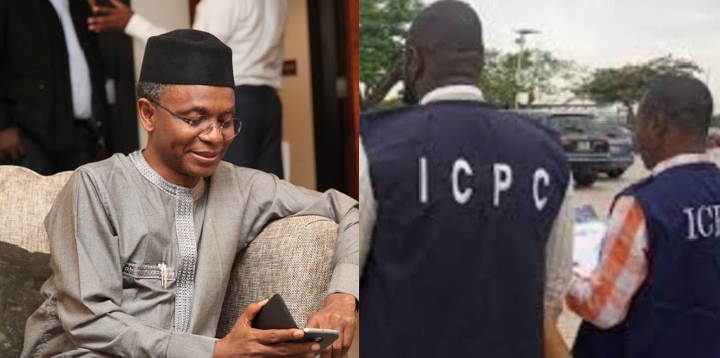
    WITHIN NIGERIA learned that the Economic and Financial Crimes Commission (EFCC) transferred Nasir El-Rufai to the Independent Corrupt Practices and Other Related Offenses Commission (ICPC) on the evening of February 18.

    It was also learned that the Independent Corrupt Practices and Other Related Offences Commission (ICPC) obtained a 14-day remand warrant for the former governor, which is set to expire on March 5.

    The 14-day remand warrant acquired by the ICPC expired on Thursday evening, March 5, but Nasir El-Rufai remains in detention and has not been freed or formally charged in court, as at the time of filing this report.

    However, some Nigerians, particularly supporters of the former Kaduna governor, have decried Nasir El-Rufai’s continuing detention, describing it as a politically motivated witch-hunting and urged the ICPC to release him.

    Issues before Nasir El-Rufai?

    In 2024, the Kaduna State House of Assembly charged Nasir El-Rufai for stealing N423 billion in public monies and money laundering. They accused him of stealing N1.37 billion set out for a light rail project, as well as N64.8 million that senior aides reportedly laundered.

    They further accused him of being involved in over N155 million disputed transactions, excluding €1.4 million and 180 payments totaling N2.158 billion from a Consolidated Revenue Account linked to Kaduna State’s Internally Generated Revenue (IGR) account.

    During a February 2026 appearance on Arise TV’s Prime Time, Nasir El-Rufai admitted to listening in on calls from National Security Adviser Nuhu Ribadu. The Department of State Services (DSS) has charged El-Rufai with three counts of cybercrime, including illegally eavesdropping calls from National Security Adviser Nuhu Ribadu.

  • N2.4bn Fraud: Ex-Nexim MD, Robert Orya’s Trip to 490 Years Sentence

    N2.4bn Fraud: Ex-Nexim MD, Robert Orya’s Trip to 490 Years Sentence

    Robert Orya, a former managing director of the Nigerian Export-Import Bank (NEXIM), has been sentenced to 10 years in prison on each of the 49-count charges by a high court of the Federal Capital Territory (FCT) in Abuja.


    This was disclosed on Thursday, February 5, in a post on its X handle by the Economic and Financial Crimes Commission (EFCC).

    WITHIN NIGERIA learned that Justice Frances Messiri handed down the jail sentence upon convicting Orya on all 49 counts of criminal charges bordering on fraud to the tune of N2.4 billion.

    Recall that the anti-graft agency in 2021 dragged the former managing director to court over alleged criminal breach of trust, fraud, misappropriation, impersonation, official corruption, and abuse of office, among others.

    The anti-graft commission also accused Orya of fraudulently diverting funds, including through entities like Luxurium Leisure Services Limited (incorporated using fictitious names), and inducing loans, such as N488 million to Treasure Mix Construction Limited under false pretenses.

    Who is Robert Orya?

    Robert Orya is a native of Ugwe, a community in Benue State where he completed his primary and secondary education. He attended the Teacher’s College, where he obtained a National Certificate of Education. He later attended Benue State Polytechnic, where he graduated with an Ordinary National Diploma.

    Orya, a businessman, banker, and management consultant, once served as honorary president of the Global Network of Export-Import Banks and Development Finance Institutions.He assumed leadership of NEXIM’s executive management team in August 2009, a position he held till 2016.

    Origin of Robert Orya’s trial?

    In 2019, the Central Bank of Nigeria (CBN) charged Robert Orya, the former Managing Director of the Nigerian Export-Import Bank (NEXIM), of corruption and financial wrongdoing following a forensic audit ordered by the NEXIM board.

    The apex bank also accused the export/import bank’s previous administration of plotting the ouster of Joseph Nnanna, its deputy governor in charge of the Economic Policy Directorate.

    Recall that Mr. Nnanna was the chairman of the Board of NEXIM, which ordered a forensic examination of the bank’s lending operations.

    According to the CBN, the audit showed various levels of procedural violations, including high levels of fraud in loan disbursement by the bank’s prior management.

    Robert Orya was also accused of abusing his position to earn over N1.4 billion from the bank through fraudulent loan awards and forming corporations in the names of nonexistent people or entities without their permission to secure loans that went unpaid for years.

    How was he arrested?

    WITHIN NIGERIA discovered that Robert Orya, a former managing director of the Nigerian Export-Import Bank (NEXIM), was arrested several times by anti-graft agents.

    According to a check, Orya was originally arrested by EFCC investigators after the anti-graft agency, in partnership with the then-Special Presidential Panel on Recovery of Public Property (SPIP), led by Okoi-Obono Obla, received a petition to indict him.

    Orya was reportedly arrested and detained by EFCC agents for four days before being required to report to the anti-graft agency’s Capital Market and Insurance Fraud Section in Abuja on a daily and then weekly basis between 2016 and 2018.

    However, WITHIN NIGERIA gathered that the NEXIM Bank management, in October 2017, wrote to the SPIP, which led to the arrest and detainment of Orya at the police headquarters in Abuja for four days.

    Orya’s Legal Tussle?

    On November 25, 2021, Robert Orya, ex-NEXIM MD, appeared before Justice F.E. Messiri of the Federal Capital Territory High Court in Abuja on a 49-count charge of fraud and abuse of office.

    He was accused of fraudulently obtaining over N1.4 billion from NEXIM Bank, including using the names of non-existent individuals and others to gain loans without their agreement.

    The anti-graft organization claimed that he exploited his position as managing director of NEXIM Bank to embezzle public monies.

    He pleaded not guilty to all counts, prompting a lengthy trial that lasted several years.

    Verdict?

    Justice F.E. Messiri of the Federal Capital Territory High Court in Abuja sentenced Robert Orya, former Managing Director of the Nigerian Export-Import Bank (NEXIM), to 490 years in jail on February 5, 2026.

    The ruling came after Orya was found guilty on all 49 counts of fraud and abuse of power. Orya was sentenced to ten years in jail on each count.

    The sentences will run concurrently. This means Orya will only serve a maximum of 10 years in prison, not 490.

  • How EFCC recently traced ₦162bn scam in Crypto through Nigerian Banks

    How EFCC recently traced ₦162bn scam in Crypto through Nigerian Banks

    Money moved like a river beneath the surface of Nigeria’s banking system, invisible to most but tracked carefully by those who knew where to look. Cryptocurrency transactions rose and fell without notice, flowing through accounts that were meant to be monitored but were left unchecked.

    By early 2026, the Economic and Financial Crimes Commission had begun piecing together a story of negligence, deliberate gaps, and billions lost to fraud. Each digital transaction became a clue, every pattern a map, leading investigators through a labyrinth of accounts, wallets, and networks that spanned the country.

    What appeared as ordinary banking activity concealed an extraordinary flow of illicit funds, and the EFCC followed every trace with patience and precision.

    Serious Allegations Against Banks, Fintechs, and Microfinance Banks

    In January 2026, EFCC officials publicly accused several Nigerian financial institutions of failing to enforce anti-fraud measures meant to protect customers and the financial system. Know Your Customer and Customer Due Diligence procedures, designed to flag suspicious activity, were either ignored or implemented poorly. New-generation banks, celebrated for their technological sophistication, allowed cryptocurrency transactions to move unchecked, creating blind spots that fraudsters exploited.

    Investigators discovered that approximately ₦162 billion worth of cryptocurrency flowed through at least one new-generation bank from January to December 2025 without proper verification. Another ₦18.7 billion was traced to accounts tied to investment and airline discount scams, many of which defrauded ordinary Nigerians. These transactions revealed a mix of institutional oversight failures and deliberate manipulation by fraud networks.

    Microfinance banks and fintech operators also featured prominently in the investigation. Accounts with minimal activity suddenly became hubs for high-value transfers. Some institutions did not flag repeated transfers that should have triggered alerts. EFCC analysts noted that these lapses were not isolated but indicative of systemic weaknesses in monitoring and reporting.

    The commission emphasized that while some financial institutions claimed technical compliance, the reality was stark. Weak controls, combined with the complexity of crypto and digital payment flows, allowed billions to be moved without detection. Investigators warned that negligence of this magnitude would no longer be tolerated and that institutions could face legal consequences if found complicit.

    Impact on Nigerians

    The scale of the fraud was devastating. EFCC estimated that more than 900,000 Nigerians were affected by the largest of these schemes, losing savings, investments, and operating capital. One of the most widespread scams involved a fake airline discount system, first appearing in March 2025, which tricked people into transferring funds for tickets that never existed.

    Another scheme, which began in April 2025, involved bogus investment companies with elaborate online presences that mimicked legitimate financial institutions. The fraudsters created a veneer of authenticity through professional websites, social media profiles, and official correspondence. Funds were routed through multiple banks and fintech platforms, complicating detection.

    The human impact extended beyond financial loss. Families and small businesses faced severe disruption, some unable to meet operational or household obligations. The EFCC’s interviews with victims revealed fear, confusion, and anger. These stories underscored not only the scale of the fraud but the societal consequences of institutional failures.

    Investigators also documented patterns in how fraud networks targeted vulnerable populations, particularly those unfamiliar with digital finance or cryptocurrency. The scale and sophistication of the scams illustrated systemic weaknesses in the financial system and highlighted the need for accountability, not only from perpetrators but from the institutions that facilitated these transactions.

    How EFCC Traced the ₦162 Billion Crypto Transactions

    EFCC investigators approached the ₦162 billion crypto scam as a digital labyrinth, where every transaction held a clue. Using forensic accounting tools and blockchain analysis, the team mapped movements across wallets and bank accounts. By late 2025, they had identified patterns in how the fraudsters moved funds between multiple accounts in both Nigerian banks and foreign digital wallets, breaking down large sums into smaller transfers to avoid triggering alarms.

    Investigators looked for sequences in transaction timings, account usage, and wallet conversions. Repeated patterns emerged, revealing how dormant accounts were suddenly activated for high-value transfers. EFCC analysts noted that some accounts received multiple small deposits from unrelated individuals, which were then aggregated into cryptocurrency transactions. This method demonstrated both sophistication and intentional design by the fraudsters.

    The commission also leveraged interbank cooperation. Some banks voluntarily shared transaction histories, while others resisted, fearing reputational damage. Each lead was verified against blockchain records, KYC documentation, and transaction logs. Analysts painstakingly reconstructed every major transfer sequence, connecting the digital footprints of funds to the original fraudulent schemes.

    EFCC combined technology and human intelligence. Software flagged suspicious transfers, but analysts reviewed them manually to avoid false positives. Cross-referencing blockchain addresses with bank accounts revealed how the flow of ₦162 billion traversed multiple layers of financial institutions. This methodology allowed the EFCC to create a full map of the fraud network and pinpoint institutional lapses that enabled the illicit movement of funds.

    Collaboration with Regulatory Bodies

    EFCC coordinated closely with the Central Bank of Nigeria, the Financial Reporting Council, and other supervisory agencies. Regulators were tasked with verifying compliance, auditing suspicious accounts, and determining whether banks and fintechs had violated operational standards. This collaboration ensured no institution could evade scrutiny through bureaucratic loopholes.

    Joint investigations involved cross-checking transaction records, assessing internal audit reports, and monitoring real-time transfers. Regulators contributed both oversight expertise and legal authority, allowing EFCC to act decisively. This multi-agency approach underscored the seriousness of the case and demonstrated a commitment to addressing systemic vulnerabilities across Nigeria’s financial sector.

    The CBN, in particular, was asked to review licensing conditions and operational protocols for banks implicated in large crypto transfers. Officials examined whether financial institutions had adequate staff training, risk management frameworks, and automated fraud detection systems in place. The goal was to prevent similar multi-billion Naira scams in the future and restore public trust in the banking system.

    The collaboration also included public communication. Both EFCC and regulatory bodies informed the public about ongoing investigations, emphasizing the importance of vigilance and compliance. By combining enforcement, oversight, and transparency, Nigerian authorities sought to mitigate the human, economic, and institutional costs of large-scale fraud.

    Institutional Failures and Compliance Gaps

    Investigators found that many institutions failed to implement KYC and CDD protocols rigorously. Accounts were opened without sufficient verification of identity or source of funds, creating opportunities for fraudsters. Transactions flagged as unusual were often ignored or delayed, allowing illicit funds to move freely.

    Fintech platforms offering digital wallets or cryptocurrency services were particularly vulnerable. Lax onboarding processes and insufficient monitoring allowed fraudsters to exploit the system, sometimes layering transactions through multiple accounts to obscure the origin of funds. These gaps magnified the impact of scams, amplifying losses across the banking sector.

    The EFCC emphasized that systemic weaknesses went beyond individual lapses. Even banks with strong compliance frameworks had gaps in monitoring, reporting, or escalation procedures. Investigators highlighted that technology alone was insufficient; institutional vigilance and accountability were critical to prevent large-scale financial crimes.

    Recommendations included mandatory real-time monitoring of suspicious activity, regular audits, and staff training on emerging fraud patterns. EFCC officials stressed that the lessons from the ₦162 billion crypto scam and the ₦18.7 billion investment and airline discount scams should guide reform across Nigeria’s financial sector, making institutions resilient rather than complicit.

    Recovery Efforts and Legal Proceedings

    EFCC launched parallel recovery operations alongside investigations. The commission sought to freeze accounts linked to fraudulent activity, trace cryptocurrency wallets, and recover funds where possible. Recovery efforts involved coordination with banks, fintechs, and, in some cases, foreign financial institutions.

    Legal proceedings were prepared against institutions and individuals found complicit in facilitating or failing to report suspicious transactions. EFCC emphasized that criminal prosecution could include both executives and operational staff responsible for compliance failures. These proceedings aimed to send a clear message that financial negligence in the face of multi-billion Naira fraud would not be tolerated.

    The commission also engaged with victims, providing guidance on reporting losses and cooperating with ongoing investigations. Public awareness campaigns highlighted the risks of digital investment schemes and the importance of verifying financial platforms before transferring funds. This dual approach of enforcement and education was critical to restore public confidence.

    EFCC made clear that recovery was not only about funds but about accountability. By combining legal, technical, and investigative strategies, the commission aimed to prevent repeat occurrences, recover lost assets, and ensure that financial institutions strengthened safeguards to protect ordinary Nigerians.

    The Role of Banks and Fintechs in Enabling the Fraud

    Financial institutions, both traditional and digital, were central to the flow of illicit funds. Investigators found that lapses in KYC procedures allowed accounts to be opened with minimal verification. This enabled fraudsters to move substantial sums without triggering alerts. New-generation banks, despite advanced technology, had weaknesses in monitoring crypto-related transfers, while smaller fintechs lacked rigorous compliance protocols.

    Microfinance banks were implicated in several smaller transactions that were aggregated into the larger scheme. EFCC observed that accounts opened for ordinary business purposes were exploited to funnel money through cryptocurrency conversions. These transfers often bypassed standard fraud detection algorithms, revealing both systemic and operational gaps.

    The EFCC emphasized that banks were not passive bystanders. Some failed to escalate unusual activity, while others delayed reporting suspicious transactions. This negligence created opportunities for fraudsters to exploit the system repeatedly. The commission suggested that the magnitude of losses could have been reduced if financial institutions had enforced compliance standards consistently.

    Regulators were urged to consider institutional accountability alongside individual culpability. The commission noted that the vulnerabilities were not limited to one bank or fintech but spanned the industry. Strengthening controls, enforcing reporting standards, and maintaining active oversight were essential to prevent future large-scale fraud, as highlighted by the ₦162 billion case.

    Case Study: The Airline Discount Scam

    One of the most visible schemes involved a fake airline ticket discount platform, first reported by victims in March 2025. The platform promised significant reductions on domestic and international flights, luring individuals and businesses into transferring funds to accounts controlled by the fraudsters. Investigators traced the movement of funds through multiple banks, ultimately linking the transactions to cryptocurrency wallets.

    Victims often believed they were participating in legitimate promotions. The scammers used professional-looking websites, emails, and social media outreach to maintain credibility. EFCC analysts noted that the platform appeared active for several months, moving substantial sums without raising red flags in the financial system.

    Banks implicated in this scheme had failed to flag multiple large transfers over consecutive weeks. Investigators determined that better compliance checks and early detection could have prevented millions of Naira in losses. The airline scam demonstrated how traditional scams could be amplified through modern banking and digital finance channels.

    The case also illustrated the human impact of fraud. Hundreds of families and small businesses reported financial losses, delayed travel plans, and disrupted operations. EFCC emphasized that tracing these transactions and holding institutions accountable was essential to restoring public trust in Nigeria’s banking and fintech sectors.

    Case Study: The Bogus Investment Scheme

    Another high-profile scam involved a network of fake investment companies that emerged in April 2025. These firms offered returns higher than market averages and used websites, social media profiles, and professional correspondence to appear legitimate. Investors transferred funds to accounts linked to the companies, which were then converted into cryptocurrency and moved through multiple banks.

    EFCC traced the flow of funds step by step, identifying accounts that acted as intermediaries between victims and cryptocurrency exchanges. The investigators discovered that the fraudulent network operated across several states in Nigeria, exploiting gaps in institutional oversight. Many of the companies had minimal operational presence beyond their online facade, making them difficult to detect until the fraud reached massive proportions.

    Financial institutions allowed transfers to occur without adequate verification, while some fintech platforms failed to flag high-risk activity. EFCC analysts highlighted that repeated transaction monitoring, enhanced KYC procedures, and real-time alerts could have mitigated the impact. This case became central to understanding how institutional lapses compounded financial crimes.

    The bogus investment scheme also reflected the sophistication of modern fraud in Nigeria. By combining digital tools, online marketing, and institutional vulnerabilities, perpetrators executed multi-billion Naira scams with precision. EFCC’s tracing efforts revealed both the human and systemic dimensions of these operations, underscoring the need for comprehensive reform.

    The Human Cost of Multi-Billion Fraud

    EFCC emphasized that the largest scams had real-world consequences for hundreds of thousands of Nigerians. Victims ranged from small-scale investors to businesses relying on digital finance for operations. The ₦162 billion cryptocurrency scam alone affected over 900,000 people, creating ripple effects across the economy.

    Many victims reported losing savings accumulated over years. Others faced disruptions to business operations, delayed investments, and loss of trust in financial institutions. The human cost extended beyond immediate monetary losses, affecting livelihoods, morale, and confidence in digital finance.

    The commission conducted interviews and collected statements from affected individuals between October 2025 and January 2026. These accounts revealed patterns of emotional distress, financial instability, and frustration with institutions that failed to protect them. EFCC highlighted that addressing systemic vulnerabilities was not only about preventing fraud but safeguarding citizens’ economic security.

    The human dimension reinforced the urgency of institutional accountability. EFCC argued that banks and fintechs had a societal responsibility to prevent fraud, protect funds, and maintain public trust. The commission’s ongoing investigations were aimed not just at recovery but also at creating deterrents that could reduce future financial and human harm.

    Lessons for Nigerian Banks and Fintechs

    The ₦162 billion crypto scam exposed vulnerabilities across the Nigerian financial ecosystem. Banks and fintechs were reminded that compliance was not optional but central to maintaining trust and operational integrity. Lapses in KYC, CDD, and reporting procedures created fertile ground for fraud and systemic risk.

    Institutions were urged to implement real-time monitoring systems, regular audits, and staff training focused on emerging financial crimes. The EFCC highlighted that proactive oversight could prevent millions in losses, protect the public, and preserve confidence in digital and traditional banking services.

    Collaboration with regulators was identified as a key component of effective risk management. Sharing information, responding promptly to flagged transactions, and ensuring compliance with supervisory directives became essential to reduce exposure to fraud. EFCC recommended that all institutions review their policies in light of the crypto and investment scams revealed in 2025 and early 2026.

    Finally, Nigerian banks and fintechs were reminded of their societal responsibility. Beyond regulatory obligations, they play a crucial role in safeguarding the economy and the welfare of citizens. Lessons learned from these multi-billion Naira scams must drive reform, innovation, and vigilance across the sector, making it impossible for fraudsters to exploit gaps unchecked.

  • Olu Agunloye’s $6bn Mambilla Power Project Trial: What’s Next?

    Olu Agunloye’s $6bn Mambilla Power Project Trial: What’s Next?

    Olu Agunloye, former Minister of Power and Steel, has not escaped from the grip of the Economic and Financial Crimes Commission (EFCC) for fraud in the $6 billion Mambilla Hydroelectric Power Project. 


    Recall that the anti-graft commission said that Agunloye awarded the contract to Sunrise Power and Transmission Company Limited without adequate authority or budgetary provision.

    During his arraignment, Umar Babangida, a prosecution witness, claimed that former President Olusegun Obasanjo directed Agunloye to add N11 billion to the N6 billion previously set aside for the project.

    However, Agunloye pleaded not guilty to the charges levelled against him.

    Who is Olu Agunloye?

    Olu Agunloye, a native of Ondo State was born on September 16, 1948. He holds a Master’s degree in Applied Geophysics from MIT and a Ph.D in Physics from the University of Ibadan.

    He served as Minister of Power and Steel under former President Olusegun Obasanjo. He later became Minister of State for Defence (Navy). He’s also a former Executive Vice Chairman of National eGovernment Strategies and a gubernatorial candidate for Ondo State in 2016.

    Agunloye’s first encounter with EFCC?

    On December 13, 2023, the Economic and Financial Crimes Commission (EFCC) arrested Olu Agunloye, former Minister of Power and Steel, for allegedly defrauding the Mambilla Hydroelectric Power Project of $6 billion.

    WITHIN NIGERIA gathered that the project, awarded to Sunrise Power and Transmission Company Limited (SPTCL) in 2003, was designed to generate 3,960 megawatts of power on a build, operate, and transfer basis.

    Why was Olu Agunloye arrested?

    WITHIN NIGERIA gathered that the anti-graft agency alleged Agunloye of awarding the contract without proper authorization, budgetary provision, or financial backing, violating Section 22(4) of the Corrupt Practices and Other Related Offences Act, 2000.

    The EFCC also accused Olu Agunloye of disobeying a presidential directive and receiving gratification, including N5.212 million from SPTCL and Leno Adesanya.

    Olu Agunloye’s bail from EFCC custody?

    After only seven days in detention, Olu Agunloye, former Minister of Power and Steel, was released on bail by the Economic and Financial Crimes Commission (EFCC) following a favorable bail verdict.

    The former minister was granted bail in the sum of N50 million on December 20, 2023, with two sureties in the same amount, both of whom must be reputable, wealthy, and residents of the Federal Capital Territory.

    It was learned that the sureties must have homes worth $300 million and a genuine Certificate of Occupancy as part of the bail conditions.

    However, Adeola Adedipe, a lawyer for Olu Agunloye, maintained that his client was not a flight risk and would remain available throughout the trial.

    The EFCC contested the bail motion, but Justice Jude Onwuegbuzie granted it and ordered Agunloye to give up his international passport and attend all hearings.

    The Legal Tussle?

    Olu Agunloye, former Power and Steel Minister, was charged with seven counts of fraudulent contract award and official corruption by the Economic and Financial Crimes Commission (EFCC) on January 10, 2024, in Abuja’s Federal High Court.

    According to the EFCC, Agunloye gave Sunrise Power and Transmission Company Limited a $6 billion contract for the Mambilla Hydroelectric Power Project with no budgetary provision, approval, or cash backup.

    The charges include disregarding presidential directions, conspiring to fake documents, and getting gratification.

    Agunloye pled not guilty to the allegations. Adeola Adedipe, a lawyer for Agunloye, contended that the allegations were unrelated to financial crimes, but the court rejected this claim.

    Endless trial?

    On September 18, 2025, the Economic and Financial Crimes Commission (EFCC) re-arraigned Olu Agunloye, the former Minister of Power and Steel, on an amended seven-count accusation.

    The trial was adjourned to October 9, 2025, and then again on February 2, 2026, to allow for additional cross-examination of the prosecution’s witness, Umar Babangida, an Assistant Commissioner of Police and EFCC investigator.

    Babangida claimed that former President Olusegun Obasanjo directed Agunloye to add N11 billion to the N6 billion previously allocated for the project, but the Federal Executive Council (FEC) rejected the request.

    However, at the time of filing this story, the trial was still proceeding, with Agunloye pleading not guilty to the accusations.