Tag: Imo state

  • KWAM 1’s daughter Dami and Cubana ChiefPriest’s likely challengers in the race for APC tickets in Lagos and Imo

    KWAM 1’s daughter Dami and Cubana ChiefPriest’s likely challengers in the race for APC tickets in Lagos and Imo

    Political ambition rarely arrives quietly in Nigeria’s party system, especially when it intersects with celebrity influence, established political structures, and deeply rooted local power blocs. The recent emergence of Cubana Chief Priest in Imo State and Damilola Marshal, daughter of KWAM 1, in Lagos State has added a fresh layer of intensity to already sensitive political terrains. What looks like a simple filing of interest forms quickly transforms into a complex battlefield shaped by incumbents, party loyalists, constituency interests, and internal party negotiations that rarely make public headlines.

    Behind the visible excitement lies a far more intricate struggle where sitting lawmakers, returning aspirants, and powerful grassroots coordinators begin positioning quietly long before primaries are conducted. Every endorsement, meeting, and silent alliance begins to matter from the moment nomination forms are picked. The real competition is not only about popularity but about structure, loyalty networks, and the ability to secure confidence within party machinery that often determines who eventually appears on the ballot.

    This analysis moves into the deeper layers of both contests, identifying the individuals, structures, and political realities that will shape the journey ahead for both aspirants as they attempt to secure their party tickets in two of Nigeria’s most politically active regions.

    Political Landscape Imo State Orlu Zone Reality Check

    Imo State politics, especially within the Orlu political axis, has long been defined by a strong blend of incumbency advantage and deeply entrenched party structures. The Orsu Orlu Oru East federal constituency remains one of the most competitive spaces in the state, where electoral outcomes are often influenced by internal party cohesion as much as by voter sentiment.

    The entrance of Cubana Chief Priest into this space introduces a new dynamic, but the structure he is stepping into has already been shaped by years of political consolidation. The seat currently sits within a system where incumbency carries not just legislative advantage but also significant influence over party delegates and local government structures.

    Within this environment, every aspirant must first confront the internal reality of party loyalty before even thinking about the general electorate. This makes the primary election stage far more decisive than the final election itself.

    Sitting Power Structure Orlu Federal Constituency

    Hon Canice Moore Nwachukwu

    At the center of the contest is Hon Canice Moore Nwachukwu, the current representative of the Orlu Orsu Oru East federal constituency. As a sitting member of the House of Representatives elected in the 2023 general elections, his presence introduces a strong incumbency advantage that is difficult to dislodge in most Nigerian party systems.

    His political strength is not only derived from his position in the National Assembly but also from the relationships built across party wards, local government structures, and constituency project networks. These layers of influence often translate into delegate loyalty during party primaries, making him a central figure in any APC internal contest within the constituency.

    Beyond formal structures, incumbents in such constituencies typically maintain informal networks that include community leaders, youth coordinators, and political financiers who play quiet but decisive roles during primaries.

    APC Internal Contest Imo State Dynamics

    Before any general election discussion becomes relevant, the APC primary stage in Imo State stands as the first major obstacle for any aspirant. The party structure in Orlu zone is historically competitive, with multiple factions often aligning behind different power brokers.

    Cubana Chief Priest, despite his public recognition and influence in entertainment and business circles, must engage with a political environment where grassroots structure often outweighs public popularity. The APC internal contest in this constituency typically involves negotiations with local party executives, ward leaders, and influential stakeholders whose decisions shape delegate voting patterns.

    Other aspirants within the party also represent a significant factor. These individuals are often long time party loyalists who have invested years in building local political capital. Their resistance is not necessarily personal but structural, as they aim to preserve existing party order and continuity.

    Chiefpriest

    This stage of the contest is widely considered the most unpredictable because alliances can shift rapidly within weeks leading to primaries.

    Opposition Landscape General Election Scenario Imo State

    If the APC ticket is eventually secured, the next phase shifts to a broader electoral contest that includes opposition parties such as the Peoples Democratic Party and the Labour Party.

    The Labour Party in particular has demonstrated strong urban and youth driven influence in parts of Imo State since the 2023 election cycle, reshaping voter alignment in several constituencies. This introduces a three way competitive environment where party loyalty alone may not guarantee victory.

    The PDP also maintains a traditional structure within the state, often relying on established political families and long standing party networks. This creates a multi layered contest where the eventual APC candidate must prepare for a highly competitive general election environment.

    Lagos State Political Structure: Surulere Constituency Reality

    Lagos State presents a different political environment altogether. Unlike Imo State where incumbency and local influence dominate heavily, Lagos politics often combines structured party control with high urban voter sensitivity.

    Surulere Constituency II, where Damilola Marshal has expressed interest, is a politically active district with a history of competitive legislative contests. The constituency reflects a mix of middle class urban voters, youth populations, and established political actors who maintain strong ties within the APC structure.

    Here, party primaries often determine electoral success more than general elections due to the dominance of APC in the state over multiple election cycles.

    Incumbent Position Lagos Assembly Contest

    Hon Mosunmola Rotimi Sangodara

    The current representative of Surulere Constituency II in the Lagos State House of Assembly is Hon Mosunmola Rotimi Sangodara. As a sitting legislator elected under the APC platform, she carries the advantage of incumbency, which includes established constituency presence and access to party delegate networks.

    Her position within the assembly also strengthens her visibility among constituents, particularly through legislative activities and constituency outreach programs that are often activated during election cycles.

    In Lagos political structure, incumbents are typically supported by strong party machinery unless significant internal restructuring occurs within the APC at state level.

    APC Primary Battle Lagos State Internal Dynamics

    The APC primary process in Lagos is widely regarded as one of the most structured yet highly competitive political processes in the country. Party leadership at state and local levels plays a decisive role in candidate selection, often balancing loyalty, electability, and internal zoning arrangements.

    Damilola Marshal will be entering a contest where other aspirants from Surulere II are also expected to emerge. These individuals often include long standing party members, local government influencers, and youth mobilization figures who have built grassroots recognition over time.

    Within this environment, endorsements from key party stakeholders often carry more weight than public recognition. This makes the internal APC negotiation stage critical in determining final outcomes.

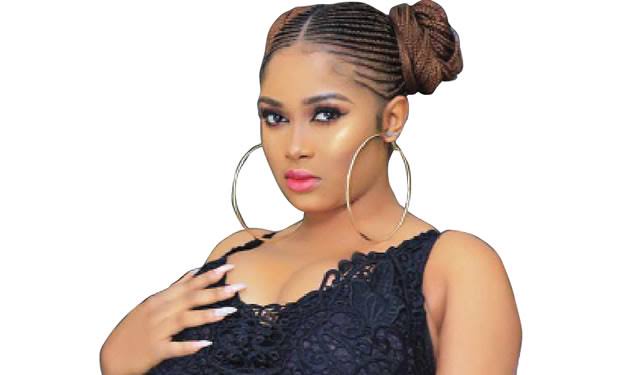
    KWAM 1’s daughter Damilola

    Opposition Path Lagos General Election Outlook

    Should the APC ticket be secured, the general election stage introduces opposition from parties such as the PDP and Labour Party. Lagos State has witnessed increasing political diversity in recent election cycles, especially in urban constituencies like Surulere.

    The Labour Party in particular has gained traction among younger voters and urban professionals, making general elections more competitive than in previous decades. The PDP also maintains a structured presence, although its influence varies across different local government areas.

    This creates a layered contest where APC candidates must balance internal party expectations with external voter engagement strategies.

    Comparative Political Pressure: Imo State Versus Lagos State

    While both Cubana Chief Priest and Damilola Marshal are entering APC contests, the nature of their political challenges differs significantly. Imo State presents a more volatile internal structure where incumbency and factional alignments dominate.

    Lagos State, on the other hand, operates under a more centralized party structure but with higher expectations for administrative performance and constituency delivery.

    In Imo, the primary contest is often more unpredictable due to shifting alliances. In Lagos, the structure is more stable but heavily influenced by established party leadership decisions.

    Both environments, however, share a common reality where internal party primaries often determine final electoral outcomes.

    Likely Challenger Patterns – Imo State APC Race

    In Imo State, challengers to Cubana Chief Priest are likely to emerge from three main categories. First are incumbency aligned political actors who seek to retain the seat. Second are long standing APC loyalists within the constituency who believe in internal rotation of leadership. Third are emerging aspirants supported by local political patrons seeking to expand influence.

    These groups collectively form the core resistance within the APC primary structure. Their influence is amplified by their access to ward delegates and local government coordinators who play key roles during voting.

    The strength of any challenger will depend on their ability to consolidate these internal groups into a unified front.

    Likely Challenger Patterns – Lagos APC Race

    In Lagos State, challengers to Damilola Marshal are expected to come primarily from within established party ranks in Surulere Constituency II. These include experienced political figures who have contested previously or held party offices within the local structure.

    Additionally, grassroots mobilizers who have built recognition through community engagement programs may also enter the race. These individuals often rely on deep local relationships rather than public recognition.

    The incumbent advantage of Hon Mosunmola Rotimi Sangodara remains a central factor, as challengers must overcome both structural party loyalty and constituency familiarity.

    Political Reality Check: Both Contests

    Both contests ultimately reflect the deeper nature of Nigerian party politics where nomination battles often define electoral success long before general elections take place. For Cubana Chief Priest in Imo State, the challenge is rooted in confronting a sitting federal lawmaker backed by established party structures. For Damilola Marshal in Lagos State, the challenge lies in navigating a structured party environment where incumbency and internal loyalty play dominant roles.

    The APC primaries in both states will serve as the true determining ground for these political ambitions, shaping not just individual careers but also reflecting broader patterns within Nigeria’s evolving political landscape.

  • Political Undertone behind Cubana Chief Priest’s 2027 House of Reps bid

    Political Undertone behind Cubana Chief Priest’s 2027 House of Reps bid

    Pascal Okechukwu, widely known as Cubana Chief Priest, did not drift into politics quietly or casually, his declaration for the Federal House of Representatives seat representing Orsu, Orlu, Oru East Federal Constituency in Imo State landed with deliberate weight in late April 2026, immediately shifting attention from entertainment spaces into the structured corridors of partisan ambition where influence is measured in networks, loyalty, and electoral machinery rather than popularity alone.

    And this move has since opened layered conversations around timing, intent, and the deeper political calculations shaping the 2027 elections in Imo State.

    Early Political Positioning Inside Imo APC Structure

    Cubana Chief Priest’s entry into formal politics did not begin with his declaration speech in April 2026, it traces back to his gradual embedding within the All Progressives Congress political architecture in Imo State, where visibility alone was no longer his only currency but became a bridge into structured influence, especially after his appointment in February 2026 as Imo State Director of the City Boy Movement, a pro Tinubu support network that has been actively mobilizing youth and grassroots participation across key states in Nigeria.

    That appointment marked a turning point that repositioned him from a social figure operating at the intersection of nightlife entrepreneurship and celebrity influence into a politically recognized mobilizer within a ruling party structure that values loyalty signals and mass appeal, particularly as the APC continues to strengthen internal alliances ahead of 2027, where every constituency is expected to deliver not just votes but organized political blocks capable of surviving intense opposition competition.

    The shift was not sudden but strategic, unfolding through public appearances, political gatherings, and endorsements that placed him closer to established APC stakeholders in Imo State, gradually constructing a narrative that his influence extends beyond entertainment circles into youth engagement networks that can be activated during electoral cycles, a factor that likely contributed to his confidence in contesting a federal legislative seat.

    City Boy Movement Influence Network Expansion

    The City Boy Movement, which Cubana Chief Priest was assigned to coordinate in Imo State in February 2026, has become one of the key political instruments linked to youth mobilization in support of President Bola Ahmed Tinubu’s broader political ecosystem, and his leadership position within this structure significantly elevated his political profile within APC circles, especially among younger demographics who already recognize his brand identity.

    His role within this movement is not ceremonial, it is tied to grassroots coordination, event-driven mobilization, and symbolic representation of a politically energized youth bloc that the APC has been cultivating since the post 2023 election cycle, and this positioning has allowed him to translate social media visibility into structured political relevance within a system that demands more than popularity for candidacy legitimacy.

    The City Boy Movement presence in Imo State has also created a parallel influence channel that intersects with traditional party structures, allowing him to operate within both formal APC hierarchies and informal youth-driven political spaces, a dual advantage that is often rare in Nigerian constituency politics where access and loyalty networks define electoral strength more than public persona alone.

    Declaration Moment – April 2026 Political Signal

    The declaration made in late April 2026 for the 2027 House of Representatives race was not framed as a spontaneous ambition but as a calculated political signal, aligning with early pre election positioning strategies common among aspirants seeking to consolidate name recognition and delegate loyalty ahead of party primaries expected to intensify closer to 2027.

    He publicly confirmed his intention to contest the Orsu, Orlu, Oru East Federal Constituency seat, a politically sensitive and highly competitive zone within Imo State, known for its strong grassroots mobilization culture and deep party rivalry, where electoral outcomes are often shaped by ward level alliances, community leadership structures, and long standing political networks that extend beyond media influence.

    The timing of the declaration suggests an attempt to secure early psychological advantage within APC internal dynamics, where aspirants often begin groundwork years ahead of elections to build delegate familiarity and consolidate stakeholder endorsements, especially in constituencies where competition within the party is as intense as the general election itself.

    Constituency Reality, Orlu Political Complexity

    The Orlu, Orsu, Oru East Federal Constituency remains one of the most politically active zones in Imo State, characterized by strong voter engagement, high party loyalty fluctuations, and recurring contestation between major political parties including APC, APGA, and Labour Party structures, making it a terrain where celebrity influence alone is insufficient without sustained grassroots presence.

    Political actors within this constituency often rely on deeply rooted community structures, traditional leadership influence, youth coalitions, and ward based political strategists who control delegate outcomes during party primaries, meaning any aspirant entering this space must engage beyond surface visibility and commit to long term political negotiation across multiple stakeholder layers.

    Cubana Chief Priest’s entry into this environment introduces a new dynamic where entertainment driven recognition intersects with traditional political structures, creating both opportunity and resistance depending on how local power brokers interpret his influence and long term political intentions.

    Motivational Narrative: Development Promise

    Throughout his public positioning, Cubana Chief Priest has consistently framed his political ambition around themes of youth empowerment, job creation, grassroots development, and investment attraction into his constituency, presenting himself as a bridge between private sector energy and public governance structures.

    His messaging emphasizes value addition rather than personal gain, repeatedly stating that his intention is not to accumulate wealth from public office but to contribute resources, visibility, and opportunity channels into the constituency he seeks to represent, a narrative designed to resonate with younger voters who are increasingly skeptical of traditional political rhetoric.

    He has also made statements suggesting a commitment to shifting attention toward neglected areas of development within his constituency, particularly in relation to economic participation and youth engagement, although the practical translation of such promises will depend heavily on legislative effectiveness and access to federal influence structures once elected, if successful.

    APC Internal Structure – Primary Battle Reality

    Despite public enthusiasm and visibility, the most significant challenge facing Cubana Chief Priest lies within the APC primary election structure, where delegate based voting systems often determine candidacy outcomes through established political relationships rather than mass popularity alone.

    Party primaries in Imo State are historically competitive, often involving long standing political figures who maintain deep rooted influence across wards and local government structures, meaning any new entrant must negotiate with existing power blocs that control mobilization networks and delegate loyalty patterns.

    His celebrity status may provide initial recognition advantage, but within APC internal politics, recognition does not automatically translate into delegate support, which is often built through sustained engagement, political patronage structures, and strategic alliances with influential party stakeholders who operate at grassroots level.

    Youth Influence Versus Political Machinery Balance

    One of the most significant dynamics surrounding his candidacy is the contrast between youth driven influence and traditional political machinery, where social media popularity and entertainment based recognition intersect with older, more established electoral structures that prioritize ground presence over digital visibility.

    Cubana Chief Priest’s strength lies in his ability to mobilize attention, shape narratives, and attract youth engagement, particularly in urban and semi urban communities where social media influence plays a significant role in political awareness, but the constituency terrain requires consistent physical engagement across rural wards where political loyalty is often shaped by direct interaction and long term community involvement.

    This creates a structural tension between modern influence politics and traditional electoral systems, a tension that will likely define the trajectory of his candidacy as the 2027 election cycle intensifies.

    Public Reaction Spectrum: Support Versus Criticism

    Public response to his declaration has been sharply divided, with supporters arguing that his entry into politics represents a refreshing shift that could bring visibility, resources, and youth centered representation into a constituency that has long been dominated by traditional political figures.

    Supporters also highlight his network strength, financial capacity, and ability to attract attention to local issues, suggesting that these factors could translate into developmental opportunities if properly channeled within legislative frameworks, especially in areas such as entrepreneurship support and youth empowerment programs.

    Critics however question the depth of his governance experience, pointing out that legislative responsibilities require technical understanding of policy, constituency management, and federal negotiation processes that extend far beyond popularity or social influence, raising concerns about long term effectiveness within the National Assembly structure.

    Political Undertone and Strategic Timing Interpretation

    The timing of his declaration in April 2026 reflects broader political undertones connected to early positioning strategies within Nigerian electoral cycles, where aspirants begin groundwork well ahead of party primaries to secure visibility, negotiate alliances, and build delegate trust networks.

    This timing also aligns with increased political activity within APC structures ahead of 2027, where internal consolidation and zoning negotiations are already shaping potential candidacy outcomes across multiple constituencies, including highly competitive areas such as Orlu zone.

    His declaration therefore functions not only as personal ambition expression but also as a strategic insertion into ongoing political calculations within Imo State APC dynamics, where every constituency seat carries significance for broader party strength at federal level.

    Road to 2027 Contest

    The journey toward the 2027 House of Representatives election remains uncertain and highly competitive, with multiple phases including party primaries, stakeholder consultations, campaign mobilization, and eventual general elections, each stage requiring different forms of political capital and strategic engagement.

    Cubana Chief Priest must navigate not only public perception but also internal party negotiations, where established political figures, constituency power brokers, and grassroots mobilizers will play decisive roles in determining candidacy viability.

    His ability to transition from a publicly recognized figure into a structured political operator will ultimately determine whether his declaration becomes a successful electoral campaign or remains a symbolic entry into Nigeria’s increasingly celebrity influenced political landscape.

    Closing Political Reality, Beyond Declaration Moment

    The declaration made in late April 2026 represents only the opening phase of a much longer and more complex political process, where visibility must evolve into structure, influence must convert into votes, and ambition must survive the pressure of internal party competition and constituency expectations.

    What now unfolds is not a headline moment but a sustained political test within one of Imo State’s most competitive federal constituencies, where every step toward 2027 will be shaped by negotiation, alignment, and the ability to transform personal popularity into institutional political strength capable of surviving Nigeria’s demanding electoral environment.

  • The Imo Party where two Actors recently died and the investigation that still isn’t Public

    The Imo Party where two Actors recently died and the investigation that still isn’t Public

    April 2025 Owerri was alive with the buzz of film crew chatter and actors laughing about the scenes they had just wrapped. Cameras, lights, scripts scattered across floors, the smell of food, a gentle hum of music from a nearby speaker. Two veteran Nollywood actors were among the crowd, sharing stories of their early days in Lagos, Aba, and Enugu, while younger actors followed in awe.

    The director provided a meal of rice, wine, and a local drink called Calypso. Nobody thought twice about the meal, nobody suspected danger. But in the early hours, the laughter stopped. Two actors were dead, two more barely clinging to life, hospital staff rushing to save them. Phones erupted with messages, families panicked, the news spread faster than anyone could control.

    Verified Facts About the Incident

    From multiple verified reports, we know that two actors were pronounced dead on arrival at the hospital. Two others were admitted for treatment and survived. Police confirmed the deaths and said autopsies were underway to determine cause, yet the full results were not made public. The identities of the deceased were initially withheld, leaving families and fans in anxious limbo. Eyewitness accounts differ slightly, with some claiming the actors appeared fine during the party, others stating they showed symptoms long before collapsing.

    The director provided the meal and drinks that night. The meal of rice, wine, and Calypso was consumed without suspicion. Some attendees insisted nothing tasted off, nothing smelled strange. Others reported bitter aftertaste, immediate dizziness after the first sip. The surviving actors have been quiet, recovering in hospitals under observation. Their statements are guarded, partly out of grief, partly because police inquiries are ongoing. The combination of official vagueness and contradicting witness testimonies has created a fog of uncertainty that continues to grow with each retelling.

    Conflicting Accounts and the Mystery

    Eyewitnesses provide starkly different accounts. One actor reported that they noticed unusual sweating and dizziness among the victims early, tried to alert the host and crew, but nobody acted fast enough. Another insisted that the victims were drinking and chatting normally moments before they collapsed. Police have acknowledged these contradictions but have offered few clarifying details publicly. The director, central to the event, has provided inconsistent statements in interviews, sometimes emphasizing safety and attentiveness, other times deflecting blame or offering minimal insight.

    This conflicting narrative feeds the mystery, creating fertile ground for rumor. Online discussions speculate wildly, sometimes attributing the deaths to contaminated food, at other times to possible chemical adulteration or unseen environmental hazards. In some quarters, people whisper about curses or spiritual misfortune. Social media amplifies these stories, every retelling gaining embellishments, creating a layer of narrative fiction over the real-life tragedy. The truth is obscured, and the unknown becomes as compelling as the confirmed facts, leaving everyone, from fans to fellow actors, in a liminal space between grief and speculation.

    Industry Response and Safety Concerns

    The Actors Guild of Nigeria, AGN, issued a statement immediately after the incident, calling for better oversight of film sets and safety protocols at events involving cast and crew. They referenced the death of veteran actor Junior Pope in 2024 during a boating accident, emphasizing the ongoing vulnerabilities faced by actors on and off set. The statement highlighted medical checks, safe event hosting, and strict adherence to occupational safety guidelines.

    Industry insiders suggest that such statements, while necessary, only scratch the surface. Nollywood is a bustling, loosely regulated industry where long hours, low-budget shoots, and informal gatherings remain common. The AGN’s call for regulation underscores that systemic issues, rather than individual negligence alone, may have contributed to the tragedy. Veteran actors privately express frustration that these calls for safety are often ignored, leaving repeated incidents unresolved.

    Families Struggling With Grief and Confusion

    Families of the deceased traveled from multiple cities including Lagos, Aba, and Enugu to Owerri, desperate for clarity. Emotions ran raw. Some family members sat silently, faces etched with disbelief. Others wept openly, collapsing into the arms of friends and co-workers. Colleagues who attended the party shared stories, laughter-tinged memories of rehearsals, scenes, inside jokes. They balanced grief with shock, often contradicting one another in small details, further blurring the timeline.

    The emotional weight on surviving actors is immense. They wrestle with survivor guilt, confusion over what caused the deaths, and anxiety about media attention. Friends describe sleepless nights, recurring visions of the moments leading up to the collapses, and the haunting sounds of that night—the sudden silence, the sirens, the chaos.

    Cultural Context and Industry Reflection

    Nollywood is not just an industry, it is a community deeply embedded in Nigerian culture. Parties following shoots are common, celebrating camaraderie, success, and relief from grueling schedules. Meals, drinks, and casual gatherings are expected, even sacred in a way, marking transitions between work and relaxation. The deaths, occurring in this intimate context, violate that expectation of safety.

    The tragedy exposes vulnerabilities. Veteran actors are often relied upon as mentors, yet their safety is precarious. Insurance and formal safety protocols are limited. What was supposed to be a joyful moment turned into a cautionary tale. The narrative becomes part moral, part cultural critique, part industry reflection. It forces the community to confront uncomfortable truths about negligence, risk, and how human error and oversight mix unpredictably with fate.

    The Missing Forensic Report and Why the Mystery Persists

    Months have passed since the incident. Autopsies were presumably conducted, yet no comprehensive public report has emerged. This official silence allows rumors to thrive. Was it food poisoning, chemical contamination, or an entirely preventable mishap?

    Eyewitness contradictions, partial police reports, and guarded statements from the director and survivors mean that the truth remains partially hidden. Social media speculation fills the gaps, often embellishing reality, sometimes veering into dark folklore.

    Lessons About Safety, Trust, and the Fragility of Life

    This tragedy is a cautionary tale. Fame does not insulate anyone from danger. Trusting meals, trusting hosts, trusting routines can carry unforeseen risk. Safety must be prioritized, oversight enforced, accountability demanded.

    The emotional, cultural, and operational lessons are clear: systemic vulnerabilities in Nollywood are dangerous, oversight is sparse, and tragedies leave long-lasting shadows not just on families, but on the industry’s collective conscience.

    Closeout: How the Imo Party Remains a Ghost Story Lingering in Nollywood

    The Imo party is more than a headline. It is a story of human unpredictability, grief, and unanswered questions. The missing forensic report, the conflicting accounts, the silence of key players, and the raw grief of families and colleagues all combine to make this tragedy feel unresolved, almost spectral. It is a cautionary tale, a mystery, and a cultural reflection all at once.

    Nollywood moves on, cameras continue rolling, new films debut, yet the memory of that night lingers, haunting the spaces between scripts, scenes, and celebrations. The truth waits, elusive, partly told, partly hidden, in Owerri, in offices, in whispers, in hearts.

  • BRIEF PROFILE: ‘Mercy Isoyip Descushiel’ – an actress who mispronounces the national anthem while dressed as a police officer

    BRIEF PROFILE: ‘Mercy Isoyip Descushiel’ – an actress who mispronounces the national anthem while dressed as a police officer

    A Nollywood actress and singer known by her stage name Mercy Isoyip, also called Descushiel, added her name to the long list of well-known Nigerians who are unable to recite the national anthem on Monday, October 30.


    At the Senior Police Officers Conference in Owerri, Imo State, recall that the singer Mercy Isoyip, better known as Descushiel, misrecited the national anthem while dressed in a police costume.

    After the video went viral on social media, many users expressed their disapproval of the occurrence and concerns about a police officer’s incapacity to correctly recite the national anthem of the nation she had pledged to defend with her life. 

    Findings, however, showed that Descushiel, also known as Mercy Isoyip, is not a police officer. Model, songwriter, and actress Isoyip only donned a police outfit to recite the national anthem during the Senior Police Officers’ conference.

    This is a brief biography of Mercy Isoyip, also known as Descushiel, who mispronounced the National Anthem while donning a police costume.

    EARLY LIFE

    Mercy ‘Descushiel’ Isoyip was born on the 11th of July, 1990. Despite being a native of Cross Rivers State, she was raised in Calabar. Her family is Christian.

    EDUCATION

    She completed her first school leaving certificate at the Command Children School. At Zenith High School, she finished her secondary schooling. She graduated from University of Calabar with a degree in accounting. She also attended the New York Film Academy in the United States to study filmmaking and screen acting.

    CAREER


    A record amount of hit tracks have been released by actress and rapper Mercy Isoyip “Descushiel” since her entry into the entertainment business

    Anyone familiar with the entertainment business would know that she created ripples across national radio stations with her debut track, Telegram, which became an instant hit. Thirsty, Don’t Go, and Mumkama are some of the popular singles she has released.

    The release of her EP is slated for March 2021. She gave a performance on December 27, 2019, at the Warri Again Festival in Nigeria. The Eko Hotel Convention Center hosted the event.

    She planned a live performance event for February 14, 2020. Val Gone Wild was the name of the event.

    Nollywood actress Mercy “Descushiel” Isoyip is likewise a successful performer. After making her feature film debut in Paige in 2016, she rose to national stardom. She produces movies as well. ‘Morning After’ is her first piece.

    Tina Mba, Segun Arinze, Kunle Remi, Kenneth Okorie, Rachael Oniga, Tony Umez, Daniel Lloyd, Ayo Makun, Ramsey Nouah, Prince Felix, Funny Bone, and Charles Uwagbai are a few of the distinguished figures in the industry with whom she collaborated.

    She represents Orange Drugs Company as a brand ambassador and a model. She had an appearance in Flavour’s Nnekata music video.

  • IMO: How my father killed my mother, 24-year-old son narrates

    IMO: How my father killed my mother, 24-year-old son narrates

    A 24-year-old young man identified as Obioma has accused his father identified as Ezeji Sango Ahiazunwa of killing his 54-year-old mother through steady domestic abuse.

    Obioma also accused that his mother, a victim of domestic violence was always subjected to torture by his father, Ezeji Sanjo mostly over trivial matters.

    While speaking with WITHIN NIGERIA via a telephone interview, the 24-year-old man said his father, Ezeji who is a resident of Umuoyaa Otulu Ahiazu Mbaise in Imo state married her mother as a second wife in 1984 which was the beginning of her torturous journey as narrated by his mother before she died.

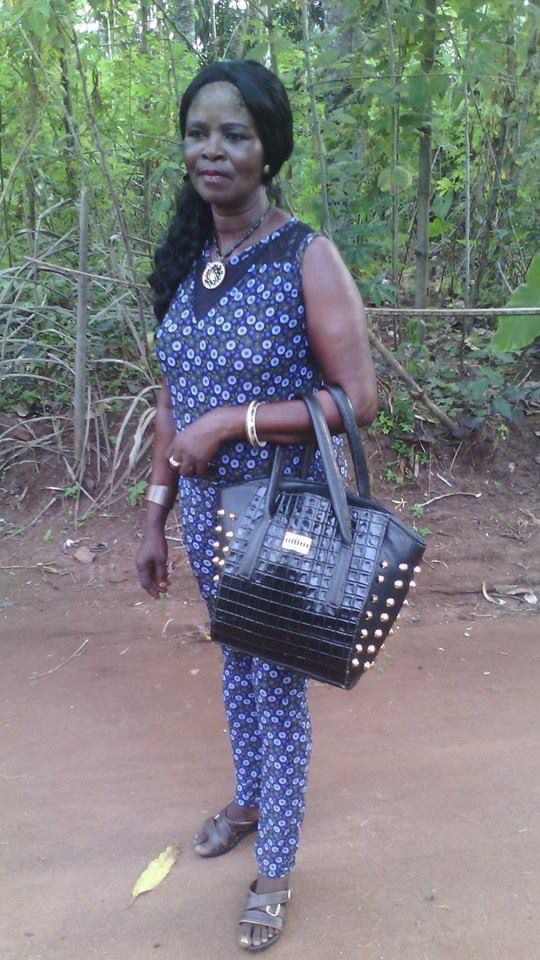
    Photo 1: The deceased mother of six

    Obioma said the first wife of her father who gave birth to five children also died as a victim of domestic violence which was relatively less when compared but his mother was responsible for the upkeep of all the eleven children and his father too after the demise of the first wife.

    ‘My mother had eight pregnancies for him but she lost two owing to torture and maltreatment she passed through. Both my father and his first wife really made her suffer. There was a time I told her to leave the marriage but she insisted that she would not leave her home. I am really depressed, he added.

    When asked about the nature of his father’s work, Obioma said his father is jobless and always depend on his wives especially his dead mother for survival.

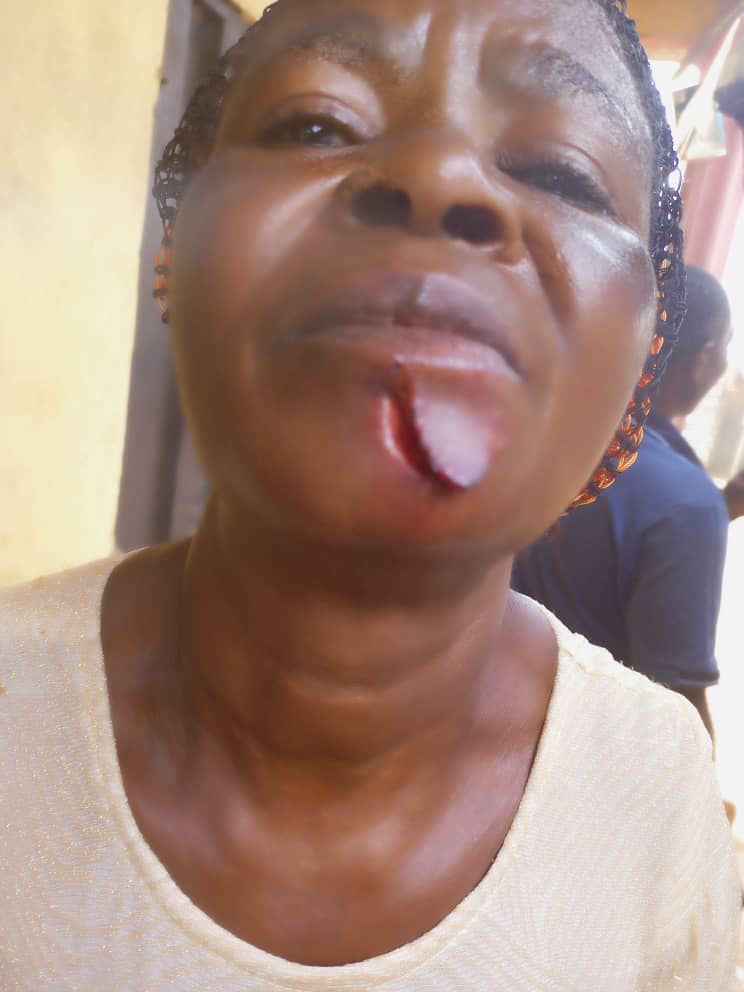
    Photo 2: One of the cuts she sustained during a fight with her husband

    Obioma told this reporter that one of children of the first wife also contributed to the menace by frustrating his mother who happens to be the second wife.

    The duo would jointly beat her up till she fainted. They would threaten to kill her and maintained that nothing would happen if they eventually did. I witnessed a particular incident where one of his eldest son and the first wife beat her up till two front teeths got removed, the 24-year-old man added.

    While bittterly complaining about the painful loss of his mother, Obioma revealed that the last violence that made her life worse till she died happened around December last year.

    Obioma said his mother was beaten by his father and started vomiting blood after Easter Sunday as a result of conflicts they had. She was rushed to Cecilia Memorial Hospital Ogbe Ahiara Ahiazu Mbaise. She later died on Thursday morning after she did not respond to medical treatment.

    According to Obioma, his mother called him and other siblings on Easter Monday to inform them about their father’s threat to kill her and how he (his father) does not care about the plights of the sick mother.

    ‘I am appealing to Nigerians to come to our rescue. Personally, I want justice for my mother and that is why I have come to the media to assist us by informing people about what my dear mother went through. Whenever I remember, I shed hot tears because she is gone, a rather sad son said.

  • Imo government takes over Royal palm estate allegedly owned by Okorocha’s wife

    Imo government takes over Royal palm estate allegedly owned by Okorocha’s wife

    The Imo State Government on Friday recovered the Royal Palm Estate along Akachi road allegedly belonging to former Governor Rochas Okorocha’s wife, Nkechi Okorocha.

    The seizure was in compliance with the directive of the Imo State gazette on the report of the Judicial Commission of Enquiry on recovery of Lands and other related matters.

    The Commissioner for Lands, Enyinnaya Onuegbu, who led the team that took the estate allegedly acquired by the ex- Governor’s wife on Friday evening, said the Government has sealed up the place till further notice.

    According to him: “This is as a result of the recommendation of the commission that all illegal lands and structures acquired by the administrations between 2006 and 2019 should be taken over by the government.”

    He said the current administration was not resting on its oars in recovering all the stolen properties of the state especially those carted away by the previous administrations.

    The Commissioner added in line with the 3R mantra initiative of Governor Hope Uzodimma, the state must continue to work with the relevant laws and recommendations of government agencies and commissions no matter whose ox is gored.

  • Okorocha to Uzodimma: You can not rename my university, Eastern Palm

    Okorocha to Uzodimma: You can not rename my university, Eastern Palm

    Rochas Okorocha, a former governor of Imo State has reacted to Governor Uzodimma’s announcement of renaming the Eastern Palm University to K. O. Mbadiwe University.

    This is coming shortly after the son of the late politician and ambassador, Greg Mbadiwe decamped to the All Progressives Congress (APC).

    Okorocha, the senator representing Imo West senatorial district stated that the university was set up based on a public-private partnership between the state and the Rochas Foundation.

    The senator added that it will be contemptuous for Governor Hope Uzodimma to rename the Eastern Palm University.

    Okorocha also faulted the State assembly’s repealment of the law establishing the university.

    He said;

    “The law establishing the University prescribed the PPP arrangement.

    “Since that was the setting, the Assembly, therefore, defaulted or had acted in contravention of the law by not getting the consent or agreement of the two parties involved, on the reported repeal.

    “In other words, the repeal only existed in the imaginations of those behind it.”

    The Senator who revealed that he established and got licences for five universities and four polytechnics while he was governor, accused the lawmakers and the state government of disregarding a pending court case on the matter.

    Okorocha added;

    “For both the Assembly and the government to be taking one-sided decisions on the fate of the university, without reference to the main party and the court matter, has only made their actions questionable and contemptuous.

    “A university is not a street one can rename or change its name at a polling unit where he had gone to revalidate his membership of APC. So, the claimed renaming of the university does not add up in reality.

    “The purported repeal of the law establishing the university without recourse to the position of one of the parties has also made the Assembly a willing party in the matter in court.

    “Until the court decides on the matter before it, there is nothing anybody can do about that.”

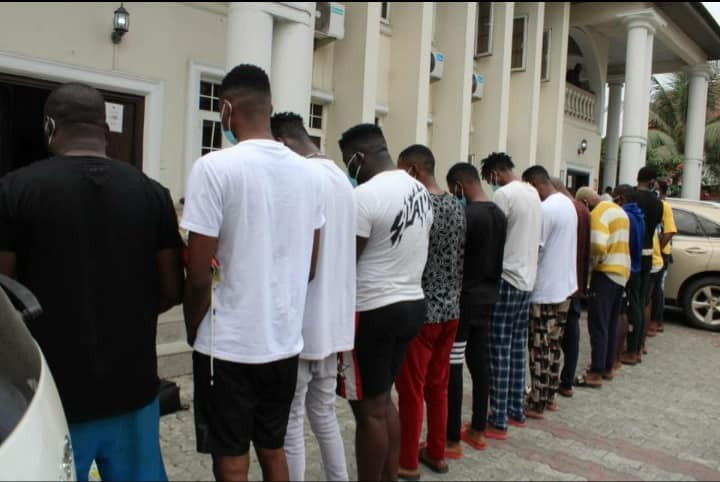
  • PHOTOS: EFCC operatives arrest medical doctor, 17 others over fraud in Owerri

    PHOTOS: EFCC operatives arrest medical doctor, 17 others over fraud in Owerri

    Operatives of the Uyo Zonal Office of the Economic and Financial Crimes Commission have arrested a 28-year-old medical doctor, Chijioke Precious over alleged internet fraud in Owerri, Imo State.

    WITHIN NIGERIA learnt that the medical doctor identified as Precious was arrested around 1am on Wednesday at Umuguma area of “World Bank” in Owerri, alongside 17 other suspected fraudsters.

    The other suspects whose ages range between 21 and 34 were identified as Anthony Joshua, Henry Mezie, Chukwuebuka Ahiwe, Michael Chinagorom, Jossy Irokwe, Ibe Chukwuebuka, Iroadinma Chibuike, Uchechukwu Divine and Nwosu Emmanuel.

    Others include Kenneth Williams, Mmesoma Oparanozie, Chikezie Ogochukwu, Uchenna Ejiogu, Victor Chijioke, Chidera Cyprian, Chukwuebuka Precious and Anyaehie Kelvin.

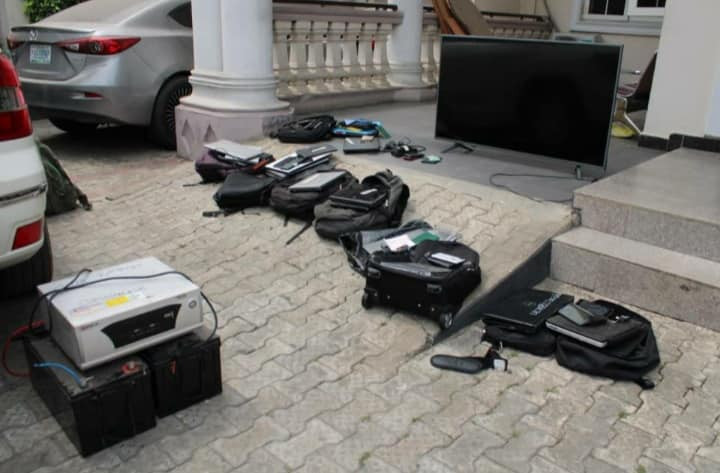
    In a press release, the agency said they recovered 7 luxurious cars which include, one green Lexus ES350, one blue Lexus ES320, two Toyota Venza, one silver Lexus RX 350, one black Toyota, and one white Mercedes Benz 4Matic from some of the suspects.

    Other items recovered include over 20 sophisticated mobile phones, more than 12 laptops, four inverter batteries, one big screen television, and jewelries suspected to be proceeds of crime.

    The suspects will all be charged to court as soon as investigations are concluded.

    See Photos:

  • Okorocha to Uzodimma: Recover my private varsity if you can

    Okorocha to Uzodimma: Recover my private varsity if you can

    Senator Rochas Okorocha, the immediate past governor of Imo state has challenged the incumbent governor of the state, Hope Uzodinma to recover his private university, Eastern Palm University(EPU), Ogboko, Ideato South Council Area of the state, if he has the legal power to do so.

    While insisting that the said university was a creation of the law, Okorocha clearly stated that it does not belong to the state government.

    This was in response to the statement released by the Imo state government that it had recovered the Eastern Palm University and had been empowered to deal decisively with anyone or group of persons ready to test the will of government over ownership of the university.

    In a statement issued on his behalf by his media adviser, Sam Onwuemeodo, Okorocha urged the general public to disregard the claim by the state government that it had recovered the university because it had no reason to take over the university from him.

    According to him, the government’s claim was only aimed at distracting the public from the total collapse of governance in the state.

    “The Eastern Palm University was a creation of the law. It has a law establishing it. It is a legal entity. So, it is not a kiosk or market store one could wake up one day, to claim or announce to have recovered.

    “The Eastern Palm University was established by the Imo State of Nigeria, Law No. 3 of 2019. And part II, No.3 (3) Stated that, “the University shall be owned on a Public Private Partnership (PPP) basis, by the Imo State Government and the Incorporated Trustees of Rochas Foundation, hereinafter referred to as the Parties”.

    “And the Agreement and Memorandum of Understanding between the Concerned Parties are domiciled in the relevant bodies or Institutions. And the law also provided that any of the Parties, “may decide to opt out of the Agreement upon giving the prescribed notice and meeting the conditions for opting out as contained in the Agreement”, the state reads.

    Okorocha said it was absurd for the government to announce to have recovered an institution established by law, through a press conference held in one of the offices  in  government house, claim to have based the action on a Whitepaper, seen by nobody.

    The former governor reminded Governor Uzodimma of his assurance to release the Whitepaper on all the recommendations of the panels set up by his government or the government before him.

    “And instead of living up to his vow or assurance to release the Whitepaper, he decided to play Politics of Vendetta with the issue.”

  • IGP to arraign Ohakim over ‘threat to circulate nude photos’ of a lady

    IGP to arraign Ohakim over ‘threat to circulate nude photos’ of a lady

    Police will on Monday, February 15 arraign former Imo governor Ikedi Ohakim and another man named Chinedu Okpareke before a Federal High Court sitting in Abuja for allegedly threatening and harassing Chinyere Amuchinwa.

    They will be arraigned before Justice Taiwo Taiwo.

    According to the charge sheet with number FHC/ABJ/CS/287/2020, the defendants allegedly threatened to release a nude photograph of Amuchienwa if she fails to drop the charges of attempted kidnap against them.

    In the five-count charge dated November 25, 2020, and signed by M.O. Omosun, the police alleged that both Mr Ohakim and his accomplice knowingly and intentionally transmitted communication through a computer system or network to harass and bully Amuchienwa.

    The alleged offence is punishable under Section 24(1)(a) of the Cybercrime Act 2015.

    One of the charges read, “That you Chinendu Okpareke ‘m’ 49, and Dr Ikedi Ohakim ‘m’ and others now at large on the 13th day of August 2020 within the jurisdiction of this court did conspire among yourselves by knowingly and intentionally send messages by means of computer system or network in a grossly offensive, pornographic, nude of an indecent obscene and menacing character of one Chinyere Amuchienwa ‘f’ and thereby committed an offence punishable under Section 27 (1)(a) of the Cybercrime Act 2015.”