Tag: INEC

  • What the Electoral Act 2026 Amendment Means for Electronic Voting Transmission

    What the Electoral Act 2026 Amendment Means for Electronic Voting Transmission

    On the 18th of February 2026, President Bola Tinubu signed into law the Electoral Act 2022 (Repeal and Re-Enactment) Bill 2026, ending a legislative process that had consumed nearly two years, triggered street protests outside the National Assembly, and reopened every unresolved argument from the 2023 general elections. The signing came roughly 24 hours after the harmonised bill cleared both chambers, a pace that contrasted starkly with bills that had waited years for presidential attention.

    The reform debate was never abstract. It grew from a specific and documented failure: during the 2023 presidential election, INEC uploaded only 31.8 percent of polling unit results to its Result Viewing Portal within 36 hours of polls closing, while collation centres in Lagos, Rivers, Kogi, and several northern states announced figures that differed materially from what BVAS devices had recorded at the units. The Supreme Court, when petitions reached it, ruled that IReV was merely a public viewing portal and carried no legal force. That judgment did not end the dispute. It relocated it to the National Assembly.

    What the Electoral Act 2026 Amendment Means for Electronic Voting Transmission

    Electronic voting

    The Electoral Act 2026 Amendment represents the most consequential statutory intervention in Nigeria’s result transmission framework since independent elections began. At its centre is Section 60(3), which converts electronic transmission from a policy preference into a legal obligation. How that obligation is qualified, and what those qualifications leave open, will shape the credibility of every election Nigeria holds from 2027 onward.

    What the 2022 Act Actually Said and Why Courts Rejected Electronic Results

    The Electoral Act 2022 was widely treated as a breakthrough, and in several respects it was. It introduced the Bimodal Voter Accreditation System, expanded timelines for petitions, and signalled an intent to use technology for result management. But Section 60(5) of that Act stated only that the presiding officer shall transfer results ‘in a manner as prescribed by the Commission.’ It said nothing about electronic systems, nothing about the internet, and made no mention of the IReV portal.

    Section 50(2) reinforced this discretion by placing the entire transmission process within the Commission’s operational guidelines. When disputes from 2023 reached the courts, judges followed the law as written. The Supreme Court held in multiple judgments, including Lawal v. Maitawalle and Ifeanyi v. INEC, that electronic transmission was directory rather than mandatory, meaning non-compliance did not automatically invalidate an election result where manual collation had been properly conducted. The Court of Appeal had similarly ruled that the law did not require immediate electronic transmission as a condition for result validity.

    In summary: INEC had deployed technology without the statute demanding it, which meant courts could not compel the commission to rely on the data that technology produced. Citizens watched results on IReV that contradicted what collation centres announced, and the law provided no mechanism to act on that discrepancy.

    The Legislative Battle: From Rejection to Emergency Session

    The original committee proposal for the new Act contained three elements in a revised Section 60(3): mandatory electronic transmission, explicit statutory recognition of the IReV portal, and a requirement that transmission happen in real time while polling agents and observers were still present at the unit. That sequence mattered. Real-time upload during counting would have closed the window in which results could be altered between a polling unit and a collation centre.

    When the bill came before the Senate on the 4th of February 2026, the chamber rejected the committees’ proposal and voted to retain the existing framework from the 2022 Act. The decision triggered nationwide protests. Civil society organisations and opposition figures condemned the vote. Former Vice President Atiku Abubakar, who had joined the African Democratic Congress in late 2025, was among the vocal critics. Faced with public pressure, the Senate reconvened for an emergency session on the 10th of February and reversed its position.

    The House of Representatives, which had passed a version mandating real-time transmission in December 2025, subsequently rescinded that position during a harmonisation session on the 17th of February, aligning instead with the Senate’s revised clause. The bill passed both chambers and received presidential assent the following day.

    Section 60(3): What the Law Now Actually Requires

    The enacted version of Section 60(3) reads, as confirmed by Senate President Godswill Akpabio during the emergency session: ‘The presiding officer shall electronically transmit the results from each polling unit to the IREV portal and such transmission shall be done after the prescribed Form EC8A has been signed and stamped by the presiding officer and/or countersigned by the candidates or polling agents where available at the polling units. Provided that if the electronic transmission of the results fails as a result of communication failure, the result contained in Form EC8A signed by the presiding officer shall be the primary source for collation and declaration of results.’

    The law also gives statutory recognition to the Bimodal Voter Accreditation System under Section 47, and Section 60(6) prescribes a penalty of six months imprisonment, a fine of N500,000, or both, for any presiding officer who wilfully frustrates electronic upload. Senate Leader Michael Opeyemi Bamidele described this penalty provision as directly responsive to public demands, noting it attaches accountability to the transmission obligation in a way the 2022 Act never did.

    What Changed for Election Tribunals: The Admissibility Question

    The practical legal shift is significant. Under the 2022 framework, courts consistently treated IReV data as having no determinative weight over manually collated figures. Under the 2026 Act, election tribunals in 2027 are obligated to receive IReV data as admissible evidence and engage with it. That is not a minor procedural shift. It means a petitioner can now point to what the IReV portal recorded and require a court to address the discrepancy between those figures and what was declared.
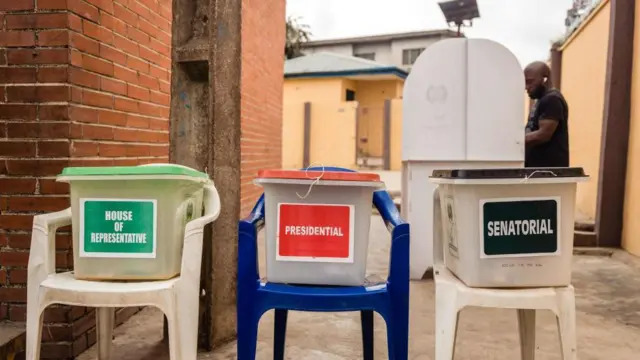
    Election voting centre

    The more contested question is evidentiary weight rather than admissibility. The Act creates a statutory hierarchy in which the manual Form EC8A is described as ‘the primary source’ when communication failure is claimed. In such circumstances, IReV data functions as corroborating rather than determinative evidence. Tribunals encountering a conflict between the two will face a question the Act leaves entirely unanswered: what standard of proof governs a challenge to a presiding officer’s claim of communication failure? Legal analysts writing in TheCable and on OAL Law’s platform have identified this gap as the most likely generator of appellate litigation after 2027, with first-instance decisions likely to diverge before higher courts establish a consistent standard.

    The Undefined Loophole: What ‘Communication Failure’ Does Not Mean

    The Act nowhere defines ‘communication failure.’ It does not state whether the term covers complete network absence, intermittent connectivity, server congestion at INEC’s end, equipment malfunction, human error in operating the device, or deliberate interference. It establishes no procedure for certifying that failure has occurred. It creates no independent verification mechanism, no requirement for INEC technical staff to investigate, and no standard by which a collation officer can reject a claimed failure and demand electronic submission.

    This is not a hypothetical concern. In 2023, INEC cited ‘technical glitches’ to account for delays in uploading results, and the commission offered no detailed explanation. The institution that failed to upload 68.2 percent of presidential results within 36 hours of polls closing remains the institution that would, under the 2026 Act, have primary discretion in determining when transmission has failed. Commentators including the EiE Nigeria civic organisation and Premium Times have made this point directly: the law mandates transmission without protecting the legal integrity of what transmission produces.

    Kenya’s approach is frequently cited as a contrasting model. Kenya’s electoral commission is legally required to test and certify its transmission infrastructure at least 60 days before any election, and electronic results form part of the official legal record from the moment of upload. Nigeria’s law takes a different path: the obligation to transmit exists, but the mechanism for its enforcement remains substantially in the hands of the same institutional actors whose discretion the 2022 Act had already made problematic.

    The Broader Reforms: BVAS, PVC Downloads, and Penalties

    Electronic transmission dominated the public debate, but the 2026 Act introduced several other changes with direct practical consequence. Section 47 gives BVAS statutory recognition for the first time, removing the ambiguity that allowed some polling units during 2023 to revert to manual accreditation without legal challenge. BVAS had been deployed under INEC’s operational guidelines rather than an explicit statutory mandate, which created the same vulnerability that the 2022 Act created for IReV.
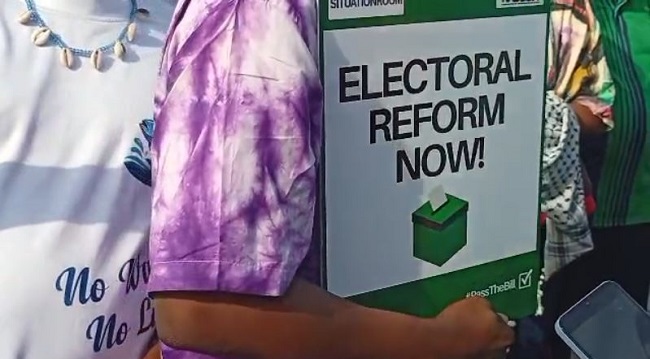
    Electoral Act 2026, electronic transmission, IReV portal, INEC, Nigeria elections 2027, Form EC8A, BVAS, election reform Nigeria
    Electoral reforms campaign

    The Act also allows registered voters to download their Permanent Voter Cards directly from INEC’s website. In 2023, millions of PVCs went uncollected because physical collection involved wrong centres, inadequate notice, and logistical failures that fell hardest on working Nigerians in urban areas. Digital access removes that barrier without requiring any change to the underlying registration system.

    On campaign finance, the Act introduces limits on spending and strengthens the framework for pre-inauguration dispute resolution, requiring election petitions to be filed and resolved before a declared winner takes office. On penalties for vote-buying, the Senate removed a proposed 10-year ban for persons convicted of purchasing voter cards, describing it as disproportionate, and replaced it with a N5 million fine and a two-year custodial sentence.

    The Act also reduces the timeline for releasing election funds to INEC from 12 months to 6. The funding timeline change has drawn less attention but carries real risk. Before the 2022 Act, INEC had no guaranteed timeline at all and negotiated funds from the executive each cycle. Halving the planning window reduces the commission’s buffer against late disbursements, particularly for an election spread across presidential, National Assembly, governorship, and state assembly contests.

    What Signing Within 24 Hours Signals

    The speed of assent drew pointed commentary. President Tinubu signed the bill within roughly 24 hours of passage, while acknowledging Nigeria’s broadband limitations as a reason not to require real-time transmission. Critics noted the contrast between that pace and bills that had waited years for executive attention, reading the timing as evidence of tacit coordination between the Presidency and the National Assembly to close the matter before pressure could build for a stronger Clause 60.
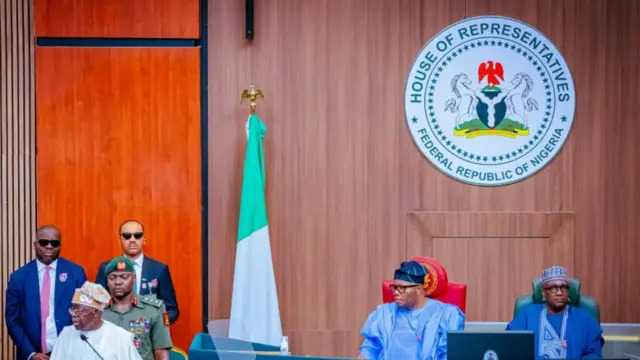
    Nigeria’s legislative house

    At the signing ceremony, Senate President Akpabio described Tinubu as ‘the first president to introduce electronic transmission of results from the polling units to the entire world,’ and noted that even where network is absent, officials can carry a result to a networked location for later upload. Transparency advocates responded that ‘later upload’ is exactly the window through which manipulation has historically occurred, and that the law as signed does not close it.

    The Implementation Test That Matters

    Nigeria’s electoral challenge has historically been less about the absence of law than about enforcement discipline. The 2022 Act was, by the standards of Nigerian electoral legislation, a progressive document. What happened in 2023 was not a failure of statute so much as a failure of institutional compliance, political will, and judicial capacity to impose consequences in real time.

    The 2026 Act is more explicit than its predecessor. Electronic transmission is now mandatory by statute, BVAS has legal backing, IReV data is admissible in court, and presiding officers face a specific criminal penalty for wilful non-compliance. These are genuine advances. Whether they translate into a meaningfully different 2027 election depends on four things that no statute can directly control: whether INEC builds and certifies infrastructure before polling day, whether the commission documents and accounts for any claimed transmission failures, whether tribunals apply the new evidential framework with consistency, and whether political actors with influence over presiding officers find the cost of obstruction has actually risen.

    The 2027 general elections are scheduled for the 16th of January (presidential and National Assembly) and the 6th of February (governorship and state assemblies). That timetable leaves INEC a narrower runway than any comparable election cycle since the return of democracy in 1999. The Electoral Act 2026 has changed the legal architecture. Whether the institution meets the architecture is the question that will be answered at the polls.

  • Voter data protection: Emeke Ike, Lere Olayinka and the nagging questions for INEC

    Voter data protection: Emeke Ike, Lere Olayinka and the nagging questions for INEC

    The trust and confidence of many Nigerians in the commission has waned considerably, if not lost completely. Its antecedents and recent actions have left many disillusioned with politics and governance as they no longer believe it is capable of conducting credible polls. For a commission that has not been entirely open and forthright about its dealings and activities, it is hard to believe that Emeka Ike was the only person whose data was retrieved and exposed by this account.


    When Lere Olayinka shared the voter card information and data page of Nollywood actor, Emeka Ike from the backend of the Independent National Electoral Commission (INEC), he did it to mock and belittle the political ambition of the thespian who was seeking to secure the Nigerian Democratic Congress (NDC) ticket to represent one of the constituencies in the federal capital territory in the House of Representatives. However, it did not take long for what he thought to be an innocuous cheap shot to score a political point and denigrate the actor to become a scandalous miscalculation.

    Olayinka’s revelation of Ike’s voter registration information from INEC’s backend was supposed to be a jab at what he felt was the latter’s political misadventure but it revealed something deeply disturbing and damning, particularly for an organisation that is grappling with serious erosion of public trust and reputational damage. The outrage and condemnation were swift and intense. With outrage comes one big question: How did a lowly media aide of the FCT minister, Nyesom Wike, have access to INEC’s database that should ideally only be accessible to a few top brass of the commission’s information technology (IT) department its figures in the top echelon of its administrative department.

    If the outing of the INEC chairman, Joash Amupitan, as an apologist of the ruling party and staunch supporter of president Bola Tinubu last month via his digital footprint on X raised serious questions about his legitimacy, the optics of his continued stay in the position and his ability to conduct a free, fair, and credible election, then the unfettered access to the database of voter by the media aide of Wike — the henchman of the president, a man that has acquired a reputation for perverting democracy and violently subverting the will of the people — has cleared the doubt as to where INEC allegiance truly lies and also shattered whatever tinge of hope many had that INEC is an independent arbiter capable of conducting credible polls.

    Expectedly, following the widespread reproach that greeted Lere’s action, the commission, like it did last month during the scandal that rocked it over its chairman’s affiliation with the APC, issued a tame, weak and perfunctory press release on Tuesday. The commission confirmed that the voter information was accessed using valid staff details and subsequently released without authorisation. It assured the public that there was no external hacking or breaching, no system-wide compromise, and that the incident concerned only one specific voter record.

    But that reassurance elicited more questions than it answered. The critical question INEC has not answered is this: how many other voter records and information did the user account in question access and subsequently release to Olayinka and others? The commission’s statement identifies a specific user account through its audit trail and confirms that authorised INEC registration officers were provided with controlled access to certain elements of the CVR system to process registrations, transfers, and updates.

    That access is elaborate and strikes at the heart of data protection which has become a controversial subject in recent years. If a single authorised account could pull up Ike’s application number, VIN, registration centre, profile photograph, and date of application — all the personal information displayed in the screenshots — what other information does it have access to and to whom is he or she providing it? It is not enough for INEC to tell us that only one voter was affected by the egregious betrayal of public trust, it has to show it.

    The trust and confidence of many Nigerians in the commission has waned considerably. Its antecedents and recent actions have left many disillusioned with politics and governance as they no longer believe it is capable of conducting credible polls. For a commission that has not been entirely open and forthright about its dealings and activities, it is hard to believe that Emeka Ike was the only person whose data was retrieved and exposed by this account. In fact, the consensus among many Nigerians, particularly opposition members, is that if Ike Data information can be accessed by Olayinka, then the ruling party has unrestricted access to the data of millions of Nigerian voters.

    This is not an insignificant oversight or a negligible administrative lapse. It is an issue that goes to the core of INEC’s credibility and public confidence. Nigeria’s data protection framework, under the Nigeria Data Protection Act 2023, imposes obligations on data controllers and processors. INEC is a data controller. The unlawful disclosure of a registered voter’s personal information — and its continued public availability — demands a response beyond an internal audit.

    The questions that need answers are pretty simple and straightforward: Was the purported user account suspended immediately upon identification? Was access to the CVR portal by non-INEC personnel — including political appointees and their staff — ever formally authorised, and under what authority? And critically, will INEC publish the full scope of what was accessed from that account, not just the one record it has admitted to?

    A voter database is among the most sensitive and critical central storage of citizen data a government can have. Its integrity is not merely a technical matter, it is a democratic one. INEC’s statement, as it stands, tells Nigerians what did not happen. What they need to know is the full account of what happened. This saga is the latest in the growing list of episodes of troubling incidents at INEC that further deepens many Nigerians’ distrust of the commission. If anything, many now see the body as an appendage of the ruling party.

  • FACT CHECK: Did Angry Youths Burn Nafiu Bala’s House in Gombe?

    FACT CHECK: Did Angry Youths Burn Nafiu Bala’s House in Gombe?

    CLAIM: Angry youths set fire to Nafiu Bala’s residence in Gombe State after the Supreme Court recognized David Mark’s faction as the legitimate leadership of the African Democratic Congress (ADC).


    BACKGROUND

    Shortly after the Supreme Court affirmed David Mark’s faction as the ADC’s legitimate leadership on 30 April 2026 and INEC updated its records, several Facebook posts alleged that youths had torched the home of Nafiu Bala, a factional ADC leader in Gombe State.

    These posts included four images: a portrait of Bala and three photos of buildings engulfed in flames with onlookers present.

    VERIFICATION

    When WITHIN NIGERIA team analysed the images, it discovered that one of the photos used in the post is from a fire at Abubakar Tatari Ali market in Azare, Bauchi State, on 6 March. It has no connection to Nafiu Bala or Gombe State.

    Likewise, DSP Buhari Abdullahi, Public Relations Officer for the Gombe State Police Command, said after an investigation that no fire at Bala’s residence occurred anywhere in the state.

    He described the story as false and confirmed no incident was recorded.

    Abdullahi urged residents to disregard the misinformation, remain calm, and verify information before sharing it online to avoid spreading panic.

    He reiterated that the command is maintaining peace and security across all LGAs in Gombe.

    The allegation that Nafiu Bala’s house was set ablaze by angry youths is false and misleading. No such event occurred, according to the Gombe State Police Command.

    VERDICT

    The claim that angry youths set Nafiu Bala’s residence ablaze after the Supreme Court recognized David Mark’s faction is false and misleading.

    No such event occurred, according to the Gombe State Police Command.

  • LEGAL INSIGHT: Electoral Act 2026 restricts court action on party disputes

    LEGAL INSIGHT: Electoral Act 2026 restricts court action on party disputes

    Political party disputes in Nigeria have historically been settled through court intervention, particularly in cases involving leadership struggles and candidate selection processes.

    The Electoral Act 2026 now introduces clearer limits on judicial involvement in such internal matters, aiming to preserve party autonomy.

    Section 83(5) of the law provides that “no court in Nigeria shall entertain jurisdiction over any suit or matter about the internal affairs of a political party”.

    Subsection 6 further directs that courts should avoid issuing interim or interlocutory injunctions in such cases and instead deliver accelerated final judgments while suspending premature rulings.

    The law also imposes financial sanctions, with Section 83(6)(b) prescribing a minimum cost of N10 million against plaintiffs and their legal representatives where such suits are filed.

    Section 88(4) also bars courts from halting party primaries or general elections pending the determination of any dispute.

    ADC LEADERSHIP DISPUTE

    The internal crisis within the African Democratic Congress (ADC) has emerged as a practical test of the provisions of the Electoral Act 2026.

    The Independent National Electoral Commission (INEC) initially declined recognition of a leadership structure led by David Mark following an appellate court directive to maintain the status quo ante bellum.

    The dispute followed a leadership transition in July 2025 when Ralph Nwosu resigned and endorsed an interim arrangement led by Mark after opposition figures adopted the party for the 2027 political cycle.

    However, a rival faction led by Nafiu Bala challenged the arrangement, insisting he remained deputy national chairman and should assume leadership based on party rules.

    On September 2, 2025, Bala filed Suit No. FHC/ABJ/CS/1819/2025 at the Federal High Court in Abuja seeking to restrain the Mark-led leadership from operating as party executives.

    He also sought orders preventing INEC from recognising the leadership and requested recognition as acting national chairman.

    Further applications sought to halt party meetings, congresses and conventions pending final determination of the case.

    At a hearing on September 4, 2025, Justice Emeka Nwite ordered that all respondents, including INEC, be served to respond to the motion.

    In an affidavit submitted on September 12, 2025, INEC urged the court to avoid intervening in what it described as internal political party affairs.

    An assistant executive officer, Ayuba, deposed that the case represented an attempt to draw the court into matters reserved for political party governance.

    The affidavit stated, “That the Plaintiff’s application is in substance an invitation to this Honourable Court to delve into issues of internal/domestic affairs of 1st Defendant as a political party”.

    It further added, “That I know as a fact that a Court of record should not dabble into a political question, which remains the exclusive preserve of political parties, which should be allowed to do their thing.”

    Judicial precedent has consistently reinforced limits on court jurisdiction over internal political party affairs.

    In earlier decisions, the supreme court held that political parties operate as voluntary associations governed by their constitutions and internal regulations.

    In Uba v. Ozigbo (2021), the court ruled that candidate nomination processes remain exclusively within party control.

    Similarly, in Anyanwu v. Emmanuel (2025), the apex court stated that leadership disputes within parties are non-justiciable and fall outside judicial authority.

    Despite these rulings, litigations over party control continue to be filed in courts across the country.

    NBA WARNS

    The Nigerian Bar Association (NBA) has cautioned against increasing court involvement in political party disputes.

    NBA president Afam Osigwe described such cases as contrary to the Electoral Act 2026 and warned that they undermine legal order.

    He also stated that disciplinary action may be taken against legal practitioners who initiate cases contrary to the law’s provisions.

  • POLITICAL OUTLOOK: ADC’s next steps after controversial convention

    POLITICAL OUTLOOK: ADC’s next steps after controversial convention

    The African Democratic Congress (ADC) faces a defining moment after holding a disputed national convention amid regulatory resistance and deepening internal divisions ahead of the 2027 elections.

    The party proceeded with the convention despite the Independent National Electoral Commission (INEC)declining to recognise any faction following a leadership dispute currently before the courts.

    The electoral body based its position on a March 12 judgment of the Court of Appeal directing all parties to maintain the status quo pending determination of the substantive suit.

    INEC subsequently announced that it would not monitor meetings or recognise any leadership structure within the party until legal clarity is achieved.

    Despite this position, the faction led by the former senate president, David Mark, went ahead with the convention and announced a new National Working Committee.

    The convention, which was eventually held at the Rainbow Event Centre in Abuja after a venue dispute, produced Mark as national chairman of the party.

    The former governor of Imo State, Emeka Ihedioha, who chaired the electoral sub-committee, confirmed the outcome of the exercise.

    The new leadership also includes the former minister of interior, Rauf Aregbesola, who was named national secretary.

    During the convention, the party dissolved the previous National Working Committee and amended aspects of its constitution.

    The development followed weeks of tension within the party, with multiple factions laying claim to its leadership structure.

    Apart from the Mark-led group, other factions emerged under the former deputy national chairman, Nafiu Bala, and the party’s 2023 presidential candidate, Dumebi Kachikwu.

    In a move aimed at asserting control, the convention announced the expulsion of Bala and several other members accused of undermining the party.

    The national secretary of the party, Rauf Aregbesola, defended the decision to hold the convention, insisting that all legal procedures were followed.

    “We have discharged the responsibility required of us, and at this point, it is the duty of INEC to equally discharge its constitutionally and lawfully assigned responsibility by attending and monitoring this convention. It’s a duty,” he said.

    “The decision of INEC to refuse to attend and monitor our convention amounts to a dereliction of duty, bordering on a dangerously partisan outlook aimed at unlawfully delegitimising the otherwise legitimate actions of our party, the ADC.”

    Aregbesola further cited provisions of the Electoral Act, stating that failure to notify INEC is the only ground upon which a convention can be invalidated.

    “The only condition that would warrant a congress or convention of a party to be invalid is contained in Section 82, Subsection 6 of the Electoral Act 2026,” he said.

    “Failure of a party to notify the commission as stated in Sections 1 and 2 shall render the primaries, convention, congress, and congresses invalid.”

    He maintained that the party complied with all requirements, including submission of membership registers and notification timelines.

    However, the minister of the federal capital territory, Nyesom Wike, rejected the claims, describing the party’s position as an attempt to attract sympathy.

    The leadership dispute has also triggered strong reactions from political actors aligned with the party’s emerging coalition.

    The former vice-president, Atiku Abubakar, accused the electoral body of undermining democratic processes.

    “I will not end these remarks without indicting the chairman of INEC and INEC itself because it is clear, it is obvious, the evidence is there. INEC is being used to scuttle democracy in this country,” he said.

    “Now, let the Federal Government know that we fought the military to bring democracy in this country, and we are going to fight them to bring democracy in this country.”

    He further warned that the party would resist actions it considers unlawful.

    “Let the chairman know we are not going to let him get away with his illegalities, we will not, and I hope we will have your support and cooperation to make sure we return to true democracy, to true development in all aspects of human endeavour,” he added.

    Other party members also criticised INEC’s stance, describing it as a misinterpretation of the appellate court’s directive.

    The national publicity secretary of the party, Bolaji Abdullahi, said the commission’s understanding of “status quo ante bellum” was incorrect.

    “The Court of Appeal ruling at the centre of the dispute to maintain ‘status quo ante bellum’ has been misinterpreted by INEC… That interpretation is not only fraudulent, but also dishonest and completely self-serving,” he said.

    INEC, however, maintained that its position was guided by legal advice and the need to avoid actions that could prejudice ongoing court proceedings.

    The chairman of the commission, Joash Amupitan, explained that conflicting requests from factions influenced the decision to suspend recognition.

    He said the commission interpreted the court order as requiring it to revert to the leadership structure that existed before the dispute escalated.

    Meanwhile, internal disagreements continue to shape the party’s outlook as it prepares for key electoral deadlines.

    INEC has set timelines for submission of membership registers and conduct of party primaries ahead of the 2027 elections.

    Failure to meet these requirements could affect the party’s eligibility to field candidates.

    Legal experts say the outcome of the ongoing court case will play a crucial role in determining the party’s participation in the electoral process.

    A senior advocate of Nigeria, Olu Daramola, said resolving the dispute is essential for the party’s survival.

    “You may end up with only one party because the PDP is already decapitated. The party is in the hands of those who say the President must continue, and they are working for the President,” he said.

    “ADC appears to be the only credible opposition for now. If they don’t resolve their crisis, they may not be able to field any candidate in the coming elections.”

    A public affairs analyst, Jide Ojo, also highlighted the urgency of reaching a resolution before regulatory deadlines.

    “Are they going ahead? If they do, will INEC recognise the outcome? Most likely, INEC will not,” he said.

    “If INEC does not recognise any leadership, who will submit the register due by May 10? Failure to do so means the party will not participate in the election.”

    Amid the uncertainty, efforts are ongoing within the party to address internal divisions and engage stakeholders.

    There are also indications of possible alliances with other political groups as part of broader opposition realignments.

    Political observers say the coming months will determine whether the party can consolidate its structure and position itself effectively ahead of the 2027 polls.

  • ELECTION WATCH: INEC’s role and credibility ahead of the 2027 polls

    ELECTION WATCH: INEC’s role and credibility ahead of the 2027 polls

    As preparations gradually gather pace for the 2027 general elections, attention is increasingly turning to the role of the Independent National Electoral Commission (INEC) as the body responsible for organising the process.

    Discussions around the forthcoming polls have centred largely on the issue of credibility, particularly how electoral outcomes are perceived by voters, political actors, and observers.

    In examining the current climate, references are often made to the conduct of the 2023 general elections as a benchmark for comparison.

    The 2023 elections, though not without challenges, were widely described as competitive, with multiple political parties presenting candidates across various levels.

    Before the primaries in 2022, Nigeria’s political space was largely dominated by two major parties, but this expanded to include more viable contenders ahead of the election.

    This expansion was driven by movements of political actors across party lines, which contributed to the emergence of a broader field of candidates.

    Notably, such political shifts occurred without reported interference from anti-corruption agencies or judicial processes that could have restricted participation.

    Similarly, the administration of the late president, Muhammadu Buhari, was not publicly linked to direct intervention in the electoral process during that period.

    Observers also noted that the electoral commission did not withdraw recognition from opposition parties or intervene in internal party disputes before the election.

    These factors collectively contributed to the perception of a competitive environment, which is widely regarded as a key element of electoral legitimacy.

    Another important component was the level of public confidence in the electoral management body prior to the election.

    Stakeholders, including voters and international observers, expressed trust in the commission’s ability to conduct the process.

    During debates around the Electoral Act amendments, proposals concerning electronic transmission of results drew public attention.

    There were suggestions that result transmission infrastructure be managed by a government agency, but this proposal did not gain acceptance among stakeholders.

    Instead, emphasis was placed on the electoral commission maintaining control of its processes to ensure independence.

    At the time, international partners also publicly expressed confidence in the commission’s preparedness for the elections.

    These developments contributed to a relatively positive institutional image ahead of the polls.

    However, discussions surrounding the 2027 elections indicate that perceptions of the commission’s neutrality are now being more closely scrutinised.

    Concerns have been raised about decisions relating to party leadership disputes and the interpretation of court rulings.

    Such actions, while grounded in legal processes, have generated debate about their broader impact on the political environment.

    Analysts note that electoral bodies often play a balancing role in maintaining openness within the political system.

    In situations where multiple institutions are involved, including courts and regulatory agencies, the conduct of the electoral commission becomes central to maintaining equilibrium.

    The perception of fairness is considered as significant as the actual implementation of electoral laws.

    If stakeholders believe that the process is not even-handed, confidence in the outcome may be affected irrespective of legal justifications.

    Another aspect frequently highlighted in discussions is the level of competitiveness expected in the upcoming election cycle.

    Historical data suggests that closely contested elections, with narrower margins of victory, tend to reflect improved electoral practices.

    In previous election cycles, large disparities in vote margins were often interpreted as indicators of irregularities.

    However, more recent elections have shown reduced margins between leading candidates, suggesting evolving electoral dynamics.

    Additionally, the performance of opposition parties has been cited as a measure of openness within the political system.

    In 2023, several smaller parties achieved representation at the national level, marking a shift from earlier patterns.

    This development indicated a broader distribution of political participation across party lines.

    The extent to which similar patterns will be sustained in 2027 remains a subject of observation.

    Attention is also being paid to internal developments within political parties, as these can influence the overall structure of competition.

    Disputes, realignments, and organisational changes within parties may affect their readiness for the elections.

    In this context, the role of the electoral commission in recognising party leadership and supervising processes is seen as critical.

    Observers emphasise that the commission’s decisions must be transparent and consistent to maintain public trust.

    The credibility of any election is often linked not only to the conduct of voting but also to the broader environment in which the process takes place.

    This includes pre-election activities, legal disputes, and administrative decisions that shape participation.

    As the 2027 elections approach, these factors are expected to remain central to public discourse.

    Ultimately, the perception of fairness and openness will play a significant role in determining how the outcome is received by stakeholders.

    Maintaining institutional confidence is therefore considered essential to the overall integrity of the electoral process.

  • Amupitan’s partisanship and the aberration of INEC’s chairman appointment process

    Amupitan’s partisanship and the aberration of INEC’s chairman appointment process

    We must find a way to strip the president of the power to appoint INEC’s chairman and make the process of such an appointment clean, open and transparent. The vetting of anyone who must head the commission must be meticulous, painstaking, rigorous, and fair. It must be done by an Independent body made up of eminent, intelligent, and compassionate Nigerians with impeccable character, exemplary traits, and a sterling record of accomplishment in their various fields of endeavour. 


    Many reasons have been adduced for why Nigeria is in the distressing, uninspiring, regressive and chaotic state it is in. One of those reasons has been attributed to the Nigerian constitution. Some have argued that the framing of many aspects of the constitution gives too much leeway to those who should ideally be at forefront of protecting the constitution and adhering to its letter and spirit to bend rules, abuse the process of governance and in many cases wilfully violates the laws enshrined in the constitution to advance selfish and and nefarious interests that erode the rule of law, deepen impunity and hamper the nation’s ability to forge ahead politically, socially and, most importantly, economically.

    One of the aspects of the constitution that is constantly a subject of intense public debate is the appointment of the chairman of the Independent National Electoral Commission (INEC). The Nigerian constitution grants the Nigerian president unrestricted and unfettered power to appoint whomever he wants as the head of the electoral body, with little or no recourse to the input, contribution, opinions, or reservations of the citizens. This liberty to single-handedly decide who will head the most important institution in our electoral process, which to a great extent determines the stability of our democracy, has become a constitutional provision that has put our democracy in utter peril.

    For many, this provision is not only a minor anomaly that can be glossed over, but also a dangerous and foreboding arrangement that portends danger to our democracy and could ultimately lead to its demise. Since the return to democratic rule in 1999, only two presidents, late Umaru Yar’Adua and Goodluck Jonathan, have made conscious, deliberate and genuine efforts to deepen our electoral process and strengthen the autonomy of INEC. While Yar’Adua died in office before his electoral reforms could start yielding results, Jonathan, who ensured that the electoral reforms of his predecessor were implemented, would go on to lose his re-election due to the reforms.

    However, since 2015, there has been no significant concerted effort to build on the reforms of the Yar’Adua/Jonathan era. If anything, whatever inroads and progress they made to ensure we have an exemplary democracy and inspiring electoral processes have largely been reversed in the last decade. The situation has largely become progressively worse under the current administration with elections increasingly becoming a needless formality and wasteful adventure that legitimises the subversion of people’s will and brutal and power grab of ruthless and desperate politicians with inordinate ambition.

    The recent legal and political developments in the country have once again brought to the fore the debate regarding the appointment of INEC’s chairman by the president. Last Wednesday, the INEC announced that it will no longer recognise the leadership of the African Democratic Congress (ADC) under the chairmanship of David Mark and the national secretary, Rauf Aregbesola. The commission also announced that the names of both Mark and Aregbesola have been removed from its portal. INEC cited the ongoing legal dispute between the Mark-led leadership of the party and Nafiu Bala Gombe, who wants the commission to declare him the party’s chairman. The commission stated that it won’t recognise either of the factions as the legitimate leader of the party and will not monitor the congresses and conventions of the party. The electoral umpire said its action and decision are influenced by the latest ruling of the appellate Court for the parties to the suit to maintain status ante bellum.

    The decision of INEC stunned many keen watchers of Nigeria’s political space, with many asserting that the commission’s decision amounts to regulatory overreach and that there is more to the development than meets the eye. What made INEC’s decision disconcerting for many is the fact that the commission was involved in every internal political party arrangement and mechanism that produced the Mark-led leadership of the ADC and attested to the smooth, proper and meticulous process of change of leadership.

    Also, the decision of INEC comes across as an usurpation of the responsibility of the judiciary regardless of the justification and legal arguments it gave. Also, the order of the appeal court asking the concerned party to maintain the status quo was issued on March 12 but the commission decided to act on it by unilaterally interpreting the judgment as it deemed fit without approaching the appellate Court for interpretation. The unsettling development has raised serious concerns among many Nigerians as it further deepens the doubts and misgivings many have always harboured regarding the neutrality and independence of the commission and its capacity to conduct free, fair credible elections.

    While the furore and outrage elicited by INEC’s decision on ADC leadership are yet to subside, the commission is hit by another scandal. On Friday the chairman of the commission, Joash Amupitan, was exposed as a supporter of APC and President Bola Tinubu, long before his appointment. In a post from March 2023, Amupitan wrote that ‘victory is sure’ for the APC during the gubernatorial election in Lagos State while replying to one Dayo Israel, a popular staunch high-ranking member of the APC, who in his own tweet that Amupitan replied to, claimed the APC won seven of the ten polling units in his community. In April 2023, he commented “Asiwaju” on a post by the Tinubu support group on X announcing the return of Tinubu to Abuja after vacation and how thousands of people were waiting to welcome him.

    The account has since been locked after the name was changed from Amupitan to Sundayvibe00 to give the impression that it was a parody account that has nothing to do with the INEC chairman. But Grox, the X AI tool, confirmed that the X account indeed belongs to the INEC chairman. The truth is not many expect Tinubu to appoint an honest, competent, radical and forward thinking person that wants to make a real impact that will herald far reaching positive effects and change our electoral process for good as INEC chairman as doing this will put his own political ambition and objectives in jeopardy, but to appoint an openly partisan loyalist as the head of the nation’s electoral commission is a deeply troubling move even by Nigerian disgustingly low standards.

    But the issue here is beyond Amupitan and Tinubu. It is that of a nation that has not only normalised abnormality but infused it into its constitution and codified it in its legal documents. Appointment of INEC’s chairman by an incumbent president is one of the aberrations that must be rectified with immediate alacrity. We must find another way to appoint the man whom we want to entrust our votes and elections to. The stability and sustainability of our democracy should not have to be tethered to the magnanimity and benevolence of a president or his whims and ruthless quest for power. We cannot afford to continue on this treacherous path that leaves us at the mercy of the president who will want a chairman that is pliant and amenable to his wishes.

    We must find a way to strip the president of the power to appoint INEC‘s chairman and make the process of such an appointment clean, open and transparent. The vetting of anyone who must head the commission must be meticulous, painstaking, rigorous and fair, and must be done by an Independent body made up of Nigerians with impeccable character, exemplary traits and a sterling record of accomplishment in their various fields of endeavour. Their recommendations will be subject to approval from former presidents, representatives of the ruling party, opposition parties, the Nigerian Bar Association and civil society organisations. This way, the president is completely removed from the process of appointing an umpire who will conduct an election in which he will take part. It will amount to nothing more than a pipe dream to believe that a man who is unquestioningly loyal to the president will conduct a credible and transparent election that could see the current president lose power. And if there is one thing many Nigerians have learned from the political and legal developments in the country in the last two weeks, it is to keep their emotions in check and put the thought of a fair and credible presidential election in 2027 out of their mind.

  • PROFILE: Nafiu Bala rises as fresh contender amid uncertainty over Atiku, Obi ambitions

    PROFILE: Nafiu Bala rises as fresh contender amid uncertainty over Atiku, Obi ambitions

    The political landscape surrounding the African Democratic Congress (ADC) shifted on April 1 when the Independent National Electoral Commission (INEC) announced the withdrawal of recognition for two rival factions within the party.

    The decision, which coincided with a date often associated with pranks, initially generated doubt among observers who questioned whether the announcement was genuine.

    However, the commission clarified that its action was based on a judgement delivered by the court of appeal concerning internal disputes within the party.

    The faction aligned with the former senate president, David Mark, rejected the commission’s position and accused the electoral body of misinterpreting the court’s decision.

    At the centre of the dispute is Nafiu Bala, who has positioned himself as a leading figure within a rival faction claiming control of the party’s structure.

    Bala had previously appeared alongside stakeholders during the unveiling of the Mark-led leadership at an event held at the Shehu Musa Yar’Adua Centre in Abuja in July 2025.

    During that gathering, the former presidential aide, Lauretta Onochie, introduced Bala as the deputy national chairman responsible for intergovernmental affairs.

    The founder of the party, Ralph Nwosu, stated at the event that members of the national executive council and national working committee had stepped down to allow a new interim leadership to emerge.

    Bala was listed among those said to have resigned from their roles to pave the way for the interim arrangement.

    Weeks after the event, Bala publicly rejected the leadership structure and announced himself as the national chairman of the party at a separate briefing in Abuja.

    He alleged that the emergence of the Mark-led leadership did not follow due process and was inconsistent with the party’s constitution.

    Bala maintained that he had not resigned from his earlier position and described reports suggesting otherwise as misleading and fabricated.

    He stated that legitimate members of the party would seek legal redress to challenge what he described as an unlawful takeover.

    The dispute soon moved to the courts when Bala filed a suit at the federal high court in Abuja in September 2025.

    In his application, he asked the court to prevent members of the rival faction from presenting themselves as party leaders and to compel recognition of his own leadership.

    The presiding judge, Emeka Nwite, directed that the respondents, including the electoral commission, be notified to respond to the application.

    The Mark-led faction later approached the court of appeal to challenge the jurisdiction of the lower court to hear the matter.

    In March 2026, the appellate court dismissed the appeal, stating that it lacked merit and did not meet the required legal threshold.

    The panel, led by Uchechukwu Onyemenam, noted that the lower court had not issued a substantive ruling but had only directed parties to respond.

    The court further instructed all parties to maintain the existing situation pending further proceedings at the trial court.

    Bala’s political trajectory traces back to his early involvement with the Democratic Peoples Party, where he served as national secretary.

    In 2018, he issued a public statement denying claims that the party had entered into an alliance with the Peoples Democratic Party ahead of the 2019 elections.

    He later joined the Peoples Redemption Party with plans to contest a senatorial seat before leaving the party in 2022 to align with the ADC.

    That same year, he completed the documentation required by the electoral commission for participation in the Gombe State governorship election.

    He subsequently emerged as the ADC candidate for the election and received his certificate of return from the party leadership.

    The election was eventually won by Inuwa Yahaya of the All Progressives Congress, who secured a majority of the votes cast.

    Bala challenged the outcome through the legal process, taking the case from the election tribunal to the supreme court.

    At the apex court, he withdrew his appeal, leading to its dismissal by the court.

    The lead justice, Kudirat Kekere-Ekun, described the case as lacking merit and questioned the basis of the legal challenge.

    The ongoing leadership dispute within the ADC has implications beyond the party, particularly for opposition figures seeking a common platform ahead of the 2027 elections.

    Prominent politicians, including former vice-president Atiku Abubakar and former Anambra State governor Peter Obi, have been associated with the party as a potential coalition platform.

    Others, such as Rotimi Amaechi and Rabiu Kwankwaso, have also been linked to discussions around opposition alignment.

    The uncertainty surrounding the party’s leadership structure has raised concerns about its ability to participate effectively in the forthcoming elections.

    The Mark-led faction has suggested that the derecognition of the party could affect its capacity to present candidates.

    As legal proceedings continue and internal disagreements remain unresolved, the situation within the ADC continues to evolve.

    Observers note that the outcome of the dispute may influence broader political alignments as preparations for the 2027 elections gather momentum.

  • POLITICAL BREAKDOWN: Inside ADC’s fractured structure as three factions battle for control

    POLITICAL BREAKDOWN: Inside ADC’s fractured structure as three factions battle for control

    Tensions within the African Democratic Congress (ADC) deepened after the emergence of a new leadership group claiming authority over the party’s national structure.

    The development has further complicated the party’s internal situation, with three separate factions now asserting legitimacy ahead of the 2027 general elections.

    The latest group is led by the party’s 2023 presidential candidate, Dumebi Kachikwu, who announced plans to organise a national convention.

    The faction also disclosed its intention to set up an interim leadership to oversee party activities.

    Speaking at a media briefing, the group’s spokesperson, Norman Obinna, rejected the authority of other factions and distanced the group from rival claims.

    The party, once considered a possible platform for opposition collaboration, is now dealing with competing leadership structures.

    The roots of the disagreement can be traced to July 2025 when the long-serving national chairman, Ralph Nwosu, stepped down from his position.

    Following his exit, an interim leadership arrangement was introduced as part of efforts to reposition the party.

    The move was linked to broader political discussions involving opposition figures seeking a common platform.

    However, the transition was immediately challenged by some members of the party.

    A former deputy national chairman, Nafiu Bala, argued that the party’s constitution provided for his succession after the chairman’s resignation.

    At the same time, Dumebi Kachikwu and his supporters questioned the legality of the transition process.

    They described the arrangement as a takeover that did not reflect internal party procedures.

    The situation prompted the involvement of the Independent National Electoral Commission, which initially interacted with one of the factions.

    Subsequently, the commission withdrew recognition from the rival leadership groups.

    The electoral body cited ongoing legal proceedings and directed that the status quo be maintained pending court decisions.

    This position has left the party without a generally accepted leadership structure.

    The absence of a recognised authority has affected preparations for key party activities across different levels.

    The first faction is associated with the former senate president, David Mark, who heads an interim caretaker arrangement.

    This group includes figures such as former vice-president Atiku Abubakar, former Anambra State governor Peter Obi, and former Kano State governor Rabiu Kwankwaso.

    Other members include the former Osun State governor, Rauf Aregbesola, and the former minister of youth and sports, Bolaji Abdullahi.

    The faction emerged from the leadership transition announced in July 2025 and positions itself as the structure responsible for guiding the party.

    Supporters of this group maintain that the process followed established procedures within the party.

    The group had previously conducted activities and was initially acknowledged by the electoral commission before recognition was withdrawn.

    The second faction is led by Nafiu Bala, who maintains that he remains the rightful leader of the party.

    He has the backing of some members of the former national working committee and supporters at the state level.

    Bala insists that he did not resign from his position and that he is entitled to assume leadership based on constitutional provisions.

    The dispute involving his claim has been taken to court for determination.

    The third faction is led by Dumebi Kachikwu, who was the party’s presidential candidate in the 2023 election.

    His group includes individuals who identify with the party’s earlier structure prior to the 2025 leadership changes.

    This faction rejects both the Mark-led arrangement and Bala’s claim to leadership.

    The group has stated that Bala did not occupy the position he claims within the party structure.

    At the media briefing, the spokesperson of the faction outlined its position on the crisis.

    “The ADC remains a party of and for all Nigerians, and not just for former political office holders and the elites,” Obinna said.

    “The ADC is also not for sale,” he added.

    The group called on the electoral commission to recognise its structure and support its activities.

    It also emphasised the need to prevent further decline within the party.

    The current situation has placed the party in a state of uncertainty.

    The electoral commission has stated that it will not recognise any faction pending the resolution of court cases.

    It also indicated that it would not monitor meetings, congresses, or conventions organised by any of the groups.

    This position has created challenges for internal organisation and planning.

    The ongoing legal and administrative processes are expected to determine the direction of the party.

    Observers note that the outcome of the dispute may influence broader political alignments ahead of the next election cycle.

    For now, the party continues to operate without a unified leadership structure as the competing factions maintain their respective claims.

  • Who is ‘Nafiu Bala’? The Man at the Center of ADC Crisis

    Who is ‘Nafiu Bala’? The Man at the Center of ADC Crisis

    Nafiu Bala, a Gombe-born politician accused by the David Mark-led group of being responsible for the African Democratic Congress (ADC) crisis, has recently made headlines. 


    Recall that the Independent National Electoral Commission (INEC) on Wednesday, April 1 derecognized both factions (Nafiu Bala and David Mark) of the African Democratic Congress (ADC), citing an appeal court judgment.

    Following the INEC pronouncement, many events, including news conferences and protests, shaped the early days of April till date, as many questioned whether the African Democratic Congress (ADC) conflict would ever be resolved.

    Here are 12 things you probably did not know about Nafiu Bala, Gombe-born politician who is at the centre of the ADC crisis:

    He was born on June 6, 1986, in Gombe State.

    He is a politician and businessman

    He attended Nassarawo Primary School

    He attended Nassarawo Junior Secondary School

    He also attended Government Day Technical College (Vocational), Gombe, where he obtained his Senior Secondary School Certificate (SSCE) in 2010

    He obtained a Diploma in Law from A.D. Rufai College for Legal and Islamic Studies, Misau, Bauchi State (2012)

    He is the managing director of BALNARA Universal Ltd, a diversified company operating in cement distribution, real estate, logistics, and agriculture

    He began his political journey with the Democratic Peoples Party (DPP), where he served as national secretary

    He later joined the Peoples Redemption Party (PRP) and contested the 2023 Gombe north senatorial district election

    In 2022, he joined the African Democratic Congress (ADC) and contested the Gombe State governorship election, losing to Governor Muhammadu Inuwa Yahaya of the All Progressives Congress (APC)

    He claims to be the national chairman of ADC, citing the party’s constitution

    However, his leadership’s claim is contested by David Mark’s faction, leading to a bitter dispute and court battles