Tag: Lagos Island

  • The Vanishing Houses of Isale Eko: How neglect is erasing historic family compounds in 2025

    The Vanishing Houses of Isale Eko: How neglect is erasing historic family compounds in 2025

    Isale Eko has always been the heartbeat of Lagos Island, the place where stories of the city begin, long before the high-rise towers and buzzing traffic of Victoria Island. In 2025, walking through Adeniji-Adele Road, or peeking into Olowogbowo, you can still see traces of what Lagos used to be. Family compounds, some dating back to the eighteenth and nineteenth centuries, stand like stubborn ghosts of the past.

    These structures carry histories of families who witnessed colonial times, the rise of trade along the Lagos Lagoon, and generations who made Isale Eko their home. But many of them are vanishing slowly. It is not dramatic news flashes that tell the story, it is the quiet collapsing walls, the empty courtyards, the moss eating into what once was grand timber and carved doors that speak louder than words.

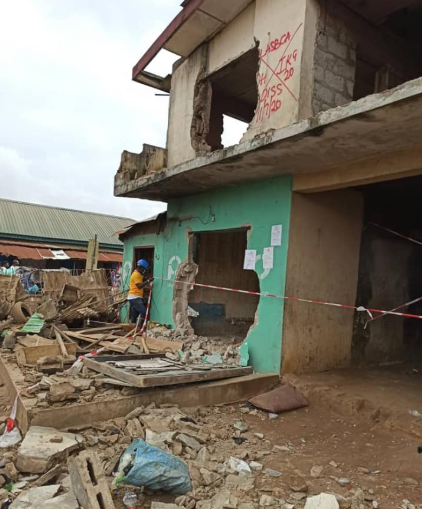
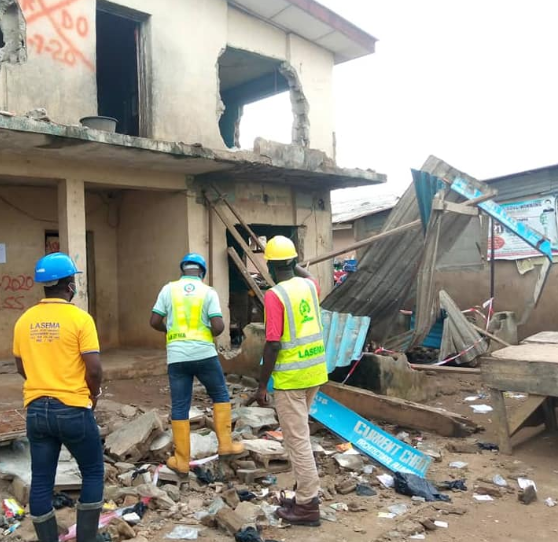
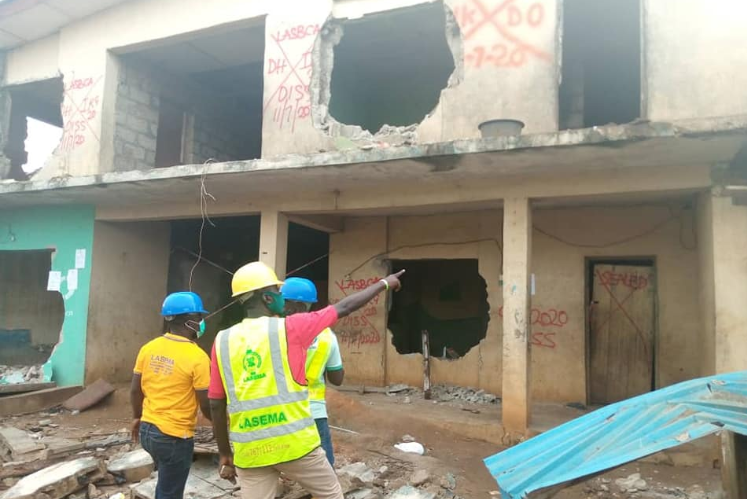
    In July 2025, a three-storey building along Adeniji-Adele collapsed, it had reportedly been marked for demolition months before, yet it lingered long enough to become dangerous proof of neglect. The collapse made the streets talk again, and reminded Lagosians that history is fragile when left unchecked.

    The Redevelopment Pressure That Never Sleeps

    Walking through Isale Eko today, it is clear that the pressure to redevelop is relentless. Roads are being widened, private developers eye every plot of land, and families sometimes sell their ancestral homes for reasons that make sense in cash terms, but break cultural continuity. The last decade has been ruthless for old compounds.

    Buildings that survived decades of coastal humidity, torrential rains, and political upheaval now fall not to nature, but to human hands reshaping the island for modern commerce. As 2025 unfolds, many properties have already been converted into commercial plazas or modern apartments.

    Residents and passersby feel the change every time a familiar compound disappears overnight, and a shiny wall replaces it. It is not just property being lost, it is memory and identity being erased. And there is no comprehensive record capturing all of it. Every time a family sells or abandons a house, a page of Lagos history disappears, and the street becomes stranger than it used to be.

    When the Government Steps In, But Barely

    The Lagos State Ministry of Tourism, Arts and Culture has tried to keep up through multiple heritage initiatives between 2023 and 2025. They have been mapping endangered heritage sites, auditing historic quarters including Isale Eko, Epetedo, the Brazilian Quarters, and Olowogbowo. Documents exist showing efforts to record family compounds dating back centuries. But the audits and reviews seem almost ceremonial in the face of rapid redevelopment.

    There are reports and presentations, yes, there is documentation, but as 2025 continues, the pace of demolition outstrips the pace of preservation. The streets themselves almost mock the paperwork. Buildings vanish quietly, and suddenly, sometimes the next generation cannot even prove where their ancestors lived.

    Some NGOs and academic bodies have highlighted this problem, but even with attention, it feels like a slow-motion loss. Every time a developer wins a court case, or a sale is finalized, the audits cannot follow fast enough.

    The Groups Who Yell But Hardly Ever Get Heard

    Groups like Legacy 1995 Foundation, heritage activists, and urban historians have been sounding the alarm for years. They document in research papers, workshops, and public meetings how many Isale Eko homes are being replaced by commercial properties. Their studies between 2024 and 2025 confirm rapid structural loss. Afro-Brazilian houses, indigenous compounds, structures built with care over generations are vanishing.

    Many compounds were never formally registered as heritage sites, leaving them vulnerable. But while their warnings are fact-based and widely cited, the streets keep changing faster than the memos and photos can travel.

    Activists talk about cultural identity and historical memory, but the ordinary Lagosian sometimes just sees empty plots and modern walls. There is tension between memory and money, and in 2025 it is money winning most rounds.

    Life in the Shadow of Vanishing Walls

    The human side of this story is often overlooked. Elders and royal family representatives have raised their voices about the pace at which historic compounds are being sold off. Families relocate, sometimes willingly, sometimes forced by circumstance. Children grow up not knowing the courtyards where their parents once played. Weddings, birthdays, small ceremonies that used to happen in the shaded halls of compound houses now happen in rented halls or modern apartments with none of the ancestral texture.

    In some streets, residents whisper about the lost neighbors who moved away, and about compounds they can no longer enter. There is a quiet grief in Isale Eko, a sense of watching familiar spaces vanish even while daily life pushes forward. As 2025 goes on, the feeling becomes sharper.

    Academic and Urban Research Insights

    Recent studies conducted in 2024 and 2025 underline the same realities. Urban regeneration scholars warn that historically rooted areas face neglect and insensitive development, that risks eroding architectural heritage, social cohesion, and historical identity. The research does not overstate the problem. It uses data from property records, surveys, and on-the-ground observation to show the systematic loss of old houses.

    Even without dramatic headlines, the numbers tell the story. Structural failures, collapse incidents, and redevelopment projects are concentrated in areas that were once cultural anchors for Lagos Island. Academics note that much of the loss could have been avoided with proper legal frameworks, documentation, and enforcement. But in reality, the process has been messy, inconsistent, and vulnerable to human unpredictability.

    Streets, Sounds, and Stories of Disappearance

    The street-human reality of Isale Eko is a patchwork of memory. Each street has stories about who lived where, which families survived colonial and post-colonial eras, and which ones vanished in the last decade. Even vendors and taxi drivers know which compounds were old and which ones are gone. The city hums with traffic, generators, and market noise, but beneath it all, there is a layer of whispering history.

    As 2025 continues, compounds that once hosted generations fall, and streets change. Sometimes a wall stands alone, and the people who remember shake their heads. Sometimes a new wall goes up, and the memories fade. For ordinary Lagosians, the rhythm of change feels inevitable, unpredictable, and even cruel.

    Why Neglect and Modernity Clash

    Neglect is not just absence of maintenance. It is a product of social shifts, economic pressure, and inadequate preservation laws. Modernity moves fast, and the historic houses of Isale Eko cannot keep up. In 2025, the clash is visible everywhere. Developers prioritize profits and modern designs over heritage. Families sometimes see the new apartments as financial salvation.

    And the legal structures that could protect compounds often lag decades behind urban expansion. The result is a cityscape in motion, streets that used to carry family stories now carry commercial advertisements and modern walls. Every corner tells a story of tension between past and present, between memory and cash, between human unpredictability and the laws that are supposed to govern it.

    The Uncertain Future

    If nothing changes, the street-human reality of Isale Eko will continue to evolve. As 2025 continues, more compounds will vanish. Some NGOs and activists remain vigilant. Academics continue to study and document. The Ministry of Tourism, Arts and Culture may try to expand audits and mapping. But the pace of redevelopment is relentless.

    The question becomes what is worth saving, and how the memory of a city that began here will survive if its physical anchors disappear. By late 2025, the city is already halfway transformed, and the vanished houses are remembered more in stories than in walls.

    Final Thoughts Without Closure

    Isale Eko in 2025 stands as both a warning and a lesson. Buildings that survived centuries succumbed not to nature, but to neglect, human choices, and the unstoppable wave of urban development. Historic family compounds are disappearing slowly, unpredictably, and the consequences are felt socially, culturally, and emotionally.

    Preservation efforts exist, but they move slower than the streets change. Walking through Isale Eko today, you encounter walls, shadows, and traces of a past that seems both present and absent at once. Memory and materiality are in constant tension, and in 2025, the city is still learning how to survive itself.

  • Five Markets in Lagos State Ravaged by Fires Since the Start of 2024

    Five Markets in Lagos State Ravaged by Fires Since the Start of 2024

    Fire incidents have been observed to be a frequent event in Lagos markets. Reports have shown that some of these markets have experienced recurring fire incidents, leading to the loss of millions worth of properties, with some traders recounting their losses and finding it difficult to return to their once-flourishing businesses. 

    The most recent of these incidents is the fire that gutted the  Dosunmu market in Lagos Island on Tuesday, 9th of April. The incident affecting a two-storey building reportedly occurred on Tuesday, and resulted in severe damage to at least 14 buildings in the area, leaving one dead and 8 injured others injured. The Lagos State Emergency Management Agency (LASEMA) revealed that the cause of the fire was a generator set that was being refueled while still running.

    The fire outbreak at Dosunmu market came 24 hours after a similar incident involving a three-storey building at the Balogun market on Monday, 8th April. It was reported that the inferno affected twenty built-up shops, three warehouses, and sixteen attachments, with eighty-six traders affected during the blaze, which lasted several hours.

    On March 20, Goods worth millions were destroyed as fire ravaged a 4-storey building in the Lagos market. The 4-storey building used as a residential building and shop for the sale of fabrics was engulfed by fire at about 7:01 AM on Wednesday. According to traders, the fire, which started at No. 47 Dosunmu Street, escalated to four buildings at No. 45, No. 47, No. 49A, and No. 49B at Dosunmu Street, Lagos Island.

    Earlier on February 4th, Lagosians witnessed planks worth millions of naira being razed down by fire at the sawmill, located along Lagos-Abeokuta Expressway, at Awori Bus Stop, Abule Egba, Lagos. The fire broke out at about 3.47 pm at the sawmill occupied on a vast land in the area, destroying planks, and other items, estimated to be worth several millions of naira.

    Also, on January 21, a warehouse in Mandilas Building, Broad Street in Lagos Island was razed by fire. According to reports, a warehouse in a 14-storey building was destroyed by fire. The fire which originated from the first floor burnt through the fourth floor with millions of goods reported to have been destroyed. 

    Way Out Of These Recurring Incidents

    Within Nigeria has observed the distressingly common fire incidents in Lagos State and emphasize the need to provide a lasting solution to prevent future occurrences. Most of the incidents have been blamed on electrical surges and poor market structures which make it easy for the fire to spread. However for these incidents to come to be reduced to their lowest minimum, the Lagos State Fire and Rescue Service must intensify efforts to raise awareness about fire prevention and control measures. 

    This includes disseminating information on best practices for fire safety and equipping individuals with the knowledge and skills needed to mitigate risks effectively. Additionally, establishing fire mobile stations at strategic points within markets can substantially improve response times for firefighters, enhancing their ability to contain fires before they escalate.

    Furthermore, training programs focusing on basic safety procedures should be prioritized by relevant agencies within the Lagos State Fire and Rescue Service. Providing instruction on administering first aid treatments in the critical moments before medical teams arrive can significantly increase the likelihood of saving lives in emergency situations. 

  • Falz Gets Street Named After Him (Photo)

    Falz Gets Street Named After Him (Photo)

    Folarin Falana popularly known as Falz, a Nigerian Singer and activist, has gotten a street in his name in Lagos Island.

    The 30-year-old singer announced this in an Instagram post with a picture of himself standing at the beginning of the street.

    The picture revealed that his street name is Falz Falana Lane.

    “Wahala for who no get street name o,” he wrote on Friday.

    See below:

    Falz father human rights activist Femi Falana also has a street in his name.

    Femi Falana’s street is located at Lekki Peninsula Lagos State.

  • Angry youths burn down Lagos Gov, Sanwo-Olu’s family home on Lagos Island

    Angry youths burn down Lagos Gov, Sanwo-Olu’s family home on Lagos Island

    The family home of Lagos state governor, Babajide Sanwo-Olu situated on Omididun Street, Lagos Island on Wednesday has been reportedly set ablazed by angry youths.

    Recall that the Lagos state governor, Sanwo-Olu had imposed a curfew on the state due to the #EndSARS protests. Soldiers were subsequently called in which led to the deaths of at least seven persons, mostly youths.

    According to an Eyewitnesses, one of the youths holding a jerry can of petrol was seen soaking the house in petrol but was quickly stopped by residents for fear that the fire could spread uncontrollably.

    Despite the pleas by the residents which failed, the angry youths who were firstly stonning the family house reportedly set the house ablaze

    It was learnt that policemen attached to the Adeniji Adele Police Station had raced to the scene in a bid to quell the violence.
  • PHOTOS: Another building collapses in Lagos

    PHOTOS: Another building collapses in Lagos

    Barely 24 hours after a three storey-building collapsed in Lagos Island, killing three persons and leaving many others injured, another building has partially collapsed in the Ikotun area of Lagos State on Saturday, July 11.

    This was contained in a statement released by the Lagos State Emergency Management Agency LASEMA.

    According to the statement, the one-storey building with nine shops and 15 rooms collapsed from the back of the building. Thankfully no life was lost or anyone injured in the incident.

    The Director-General of the Lagos State Emergency Response Agency (LASEMA) disclosed that the building was found to be conspicuously distressed as many cracks were observed on the walls, pillars, and decking.

    He said all the occupants have been evacuated while the building has been cordoned off.

    See Photos:

    PHOTOS: Tragedy as another building partially collapses in Lagos

    PHOTOS: Tragedy as another building partially collapses in Lagos

    In a related story, WITHIN NIGERIA reported that following the earlier report about the building in Lagos Island that collapsed at 3 a.m this morning, fresh updates have emerged.

    The death toll from the three-story building that collapsed has risen to three.

  • BREAKING: Fire guts Apogbon market in Lagos

    BREAKING: Fire guts Apogbon market in Lagos

    18 days after fire razed some buildings inside popular Balogun market situated on Lagos Island, another fire incident has happened at Apongbon market.

    WITHIN NIGERIA learnt that the fire which has led to the destruction of properties was yet to be put out at 11am.

    As at the time of filing this report, details of the fire incident are still sketchy.
    Details later.
  • VIDEO: Petrol tanker falls in Lagos Island, area boys allegedly storm scene to scoop petrol

    VIDEO: Petrol tanker falls in Lagos Island, area boys allegedly storm scene to scoop petrol

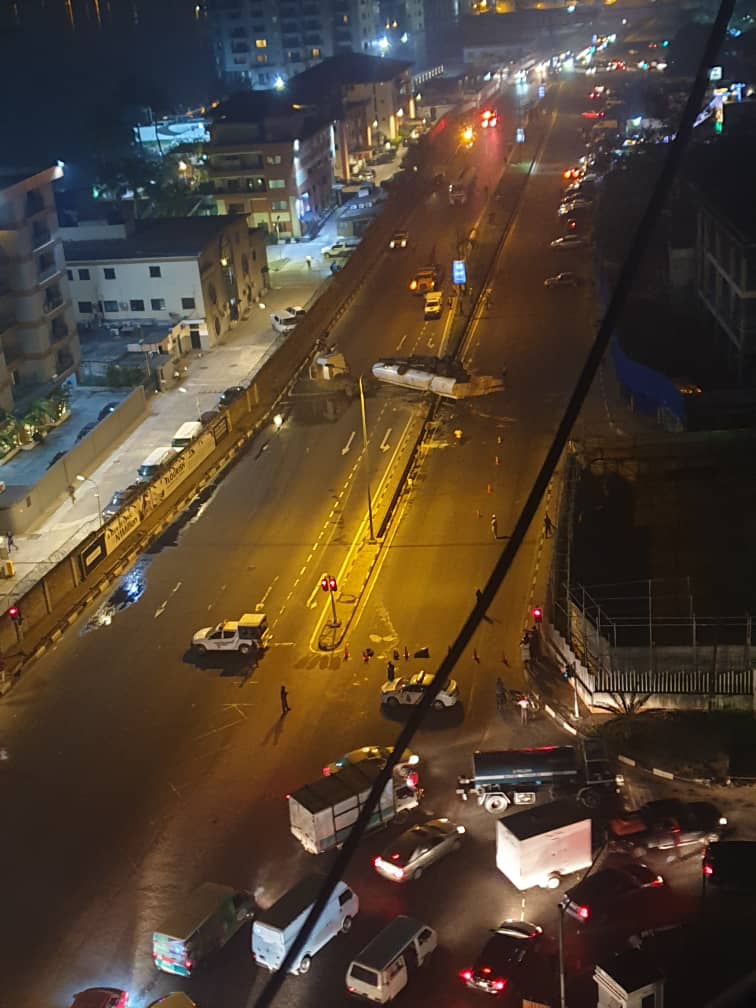
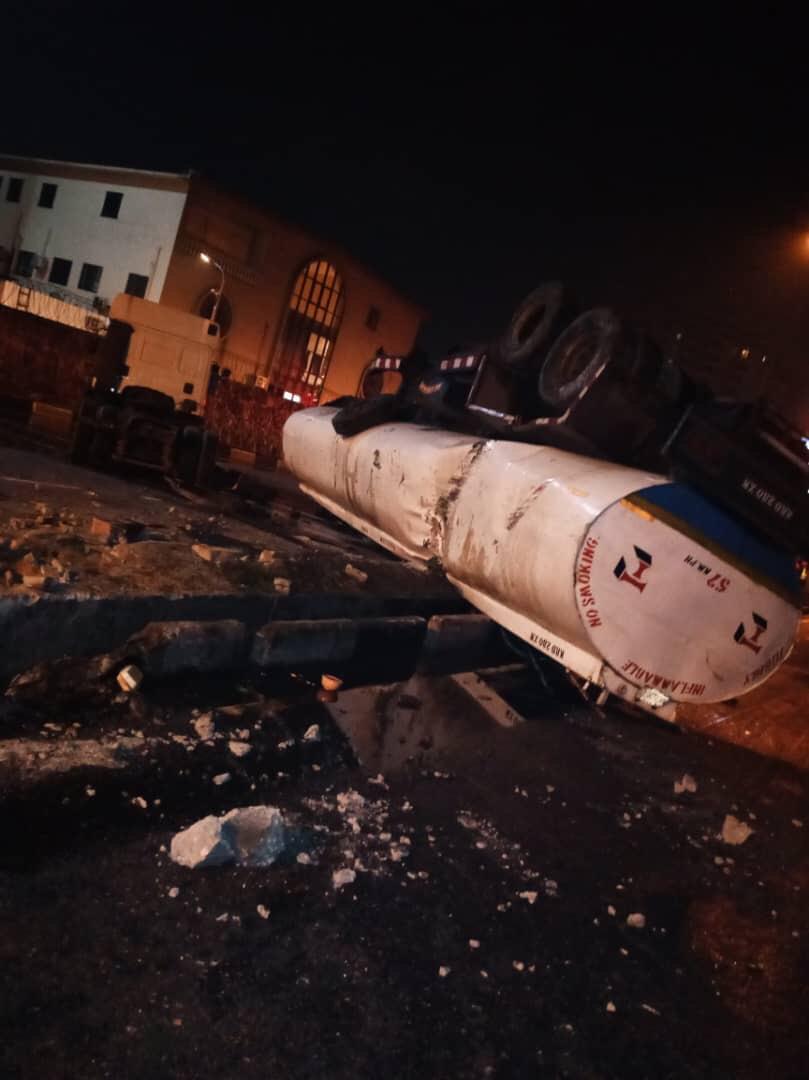
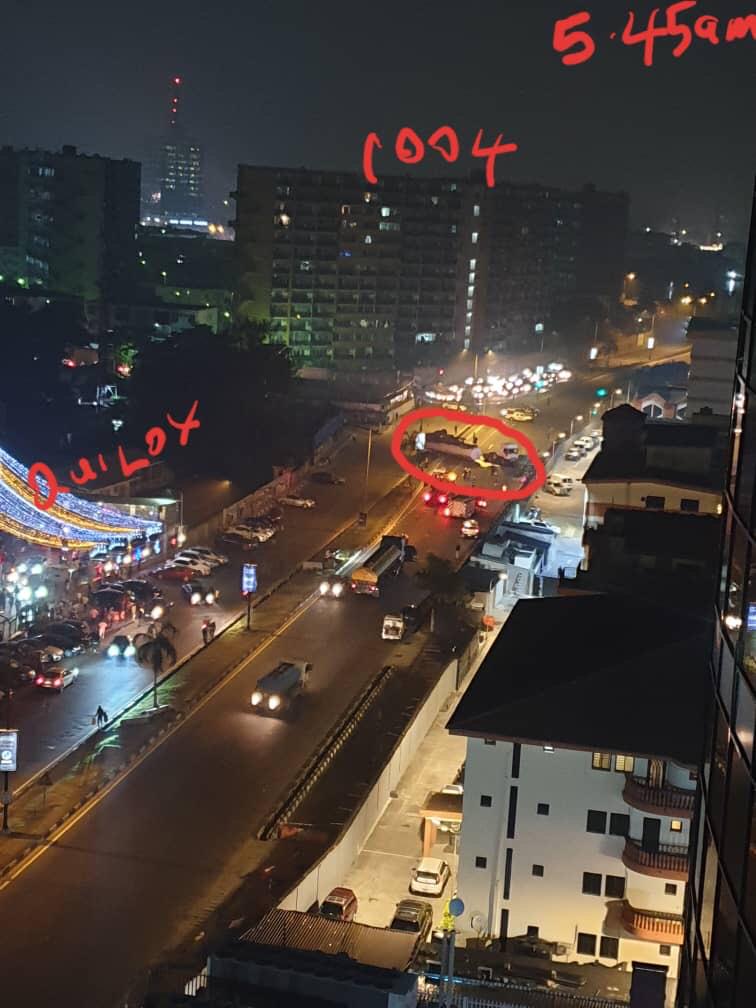
    It was a major tragedy averted in Lagos community as a petrol tanker fell on Ozumba, few metres away from Cactus in Lagos Island.

    WITHIN NIGERIA learnt that yet-to-be identified area boys have stormed the scene of the incident to fetch the petrol rather than finding ways to salvage the incident leading to traffic build-up.

    According to eyewitness report, the traffic has formed two lanes on the Quilox side of the road, motorists and residents are advised to take alternate route to enter Victoria Island in order to avoid Ozumba.

    Details later…

    See Photos:

    WATCH THE VIDEO BELOW:

  • VIDEO: Fire fighter uses bucket and water to put out Balogun Market fire

    VIDEO: Fire fighter uses bucket and water to put out Balogun Market fire

    To the dismay of few who were not conversant with the sad narratives of the county, a hilarous, disturbing but sad video of a fire -fighter struggling to put off fire with buckets and water as properties worth millions gut fire in Balogun market has emerged online.

    WITHIN NIGERIA had earlier reported that 20 days after Onitsha fire incident which resulted into loss of properties and lives, a five storey building situated in Balogun market, Lagos Island is currently on fire.

    The yet-to-be identified fire fighter who was recorded by sympathisers on standby is seen trying all his possible best to put off the fire but it seem all his efforts tend to make things worse.

    Many people have wondered why fire workers have not responded to the recent fire outbreak that occured in Dosunmu five hours after a five storey building catches fire in Balogun market, the video should solve the puzzle.

    WATCH THE VIDEO BELOW:

  • VIDEO: 20 days after Onitsha fire incident, five storey building catches fire at Balogun market in Lagos Island

    VIDEO: 20 days after Onitsha fire incident, five storey building catches fire at Balogun market in Lagos Island

    20 days after Onitsha fire incident which resulted into loss of properties and lives, a five storey building situated in Balogun market, Lagos Island is currently on fire.

    Twitter users who stay around the vicinity of the fire outbreak (Balogun market) have uploaded videos from the scene of the incident and these videos have gone viral on Twitter.

    Inside the 11 seconds video, one could hear the siren of vehicles possibly belonging to fire workers but the cause of the fire incident is yet unknown as at the time of reportage.

    WATCH THE VIDEOS:

    Another clip below:

    Details later

  • Woman stabs colleague inside Koseh market, Lagos Island over N250

    Woman stabs colleague inside Koseh market, Lagos Island over N250

    There was chaos in Lagos Island area of the state, as two load carriers engaged in a fierce fight over the sum of N250, leading to the near-fatal stabbing of one of them.

    The incident occurred at the drinks section of the popular Offin/Koseh market after a minor disagreement between two load carriers identified as, Mama Bose and Mama Ilorin.

    In the course of their heated exchange, Mama Bose stabbed Mama Ilorin, several times, on the face and has since been arrested, while the victim was promptly given medical aid.