Tag: National Assembly

  • Legal, structural, and operational framework of state police — What key provisions of amended bill entail

    Legal, structural, and operational framework of state police — What key provisions of amended bill entail

    For years on end, there have been strident calls for a revamping of the Nigerian policing system. However, what shape, form and structure this wholesome reconfiguration of the nation’s floundering, weak and inefficient policing system should take is one thing the proponents of this much-needed change cannot agree on.

    While some favour far-reaching and effective structural and operational shift and behavioural change in the mentality and thinking of officers but still want the control of the police solely in the hand of the federal government, others, who are advocate not just agitating for tiered policing structure but also political and socioeconomic restructuring of the country, want a decoupling and decentralisation of the policing system where subnationals, particularly states, have more than just symbolic and perfunctory say in security matters in their domain but have greater control over security architecture, especially the police, which makes it easy for them take firm and decisive decisions on matters of insecurity. And as it stands, it appears the set of people is the one that will have the final say on the matter of Nigeria’s policing system restructuring.

    Since coming to power, President Bola Tinubu has made the creation of state police one of the main objectives of his government. The National Assembly on Thursday took a major step towards the actualisation of that goal as both the Senate and House of Representatives showed readiness to amend the 1999 Constitution to pave the way for the decentralisation of policing in the country

    A bill seeking the establishment of state police in Nigeria has been passed by the lower legislative chamber, the House of Representatives.

    The passage of the bill for further legislative action marks a significant step towards decoupling Nigeria’s policing structure and giving the governors more power over matters of security in their domain.

    The bill, which was passed during plenary presided over by Speaker Tajudeen Abbas on Thursday had massive support with 289 lawmakers voting in favour.

    Thursday’s session was ostensibly dedicated to the proposed legislation amid a deepening security crisis across the country, including killings, kidnappings, and bandit attacks across the country.

    There was a momentary snafu during the hearing at the hearing when Bashir Zubairu, a lawmaker from Kaduna State, raised a point of order.

    He disclosed that members had only received the report prepared by the House Committee on Constitution Review earlier in the day and did not have enough time to study it.

    Addressing the chamber after being recognised by the Speaker, Zubairu stated, “Mr Speaker, this document was only made available to lawmakers in the chambers, and we are yet to go through it. We cannot do justice to it because we have not gone through it.”

    Despite his concern raised, the Speaker ruled him out of order and directed that the process continue.

    As Abbas proceeded to take lawmakers through the bill’s provisions, some members were heard shouting “Point of Order,” but the Speaker declined to entertain the interruptions.

    Before voting commenced, Abbas informed members that the electronic voting system was not functioning, explaining that voting would instead be determined based on attendance records.

    Of the 290 lawmakers present, 289 supported the establishment of state police, while only one member voted against the proposal. The Speaker, Abbas did not participate in the vote.

    The bill also scaled second reading in the Senate after which it was referred by the Senate President, Godswill Akpabio, to the Senate Ad-hoc Committee on the Review of the 1999 Constitution for further legislative scrutiny.

    Senate Leader, Opeyemi Bamidele, while leading the debate, underscored the importance of the establishment of state police, noting that reform of the policing system would undoubtedly strengthen Nigeria’s internal security apparatus amid growing concerns over the capacity of the Nigeria Police Force to effectively tackle emerging threats.

    “The establishment of state police will improve intelligence gathering: Local police officers are better equipped to obtain actionable intelligence from communities because they understand local languages, customs and social structures

    If eventually enacted, the legislation is expected to introduce a multi-layered policing system aimed at improving responses to banditry, kidnapping, terrorism and other security threats through greater local participation in policing.

    What key provisions entail

    It also states that the Federal Police will continue to exercise policing powers in any state until its police service becomes fully operational.

    The amendment further proposes changes to the appointment and command structure of the police.

    Under the new arrangement, the Inspector-General of Police will be appointed by the President on the advice of the Nigeria Police Council from among serving members of the Federal Police, subject to confirmation by the National Assembly.

    Similarly, a State Commissioner of Police will be appointed by a governor on the advice of the Nigeria Police Council from among serving officers of the State Police, subject to confirmation by the respective State House of Assembly.

    The proposal empowers governors to issue lawful directives to State Commissioners of Police on matters relating to public safety and maintenance of law and order. However, where a commissioner considers such directives unlawful or inconsistent with policing standards, the matter may be referred to the Nigeria Police Council for a final decision.

    Federal and State police

    Reps changed PSC to Federal Police Service Commission

    One of the key highlights of the bill is the amendment of Section 84 in sub-section 4 of the Constitution, replacing the Police Service Commission with the Federal Police Service Commission. Similarly, the Nigerian Police Council also becomes the National Police Council.

    In the same vein, the words “Nigeria Police Force” are substituted for “Federal Police and State Police.”

    Clause 12 of the bill amended Section 214 by providing a new Section 214 to establish the federal police and state police.

    214 (2) of the amended bill reads, “The National Assembly shall by an Act prescribe for the structure, organisation, administration and powers of the Federal Police and provide the framework and guidelines for the establishment of State Police.”

    (3) “No State Police shall commence operational policing unless it has been established by a Law of the House of Assembly of the State and certified as meeting national minimum standards in the manner prescribed by an Act of the National Assembly.”

    The amended bill also provides that “Unless and until a State Police commence operational policing under subsection (3) of this section, the Federal Police shall continue to perform policing functions in that State; and after such commencement, the Federal Police shall continue to perform federal policing functions and may provide assistance to the State Police in accordance with law.”

    Specifically, the proposed law provides that the Federal Police shall “Be responsible for the maintenance of public security, preservation of public order and security of persons and property throughout the Federation to the extent provided for under this Constitution or by an Act of the National Assembly; and be responsible for the maintenance of public security, preservation of public order and security of persons and property within a State to the extent that the State has power to make laws under this Constitution.”

    Sub-Section 6 of the bill leaves certain operational duties to the State Police.

    It reads, “Subject to the provisions of this Constitution, the Federal Police shall not interfere with the operations of any State Police of the internal security affairs of a State except to contain serious threats to public order where it is shown that there is a complete breakdown of law and order within a State and the State Police is unable to contain the threat,” or “Where the Governor of a State requests the intervention of the Federal Police to prevent or contain a breakdown of law and order in the State.”

    The Federal Police may also intervene “Where a State Police is unable to function owing to administrative, financial or other problems which render it inoperative at the time.”

    The Federal Capital Territory

    The bill places the FCT within the territorial jurisdiction of the Federal Police, as it provides that “The Federal Police shall establish and maintain such commands, formations, departments and operational units within the Federal Capital Territory as may be necessary for the effective discharge of its functions.

    Inspector General of Police V Commissioner of Police of a State

    Clause 13 of the proposed bill amended Section 215 with a new Section to read, “The Federal Police shall be headed by an Inspector-General of Police who shall be appointed by the President on the advice of the National Police Council from among serving members of the Federal Police, subject to confirmation by the National Assembly.

    “The Federal Police shall be under the command of the Inspector-General of Police, including contingents of the Federal Police stationed in a State.

    “The President or such other Minister of the Government of the Federation as he may authorise in that behalf may give to the Inspector-General of Police such lawful directions with respect to the maintenance and securing of public safety and public order as he may consider necessary, and the Inspector-General of Police shall comply with those directions or cause them to be complied with.”

    On the other hand, “A State Police shall be headed by a Commissioner of Police who shall be appointed by the Governor of the State on the advice of the National Police Council from among serving members of the State Police, subject to confirmation by the State House of Assembly.

    “The Governor or such other Commissioner of the Government of the State as he may authorise in that behalf may give to the Commissioner of Police such lawful directions with respect to the maintenance and securing of public safety and order as he may consider necessary, and the Commissioner of Police shall comply with those directions or cause them to be complied with.

    “Provided that where the Commissioner of Police feels that the direction given under this subsection is unlawful or contradicts general policing standards or practice, he may request that the matter be referred to the National Police Council for review and the decision of the National Police Council shall be final.”

    Removal of IGP, State Police Commissioner

    A new Section 216 proposes that “An Inspector General of Police shall be removed by the President upon the recommendation of the National Police Council praying that he be so removed on any of the following grounds -grave misconduct in the discharge of his official duties; breach of Police Act, Regulation, Code and Code of Conduct; conviction of any offence involving fraud or dishonesty by a court of law or tribunal; bankruptcy; or mental incapacity.”

    Such a removal, according to the proposed law, shall be subject to approval by a resolution of a two-thirds majority of the National Assembly.

    A Commissioner of Police of a State, on the other hand, “Shall only be removed by the Governor upon the recommendation of the National Police Council praying that he be so removed on any of the following grounds: grave misconduct in the performance of his official duties; breach of policing standards, law, regulation, code and code of conduct.”

  • Inside the recent Youth Protest that shook Nigeria’s National Assembly

    Inside the recent Youth Protest that shook Nigeria’s National Assembly

    The morning of June 9, 2026 began like a typical weekday in Abuja, steady movement around government corridors, routine security checks, early commuters trying to beat the traffic rhythm of the capital city, yet beneath that calm surface something was already building across different parts of the city. Small groups of young Nigerians had begun gathering quietly without loud announcements, without political banners that suggested affiliation, but with a shared concern that had been growing for months across communities, schools, highways and rural settlements. Their conversations carried the same tone, worry about safety, frustration about repeated incidents, and a determination that the issue could no longer remain confined to private discussions or social media debates.

    By mid morning the gathering had expanded into a coordinated movement that stretched across key points in the city, drawing attention from passersby, journalists and security personnel who were observing the steady flow of people moving toward a central direction. The atmosphere was not chaotic, yet it was charged with urgency, as though each participant understood that the day represented something larger than a protest. It was a collective expression shaped by repeated experiences of insecurity that had affected different parts of the country over time.

    The destination was the complex of the National Assembly Nigeria, a symbolic center of legislative authority, where national decisions are debated, shaped and formalized. The movement toward this location was not random, but deliberate, reflecting a belief among the participants that the concerns they carried required direct visibility at the heart of governance.

    Gathering Point Near Federal Corridor

    The initial convergence reportedly began around the vicinity of the Federal Ministry of Women Affairs Nigeria, where participants arrived in small groups before forming a unified procession. The location served as an assembly point where final coordination took place, voices merged, and placards were distributed among participants who had come prepared with messages that reflected shared demands.

    From this point, the procession began its movement toward the National Assembly complex, maintaining a steady pace, with participants singing solidarity songs that echoed across nearby streets. The songs were not ceremonial but reflective, carrying tones of concern, resilience and collective identity. Security personnel monitored the movement closely, ensuring that traffic and public order were maintained while allowing the march to proceed without interruption.

    Placards became visible as the crowd expanded along the route, with messages such as Nigerians Unite Against Insecurity, Leaders from APC PDP ADC Should Rise in One Accord Against Insecurity, and Nigerians Unite Against Terror. These messages reflected a central theme that ran through the entire demonstration, a call for unity across political divides in addressing insecurity that had affected civilians across different regions.

    Entry Approach Toward National Assembly Complex

    As the march approached the National Assembly Nigeria, the size of the gathering had grown significantly, attracting attention from journalists, observers and additional residents who joined along the way. The complex itself stood as a focal point of national governance, making it a powerful symbolic destination for a protest centered on national security concerns.

    Participants maintained order as they approached the perimeter, with security operatives managing access points while allowing the demonstration to remain peaceful. There was no report of confrontation, as both sides maintained distance and discipline, reflecting an understanding that the purpose of the gathering was communication rather than confrontation.

    At this stage, the demonstration transitioned into a stationary gathering outside the complex, where voices were directed toward media representatives and onlookers. The messages being shared focused on the lived realities behind the protest, including fears on highways, repeated abductions, and growing uncertainty in rural and urban communities alike.

    Core Issues Driving The Protest Movement

    The motivations behind the June 9 2026 demonstration were rooted in a series of security concerns that had been escalating across Nigeria over time. Participants highlighted increasing kidnappings affecting both urban and rural communities, as well as attacks attributed to armed groups operating in different regions. The fear expressed by many speakers centered on the unpredictability of travel, particularly on major highways where incidents had become more frequent.

    One recurring concern was the expansion of insecurity into areas previously considered relatively stable. Communities that once felt distant from conflict zones were now reporting incidents that created anxiety among residents, especially families with school aged children. The psychological impact of these developments was repeatedly emphasized during the protest, as participants described how daily routines had been altered by fear and caution.

    Another issue raised was the perception that insecurity had become entangled with political narratives, making it harder for citizens to see unified responses from leadership. This concern was not framed as accusation but as frustration over perceived delays in coordinated action. The demand was not directed at any single group, but toward a broader system of governance responsible for national safety.

    Voices From Within The Movement

    Among those present was Isah Abubakar, identified as one of the organizers, who spoke about the daily realities faced by citizens in different parts of the country. His remarks focused on the unpredictability of movement in certain regions, where travel after evening hours had become increasingly risky. He emphasized that insecurity does not distinguish between political affiliations, religious backgrounds or ethnic identity, affecting all citizens in similar ways.

    Other participants echoed similar sentiments, describing experiences from different states where school environments, farming communities and transport routes had been disrupted by fear of attacks. These accounts were not presented as isolated incidents but as part of a broader pattern that had contributed to rising public anxiety.

    The tone of the gathering remained consistent, grounded in concern rather than confrontation, with repeated calls for national unity in addressing the challenges being discussed.

    Structured Demands Presented By Protesters

    The demonstration outlined several clear demands that reflected the priorities of the participants. The first was immediate and decisive action by the Federal Government to strengthen security operations across affected regions. This included calls for improved coordination among security agencies and more visible responses to emerging threats.

    The second demand focused on national unity, particularly among political actors across different parties. Participants urged leaders from APC, PDP and ADC to place security above political competition, emphasizing that insecurity affects citizens regardless of political alignment.

    The third demand centered on cooperation with experienced security professionals, including retired military officers and former service chiefs, who were encouraged to contribute insights that could assist ongoing efforts to address the crisis. This suggestion reflected a belief in combining institutional knowledge with current strategies.

    The fourth demand highlighted accountability within security institutions, with calls for improved transparency, efficiency and responsibility in handling security related challenges. This aspect of the protest emphasized trust as a critical component of national security efforts.

    National Context Behind Rising Concern

    The protest did not emerge in isolation but was influenced by a series of incidents reported across different parts of the country. Reports of school abductions in states such as Oyo and Borno had intensified public concern, particularly among parents and educational communities. These incidents created widespread emotional reactions, including demonstrations from students and teachers calling for urgent rescue operations.

    At the same time, insecurity concerns that had historically been concentrated in northern regions were increasingly reported in parts of the Southwest, altering public perception of geographical safety zones. This shift contributed to a broader sense of uncertainty among travelers and residents across multiple regions.

    Religious organizations also expressed concern, with the Christian Association of Nigeria CAN announcing a three day national mourning period in response to ongoing security challenges. This development added another layer of national attention to the issue, reinforcing the urgency felt by many citizens.

    Atmosphere During The Protest Gathering

    Despite the seriousness of the subject matter, the demonstration remained peaceful throughout its duration. Participants maintained order, avoided disruption of public infrastructure, and ensured that their messages were communicated through placards, speeches and media engagement rather than confrontation.

    Journalists present at the scene documented statements from participants while security personnel maintained a controlled perimeter. The interaction between both sides remained calm, reflecting a shared understanding of the need to avoid escalation.

    The crowd continued to grow and shift gently throughout the day, with participants rotating positions, engaging in discussions, and responding to media inquiries. The overall environment reflected a disciplined expression of civic engagement rather than disorder.

    Broader Meaning Within National Climate

    The demonstration at the National Assembly Nigeria reflected a growing pattern of civic attention toward insecurity as a defining national concern. The timing of the protest, occurring ahead of the 2027 electoral cycle, added significance to its message, as citizens increasingly call for security to be prioritized in national planning and policy direction.

    The presence of young Nigerians at the forefront of the movement highlighted the demographic reality of a population deeply affected by security conditions across education, employment and mobility. Their participation reflected a desire for visible action and sustained attention to issues affecting daily life.

    The gathering outside the legislative complex became a moment of national visibility, where concerns that had circulated across communities were brought directly to the institutions responsible for addressing them.

    Closing Reflection On The Day’s Events

    The events of June 9, 2026 at the National Assembly complex captured a collective expression shaped by lived experiences of insecurity across different regions of Nigeria. The movement from initial gathering points to the legislative center reflected a structured and peaceful effort to communicate urgency.

    What unfolded was not a moment of disruption but a demonstration of civic engagement, where citizens chose visibility over silence and coordination over fragmentation. The messages carried throughout the march remained consistent, calling for unity, accountability and decisive action in addressing insecurity.

    As the day concluded, the presence of the participants gradually reduced, but the message they carried remained present within national discourse, reflecting concerns that continue to shape conversations across communities, institutions and leadership spaces.

  • May 17: Today in Nigeria history, the NIS introduced the e-Passport

    May 17: Today in Nigeria history, the NIS introduced the e-Passport

    On this day, May 17 in 2007, the NIS introduced the e-Passport under the leadership of the then CGI CJ Udeh OFR, thereby putting the Federal Republic of Nigeria on the pages of history as the first country in Africa to introduce the e-passport and among the first countries in the world to do so.

    According to report, the e-Passport was introduced in an attempt to improve on the MRP and in line with International Civil Aviation Organization (ICAO) standards.

    The use of the e-passport has become a major tool in the fight against trans-border criminality as it contains the biometric details of holders thus making multiple acquisition and identity theft difficult.

    In due recognition of Nigeria Immigration Service’s stride as exemplified above, ICAO, the global body that regulates standards for travel documents admitted Nigeria into its Board as the sole African representative in 2009.

    As a result of this development, the e-passport machines have been installed in all the states of the federation and some Nigeria Missions abroad while, the NIS has been sending its personnel for passport intervention to all regions of the world in line with the Federal Government foreign policy of citizen diplomacy. This implies taking the mobile passport issuing equipment to acquire and process passport for Nigerians in the Diaspora.

    Another significant achievement in the realm of ICT development is the establishment of a well-equipped forensic laboratory for the examination of travel and other documents.

    It is also to be noted that NIS personnel manning this laboratory are highly skilled as they have been exposed to a lot of trainings locally and internationally on document fraud detection and techniques.

    To further strengthen the legal framework for the NIS, the National Assembly passed the Immigration Act into law in May 25th, 2015. The Act thus repealed the hitherto obsolete 1963 Immigration Act and created an additional Directorate to be known as Migration Directorate for the Service.

    From the inception of the NIS in 1963 till date, the Service has had three (3) Chief Federal Immigration Officers (CFIO), three (3) Directors of Immigration, Two (2) Acting Comptrollers General and Eight (8) substantive Comptrollers General with the current Comptroller General in the person of CGI Muhammad Babandede MFR.

    He is taking giant steps and breaking grounds with a view to upgrading and standardizing the operations of the Service while ensuring that prompt and efficient service delivery to its numerous publics is not compromised.

  • INSIGHT: Can higher budget allocations strengthen Nigeria’s safety framework?

    INSIGHT: Can higher budget allocations strengthen Nigeria’s safety framework?

    Nigeria has committed an estimated ₦32.88 trillion to defence over the past 15 years, yet insecurity continues to affect several parts of the country.

    This allocation represents about 12.5 per cent of the ₦262.83 trillion total national budgets recorded within the same period.

    Across the country, communities still face insurgency, banditry, kidnappings, communal clashes and oil-related violence, raising concerns about the effectiveness of rising defence expenditure.

    Security data indicates that more than 100,000 Nigerians have lost their lives in violent incidents since 2012, while many others have been abducted and displaced.

    As of 2026, at least 3.726 million people are reportedly displaced and living in about 3,900 camps nationwide.

    Recent figures also suggest that within the first 41 days of the year, no fewer than 1,091 deaths were linked to violent attacks.

    The current situation has prompted renewed scrutiny of defence spending by the National Assembly as deliberations on the 2026 budget continue.

    The Senate is considering a proposed ₦58.47 trillion appropriation bill, which includes about ₦5.41 trillion for defence and security.

    This allocation remains one of the largest components of the proposed budget submitted by the president, Bola Tinubu, in December 2025.

    The senate president, Godswill Akpabio, said lawmakers are working towards passing the budget before March 31 after completing committee reviews.

    Legislators have also stressed that timely release of funds is essential to sustain military operations across the country.

    Similarly, the House of Representatives is expected to resume examination of defence proposals after its legislative recess.

    Committees overseeing defence, army, navy and air force are reviewing areas such as troop welfare, procurement and operational logistics.

    Lawmakers have indicated that emphasis will be placed on accountability and measurable outcomes tied to budgetary allocations.

    Nigeria’s defence spending has grown steadily in recent years as authorities respond to security threats in multiple regions.

    In 2025, about ₦6.57 trillion was allocated to defence and security, while ₦5.41 trillion has been proposed for 2026.

    Within the current proposal, the ministry of defence is expected to receive about ₦3.154 trillion for personnel, logistics and capital projects.

    Despite these increases, questions remain about whether higher allocations are improving safety conditions.

    The chief of defence staff, general Olufemi Oluyede, said the armed forces alone cannot address all security challenges in the country.

    He noted that stronger collaboration with other security agencies is necessary to sustain gains made in conflict areas.

    “If these institutions are strengthened, they can effectively hold and secure territories where the Armed Forces have succeeded, ensuring that such areas remain safe,” he said.

    Oluyede also highlighted operational pressure on military personnel deployed across different regions.

    “The soldiers hardly have rest because we don’t have the numbers,” he said.

    “That is why strengthening the police and civil defence is critical,” he added.

    The defence chief disclosed that operations are ongoing in several parts of the country, including the North-East, North-West and North-Central regions.

    Special forces have also been deployed to states such as Benue and Plateau to address persistent violence.

    Plans are underway to extend operations to parts of Kwara and Niger states following reports of rising insecurity.

    A new joint task force known as Operation Savannah Shield is expected to coordinate activities in affected areas.

    “We are pulling resources from other theatres to strengthen this operation and ensure improved security in the area,” he said.

    The military has also engaged in intelligence-sharing partnerships with allied countries to enhance surveillance and response.

    “Our partners have been quite helpful, particularly in intelligence,” Oluyede said.

    “But we are careful to streamline these collaborations in line with the guidelines of Mr President,” he added.

    At the legislative level, lawmakers have called for a broader approach to addressing insecurity beyond military intervention.

    The chairman of the house committee on defence, rep. Babajimi Benson, said improved security requires stronger coordination among institutions.

    “The defence and security sector occupies a central place in Nigeria’s development discourse,” he said.

    “Nigerians expect results that translate into safer communities, restored livelihoods and renewed confidence in the authority of the state,” he added.

    He also emphasised the need for reforms in areas such as intelligence sharing, community engagement and border security.

    Other proposed measures include investment in technology, strategic communication and data-driven policing systems.

    The continued review of the defence budget is expected to shape both the scale of funding and oversight mechanisms tied to its use.

    As deliberations progress, attention remains focused on whether increased spending will translate into improved safety outcomes.

    While authorities point to ongoing operations and gradual progress in some regions, insecurity persists in several communities.

    The central issue remains whether sustained budget increases can address structural challenges affecting the country’s security framework.

    With the 2026 budget expected to be finalised soon, observers are closely monitoring not only the figures but also the impact of implementation on the ground.

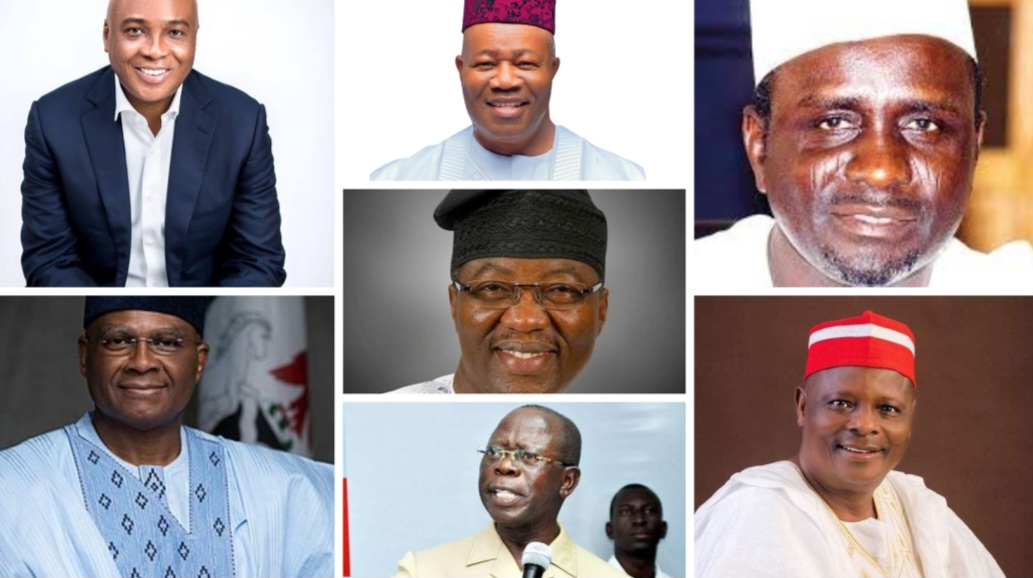
  • FULL LIST: Ex-Nigerian Governors Who Became Senators

    FULL LIST: Ex-Nigerian Governors Who Became Senators

    On March 21, Nasarawa State Governor Abdullahi Sule hinted that he may run for the Nasarawa North senatorial seat in 2027, citing mounting pressure from political leaders and citizens in the zone.


    Sule made the disclosure while members of the State Executive Council, led by Deputy Governor Emmanuel Akabe, visited his rural house in Gudi, Akwanga Local Government Area, to pay Sallah respect.

    Recall that Abdullahi Sule had earlier stated that he would not pursue elective office after his tenure ended.

    However, Sule reversed his decision, citing frequent stakeholder requests as factors that made it difficult for him to resist the calls to run.

    He further noted that both private and official delegations have consistently encouraged him to run.

    Sule, who added that the pressure has increased in recent months, explained that his initial plan was to support another senatorial candidate—someone he described as loyal but had previously lost an election.

    He stated that the desire to secure effective representation for Nasarawa North in the National Assembly is a major factor behind his reassessment.

    Meanwhile, a check by WITHIN NIGERIA revealed that if Abdullahi Sule wins the 2027 general election, he will not be the first Governor elected to the Senate.

    Additional findings revealed that past governors from the country’s six geopolitical zones had served and continue to serve as senators in the National Assembly after winning elections.

    Here are some governors who were elected as senators:

    NORTH WEST GEO-POLITICAL ZONE

    Rabiu Musa Kwankwaso (APC, Kano Central – 2011 to 2015, 2019 till 2023)

    Ibrahim Shekarau (APC,Kano Central – 2015 till 2023)

    Adamu Aliero (APC, Kebbi Central – 2011 till present)

    Aliyu Wamakko (APC, Sokoto North – 2019 till present)

    Abdulaziz Yari (APC, Zamfara West – 2011 till2019)

    Kabiru Gaya (APC, Kano South – 2007 till 2015)

    NORTH EAST GEO-POLITICAL ZONE 

    Kashim Shettima (APC, Borno Central – 2019 till 2023)

    Ibrahim Gaidam (APC, Yobe East – 2023 till present)

    Ibrahim Hassan Dankwambo (PDP, Gombe North – 2023 till present)

    Danjuma Goje (APC, Gombe Central – 2015 till present)

    NORTH CENTRAL GEO-POLITICAL ZONE

    Sani Bello (APC, Niger North – 1999 till 2023)

    Simon Lalong (APC, Plateau South – 2023 till present)

    Bukola Saraki (APC, Kwara Central – 2011 till 2019)

    Jonah Jang (PDP, Plateau North – 2015 till 2023)

    Tanko Al-Makura (APC, Nasarawa South – 2011 till 2019)

    Gabriel Suswam (PDP, Benue North – 2011 till 2023)

    SOUTH EAST GEO-POLITICAL ZONE

    Orji Uzor Kalu (APC, Abia North – 2015 till 2019, 2023 till present)

    Theodore Orji (PDP, Abia Central – 2019 till present)

    Chimaroke Nnamani (PDP, Enugu – 2011 till 2023)

    Rochas Okorocha (APC, Imo West – 2019 till 2023)

    Sam Egwu (PDP, Ebonyi North, 2011 till 2019)

    SOUTH SOUTH GEO-POLITICAL ZONE

    Godswill Akpabio (APC, Akwa Ibom North-West – 2015 till 2019, 2023 till present)

    Seriake Dickson (PDP, Bayelsa West – 2019 till 2023)

    Adams Oshiomhole (APC, Edo North – 2023 till present)

    SOUTH WEST GEO-POLITICAL ZONE

    Gbenga Daniel (APC, Ogun East – 2023 till present)

    Ibikunle Amosun (APC, Ogun Central – 2023 till present)

  • FULL LIST: Meet the Longest Serving National Assembly Members in Nigeria

    FULL LIST: Meet the Longest Serving National Assembly Members in Nigeria

    The 1999 constitution of the Federal Republic of Nigeria as amended doesn’t specify an expiry time for the legislative arm of government. The lifespan of an elected lawmaker is tied to his or tenure and victories or failures recorded at the poll.


    According to the 1999 constitution, members of the National Assembly, a bi-cameral legislature serve a mandatory four-year term and can be renewed multiple times through the poll. The constitution highlights procedures for elections, impeachments, and other processes that affect the continuity of the legislative body.

    However, some members of the National Assembly – Nigerian Senate and the House of Representatives have spent over 20 years, while some members have been in the hallowed chambers since 1999.

    In a similar vein, some members have been voted out at a particular and returned to the chambers through ballots and have spent more than 16 years. A check by WITHIN NIGERIA revealed that these members belong to the ruling All Progressives Congress and the opposition Peoples Democratic Party.

    Additional findings revealed that some members defected across political parties to sustain their membership and continued representation in the National Assembly.

    Here is a list of Senators and Members of House of Representatives who have spent more than 16 years in the National Assembly:

    Sen. Ahmad Lawan 

    Ahmad Lawan is a Nigerian politician who has been serving in the National Assembly since 1999. He was the 14th President of the Nigerian Senate from 2019 to 2023, representing Yobe North Senatorial District as a member of the All Progressives Congress (APC). He has been a member of the National Assembly since 1999.

    Hon. Nicholas Mutu 

    He is the longest-serving member of the House of Representatives, representing Bomadi/Patani Federal Constituency in Delta State since 1999. He recently defected to the All Progressives Congress (APC) in 2025.

    Sen. Ali Ndume 

    Ali Ndume is a Nigerian politician representing Borno South Senatorial District. He joined the National Assembly in 2003 as a Bama/Ngombe Federal Constituency. He later became a Senator in 2011, representing Borno South Senatorial District. He was previously the Chief Whip of the Senate but was removed from the position in July 2024 and replaced with Senator Tahir Monguno.

    Hon. Alhassan Doguwa

    Alhassan Doguwa was the Majority Leader of the House of Representatives, representing Kano State’s Doguwa/Tudun Wada Federal Constituency in the 9th Assembly. He was first elected as a Rep. member in 2007. He served as a Chief Whip of the House of Representatives in the 8th Assembly.

    Sen. Mohammed Monguno

    Mohammed Monguno is the current Chief Whip of the Senate, representing Borno North Senatorial District since 2023. He has been a member of the National Assembly since 2007. He firstly represented Marte/Monguno/Nganzai Federal Constituency in the House of Representatives. He was first elected member of the House in the Third Republic (1992/93).

    Hon. Khadijat Bukar Abba-Ibrahim 

    Khadijat Bukar Abba-Ibrahim is the wife of former Yobe State governor, Bukar Abba-Ibrahim. She has been in the National Assembly since 2007, representing Damaturu/Gujba/Gulani/Tarmuwa Federal Constituency in Yobe State.

    Sen. Enyinnaya Abaribe 

    Enyinnaya Abaribe is a Nigerian senator representing Abia South Senatorial District since 2007. He has held various positions, including Senate Minority Leader (2019-2022).

    Hon. Idris Wase

    Ahmed Idris Wase is a Nigerian politician serving as a member of the House of Representatives since 2007, representing Wase Federal Constituency in Plateau State. He previously served as Deputy Speaker of the House of Representatives from 2019 to 2023.

    Hon. Muktar Betara 

    He is a member of the House of Representatives, representing Biu/Bayo/Shani Federal Constituency in Borno State. He was first elected in 2007 and has been representing the federal constituency since then.

    Hon. Wole Oke

    He is a member of the House of Representatives, representing Oriade/Obokun Federal Constituency in Osun State. He was first elected in 2003 on the PDP platform but lost re-election in 2011 and later re-elected under the platform of the PDP in 2015. He is currently a member of the All Progressives Congress (APC).

    Sen. Adamu Aliero 

    Adamu Aliero is a Nigerian Senator representing Kebbi North Senatorial District. He served as Governor of Kebbi State for eight years from 1999 to 2007 on the platform of the defunct ANPP. He was elected as a Senator in 2007 and he has been serving as one till date.

    Sen. Adeola Olamilekan

    Adeola Olamilekan, also known as Yayi, is a Nigerian senator, representing Ogun West Senatorial District. He was first elected as a member, House of Representatives, representing the Alimosho Federal Constituency in 2011. He served as Senator for Lagos West from 2015 to 2023.

    Sen. Aminu Waziri Tambuwal

    Aminu Tambuwal is a Nigerian Senator representing Sokoto South Senatorial in the National Assembly. He was first elected as a member of the House of Representatives in 2003. He served as a member representing the Tambuwal/Kebbe Federal Constituency of Sokoto State from 2003 to 2015.

    Sen. Danjuma Goje 

    Danjuma Goje is a Nigerian senator representing Gombe Central Senatorial District. He is a former Governor of Gombe State. He was first elected as a Senator in 2011.

    Sen. Ibrahim Gobir 

    Ibrahim Gobir is a Nigerian Senator representing Sokoto East Senatorial District. He was first elected in 2011 and has spent about 15 years in the Senate.

    Hon. Abbas Tajudeen

    Abbas Tajudeen is the current Speaker of the House of Representatives. He is representing the Zaria Federal Constituency in Kaduna State. He was first elected in 2011.

    Hon. James Abiodun Faleke

    James Faleke is a member of the House of Representatives, representing Ikeja Federal Constituency in Lagos. He has been serving as a Rep since 2011.

    Hon. Kingsley Chinda

    Kingsley Chinda is a member of the House of Representatives. He represents the Obio/Akpor Federal Constituency, Rivers State. He was first elected as a Rep in 2011.


  • Can Nigerians Abroad Legally Vote in 2027 elections? INEC and National Assembly’s stance

    Can Nigerians Abroad Legally Vote in 2027 elections? INEC and National Assembly’s stance

    As Nigeria approaches the 2027 general elections, questions about who can vote, how votes are cast, and the inclusivity of the electoral process are increasingly in the spotlight. One of the most pressing and widely discussed issues is whether Nigerians living abroad will be able to participate in these elections without physically returning to the country. This question has generated debate among policymakers, civil society actors, and Nigerians living in the diaspora who want to exercise their civic rights. While the idea of diaspora voting is not new, it has gained renewed attention due to the growth of Nigeria’s global population and increasing demands for inclusive democratic processes.

    The discussion involves several key institutions including the National Assembly, the Independent National Electoral Commission (INEC), and various advocacy groups that argue for a voting system capable of engaging citizens abroad. At present, however, there remains a critical distinction between political will and legal reality, as constitutional and legislative barriers continue to determine who is eligible to vote in Nigeria’s elections.

    Current Legal Framework for Nigerians Abroad

    Under the current provisions of the Nigerian Constitution and the Electoral Act, citizens must be physically present at their registered polling units to cast a ballot. This requirement applies to all elections, whether local, state, or federal, including the upcoming 2027 general elections. Nigerians living abroad are therefore not automatically entitled to vote unless they travel back to their designated polling units in Nigeria. This restriction has remained consistent across successive election cycles and continues to limit the practical participation of the Nigerian diaspora.

    The legal framework assumes physical presence because election management in Nigeria has traditionally relied on paper ballots and, more recently, electronic card readers, both of which are designed for domestic use. For overseas citizens, logistical challenges related to verifying identity, ensuring ballot security, and preventing electoral malpractice make remote voting complex under current law. Therefore, the law effectively obliges any diaspora citizen wishing to vote to plan in advance, ensure proper registration, and travel back to Nigeria, sometimes months ahead of the elections. The absence of legal provisions for diaspora voting reflects both historical precedence and ongoing debates about the costs and feasibility of extending voting rights beyond Nigeria’s territorial borders.

    National Assembly Initiatives

    In both the House of Representatives and the Senate, discussions about diaspora voting have intensified in recent years, particularly in the wake of 2023 election observations and civil society advocacy. Legislators have explored introducing bills to amend the Electoral Act and relevant constitutional provisions to allow citizens living outside Nigeria to vote. These efforts have included public hearings, committee consultations, and the involvement of diaspora representatives who have shared their experiences and the barriers they face under the current system.

    A notable development in this regard is the launch of the NiDRes App and website, an initiative that aims to enhance engagement with Nigerians abroad. This platform is designed to support diaspora citizens in voter registration and election information access, laying the groundwork for eventual legal diaspora participation. While the app itself does not confer voting rights, it demonstrates governmental acknowledgment of the need to integrate overseas citizens into Nigeria’s democratic process. It also signals political recognition that, with proper legal reform, the diaspora could become a significant and engaged voting bloc.

    Federal Government Endorsement

    High-ranking government officials have also contributed to the discourse on diaspora voting. As of late 2025, the Speaker of the Nigerian House of Representatives, Rt. Hon. Abbas Tajudeen (Ph.D.) publicly advocated for a “diaspora voting bill,” emphasizing that Nigerians abroad should have the opportunity to participate in national elections. Such statements from federal leadership are significant because they indicate alignment between legislative and executive awareness regarding electoral inclusivity.

    At the same time, these statements are often cautious, reflecting the reality that any diaspora voting initiative must navigate legal, technical, and logistical hurdles before becoming actionable. The involvement of civil society and advocacy groups adds pressure for reform while also ensuring that proposed solutions remain transparent and accountable to the public.

    Legal and Constitutional Barriers

    While the political will for diaspora voting is present, legal and constitutional barriers remain the most significant obstacles. The Nigerian Constitution, along with the Electoral Act, specifies that voters must be registered at a physical polling unit and cast their votes in person. These provisions were established decades ago and were not designed to accommodate citizens residing outside the country.

    Any attempt to enable overseas voting requires a constitutional amendment, a process that is complex and time-consuming. Amending the constitution in Nigeria involves multiple stages including legislative approval by both chambers of the National Assembly, ratification by two-thirds of state assemblies, and eventual presidential assent. Historically, constitutional amendments related to electoral reform have faced delays due to political disagreements, logistical concerns, and debates over national priorities. Consequently, even with strong advocacy, it is not guaranteed that diaspora voting will be legally possible in time for the 2027 general elections unless all procedural steps are fast-tracked and successfully completed.

    Past attempts to introduce diaspora voting provisions have failed or stalled, largely because of concerns over ballot security, the cost of implementing overseas voting, and the ability of INEC to manage the process effectively. These historical precedents underscore the difficulty of translating political intent into actionable law and highlight why, despite vocal support from lawmakers and advocacy groups, Nigerians abroad cannot yet vote without returning to their home polling units.

    International Comparisons and Lessons

    Globally, diaspora voting is far from unusual. Over 140 countries allow citizens living abroad to participate in national elections, employing a variety of methods such as postal ballots, online voting, or voting at embassies and consulates. Countries such as France, the United States, and India provide models of overseas voting mechanisms that balance accessibility, security, and verification of voter identity.

    For Nigeria, these international examples provide both inspiration and cautionary lessons. While other nations have successfully implemented diaspora voting, they often rely on substantial institutional capacity and robust security protocols. Nigeria would need to invest in similar mechanisms, including secure electronic voter identification, ballot transport, and real-time verification systems, to ensure that diaspora voting is credible and resistant to fraud. Civil society and advocacy groups argue that such investments are worthwhile because they increase political inclusion, strengthen democratic legitimacy, and acknowledge the contributions of Nigerians living outside the country.

    The INEC Position

    INEC has publicly expressed support for the idea of diaspora voting in principle, acknowledging that it is fair for citizens abroad to have a voice in the democratic process. The commission recognizes that Nigerians living abroad continue to contribute economically, socially, and politically to the country and that their participation could enhance the inclusiveness of elections.

    However, INEC also stresses that relevant constitutional amendments are a prerequisite for legal enforcement. Without changes to the Constitution and the Electoral Act, the commission cannot facilitate overseas voting. INEC has also noted that logistical planning would need to be rigorous, requiring technological infrastructure, verification systems, and clear procedures to avoid disenfranchisement or electoral irregularities. The commission’s position demonstrates a willingness to modernize electoral participation while adhering strictly to the legal framework that currently governs elections in Nigeria.

    Direct Effects on Nigerians Abroad

    For Nigerians living abroad who wish to participate in the 2027 general elections, the practical implications are clear. Unless constitutional amendments and electoral reforms are completed in time, diaspora citizens will need to return to Nigeria to vote. This requirement involves careful planning, including ensuring voter registration at the correct polling unit, securing travel arrangements, and complying with election protocols.

    For the diaspora community, this situation can be both challenging and frustrating. Many Nigerians living abroad maintain strong ties to the country and wish to contribute to the democratic process, but the current legal framework limits their participation. This restriction has led to advocacy campaigns and public discourse aimed at demonstrating the feasibility and fairness of overseas voting. It has also heightened awareness of the need for Nigeria to modernize its electoral system to reflect the realities of a globalized population.

    Personal Diaspora Experiences and Perspectives

    Beyond legal and policy debates, the question of diaspora voting resonates strongly with Nigerians living abroad, many of whom feel a persistent connection to their homeland. Take, for example, a young professional based in London who has been sending remittances home for years to support his extended family and local community projects. He often follows Nigerian politics closely through news outlets and social media, feeling the impact of government policies on both his relatives and his own sense of identity. The inability to participate directly in elections leaves him frustrated, as he contributes to the country financially, culturally, and socially, yet lacks formal influence over the leaders and decisions shaping Nigeria’s future.

    Similarly, a Nigerian entrepreneur residing in Toronto has established small businesses that employ other diaspora Nigerians and even support suppliers in Lagos and Abuja. She emphasizes that voting from abroad would allow her to better reflect the interests of those she supports, bridging the gap between her economic contributions and political voice. For her, diaspora voting is not a privilege but a matter of fairness and democratic inclusion, ensuring that Nigerians outside the country are recognized as full participants in national life.

    In addition, students pursuing higher education in the United States often express a desire to vote but face logistical barriers. Many attend Nigerian universities virtually or maintain active involvement in local community initiatives back home. The thought of having to travel thousands of miles just to cast a ballot discourages many, and they view diaspora voting as a practical way to maintain engagement while pursuing opportunities abroad. These personal experiences illustrate the human dimension of the debate: diaspora citizens are not detached observers but active contributors whose lives, careers, and families remain intricately linked to Nigeria.

    Through these narratives, whether real or representative, it becomes clear why policymakers and civil society advocates argue for reforms. Enabling diaspora voting would not only expand democratic participation but also strengthen national cohesion, acknowledging that Nigerian identity and civic responsibility extend far beyond geographical borders. For many Nigerians abroad, voting is both a right and a symbolic affirmation of their ongoing connection to home, and its absence represents a tangible gap in Nigeria’s democratic framework.

    The Road to Diaspora Voting

    The prospects for diaspora voting in Nigeria depend on several factors. First, the National Assembly must successfully pass the diaspora voting bill, which requires careful drafting, negotiation, and consensus among lawmakers. Second, the bill must include technical provisions that allow INEC to securely manage voting from multiple countries. Third, civil society, media, and public advocacy must maintain pressure to ensure that reforms are prioritized and implemented effectively.

    If these steps are achieved, Nigeria could join the ranks of countries that empower their diaspora populations to vote, enhancing democratic inclusivity and participation. However, any delays or procedural failures could result in Nigerians abroad remaining unable to vote in the 2027 elections. This makes the next twelve to eighteen months critical for legal and institutional action if diaspora voting is to become a reality.

    Takeaway: What This Means for 2027

    As of now, Nigerians living abroad cannot legally vote in the 2027 general elections without returning home to their registered polling units. The legal framework under the Constitution and Electoral Act maintains this requirement, despite ongoing political advocacy, civil society campaigns, and INEC support in principle for diaspora inclusion. The National Assembly and federal leaders have signaled interest in reforming electoral laws to accommodate overseas citizens, but these efforts remain contingent on legislative processes, constitutional amendments, and practical implementation measures.

    For the Nigerian diaspora, this situation highlights the importance of political engagement, advocacy, and preparedness to navigate current legal constraints. It also underscores the significance of constitutional and electoral reforms that could enable full participation in future elections. While the conversation about diaspora voting continues, Nigerians abroad must, for the moment, plan to return home to exercise their franchise if they wish to participate in 2027, even as political, technological, and civil society efforts push toward eventual inclusion.

  • PURE DOMINANCE: APC secures Electoral Act amendments amid opposition protest

    PURE DOMINANCE: APC secures Electoral Act amendments amid opposition protest

    The ruling All Progressives Congress (APC) yesterday used its overwhelming majority in both chambers of the National Assembly to pass the revised Clause 60(3) of the Electoral Act Amendment Bill, which addresses mandatory real-time electronic transmission of election results from polling units to the IRev portal.

    The clause states: “The Presiding Officer shall electronically transmit the results from each polling unit to IREV portal and such transmission shall be done after the prescribed Form EC8A has been signed and stamped by the Presiding Officer and/or countersigned by the candidates or Polling agents where available at the Polling Unit.

    “Provided that if the electronic transmission of the result fails as a result of communication failure and it becomes impossible to transmit the result contained in form EC8A signed and stamped by the Presiding Officer and countersigned by the candidates or polling agents where available at the polling unit, the form EC8A shall remain the primary source of collation and declaration of the result.”

    APC’s membership in both the Senate and the House of Representatives has surpassed a two-thirds majority following defections from opposition parties, making the passage of key bills and amendments relatively smooth.

    Court rulings nullifying Peoples Democratic Party (PDP) victories in Plateau and subsequent defections contributed to the APC now holding at least 241 out of 360 seats in the House of Representatives, compared with 175 at its June 2023 inauguration, short of the 181-seat simple majority then required to elect the speaker.

    Opposition parties initially controlled 182 seats, with the PDP holding 116, Labour Party (LP) 35, New Nigeria Peoples Party (NNPP) 19, All Progressives Grand Alliance (APGA) five, and ADC, Social Democratic Party (SDP), and Young Progressives Party (YPP) holding two each. Three federal constituency seats were pending due to court orders.

    In the Senate, APC now controls 80 of 109 seats, with the PDP holding 21, LP three, APGA two, and NNPP one, while two seats remain vacant following the deaths of Senators Okechukwu Ezea and Godiya Akwashiki. At the 10th Senate’s inauguration, APC held 59 seats, PDP 36, LP eight, and the remaining parties shared the rest.

    The party’s dominance in both chambers facilitated the passage of the electoral amendment bill, which now allows both electronic and manual transmission in cases of network or communication failure.

    While the House initially approved mandatory electronic transmission, it later aligned with the Senate’s version, which retained a caveat, following a rowdy session in which opposition lawmakers staged a walkout, chanting “APC, ole! APC, ole!”

    The Senate retained the proviso allowing presiding officers to use Form EC8A as a backup if electronic transmission fails, after a motion by Senate Leader Opeyemi Bamidele (APC-Ekiti) was seconded by Sen. Simon Lalong (Plateau South).

    Bamidele said the review of the Electoral Act, 2022 (Repeal and Enactment) Bill, 2026 identified discrepancies in clauses 6, 9, 10, 22, 23, 28, 29, 32, 42, 47, 51, 60, 62, 64, 65, 73, 77, 86, 87, 89, 93 and 143, affecting cross-referencing, serial numbering, and internal consistency.

    He said a technical committee of leaders from both chambers, conference committee members, clerks, and legal drafting experts met to harmonise the bill to ensure electoral timelines and statutory provisions promote fairness, inclusivity, and public confidence.

    The Senate subsequently rescinded its previous decision, recommitted the bill to the Committee of the Whole, and after clause-by-clause review, retained Clause 60(3) with its proviso. Fifty-five senators voted for the provision, while 15 opposed, and 39 were absent.

    Senate President Godswill Akpabio said, “This is a major innovation since 1960. With this, senate’s stance should be applauded. I thank you for your innovation that we should undertake this. This will enable all the political parties to protect the results of their candidates.”

    The House of Representatives also rescinded its earlier approval and adopted the Senate version during an emergency session presided over by Deputy Speaker Benjamin Okezie Kalu, ensuring that electronic transmission remains primary but allowing Form EC8A as a fallback.

    Opposition members, led by Minority Leader Kingsley Chinda, protested, insisting that elections should be transmitted exclusively electronically to prevent manipulation, arguing that the APC acted based on political advantage rather than logic or facts.

    Chinda said, “Our position is clear. Elections shall and should be transmitted electronically. We are against any clause that will create room for manipulation, rigging, or any untoward act.”

    Besides Clause 60(3), lawmakers amended Clause 84 to remove indirect primaries, limiting political parties to direct primaries or consensus for candidate selection, while also barring parties from imposing additional qualifications beyond the Constitution.

    The National Assembly also amended Clause 28(1) to give the Independent National Electoral Commission (INEC) flexibility to adjust the 2027 election timetable to avoid Ramadan fasting, reducing the notice period from 360 days to 300 days.

    The INEC had earlier scheduled presidential and national assembly elections for February 20, 2027, and governorship and state assembly polls for March 6, but the amendment now allows a 60-day window to adjust polling dates for religious considerations.

    The changes underscore APC’s legislative control and the capacity to reshape electoral law while opposition parties expressed dissatisfaction, highlighting the tension between party dominance and minority representation in Nigeria’s National Assembly.


  • POWER REALIGNMENT: Does Obi’s exit to ADC threaten Labour Party’s future?

    POWER REALIGNMENT: Does Obi’s exit to ADC threaten Labour Party’s future?

    The Labour Party’s emergence as a strong political force in 2023 was largely linked to the presidential ambition of Peter Obi, and his recent move to the African Democratic Congress (ADC) has renewed debate about the party’s stability and future role.

    Obi’s departure signalled a major shift for a party that gained national visibility and structure during his campaign, transforming from a fringe platform into a widely discussed opposition force within a short period.

    The turning point came in 2022 when he left the Peoples Democratic Party shortly before its presidential primary and joined the LP at a time when his prospects within the PDP appeared limited.

    What initially seemed uncertain reshaped the electoral contest, as his message of fiscal discipline and public accountability attracted Nigerians seeking alternatives to the dominant parties.

    A strong online-driven support base known as the Obidient movement mobilised many young people and first-time voters, expanding the LP’s reach beyond its traditional base.

    When the presidential results were announced, Obi placed third with 6.1 million votes, behind Bola Tinubu of the All Progressives Congress with 8.8 million votes and Atiku Abubakar of the PDP with 6.9 million votes.

    He won in Lagos and the federal capital territory, outcomes that disrupted established voting patterns and underscored the scale of the LP’s new influence.

    Following the declaration of results, Obi rejected the outcome and described his mandate as “stolen”, stating that he would seek redress through legal and peaceful means, although the courts later affirmed Tinubu’s victory and closed the dispute.

    Despite the loss, the LP secured seats in the national assembly and recorded notable performances in several states, shifting attention from campaign momentum to the task of institutional stability.

    Leadership disputes and rival claims soon weakened cohesion at the national level, raising concerns about the party’s internal direction after the election cycle.

    LP Crisis

    In February 2024, Oluchi Oparah, factional national treasurer, accused Julius Abure, national chairman, of misappropriating N3.5 billion, an allegation he denied while threatening legal action, thereby deepening divisions.

    Earlier, in April 2023, a high court in Abuja restrained Abure, Farouk Ibrahim, national secretary, Clement Ojukwu, national organising secretary, and Oparah from parading themselves as national officers, adding to the uncertainty.

    On September 4, 2024, Nenadi Usman was named head of a 29-member caretaker committee at a meeting convened by the Abia State governor, Alex Otti, an action that reflected attempts to steady the party’s structure.

    A federal high court later upheld the Abure-led leadership and the March 2024 Nnewi convention that returned him to office, directing the Independent National Electoral Commission to recognise that leadership, while the court of appeal reaffirmed the position in January 2025.

    In April 2025, the supreme court ruled that leadership issues within political parties fall outside judicial authority, leaving rival factions divided and without a final judicial settlement.

    Last week, however, a federal high court ordered INEC to recognise the Nenadi Usman-led caretaker committee, a decision reflected on the commission’s website, while the Abure faction indicated plans to challenge the ruling.

    The internal disputes coincided with defections by some LP lawmakers to the APC and the ADC, with several legislators citing uncertainty over leadership and direction as reasons for leaving.

    These exits reduced the party’s numbers in the national assembly and raised broader questions about its capacity to function as a cohesive opposition bloc.

    Obi Moves to ADC

    Against this backdrop, Obi announced his decision to join the ADC and declared his intention to contest the 2027 presidential election on its platform.

    He also stated that he would serve only a single four-year term if elected, rather than two terms allowed by the constitution, framing the pledge as part of a plan to focus on reforms and national stability within a defined period.

    His move removed from the LP its most visible political figure, whose public image and campaign network had largely driven the party’s prominence during the 2023 election cycle.

    At present, no other LP member commands similar nationwide recognition, although some party officials maintain that the LP is bigger than any individual and that its structures remain intact under the caretaker arrangement.

    They argue that rebuilding unity and strengthening internal processes could reposition the party ahead of future elections.

    Others within the political sphere observe that much of the LP’s 2023 support centred on Obi personally rather than on long-standing party loyalty, suggesting that sustaining momentum without a nationally recognised figure may prove challenging.

    The ADC has presented Obi’s arrival as evidence of its growing profile before the next election cycle, with opposition figures within the party describing his entry as part of broader coalition efforts.

    Observers continue to assess whether his support base will remain consistent under a different party label, noting that electoral success depends not only on popularity but also on organisation, resources and internal stability.

    For the LP, immediate priorities include resolving leadership disputes and restoring confidence among members, while its longer-term task is to redefine its identity after the exit of its leading figure.

    Obi’s defection has altered the opposition landscape and introduced new alignments ahead of 2027, leaving open the question of whether the LP can consolidate its structure or yield further ground in Nigeria’s evolving political order.

  • Defiance and discipline: Senate flashpoints shaping Akpabio’s leadership era

    Defiance and discipline: Senate flashpoints shaping Akpabio’s leadership era

    Repeated confrontations between the senate president, Godswill Akpabio, and fellow senators have drawn national attention to leadership tensions in the 10th senate.

    The disputes have featured walkouts, suspensions, accusations of bias and heated exchanges on the floor of the chamber.

    Together, these episodes have come to define a turbulent relationship between the senate president and some of his colleagues.

    Below are key incidents that have shaped Akpabio’s tenure so far.

    Ali Ndume’s walkout

    Ali Ndume, senator representing Borno south, walked out of plenary in October 2023 after Akpabio ruled him out of order during debate on a motion.

    Ndume accused the senate president of bias and high-handedness while presiding over senate proceedings.

    Citing order 54 of the senate standing rules, the Borno lawmaker said sittings under Akpabio often violated established procedures.

    “There are some things we do in this chamber that are against our rules,” Ndume said.

    “Nobody is too big to learn…”

    Akpabio immediately ruled him out of order using the same provision of the rule book.

    In July 2024, the All Progressives Congress asked Ndume to vacate his position as chief whip over comments critical of the Bola Tinubu administration.

    “You have been making uncouth and rabid outbursts against the government before the international community which is not only harmful to the government’s image, but its effort to bring in foreign direct investments (FDIs),” the party said in a letter to the senate leadership.

    Tony Nwoye’s minority leadership protest

    Tony Nwoye, senator representing Anambra north, clashed with Akpabio in November 2023 over changes announced in the minority leadership.

    Nwoye accused the senate president of imposing leaders on the minority caucus.

    “Are we your slaves? Why will the senate president be picking leaders for us?” Nwoye shouted.

    “You have done your worst. You have pushed us to the wall. Meaning what? It is unfair. It is not about me, it is about the institution of the state.”

    The confrontation turned plenary rowdy, forcing Akpabio to restore order.

    Abdul Ningi’s budget allegation

    Abdul Ningi, senator representing Bauchi central, alleged in March 2024 that trillions of naira were “smuggled” into the 2024 budget.

    The senator claimed that “apart from what the national assembly did on the floor, there was another budget that was done underground which we didn’t know”.

    The allegation followed the passage of a N28.7tn budget, N1.2tn higher than the N27.5tn proposed by President Bola Tinubu.

    Akpabio suspended Ningi, accusing him of spreading falsehood capable of destabilising the country.

    “Nigerians are bashing the senate. Many Nigerians will never in future come back to respect this chamber,” Akpabio said.

    “The integrity of this chamber has been damaged and we wanted you to repair it with your speech.”

    Ningi was later recalled, with Akpabio citing “unity and reconciliation” as justification.

    Ireti Kingibe’s chamber protest

    Ireti Kingibe, senator representing the federal capital territory, walked out of the chamber in December 2024 after her motion was not entertained.

    Kingibe had intended to move a motion on demolitions in the FCT, but it was absent from the order paper.

    Akpabio said senate rules permit only one motion of urgent public importance daily.

    Kingibe later returned to apologise for her action.

    Before the incident, Akpabio advised Nyesom Wike, minister of the federal capital territory, to ignore complaints by the senator.

    “I saw one of the legislators on television talking about you (Wike) and mentioning the fact that she was not carried along,” Akpabio said.

    “Well, she is a member of the senate. Once a decision is taken, she is bound by the decision.”

    Natasha Akpoti-Uduaghan’s suspension

    Natasha Akpoti-Uduaghan, senator representing Kogi central, clashed with Akpabio on February 20 over the reassignment of her seat.

    The disagreement escalated when she refused to comply with the relocation directive.

    “I don’t care if I am silenced. I am not afraid of you. You have denied me my privilege,” she said.

    Akpoti-Uduaghan later accused Akpabio of sexual harassment, which he denied.

    The senate ethics committee subsequently recommended her suspension for six months.

    The suspension removed her remuneration, security and access to the chamber.

    On July 4, a federal high court in Abuja described the suspension as excessive and urged her reinstatement.

    Upon her return, Akpoti-Uduaghan accused Akpabio of treating her like domestic staff.

    Seriake Dickson’s Rivers emergency rule clash

    Seriake Dickson, senator representing Bayelsa west, confronted Akpabio in March 2025 over emergency rule declared in Rivers state.

    The dispute followed a motion to reorder the order paper for debate on the proclamation.

    Akpabio resisted Dickson’s attempt to raise a point of order.

    “Senator Seriake Dickson, let’s not argue. If we do, it won’t be good for any of us,” Akpabio said.

    “You were a former governor, and I was a former governor. Please turn off your mic and sit down.”

    Dickson insisted on his right to speak.

    “Mr Senate President, I have respect for you, and I believe that should be mutual,” he said.

    After a closed session, Dickson criticised Akpabio’s conduct.

    “The senate president was very unfair to me by trying to censor my freedom of expression,” he said.

    Defence and criticism of Akpabio

    Akpabio’s supporters insist the senate president has merely enforced discipline.

    Jackson Udom, special assistant on media to Akpabio, dismissed claims of authoritarian leadership.

    “The senate president operates an open administration which involves everybody,” Udom said.

    “He is just the first among equals.”

    Critics argue the repeated clashes reflect deeper governance challenges.

    “When you see the legislative arm having constant battles, not based on governance, that tells you there is a fundamental problem,” Abdulrazaq Hamzat, executive director of the Foundation for Peace Professionals, said.

    “So, those constant battles are not good for our democracy and we need to rethink them.”

    As political activities intensify ahead of the general election, observers say tensions in the red chamber may deepen.

    Ultimately, Akpabio’s approach to leadership is expected to shape how the 10th senate is remembered.