As Major General Rabe Abubakar was lowered into the ground at Gidan Dawa Cemetery, Katsina, a crowd of family, comrades, officials and well-wishers stood in final salute.
Recall that the retired soldier, taken captive with his wife on the Katsina–Matazu road on May 30, 2026, was buried at 6:00 p.m. opposite his home following funeral prayers attended by hundreds.
11 things you probably didn’t know about deceased ex-Army spokesman, Retired Maj Gen Rabe Abubakar
He was born on 7th of April, 1965 in Batsari Local Government Area, Katsina State.
He attended primary and secondary schools in Katsina State.
He earned a Bachelor of Arts in History at a Nigerian university (yet unknown).
He was commissioned into the Nigerian Army as a Second Lieutenant in 1989.
He rose to the rank of Major General in the Nigerian Army.
In August 2015, he took over as Defence Spokesman from Maj-Gen Chris Olukolade.
He served as Director of Defence Information, Defence Headquarters, from 2015 to 2017.
As DDI, he was one of the key voices communicating military operations, counter-terrorism, and security updates to the public during the Boko Haram insurgency.
He emphasized media synergy and civil-military relations in his briefings.
On 6 March 2017, Maj-Gen John Enenche replaced him as Defence Spokesman.
Rabe Abubakar was then posted as Director of Information Management, Department of Civil Military Affairs, Army Headquarters.
The Federal Government has released the names of candidates who passed the Online Computer-Based Test (CBT) for recruitment into the paramilitary that took place last November.
The list of successful applicants was released through the Civil Defence, Correctional, Fire and Immigration Services Board (CDCFIB).
According to the News Agency of Nigeria (NAN), the agencies recruiting include the Nigeria Security and Civil Defence Corps (NSCDC), the Nigerian Correctional Service (NCoS), the Federal Fire Service (FFS), the Nigeria Immigration Service (NIS), and the CDCFIB.
The Secretary to the board, retired Maj.-Gen. Abdulmalik Jibril, announced the development in a statement on Sunday in Abuja.
Jibril disclosed that successful applicants for the 2024/2025 paramilitary recruitment exercise would now proceed to the next stage of the exercise, which was physical screening and document verification.
According to him, applicants who took part in the online CBT held in November 2025, are to access the board’s official recruitment portal between June 15 and 20, to verify their status.
“Applicants are required to log in using the application number generated at the time of initial registration.”
“Shortlisted applicants are required to upload their credentials, select a date and venue of their choice for physical screening.”
The CDCFIB secretary implored applicants to carefully follow all instructions outlined on the portal.
He noted that the recruitment exercise remained absolutely free, hence, no money should be paid by applicants to any individual, agent, group or organisation claiming to render assistance with shortlisting, venue allocation, document upload, access to screening venue or final selection.
“The general public is advised to ignore fake recruitment messages, fraudulent links and unauthorised persons claiming to represent the board.
“Kindly note that all official updates shall be communicated through the CDCFIB recruitment portal, as well as approved official communication channels,” he said.
Jibril reassured Nigerians of the board’s commitment to ensuring that the exercise was conducted transparently, credibly, and merit-based in consonance with extant rules guiding recruitment processes. (NAN)
Abacha ruled Nigeria as an ironfisted military strongman having seized power in a bloodless coup in 1993 after ousting the interim president, Earnest Shonekan, who was installed by General Ibrahim Babangida after the annulment of the June 12 presidential election won by Moshood Abiola.
Former Head of State, Abdulsalami Abubakar, has recounted the chain of dramatic events that characterised the immediate aftermath of the death of the military head of state, Sani Abacha.
Abdulsalami took over as military head of state after Abacha died on June 8 1998 under mysterious circumstances. Abacha ruled Nigeria as an ironfisted military strongman having seized power in a bloodless coup in 1993 after ousting the interim president, Earnest Shonekan, who was installed by General Ibrahim Babangida after the annulment of the June 12 presidential election won by Moshood Abiola.
Abdulsalami disclosed that he was lured to the presidential villa under the pretext that Abacha wanted to see him on the morning of the latter’s death only for him to be detained in a room for over one hour without any explanation.
He said it was Ibrahim Coomassie, the late Inspector-General of Police at the time, who eventually opened the door.
In his autobiography, ‘Call of Duty’, he stated that he thought he would be sent to Togo, where an ECOWAS summit was going to be held, but he did not want to go as he was tired of embarking on foreign travels and representing the head of state at national and international events.
The former Army-General wrote: “On Monday, 8 June, I received a call very early in the morning that he (Abacha) wanted to see me. I quietly prayed that he would not send me to Togo where there was going to be an ECOWAS summit. I was tired of going everywhere.
“By this time, Lt-General Diya, his No 2, was in detention (over an alleged coup plot). I was effectively the No 2 man in government and I was always representing him at events. I told my wife I was not happy with the call because I didn’t want to travel to Togo. I told my orderly to pack my travelling bag and other personal effects.
“As I entered the bathroom, there was another call. I was told again that the Head of State wanted to see me. Out of frustration, I asked if I was travelling to Togo and the caller replied that it was on another issue. Because of the urgency, I didn’t wear my uniform. I wore a tracksuit and slippers and proceeded to the Presidential Villa.
“On getting to his residence, I was told he was in the office. I wondered why he would be that early in the office. As I was climbing the stairs, one of the guards informed me that Abacha said I should stay in the waiting room. What struck me was that anytime I went to see him, regardless of who was with him, I would still go in.
“After waiting for about half an hour, I reasoned that it was odd. Major-General Ishaya Bamaiyi joined me shortly after. We waited for about an hour. I decided to go and see Abacha by any means because I could not understand why I should be kept that long. To my greatest surprise, the door of the waiting room had been locked. I asked Bamaiyi if he was aware that we had been locked inside. Something kept telling me that something was wrong but I could not place a finger on it.
“After some time, the door was opened and the Inspector General of Police, Alhaji Ibrahim Coomassie, came in. He said: ‘Let’s go.’ We walked towards the residence and I informed him that I was told Abacha was at the office. It was at this stage that he informed me that Abacha was dead. I was shocked. I asked him what happened and he insisted we proceed first. He did not tell me anything else.”
On June 13, 2026, the Katsina State Government and the Defence Headquarters officially confirmed the death of Major-General Rabe Abubakar (rtd).
On May 30, 2026, General Abubakar and his wife, Hajiya Amina Abubakar, were ambushed and abducted by armed bandits along the Matazu axis of Katsina State while traveling to a wedding.
WITHIN NIGERIA takes a look at the retired military officers who had been caught on the crossfire of insecurity in the country.
Major General Idris Alkali
Mohammed Idris Alkali(1960-2018) was from Potiskum, Yobe state. He started his education at Central Primary School, Potiskum.
Mohammed also known as Nuri, was a retired Major General.
Late Gen. Alkali
However, he was declared missing on 3 September 2018 and found dead on 31 October 2018. It would later be revealed after investigations that he was ambushed and killed by a group of angry mob along JOS bypass in Plateau state.
During his military career, he served as the Chief of Administration, Army Headquarters, Abuja.
Air Chief Marshal Alex SabunduBadeh
Alex Sabundu Badeh (7 November 1957 – 18 December 2018) was an officer of the Nigerian Air Force.
He served as the 18th Chief of Air Staff and the 15th Chief of Defence Staff of Nigeria.
He died from gunshot injuries sustained after his vehicle was attacked by unknown gunmen along Abuja-Keffi road on Tuesday, 18 December 2018.
Badeh was assassinated in an ambush along the Keffi – Abuja expressway on the evening of the 18th of December 2018.
However, on 23 January 2019, Badeh was laid to rest following his funeral at the Pentecostal Church, Air Force base in Abuja.
Air Vice-Marshal Muh’d Maisaka
Air Vice Marshal Muhammad Maisaka was a retired senior officer in the Nigerian Air Force (NAF) and a prominent medical doctor.
He was tragically assassinated alongside his grandson on November 8, 2021, by suspected bandits at his residence in the Rigasa area of Igabi Local Government Area, Kaduna State.
During his Military Career, he served as the Director of Medical Training Operations at the Defence Headquarters in Abuja.
He was also a former Director of the Nigerian Air Force Medical Services.
Following his retirement, he dedicated himself to public health and community service. He served as the proprietor and Managing Director of MSK Hospital in Rigasa, a facility he founded to provide medical care to the local community.
However, in the early hours of November 8, 2021, armed men stormed his home on Makarfi Road in Rigasa and shot him dead, along with his grandson.
The attack also left his gateman injured. At the time of his death, he had been undergoing rehabilitation following a medical condition.
Major General Richard Duru
Another army officer that has fallen into the evil hands of terrorists is Richard C. Duru.
He was abducted in Owerri, Imo State, in September 2023 after he was kidnapped along Bishops Court, Area 7, Orji/Uratta axis while driving in his black Mercedes-Benz.
However, he was later killed by his abductors despite a $50,000 ransom his family reportedly paid for his release.
Brigadier-Gen. Maharazu Tsiga
Brigadier-Gen Maharazu Tsiga was the former Director-General of the National Youth Service Corps (NYSC).
Tsiga was abducted from his hometown Tsiga, in Bakori Local Government Area (LGA) of Katsina State on February 5, 2025, alongside nine other residents.
However, after spending 56 days in captivity, he regained his freedom.
His release comes after prolonged negotiations and the payment of unspecified amount as ransom by his family.
A close family member revealed that after the ransom was delivered, the kidnappers remained silent for a week before contacting the family and allowing Brig-Gen Tsiga to speak with them.
“The money was taken to them, and it was only after one week, on Tuesday, March 11, that they called, and we heard his voice,” the source said.
Colonel Joseph Ajanaku
The retired officer was kidnapped in the early hours of January 5, 2026 from his residence opposite the Salvation Army Church along Rukuba Road, Bassa LGA, Plateau state.
However, troops of Operation Enduring Peace swiftly swung into action and rescued him.
Later in the same day about 1400 hours, the kidnappers contacted the wife of the abducted retired officer and demanded a ransom of N200 million.
Having observed the overwhelming presence and pressure from pursuing troops, the kidnappers issued threats to kill the victim if search operations were not halted.
According to the statement, troops of Sectors 1 and 3 of Operation Enduring Peace swiftly mobilised after receiving a distress call and trailed the kidnappers along their withdrawal route through the Wildlife Park.
Colonel Rabiu Garba
Colonel Rabiu Garba (rtd.) is a military and security administrator widely known for his involvement in regional security efforts and political roles in Zamfara State.
He served as the Commandant of the Zamfara state’s local security outfit until his suspension in April 2024 following a public media appearance where he criticized the state government’s poor funding and lack of logistical support for the guards.
Before appointment as security command, he was the Special Adviser (Political) to Nigeria’s Minister of State for Defence, Bello Muhammad Matawalle, in January 2024.
He previously served as Zamfara State Commissioner for Finance and Works between 2019 and 2023.
Nevertheless, in January 2023, Colonel Garba and his two children were abducted by bandits along the Gusau-Tsafe road in Zamfara State.
They were released several days later following the payment of a 10-million-naira ransom.
Brigadier-Gen Uwem Harold Udokwere
Brigadier General Uwem Harold Udokwere (rtd.) was a prominent Nigerian military veteran.
Late Maj. Gen Abubakar
However, he tragically lost his life on June 22, 2024, during an armed robbery at his residence in Sunshine Homes Estate, Lokogoma, Abuja.
It was reported that armed assailants broke into his home around 3:00 a.m. During a struggle, he was fatally stabbed.
Before his tragic death, he served as the National Chairman of the Retired Members of the Nigerian Armed Forces (REMNAF).
Major Joe Ajayi
Another horrorful incident occurred to Major Joe Ajayi(retd).
The 76 year-old retired Major was abducted from his residence in Odo-Ape, Kabba-Bunu Local Government Area of Kogi State on May 21, 2025.
His kidnappers initially demanded a ransom of N50 million and later reduced their demand to N10 million.
Sadly, despite the ransom payment, Ajayi did not live. His kidnappers later directed the family to where his remains could be found.
His body was recovered and deposited at the Kabba Specialist Hospital mortuary.
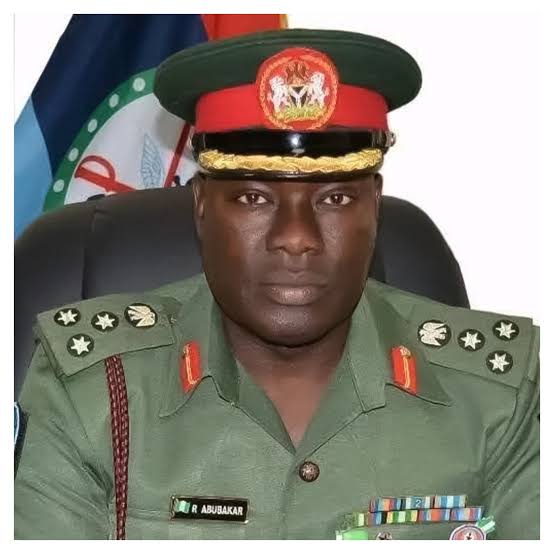
Major General Rabe Abubakar
The latest victim in this monstrous incident is retired Major General Rabe Abubakar.
He was a prominent Nigerian military officer and the former Director of Defence Information.
He equally served as the primary spokesperson for the Armed Forces of Nigeria between 2015 and 2017.
However, on May 30, 2026, General Abubakar and his wife, Hajiya Amina Abubakar, were ambushed and abducted by armed bandits along the Matazu axis of Katsina State while traveling to a wedding.
On June 13, 2026, the Katsina State Government and the Defence Headquarters officially confirmed that he had died while being held in captivity.
Authorities cited medical complications, including diabetes and hypertension, as the primary cause of death.
As usual The Armed Forces of Nigeria released statements mourning his loss and offering condolences to his family, stating that operational resources had been actively deployed to secure his safe return.
At the time filing this report, the condition and whereabouts of his wife remain unknown, though security agencies have continued intensive operations to track down the perpetrators.
The Katsina State Government has confirmed the death of retired Major General Rabe Abubakar, who died from complications of diabetes and hypertension while held captive by bandits.
This was contained in a statement issued on Saturday, June 13 by the Commissioner for Internal Security and Home Affairs Dr. Nasiru Mu’azu.
According to the statement, the officer passed away despite weeks of coordinated rescue efforts by the state government and security agencies.
“It is with profound sadness that we confirm the General’s death while in bandits’ captivity. Despite relentless efforts to secure his safe release, the situation ended in this tragedy,” the statement read.
The government described the abduction and death as a devastating loss to his family, Katsina State, and Nigeria. Governor Dikko Umaru Radda called it “a dark moment” and said it underscores the urgent need for a united fight against criminal groups threatening community security.
The state reaffirmed its commitment to work with the Federal Government and security forces to bring those responsible to justice and eliminate banditry. It also offered prayers for the late general and sympathies to his family.
Across Nigerian households, a quiet but profound shift is underway, as families reorganise their meals, reduce portions and rethink what it means to eat.
The worsening cost-of-living crisis deepened its hold on millions of Nigerians in the first quarter of 2026, with fresh data revealing another round of increases in the prices of basic food items, further stretching household budgets already worn thin by years of inflation.
A mother of four in Ikeja, Adebimpe Olatunji, captured the daily reality facing many families when she said: “We manage, the children may take bread before school, then the proper meal comes later. Sometimes everybody skips breakfast.”
Another mother, Patricia, described the shift in expectations with equal bluntness, saying: “It is no longer about eating well, it is just making sure everybody eats something.”
For Angela, a civil servant and single mother, the erosion of purchasing power had become most visible through absence, explaining that “you notice your salary more through what it cannot do anymore.”
Teachers working in public schools have begun observing the consequences firsthand, with Tunde Lawal, who teaches in Lagos, noting that some pupils now arrive without food for break time.
“You can tell when a child has not eaten properly. Some struggle to pay attention,” he said.
At Mile 12 market in Lagos, traders confirmed that buying patterns had changed significantly, with pepper seller Ope noting: “Everything is now small, small. Before, somebody buys a basket, now it may just be a handful.”
The National Bureau of Statistics, NBS, Consumer Price Index report for 2025 showed that food inflation remained in double digits for most of the year, with rice, beans, yam and maize recording sharp price increases across urban centres.
In Lagos, rice that sold for between N250 and N300 per kilogram in 2015 now fetches between N1,800 and N2,200, while beans have moved from roughly N300 per kilogram to as much as N2,800.
A crate of eggs that once cost below N1,000 now sells for up to N6,000 in some parts of the city.
The latest NBS Food Price Watch, covering December 2025 to March 2026, showed that sweet potatoes recorded the sharpest increase during the period, rising by 10.03 per cent from N752.86 to N828.34.
Irish potatoes followed with a 7.45 per cent increase to N2,044.40, while the average price of one agric egg climbed by 6.44 per cent to N256.48 and the price of a crate rose by 3.38 per cent to N6,127.62.
Yam tubers rose by 4.38 per cent to N2,144.70, with Delta State recording one of the highest average prices in the country at N2,680.21.
White beans increased by 6.31 per cent to N1,276.63, and brown beans rose by 6.06 per cent to N1,325.85, dealing a significant blow to low-income households that have long depended on legumes as an affordable source of protein.
Nigeria’s annual inflation rate, which had declined for 12 consecutive months to 15.06 per cent in February, reversed course and rose to 15.38 per cent in March and 15.69 per cent in April, with annual food inflation reaching 16.06 per cent in April.
When household incomes are stretched, nutrition is often the first casualty, with single mother Onome David, who earns a minimum wage, explaining: “To survive, you remove meat first. Then fish, then you adjust every other thing.”
Community nutrition practitioner, Eunice Obi, said she frequently observed this pattern in low and middle-income neighbourhoods, warning that “people depend more on starch now because they just want food that fills the stomach.”
Nutrition researcher, Dr. Shoba Suri, cautioned that the health consequences of such dietary shifts are not always immediately apparent, noting: “When families switch mostly to cheaper staples, fruits, vegetables and protein reduce first. The body may still feel full, but important nutrients are missing.”
Paediatric nutrition specialist at the University of Colorado, Carina Venter, warned that poor diets might affect growth and brain development in children, even when they appeared to eat regularly.
The President of the Nutrition Society of Nigeria, Professor Salisu Abubakar, said poor nutrition often developed quietly before any visible health problems emerged.
Former president of the society, Professor Ngozi Nnam, stressed that quantity alone was no measure of adequate nutrition, saying: “A child may eat regularly and still suffer malnutrition if the meals lack variety.”
Managing Director of Kamary Nutrition Consult, Mrs. Amaka Nwaora, urged Nigerians not to assume that nutritious meals required expensive ingredients, saying: “Local foods are still some of the best options. Beans, millet, sweet potatoes, ugwu, groundnuts and local vegetables are nutritious and often cheaper than processed foods.”
“A shopping list helps people focus on what they actually need. Buying in bulk markets can save money too,” she added.
Compounding the crisis, the federal government has raised alarm over a deepening food safety emergency, with the Minister Of State For Health And Social Welfare, Dr. Iziaq Salako, disclosing that unsafe food was responsible for nearly 50 million illnesses and more than 53,000 deaths in Nigeria every year.
Speaking at a ministerial briefing in Abuja to mark the 2026 World Food Safety Day, themed “From Burden to Solutions – Safe Food Everywhere,” Dr. Salako said the combined toll translated into a staggering 4.26 million years of healthy life lost to sickness, disability and premature death.
“Most of this burden falls heavily on children under five who account for more than 80 per cent of all foodborne disease burden in Nigeria,” he said.
He further warned that “the true cost of unsafe food in Nigeria is not only measured in sickness and death but also in the lost developmental potential of our children.”
Over 40 million diarrhoeal illnesses annually were linked to dangerous pathogens such as Salmonella, E. coli, Campylobacter, Shigella and Rotavirus, according to the minister.
The Permanent Secretary of the Federal Ministry Of Health And Social Welfare, Ms. Kachollom Daju, stressed that food safety and healthy nutrition could no longer be treated as separate concerns, warning that microbial contamination and poor dietary practices were converging to deepen the country’s public health burden.
“This year’s theme challenges us to move beyond understanding the problem and focus on practical, coordinated and sustainable solutions that will ensure every Nigerian has access to safe and healthy food,” she said.
The World Health Organisation, WHO, urged Nigeria to act on newly available country-specific evidence, stating that “safe food is not a luxury, it is a fundamental human right and a cornerstone of health, nutrition and economic productivity.
Editor’s Note: The names used in this story are pseudonyms to protect the identities of those involved.
For years on end, there have been strident calls for a revamping of the Nigerian policing system. However, what shape, form and structure this wholesome reconfiguration of the nation’s floundering, weak and inefficient policing system should take is one thing the proponents of this much-needed change cannot agree on.
While some favour far-reaching and effective structural and operational shift and behavioural change in the mentality and thinking of officers but still want the control of the police solely in the hand of the federal government, others, who are advocate not just agitating for tiered policing structure but also political and socioeconomic restructuring of the country, want a decoupling and decentralisation of the policing system where subnationals, particularly states, have more than just symbolic and perfunctory say in security matters in their domain but have greater control over security architecture, especially the police, which makes it easy for them take firm and decisive decisions on matters of insecurity. And as it stands, it appears the set of people is the one that will have the final say on the matter of Nigeria’s policing system restructuring.
Since coming to power, President Bola Tinubu has made the creation of state police one of the main objectives of his government. The National Assembly on Thursday took a major step towards the actualisation of that goal as both the Senate and House of Representatives showed readiness to amend the 1999 Constitution to pave the way for the decentralisation of policing in the country
A bill seeking the establishment of state police in Nigeria has been passed by the lower legislative chamber, the House of Representatives.
The passage of the bill for further legislative action marks a significant step towards decoupling Nigeria’s policing structure and giving the governors more power over matters of security in their domain.
The bill, which was passed during plenary presided over by Speaker Tajudeen Abbas on Thursday had massive support with 289 lawmakers voting in favour.
Thursday’s session was ostensibly dedicated to the proposed legislation amid a deepening security crisis across the country, including killings, kidnappings, and bandit attacks across the country.
There was a momentary snafu during the hearing at the hearing when Bashir Zubairu, a lawmaker from Kaduna State, raised a point of order.
He disclosed that members had only received the report prepared by the House Committee on Constitution Review earlier in the day and did not have enough time to study it.
Addressing the chamber after being recognised by the Speaker, Zubairu stated, “Mr Speaker, this document was only made available to lawmakers in the chambers, and we are yet to go through it. We cannot do justice to it because we have not gone through it.”
Despite his concern raised, the Speaker ruled him out of order and directed that the process continue.
As Abbas proceeded to take lawmakers through the bill’s provisions, some members were heard shouting “Point of Order,” but the Speaker declined to entertain the interruptions.
Before voting commenced, Abbas informed members that the electronic voting system was not functioning, explaining that voting would instead be determined based on attendance records.
Of the 290 lawmakers present, 289 supported the establishment of state police, while only one member voted against the proposal. The Speaker, Abbas did not participate in the vote.
The bill also scaled second reading in the Senate after which it was referred by the Senate President, Godswill Akpabio, to the Senate Ad-hoc Committee on the Review of the 1999 Constitution for further legislative scrutiny.
Senate Leader, Opeyemi Bamidele, while leading the debate, underscored the importance of the establishment of state police, noting that reform of the policing system would undoubtedly strengthen Nigeria’s internal security apparatus amid growing concerns over the capacity of the Nigeria Police Force to effectively tackle emerging threats.
“The establishment of state police will improve intelligence gathering: Local police officers are better equipped to obtain actionable intelligence from communities because they understand local languages, customs and social structures
If eventually enacted, the legislation is expected to introduce a multi-layered policing system aimed at improving responses to banditry, kidnapping, terrorism and other security threats through greater local participation in policing.
What key provisions entail
It also states that the Federal Police will continue to exercise policing powers in any state until its police service becomes fully operational.
The amendment further proposes changes to the appointment and command structure of the police.
Under the new arrangement, the Inspector-General of Police will be appointed by the President on the advice of the Nigeria Police Council from among serving members of the Federal Police, subject to confirmation by the National Assembly.
Similarly, a State Commissioner of Police will be appointed by a governor on the advice of the Nigeria Police Council from among serving officers of the State Police, subject to confirmation by the respective State House of Assembly.
The proposal empowers governors to issue lawful directives to State Commissioners of Police on matters relating to public safety and maintenance of law and order. However, where a commissioner considers such directives unlawful or inconsistent with policing standards, the matter may be referred to the Nigeria Police Council for a final decision.
Federal and State police
Reps changed PSC to Federal Police Service Commission
One of the key highlights of the bill is the amendment of Section 84 in sub-section 4 of the Constitution, replacing the Police Service Commission with the Federal Police Service Commission. Similarly, the Nigerian Police Council also becomes the National Police Council.
In the same vein, the words “Nigeria Police Force” are substituted for “Federal Police and State Police.”
Clause 12 of the bill amended Section 214 by providing a new Section 214 to establish the federal police and state police.
214 (2) of the amended bill reads, “The National Assembly shall by an Act prescribe for the structure, organisation, administration and powers of the Federal Police and provide the framework and guidelines for the establishment of State Police.”
(3) “No State Police shall commence operational policing unless it has been established by a Law of the House of Assembly of the State and certified as meeting national minimum standards in the manner prescribed by an Act of the National Assembly.”
The amended bill also provides that “Unless and until a State Police commence operational policing under subsection (3) of this section, the Federal Police shall continue to perform policing functions in that State; and after such commencement, the Federal Police shall continue to perform federal policing functions and may provide assistance to the State Police in accordance with law.”
Specifically, the proposed law provides that the Federal Police shall “Be responsible for the maintenance of public security, preservation of public order and security of persons and property throughout the Federation to the extent provided for under this Constitution or by an Act of the National Assembly; and be responsible for the maintenance of public security, preservation of public order and security of persons and property within a State to the extent that the State has power to make laws under this Constitution.”
Sub-Section 6 of the bill leaves certain operational duties to the State Police.
It reads, “Subject to the provisions of this Constitution, the Federal Police shall not interfere with the operations of any State Police of the internal security affairs of a State except to contain serious threats to public order where it is shown that there is a complete breakdown of law and order within a State and the State Police is unable to contain the threat,” or “Where the Governor of a State requests the intervention of the Federal Police to prevent or contain a breakdown of law and order in the State.”
The Federal Police may also intervene “Where a State Police is unable to function owing to administrative, financial or other problems which render it inoperative at the time.”
The Federal Capital Territory
The bill places the FCT within the territorial jurisdiction of the Federal Police, as it provides that “The Federal Police shall establish and maintain such commands, formations, departments and operational units within the Federal Capital Territory as may be necessary for the effective discharge of its functions.
Inspector General of Police V Commissioner of Police of a State
Clause 13 of the proposed bill amended Section 215 with a new Section to read, “The Federal Police shall be headed by an Inspector-General of Police who shall be appointed by the President on the advice of the National Police Council from among serving members of the Federal Police, subject to confirmation by the National Assembly.
“The Federal Police shall be under the command of the Inspector-General of Police, including contingents of the Federal Police stationed in a State.
“The President or such other Minister of the Government of the Federation as he may authorise in that behalf may give to the Inspector-General of Police such lawful directions with respect to the maintenance and securing of public safety and public order as he may consider necessary, and the Inspector-General of Police shall comply with those directions or cause them to be complied with.”
On the other hand, “A State Police shall be headed by a Commissioner of Police who shall be appointed by the Governor of the State on the advice of the National Police Council from among serving members of the State Police, subject to confirmation by the State House of Assembly.
“The Governor or such other Commissioner of the Government of the State as he may authorise in that behalf may give to the Commissioner of Police such lawful directions with respect to the maintenance and securing of public safety and order as he may consider necessary, and the Commissioner of Police shall comply with those directions or cause them to be complied with.
“Provided that where the Commissioner of Police feels that the direction given under this subsection is unlawful or contradicts general policing standards or practice, he may request that the matter be referred to the National Police Council for review and the decision of the National Police Council shall be final.”
Removal of IGP, State Police Commissioner
A new Section 216 proposes that “An Inspector General of Police shall be removed by the President upon the recommendation of the National Police Council praying that he be so removed on any of the following grounds -grave misconduct in the discharge of his official duties; breach of Police Act, Regulation, Code and Code of Conduct; conviction of any offence involving fraud or dishonesty by a court of law or tribunal; bankruptcy; or mental incapacity.”
Such a removal, according to the proposed law, shall be subject to approval by a resolution of a two-thirds majority of the National Assembly.
A Commissioner of Police of a State, on the other hand, “Shall only be removed by the Governor upon the recommendation of the National Police Council praying that he be so removed on any of the following grounds: grave misconduct in the performance of his official duties; breach of policing standards, law, regulation, code and code of conduct.”
June 12 has always carried weight in Nigeria’s national memory, a date tied to ballots, broken expectations, political struggle, and the long walk toward civilian rule. Yet as Nigeria approached Democracy Day in 2026, the atmosphere around the date feels noticeably different from previous years, not because the history has changed, but because the present reality has reshaped how that history is being viewed. Across cities, conversations are no longer centered only on remembrance, but on how the promises of democracy are being measured in everyday life.
Across households, workplaces, transport parks, and digital spaces, the tone surrounding June 12 has taken on a sharper edge of reflection. It is no longer just about what happened in 1993 or the transition of 1999, but about how those milestones connect to current realities shaping the lives of millions of Nigerians. The shift is subtle but powerful, and it sits at the heart of why Democracy Day in 2026 feels unlike those before it.
Understanding this change requires moving through history, lived experience, and present day conditions that continue to define national conversations. The journey is not only political, it is social, economic, and deeply personal for citizens who experience democracy not through speeches or ceremonies, but through daily survival.
June 12,1993: Election Memory Anchor
The foundation of Nigeria’s Democracy Day lies in the presidential election held on June 12 1993. That election is widely regarded as the most credible electoral process in Nigeria’s history during the military era, a moment when citizens believed their votes carried direct meaning. Chief M K O Abiola was widely believed to have emerged victorious, representing a rare national consensus that crossed regional and social divisions.
However, on June 23 1993, the military administration under General Ibrahim Babangida annulled the election results, triggering a political crisis that reshaped Nigeria’s democratic trajectory. The aftermath led to widespread protests, arrests, and a prolonged period of political instability that stretched through the 1990s.
The memory of that annulment remains central to the emotional weight of June 12. It represents both hope and interruption, a moment when democratic expression was acknowledged by citizens but interrupted by institutional authority. That contradiction still influences how democracy is discussed in Nigeria today.
MKO Abiola’s Symbol, Legacy, Memory
MkO Abiola
Chief M K O Abiola remains one of the most significant figures associated with June 12. His role as the widely accepted winner of the 1993 election positioned him as a symbol of democratic aspiration. His eventual detention after declaring himself president further deepened his association with the struggle for electoral justice.
On July 7 1998, Abiola died while still in custody, a moment that intensified national reflection on the cost of political struggle in Nigeria. Over time, his legacy became more than political, it evolved into a national reference point for sacrifice, legitimacy, and the meaning of electoral mandate.
In 2018, the Nigerian government officially recognized June 12 as Democracy Day, replacing the earlier May 29 date that marked the 1999 return to civilian rule. This decision reinforced Abiola’s symbolic place in national history and reoriented the meaning of the public holiday.
Democracy Day Transition Shift
Nigeria’s Democracy Day was originally celebrated on May 29 beginning in 1999, marking the official handover from military rule to elected civilian leadership under President Olusegun Obasanjo. That date represented institutional transition and the formal beginning of the Fourth Republic.
However, on June 6 2018, the federal government announced a change, moving Democracy Day to June 12 to reflect the deeper historical significance of the 1993 election. This adjustment expanded the meaning of the holiday from political transition alone to include democratic struggle, electoral justice, and civic memory.
The shift also redefined how Nigerians engage with the day. It is no longer just a celebration of governance structure, but a reflection on democratic journey, including both progress and unresolved challenges.
2026 National Mood – Economic Reality
As Nigeria approaches June 12 2026, the national mood reflects a mixture of reflection and concern shaped heavily by economic conditions. Across urban and rural communities, discussions around democracy are increasingly tied to cost of living realities that affect daily survival.
Inflation has remained a central concern, affecting food prices, transportation costs, and household purchasing power. Fuel price adjustments in recent years have also influenced transportation systems and business operations, creating ripple effects across multiple sectors of the economy.
For many citizens, Democracy Day in 2026 is not only about historical remembrance but about present day affordability. The connection between governance and economic wellbeing has become more visible in public discussions, shaping how democracy is evaluated at household level.
Youth Population, Employment Pressure
Nigeria’s youth population remains one of the largest in the world, and in 2026, employment concerns continue to play a defining role in national conversations. Many young Nigerians face limited access to stable jobs, leading to increased participation in informal economic activities.
The ongoing trend of migration commonly referred to as japa has also remained visible, reflecting the search for better economic opportunities outside the country. This phenomenon has become part of broader discussions about opportunity distribution and long term economic planning.
Education output and labour market alignment continues to be a subject of concern, as graduates enter a system that does not always match available employment structures. These realities shape how younger citizens interpret Democracy Day, often linking it to questions of opportunity and inclusion.
Security Landscape: National Concern
Security challenges remain a significant factor influencing national sentiment in 2026. Across different regions, issues such as banditry, kidnapping incidents, and localized conflicts continue to affect communities.
In parts of the North West, rural insecurity has disrupted farming activities and local economies. In other regions, isolated incidents of violence and criminal activity have continued to influence perceptions of safety. These conditions shape how citizens evaluate governance effectiveness beyond electoral processes.
Security concerns have therefore become part of the Democracy Day conversation, linking democratic governance to the ability of the state to ensure safety and stability.
Institutional Trust
Another defining feature of Democracy Day 2026 is the level of public trust in institutions. Conversations across different platforms reflect increased scrutiny of governance systems, particularly around transparency, accountability, and service delivery.
Citizens are increasingly attentive to how public resources are managed, how policies are implemented, and how effectively government institutions respond to public needs. This has created a more interrogative environment where democracy is assessed through outcomes rather than structure alone.
The result is a national mood that blends expectation with evaluation, as citizens measure governance performance against lived experience.
Reform Policies
Nigeria has implemented multiple reforms in recent years across fiscal policy, energy, and public administration. These reforms are often presented as long term structural adjustments intended to stabilize the economy and improve governance efficiency.
However, public experience of these reforms varies widely. While policy direction may be acknowledged, the immediate impact on daily life is often described as uneven. This gap between policy intention and lived reality contributes to the changing perception of Democracy Day.
In 2026, this gap plays a central role in shaping national conversations, as citizens reflect on how democratic governance translates into tangible outcomes.
Infrastructure: Everyday Reality Pressure
Infrastructure remains a visible marker of development challenges across Nigeria. Issues such as inconsistent electricity supply, road conditions in certain regions, and pressure on healthcare systems continue to shape everyday experiences.
Public education facilities in some areas face capacity and resource constraints, while urban centers deal with rapid population growth that strains existing infrastructure. These realities contribute to the broader discussion about how democracy delivers public goods.
As a result, Democracy Day conversations often extend beyond political history into practical assessments of national development progress.
Digital Space: Public Expression Growth
The rise of digital platforms has significantly transformed how Nigerians engage with Democracy Day. In 2026, social media plays a major role in shaping national discourse, allowing citizens to express opinions, share experiences, and participate in political conversations in real time.
Citizen journalism, online commentary, and viral discussions contribute to a more decentralized public sphere. This has increased both the speed and reach of political expression, making national conversations more immediate and widespread.
The digital environment has therefore become a key space where Democracy Day meaning is continuously debated and redefined.
Governance Cost Debate: Accountability Focus
Public discussion around governance costs has become more prominent in recent years. Citizens increasingly pay attention to public expenditure, administrative efficiency, and fiscal priorities.
These discussions reflect a growing demand for accountability, where governance is assessed not only by intent but by cost effectiveness and outcomes. Democracy Day has become a focal point for these conversations, as citizens reflect on the relationship between governance structures and public investment.
Democracy Measurement
The way democracy is measured in Nigeria has evolved significantly over time. Earlier interpretations focused primarily on electoral processes and transition from military rule to civilian governance.
In 2026, the measurement has expanded to include broader indicators such as economic stability, job availability, security conditions, institutional trust, and quality of public services. This shift reflects a more practical interpretation of democracy as a system that should improve daily life.
The question surrounding democracy has therefore evolved from whether democratic institutions exist to how effectively they deliver results for citizens.
National Reflection: Civic Awareness
Democracy Day in 2026 ultimately reflects a nation in active conversation with its own history and present reality. It remains a day of remembrance, but also a day of evaluation where citizens assess progress across multiple dimensions of national life.
The tone of the day is shaped by both historical memory and current experience, creating a layered national reflection that continues to evolve. Nigeria’s democratic journey is still unfolding, and June 12 remains a key reference point in understanding how far the country has come and how far it still aims to go.
Leaving With This: National Direction
Nigeria’s Democracy Day in 2026 stands at the intersection of history and present reality. It carries the weight of 1993, the transition of 1999, the recognition of 2018, and the lived experiences of citizens in the present moment. What makes it feel different is not a change in date or symbolism, but a change in how democracy itself is being measured across society.
The day continues to represent civic freedom and political participation, but it also reflects economic pressures, social expectations, and institutional demands that define modern Nigeria. As June 12 arrives in 2026, it stands not only as a reminder of democratic struggle, but as a mirror of national conditions that continue to shape the meaning of governance in real time.
The Federal Government of Nigeria and the World Bank have jointly cancelled $717.7 million in undisbursed power sector financing, effectively ending a multi-year electricity reform programme more than a year before its scheduled close. The Federal Government formally requested the cancellation on March 26, 2026. The World Bank confirmed it shortly after, setting a new programme closing date of May 31, 2026, down from the original June 30, 2027 target.
The money was part of the Power Sector Recovery Performance-Based Operation, known as the PSRO, a programme approved in June 2020 to push Nigeria toward a financially sustainable electricity sector. For a country where power cuts are a daily reality for homes and businesses, the loss of nearly three-quarters of a billion dollars in reform financing is not an administrative footnote.
World Bank $718 Million Nigeria Loan Cancellation: What Happened & Why
The World Bank $718 million Nigeria loan cancellation is rooted in a reform architecture that produced real results between 2019 and 2022, then broke apart when Nigeria’s foreign exchange market was liberalised in June 2023. That single macroeconomic shift set off a chain of events that neither the government nor the power sector was financially equipped to absorb. Understanding what went wrong requires tracing both the early gains the programme achieved and the specific conditions that made those gains impossible to sustain.
What the PSRO Was Designed to Do
The Power Sector Recovery Operation was Nigeria’s most ambitious multilateral-backed electricity reform programme in years. The World Bank approved it in June 2020 with an initial allocation to support a broad agenda: restore cost-reflective electricity tariffs, reduce the chronic gap between what the sector earned and what it cost to run, improve utility performance, and strengthen regulatory oversight across the value chain.
The underlying logic was that Nigeria’s electricity sector had for years operated as a financial black hole. Distribution companies collected less than the cost of power they distributed. Generation companies struggled to recover costs. The Transmission Company of Nigeria ran on strained infrastructure. The gap between what consumers paid and what electricity actually cost was filled, imperfectly and inconsistently, by federal government support. The PSRO aimed to systematically close that gap.
Between 2019 and 2022, the programme delivered measurable results. Annual tariff shortfalls fell from N581 billion to N166 billion, a reduction of approximately 71 percent. Regulatory cost recovery improved from 56 percent to 94 percent. These were genuine structural improvements. Encouraged by the progress, the World Bank approved an additional financing package of approximately $763.5 million in June 2023, extending the programme to 2027 and adding targets for transmission infrastructure and governance reforms.
How the Naira Devaluation Reversed Years of Progress
The timing of the additional financing package was unfortunate. It was approved in June 2023, the same month the federal government liberalised Nigeria’s foreign exchange market, triggering a sharp depreciation of the naira.
The connection to electricity costs is direct. More than 70 percent of Nigeria’s electricity is generated from gas, and gas pricing in Nigeria is denominated in US dollars. When the naira lost significant value against the dollar, the cost of running thermal power plants surged in naira terms almost overnight. Generation companies were suddenly paying far more to produce the same amount of electricity.
At the same time, electricity tariffs for most Nigerians remained largely frozen. The Nigerian Electricity Regulatory Commission adjusted tariffs for Band A customers in April 2024, moving that category to cost-reflective rates. Band A customers are those receiving the most reliable supply, typically a subset of urban consumers. Everyone else continued paying tariff rates that bore little relationship to actual generation costs.
The result was a financial rupture. Annual tariff shortfalls, which had been brought down to N140 billion in 2022, climbed to nearly N1.9 trillion annually in both 2024 and 2025. That is an increase of more than thirteen times in three years. The World Bank described the pressure this placed on Nigeria’s fiscal space as severe.
The Reform Conditions Nigeria Could Not Meet
Performance-based financing from the World Bank works through disbursement-linked indicators, specific reform milestones that a government must achieve before each tranche of money is released. The PSRO’s additional financing package, totalling roughly $763.5 million, was structured around a set of such indicators related to tariff adjustment, sector governance, transmission improvements, and the development of a credible financing plan.
According to the World Bank’s restructuring report, Nigeria failed to meet the required indicators in 2023, 2024, and 2025. The core problem was the inability to establish a credible and fiscally sustainable financing plan to address the growing tariff shortfalls. The bank was clear that without a demonstrated path to closing the revenue gap, disbursing funds tied to reform progress was not justifiable under programme rules.
Other factors compounded the problem. The World Bank cited delays in aligning performance improvement plans for major sector agencies, including the Transmission Company of Nigeria. It also flagged verification difficulties and what it characterised as weak implementation capacity. These were not minor procedural lapses. They reflected the broader institutional fragility of a sector trying to manage an escalating financial crisis while simultaneously implementing complex structural reforms.
Out of the approximately $763.5 million in additional financing, only about 9 percent was ever disbursed. Of the $449 million International Bank for Reconstruction and Development component alone, just $41.24 million was released, leaving $407.76 million unused. The programme’s overall implementation performance under the additional financing was rated Moderately Unsatisfactory by the World Bank.
What Nigeria Did and Did Not Receive
It is worth being precise about what the cancellation means in financial terms. The $717.7 million that has now been cancelled represents the undisbursed balance under the additional financing package approved in 2023. It was not a disbursed loan that Nigeria must now repay. It was funding that was committed but never released because the conditions for disbursement were not met.
Under the earlier phase of the programme, which ran from 2020 through to the restructuring, approximately $798 million was disbursed across the original PSRO and related operations. That money did flow, and the World Bank acknowledged it produced lasting results during the period when tariff shortfalls were declining. Those earlier gains are not wiped out by the cancellation of the remaining balance.
What Nigeria has lost is access to future financing that was earmarked for deepening reforms. The money would have supported further improvements at the Transmission Company of Nigeria, funded governance reforms across the electricity value chain, and provided financial backing for the broader policy and regulatory changes needed to stabilise the sector. That support will not now arrive through this particular channel.
The Structural Problems That Outlast the Loan
The World Bank was careful to note that the PSRO’s failure to disburse its additional financing does not simply reflect a gap in reform commitment or government capacity. The sector’s underlying structural problems are deep, predating the programme and persisting through it.
Nigeria’s electricity grid suffers from transmission constraints that limit how much power can physically be moved from generators to consumers, regardless of how much generation capacity exists on paper. Distribution companies continue to record high technical and commercial losses. Revenue collection from consumers remains weak. Available generation capacity, which on paper exceeds 12,000 megawatts, is routinely underutilised because of gas supply shortfalls, inadequate transmission, and weak distribution infrastructure.
These are the structural conditions that made cost-reflective tariffs politically and economically difficult to implement at scale. Asking most Nigerian consumers to pay tariffs that reflect the true cost of electricity delivery requires delivering electricity reliably. The sector’s inability to do both simultaneously created the political resistance that kept broad tariff reform stalled even as gas costs climbed.
What Happens to Nigeria’s Power Sector Reform Now
The cancellation does not mean Nigeria and the World Bank have severed their relationship on electricity. The World Bank’s restructuring documents indicate that both parties agreed to redirect support toward alternative interventions. What those interventions will look like in practice has not been detailed in publicly available documents as of the time this article was written.
Nigeria’s total public debt stood at approximately N159.28 trillion as of recent reporting. The government will need to weigh any new multilateral financing for the power sector against its broader fiscal constraints. A $1.25 billion loan request cited in reporting as pending approval would represent a significant new commitment, and would require its own set of reform conditions.
For ordinary Nigerians, the consequences of the cancellation are less about the loss of a specific financial instrument and more about what it signals for the pace of electricity reform. The sector’s N1.9 trillion annual tariff shortfall does not disappear because the loan was cancelled. That gap has to be financed somehow, whether through government subsidy, new debt, or tariff increases that have so far proven politically difficult to implement broadly.
The sector remains in a position where generation costs have risen sharply, distribution performance remains weak, and the financial model that underpins electricity delivery is structurally unsustainable without significant reform. The World Bank’s assessment that key reform indicators were not achieved between 2023 and 2025 reflects that structural reality as much as it reflects any specific failure of implementation.
The Cancelled Loan Was a Tool, Not the Problem
It would be a misreading of this episode to treat the loss of $717.7 million as the central problem facing Nigeria’s electricity sector. The cancelled loan was an instrument designed to accelerate reforms that the sector needed independently of any external financing. The reforms stalled not because the money was unavailable but because the economic conditions that made those reforms viable were undermined by the naira devaluation and the political difficulty of passing on rising generation costs to consumers.
Nigeria’s power sector crisis is a structural problem with deep roots in decades of underinvestment, institutional weakness, and the persistent political reluctance to allow electricity prices to reach cost-reflective levels for all consumers. The World Bank’s decision to cancel the remaining balance acknowledges that the specific programmatic framework designed to address those problems could not function in the economic environment that existed between 2023 and 2025.
What comes next will require a financing approach that can survive the volatility of Nigeria’s macroeconomic environment, and a reform framework that can deliver tangible improvements in electricity reliability before asking consumers to absorb the full cost of a system that has long failed them.
As part of the commemoration of democracy day, the Nigerian government has awarded national honours to fifty Nigerians.
The honours were conferred on the recipients for their roles and contributions in the pro-democracy struggle and fight against the military rule.
The conferment of the national honour was announced by President Bola Tinubu on Friday during his Democracy Day address to Nigerians.
The president acknowledged and praised journalists, civil rights activists, political leaders and military officers who played significant roles in the campaign for the restoration of democratic governance in Nigeria.
Tinubu described June 12 as a defining moment in Nigeria’s history, noting that it represents far more than an election, and remains a pivotal chapter in the nation’s democratic journey.
“June 12 occupies a sacred place in our national memory. It represents more than an election; it is a defining chapter in our story,” the president said.
He stated that Nigerians who currently enjoy the benefits of democracy have a responsibility to strengthen the institutions established through the sacrifices of pro-democracy campaigners.
“As beneficiaries of their struggle, we have a duty to strengthen and deepen the democratic institutions for which they fought. The greatest tribute we can pay is to build a Nigeria where freedom is protected, justice is upheld, opportunity is expanded, and government is accountable,” he said.
The president further noted that the June 12, 1993, presidential election demonstrated the possibility of national unity and a truly inclusive Nigerian nation.
“June 12, 1993, revealed the possibility of a true Nigerian nation. The heroes of June 12 secured political freedom. Our challenge is to secure economic freedom. Democracy must be felt in the quality of people’s lives—in opportunities for youth, in prosperous farmers, successful entrepreneurs, and the dignity of our workers.
“Every generation has a defining responsibility. The generation of our founding fathers secured independence—the generation of June 12 secured democracy. Our generation must secure prosperity,” he added.
Tinubu said the recipients of the 2026 Democracy Day national honours were persecuted, imprisoned, exiled, and suffered other forms of hardship, victimisation, and dehumanisation in their struggle for democratic governance.
According to him, many of the awardees paid heavy personal prices to ensure that democracy survived in the country.
The president said: “They suffered persecution, endured indignities, exile, incarceration, and, at times, solitary confinement, so that we have democracy today.”
He added that a comprehensive breakdown of the national honours and their respective categories would be released in the coming days
Full List of Honourees
Pro-Democracy Activists, Journalists and Civil Society Leaders
Barrister Ayoka Lawani
Tunde Fagbenle
Oladele Alake
Olatunji Bello
Louis Odion
Segun Babatope
Sam Omatseye
Sir Ademola Osinubi
Bola Bolawole
Lade Bonuola
Femi Kusa
Debo Adeniran
Chief Ayo Opadokun
Chief Ralph Obiora
Ose Osayande
Barrister Osa Director
Prof. Sylvester Odion-Akhaine
Dr Arthur Nwankwo (Posthumous)
Dr Osagie Obayuwana
Dr Joe Okei-Odumakin
Barrister Titus Mann
Joe Igbokwe
Richard Akinnola
Ben Charles-Obi (Posthumous)
George Mbah
Dr Niran Malaolu
Major-General Ishola Williams (rtd)
Femi Aborisade
Jenkins Alumona
Gbemiga Ogunleye
Muyiwa Adekeye
Babajide Kolade-Otitoju
Ike Okonta
Soldier-Democrats
Major General M.A. Garba
Brigadier General Lawal Jaafaru Isa
Colonel Umar Farouk Ahmed
Colonel Sambo Dasuki
Colonel Lawan Gwadabe
Brigadier Jonathan Ndam Temlong
Colonel Musa Shehu
Major General Chris Eze
Major General Harris Dzarma
Colonel Isa Jibrin
Major General Joseph Oshanupin
Colonel Olusegun Oloruntoba (Olugbede of Gbede Kingdom)
Lieutenant Colonel Happy Kefas Bulus
Colonel J. Okai
Colonel Emmanuel Ndubueze
Lieutenant Colonel Yakubu Muazu
Brigadier Yahaya Abubakar, the current Etsu Nupe and holder of the CFR title.
The president noted that the complete honours list, including the categories of awards conferred on each recipient, would be made public in the coming days.




![June 12: Tinubu awards national honours to Dasuki, Dele Alake, Kolade Otitoju, 47 others [FULL LIST]](https://withinnigeria.com/wp-content/uploads/2026/05/100250.jpg)