Category: National

Nigeria National News covering updates from federal Government of Nigeria (FGN), Nigeria economy, Education, Health sector, National Issues,more..

  • Why Saleh Mamman Was Sentenced to 75 Years in Prison

    Why Saleh Mamman Was Sentenced to 75 Years in Prison

    On the morning of May 13, 2026, a Federal High Court in Abuja delivered one of the most consequential corruption verdicts in Nigerian history. The dock was empty. Saleh Mamman, the man being sentenced, was not there. His lawyer told the court he could not reach him. Phone calls had gone unanswered. Nobody knew where he was.

    Justice James Omotosho proceeded anyway. When it was done, Mamman had been sentenced to 75 years in prison for laundering 33.8 billion naira that was earmarked for two of Nigeria’s most critical power infrastructure projects: the Mambilla and Zungeru hydroelectric plants. The sentences were ordered to run consecutively. He would not be eligible for any reduction option on most counts. The court ordered Interpol and all Nigerian security agencies to find him and deliver him to the Nigerian Correctional Service.

    Six days later, at 3:30 in the morning on May 19, 2026, EFCC operatives located and arrested Mamman in Rigasa, Kaduna State, where he had been hiding with two others who were also taken into custody.

    Why Saleh Mamman Was Sentenced to 75 Years in Prison
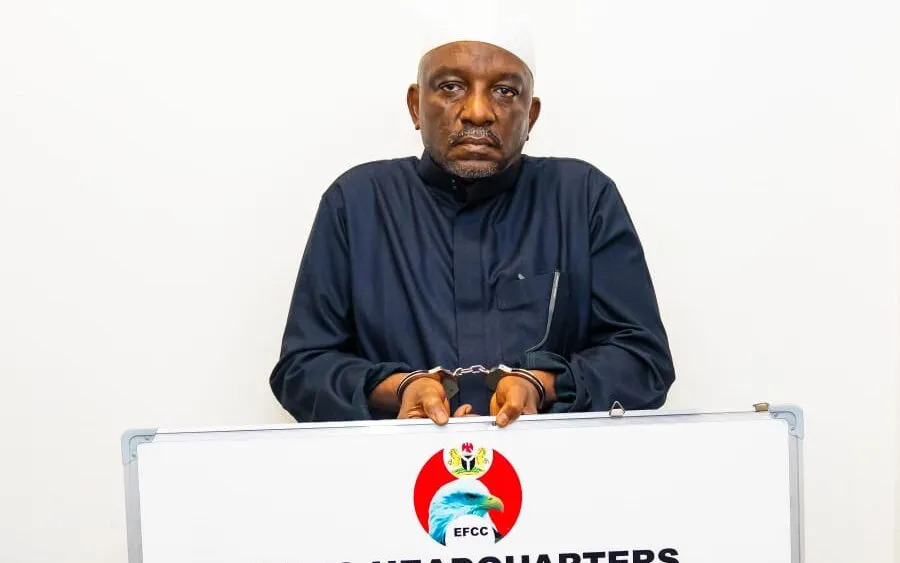
    Why Saleh Mamman Was Sentenced to 75 Years in Prison
    Saleh Mamman

    The sentence against former Minister of Power Saleh Mamman is rooted in a pattern the court found to be systematic, deliberate, and extensive. Over the course of a two-year ministerial tenure, billions of naira that should have gone toward building the electricity infrastructure Nigerians have waited decades for were instead routed through proxy companies, bureau de change operators, and private accounts. The 75-year sentence reflects not just the scale of the theft, but the court’s determination that every count would be accounted for separately.

    Who Is Saleh Mamman?

    Mamman Kwagyang Saleh was born on January 2, 1958, in Taraba State. He began his professional life in 1981 as a teacher at a technical school in Mubi, Adamawa State. In 1992, he transferred to the Taraba State Ministry of Works, eventually rising to the rank of Assistant Director in charge of Electrical Services. He retired from civil service in 2002 and moved into business and politics full-time.

    He holds a Higher National Diploma in Electrical Electronics from Kaduna Polytechnic, which he obtained in 1988, and a Master of Business Administration from Bayero University Kano, which he completed in 2015. His background in electrical engineering and his political alignment with what became the All Progressives Congress made him a credible candidate for one of the most technical cabinet portfolios in the country.

    President Muhammadu Buhari swore him in as Minister of Power on August 21, 2019. He served until September 1, 2021, when Buhari sacked him during a cabinet reshuffle and replaced him with Abubakar Aliyu, then Minister of State for Works and Housing. His successor at the ministry was Babatunde Fashola, who had held the combined Ministry of Power, Works and Housing in the previous cabinet.

    The Two Projects at the Centre of the Case

    The fraud charges centred on funds allocated to two specific hydroelectric power projects: the Mambilla Hydroelectric Power Project in Taraba State and the Zungeru Hydroelectric Power Project in Niger State.

    The Mambilla project is, in scale, one of the most ambitious infrastructure proposals in Nigeria’s history. First conceived in 1972 under the military administration of General Yakubu Gowon, the plant is designed to generate 3,050 megawatts of electricity from a complex of four dams and two underground stations along the Taraba River. After more than five decades, billions of naira in feasibility studies, and a long-running international arbitration dispute with Sunrise Power and Transmission Company, the project has not broken ground in any meaningful sense. The story of Mambilla is, in many ways, a catalogue of every structural failure in Nigerian public administration: contract disputes, political interference, and recurring financial diversion.

    Zungeru, the second project, is located in Niger State and has a planned generation capacity of 700 megawatts. It is further along in execution than Mambilla and is partially operational, though its development has been marked by delays and technical setbacks. Both projects received substantial federal budgetary allocations under the Buhari administration, and it is from those allocations that the EFCC alleged the diversions took place.

    How the Fraud Worked: What the EFCC Established in Court

    The EFCC arraigned Mamman at the Federal High Court in Abuja on July 11, 2024, on a 12-count charge of conspiracy and money laundering. The total value of the alleged diversion was 33,804,830,503.73 naira, slightly over 33.8 billion naira.

    During the trial, the prosecution called 17 witnesses and tendered 43 exhibits. The picture they painted was methodical. Funds that had been released for the Mambilla and Zungeru projects were moved outside the regulated banking system. Large sums were converted into foreign currencies through bureau de change operators, bypassing the scrutiny that formal financial channels would have required. Properties in Abuja were purchased using cash transactions that violated Nigeria’s Money Laundering (Prohibition) Act of 2011.

    One transaction the court examined closely involved a cash payment of $655,700, equivalent to approximately 200 million naira at the time, made in December 2019 to a company called Mohiba Investment Ltd for a piece of land in Abuja. The court found that Justice Omotosho was satisfied beyond a reasonable doubt that at least 22 billion naira had been siphoned through a network of relatives, ministry officials, and private companies acting as proxies. The prosecution established that the scheme involved people with direct access to the ministry’s financial operations.

    After the EFCC closed its case, Mamman’s legal team filed a no-case submission on November 19, 2025, arguing the evidence was insufficient to require him to mount a defence. Justice Omotosho dismissed the application on December 11, 2025, ruling that the prosecution had established a prima facie case that required a response. The case was adjourned to February 23, 2026, for the defence to begin. Mamman never appeared.

    Convicted in Absentia: How the Court Handled His Absence

    Mamman’s disappearance before the defence phase of his trial created a procedural test for the court. His lawyer, Mohammed Ahmed, offered explanations for his client’s absence, but Justice Omotosho found them insufficient. On May 7, 2026, the court convicted Mamman in absentia on all 12 counts, ruling that the prosecution had proved its case beyond a reasonable doubt. The judge explicitly characterised the former minister’s absence as a deliberate attempt to obstruct the administration of justice.

    Sentencing was fixed for May 13, 2026. On that date, Ahmed appeared in court and told Justice Omotosho that he did not know where Mamman was. Calls to his phone lines had failed to connect. The court proceeded. When asked for the full breakdown of the sentence, Justice Omotosho sentenced Mamman to seven years each on counts 1, 2, 3, 6, 7, 8, 9, 10, 11, and 12 without the option of a fine. He received three years on count 4, with the option of a 10 million naira fine, and two years on count 5 without the option of a fine. All sentences were ordered to run consecutively, bringing the total to 75 years.

    The court also ordered the forfeiture of foreign currencies recovered from the convict, along with four properties in Abuja that had been traced to him. Beyond the prison term, Mamman was directed to refund the outstanding balance of the funds specifically tied to the Mambilla and Zungeru projects. Justice Omotosho ordered all security agencies to liaise with Interpol to ensure his arrest and transfer to the Nigerian Correctional Service.

    The Manhunt: From Abuja Taxi to Kaduna Hideout

    Between the sentencing on May 13 and the arrest on May 19, details emerged about how Mamman had fled. Court proceedings later revealed through testimony from a relative that he had left Abuja by taxi as the trial was closing in on its conclusion. The choice of transport was perhaps designed to avoid detection systems that might flag a prominent former minister travelling through formal channels.

    He made his way to Rigasa, a neighbourhood in Kaduna State. EFCC operatives located him there and moved at 3:30 in the morning on May 19, 2026. He was arrested along with two individuals who had been sheltering him, both of whom were also taken into custody. EFCC Chairman Ola Olukoyede confirmed the arrest at a press conference in Abuja. He described the operation as a demonstration of the government’s commitment to pursuing convicted criminals regardless of their political backgrounds.

    Mamman was subsequently produced before the Federal High Court in Abuja, which cleared the way for his transfer to Kuje Prison to begin serving his sentence. Under the terms of the judgment, the 75-year sentence officially commenced on the date of his arrest.

    A Landmark in Nigeria’s Anti-Corruption Record

    The significance of the Mamman conviction extends beyond the facts of a single fraud case. He is the first minister who served in Muhammadu Buhari’s cabinet to be convicted and jailed for corruption. This is not a trivial distinction. Buhari ran for the presidency on an explicit anti-corruption platform, and his administration was marketed, both domestically and internationally, as a credible break from the culture of impunity that had characterised previous governments. That one of his own ministers has now become one of the most heavily sentenced public officials in the country’s history raises uncomfortable questions about what oversight existed at the ministerial level during that period.

    Other Buhari cabinet members currently face their own legal battles. Hadi Sirika, former Minister of Aviation, is standing trial. Abubakar Malami, who served as Attorney-General of the Federation, is facing charges. Chris Ngige, the former Labour Minister, is also in court. None of them have been convicted. Mamman, as of his sentencing, stands alone as the only member of that administration to have received a prison term.

    The EFCC has described the conviction as a landmark moment in Nigeria’s anti-corruption enforcement. Whether it marks a genuine turning point or remains an isolated case will depend, in part, on how the system handles the other pending matters.

    The Mambilla Problem: A Project That Has Defined Institutional Failure

    Understanding the Mamman case in full requires understanding what the Mambilla project represents in Nigerian public life. Since it was first proposed in 1972, the dam has been referenced in budget after budget, allocated funds across administrations spanning military and civilian governance, and consistently failed to progress beyond preparatory stages. The core issue has never been the project’s technical feasibility or its strategic importance. Nigeria generates somewhere between 4,000 and 5,000 megawatts of electricity for a population of over 200 million people. A 3,050-megawatt addition would represent a transformative improvement. The project is real, the need is real, and the engineering is understood.

    What has gone wrong, repeatedly, is governance. In 2003, the Mambilla contract was awarded to Sunrise Power and Transmission Company on a Build, Operate and Transfer basis by the then-minister Olu Agunloye, who is himself currently being prosecuted by the EFCC. Sunrise, a company with no prior record in major power projects, later took Nigeria to the International Chamber of Commerce in Paris after the federal government tried to cut it out and deal directly with Chinese firm Sinohydro. That arbitration case remains unresolved and has added a foreign legal dimension to the project’s already complicated history.

    Mamman’s theft did not happen in a vacuum. It happened inside a project that had already been looted and delayed across decades. The EFCC also has a separate case before the FCT High Court in which Mamman is charged alongside seven others on nine counts of conspiracy, false pretence, and intent to defraud relating to an additional 31 billion naira in Mambilla funds. Co-defendants in that case pleaded not guilty during their arraignment in October 2025. The prosecution alleges that over 26 billion naira in that separate matter was diverted through bureau de change operators under Mamman’s instruction.

    Nigeria’s Power Crisis and the Cost of Corruption at the Ministry Level

    The most immediate consequence of the kind of diversion established in the Mamman case is that infrastructure that should have been built was not. Nigeria’s electricity problem is among the most discussed and least resolved challenges in its development history. The World Bank has estimated that more than 40 percent of Nigerians have no access to grid electricity. Businesses run generators at significant cost. Manufacturers factor power instability into production planning in ways that reduce competitiveness. The informal estimate used by economists is that unreliable electricity costs Nigeria several percentage points of GDP annually.

    Against that background, the diversion of 33.8 billion naira from the Mambilla and Zungeru projects is not an abstraction. Zungeru is now partially operational but has faced delays and technical problems. Mambilla has barely moved. Every year the dam does not exist is a year in which Nigeria’s power deficit does not close. The Mamman conviction does not reverse that. But it does, for the first time, attach a definitive legal consequence to the ministerial-level decisions that perpetuated the deficit.

    What Happens Next

    Mamman is now in custody at Kuje Prison in Abuja. His 75-year sentence has begun to run. A separate 9-count case linking him and seven others to another 31 billion naira in alleged Mambilla funds is still before the FCT High Court. His co-defendants in that matter have pleaded not guilty.

    The Mambilla project remains where it has been for most of the past five decades: unbuilt. The arbitration with Sunrise Power in Paris continues. The feasibility studies are done. The contracts have been awarded, disputed, cancelled, and re-awarded. What has not happened is construction.

    For Nigerians who have watched ministers come and go while power supply remained unreliable, the Mamman sentence is significant less for its symbolism than for what it establishes as a precedent. A former federal minister has been convicted, sentenced to 75 years, attempted to flee, and been caught within a week. The EFCC delivered on every stage of that process. What the system does with the cases still pending will determine whether this becomes a pattern or remains, as many such moments have before, an exception.

  • Democracy Day: Nigerian Govt declares public holiday

    Democracy Day: Nigerian Govt declares public holiday

    As part of the commemoration of democracy day, the Federal Government of Nigeria has announced Friday, June 12, as a public holiday.

    The announcement was made by the government through the Minister of Interior, Dr Olubunmi Tunji-Ojo on Thursday.

    In a statement signed by the Permanent Secretary of the Ministry, Dr Magdalene Ajani, Tunji-Ojo underscores the importance of June 12 to Nigeria’s history.

    He noted that the day is set aside to honour the courage, resilience and sacrifices of Nigerians whose efforts and drive brought about democratic rule in this country.

    According to the statement, the legacy of the heroes continues to shape and inform the values and responsibilities of the Nigerian state.

    The minister reaffirmed the Federal Government’s commitment to the preservation of democratic ideals, including the rule of law, transparency, accountability and inclusive governance.

  • Reps ratify bill for State Police creation

    Reps ratify bill for State Police creation

    A bill seeking the establishment of state police in Nigeria has been passed by the lower legislative chamber, the House of Representatives.

    The passage of the bill for further legislative action marks a significant step towards decoupling Nigeria’s policing structure and giving the governors more power over matters of security in their domain.

    The bill, which was passed during plenary presided over by Speaker Tajudeen Abbas on Thursday had massive support with 289 lawmakers voting in favour.

    Thursday’s session was ostensibly dedicated to the proposed legislation amid a deepening security crisis across the country, including killings, kidnappings, and bandit attacks across the country.

    There was a momentary snafu during the hearing at the hearing when Bashir Zubairu, a lawmaker from Kaduna State, raised a point of order.

    He disclosed that members had only received the report prepared by the House Committee on Constitution Review earlier in the day and did not have enough time to study it.

    Addressing the chamber after being recognised by the Speaker, Zubairu stated, “Mr Speaker, this document was only made available to lawmakers in the chambers, and we are yet to go through it. We cannot do justice to it because we have not gone through it.”

    Despite his objection, the Speaker ruled him out of order and directed that the process continue.

    As Abbas proceeded to take lawmakers through the bill’s provisions, some members were heard shouting “Point of Order,” but the Speaker declined to entertain the interruptions.

    Before voting commenced, Abbas informed members that the electronic voting system was not functioning, explaining that voting would instead be determined based on attendance records.

    Of the 290 lawmakers present, 289 supported the establishment of state police, while only one member voted against the proposal.

    The Speaker, Abbas did not participate in the vote.

    Under the proposal, Section 214 of the Constitution will be amended to formally establish both policing formations. The National Assembly will be empowered to prescribe the structure, administration and powers of the Federal Police, while also setting minimum standards for the establishment and operation of state police services.

    The bill provides that no state police formation shall commence operations unless it is established through a law passed by the relevant State House of Assembly and certified as complying with national standards to be prescribed by the National Assembly.

    It also states that the Federal Police will continue to exercise policing powers in any state until its police service becomes fully operational.

    To guard against abuse and undue interference, the bill limits federal intervention in the affairs of state police formations. Under the proposal, the Federal Police may only intervene where there is a breakdown of law and order, upon the request of a governor, or where a state police force becomes unable to function due to administrative, financial or operational challenges.

    The amendment further proposes changes to the appointment and command structure of the police.

    Under the new arrangement, the Inspector-General of Police will be appointed by the President on the advice of the Nigeria Police Council from among serving members of the Federal Police, subject to confirmation by the National Assembly.

    Similarly, a State Commissioner of Police will be appointed by a governor on the advice of the Nigeria Police Council from among serving officers of the State Police, subject to confirmation by the respective State House of Assembly.

    The proposal empowers governors to issue lawful directives to State Commissioners of Police on matters relating to public safety and maintenance of law and order. However, where a commissioner considers such directives unlawful or inconsistent with policing standards, the matter may be referred to the Nigeria Police Council for a final decision.

    The bill also seeks to amend Section 84 of the Constitution by replacing references to the National Police Council and the Federal Police Service Commission with the Nigeria Police Council and the Police Service Commission.

    If eventually enacted, the legislation is expected to introduce a multi-layered policing system aimed at improving responses to banditry, kidnapping, terrorism and other security threats through greater local participation in policing.

  • Inside the recent Youth Protest that shook Nigeria’s National Assembly

    Inside the recent Youth Protest that shook Nigeria’s National Assembly

    The morning of June 9, 2026 began like a typical weekday in Abuja, steady movement around government corridors, routine security checks, early commuters trying to beat the traffic rhythm of the capital city, yet beneath that calm surface something was already building across different parts of the city. Small groups of young Nigerians had begun gathering quietly without loud announcements, without political banners that suggested affiliation, but with a shared concern that had been growing for months across communities, schools, highways and rural settlements. Their conversations carried the same tone, worry about safety, frustration about repeated incidents, and a determination that the issue could no longer remain confined to private discussions or social media debates.

    By mid morning the gathering had expanded into a coordinated movement that stretched across key points in the city, drawing attention from passersby, journalists and security personnel who were observing the steady flow of people moving toward a central direction. The atmosphere was not chaotic, yet it was charged with urgency, as though each participant understood that the day represented something larger than a protest. It was a collective expression shaped by repeated experiences of insecurity that had affected different parts of the country over time.

    The destination was the complex of the National Assembly Nigeria, a symbolic center of legislative authority, where national decisions are debated, shaped and formalized. The movement toward this location was not random, but deliberate, reflecting a belief among the participants that the concerns they carried required direct visibility at the heart of governance.

    Gathering Point Near Federal Corridor

    The initial convergence reportedly began around the vicinity of the Federal Ministry of Women Affairs Nigeria, where participants arrived in small groups before forming a unified procession. The location served as an assembly point where final coordination took place, voices merged, and placards were distributed among participants who had come prepared with messages that reflected shared demands.

    From this point, the procession began its movement toward the National Assembly complex, maintaining a steady pace, with participants singing solidarity songs that echoed across nearby streets. The songs were not ceremonial but reflective, carrying tones of concern, resilience and collective identity. Security personnel monitored the movement closely, ensuring that traffic and public order were maintained while allowing the march to proceed without interruption.

    Placards became visible as the crowd expanded along the route, with messages such as Nigerians Unite Against Insecurity, Leaders from APC PDP ADC Should Rise in One Accord Against Insecurity, and Nigerians Unite Against Terror. These messages reflected a central theme that ran through the entire demonstration, a call for unity across political divides in addressing insecurity that had affected civilians across different regions.

    Entry Approach Toward National Assembly Complex

    As the march approached the National Assembly Nigeria, the size of the gathering had grown significantly, attracting attention from journalists, observers and additional residents who joined along the way. The complex itself stood as a focal point of national governance, making it a powerful symbolic destination for a protest centered on national security concerns.

    Participants maintained order as they approached the perimeter, with security operatives managing access points while allowing the demonstration to remain peaceful. There was no report of confrontation, as both sides maintained distance and discipline, reflecting an understanding that the purpose of the gathering was communication rather than confrontation.

    At this stage, the demonstration transitioned into a stationary gathering outside the complex, where voices were directed toward media representatives and onlookers. The messages being shared focused on the lived realities behind the protest, including fears on highways, repeated abductions, and growing uncertainty in rural and urban communities alike.

    Core Issues Driving The Protest Movement

    The motivations behind the June 9 2026 demonstration were rooted in a series of security concerns that had been escalating across Nigeria over time. Participants highlighted increasing kidnappings affecting both urban and rural communities, as well as attacks attributed to armed groups operating in different regions. The fear expressed by many speakers centered on the unpredictability of travel, particularly on major highways where incidents had become more frequent.

    One recurring concern was the expansion of insecurity into areas previously considered relatively stable. Communities that once felt distant from conflict zones were now reporting incidents that created anxiety among residents, especially families with school aged children. The psychological impact of these developments was repeatedly emphasized during the protest, as participants described how daily routines had been altered by fear and caution.

    Another issue raised was the perception that insecurity had become entangled with political narratives, making it harder for citizens to see unified responses from leadership. This concern was not framed as accusation but as frustration over perceived delays in coordinated action. The demand was not directed at any single group, but toward a broader system of governance responsible for national safety.

    Voices From Within The Movement

    Among those present was Isah Abubakar, identified as one of the organizers, who spoke about the daily realities faced by citizens in different parts of the country. His remarks focused on the unpredictability of movement in certain regions, where travel after evening hours had become increasingly risky. He emphasized that insecurity does not distinguish between political affiliations, religious backgrounds or ethnic identity, affecting all citizens in similar ways.

    Other participants echoed similar sentiments, describing experiences from different states where school environments, farming communities and transport routes had been disrupted by fear of attacks. These accounts were not presented as isolated incidents but as part of a broader pattern that had contributed to rising public anxiety.

    The tone of the gathering remained consistent, grounded in concern rather than confrontation, with repeated calls for national unity in addressing the challenges being discussed.

    Structured Demands Presented By Protesters

    The demonstration outlined several clear demands that reflected the priorities of the participants. The first was immediate and decisive action by the Federal Government to strengthen security operations across affected regions. This included calls for improved coordination among security agencies and more visible responses to emerging threats.

    The second demand focused on national unity, particularly among political actors across different parties. Participants urged leaders from APC, PDP and ADC to place security above political competition, emphasizing that insecurity affects citizens regardless of political alignment.

    The third demand centered on cooperation with experienced security professionals, including retired military officers and former service chiefs, who were encouraged to contribute insights that could assist ongoing efforts to address the crisis. This suggestion reflected a belief in combining institutional knowledge with current strategies.

    The fourth demand highlighted accountability within security institutions, with calls for improved transparency, efficiency and responsibility in handling security related challenges. This aspect of the protest emphasized trust as a critical component of national security efforts.

    National Context Behind Rising Concern

    The protest did not emerge in isolation but was influenced by a series of incidents reported across different parts of the country. Reports of school abductions in states such as Oyo and Borno had intensified public concern, particularly among parents and educational communities. These incidents created widespread emotional reactions, including demonstrations from students and teachers calling for urgent rescue operations.

    At the same time, insecurity concerns that had historically been concentrated in northern regions were increasingly reported in parts of the Southwest, altering public perception of geographical safety zones. This shift contributed to a broader sense of uncertainty among travelers and residents across multiple regions.

    Religious organizations also expressed concern, with the Christian Association of Nigeria CAN announcing a three day national mourning period in response to ongoing security challenges. This development added another layer of national attention to the issue, reinforcing the urgency felt by many citizens.

    Atmosphere During The Protest Gathering

    Despite the seriousness of the subject matter, the demonstration remained peaceful throughout its duration. Participants maintained order, avoided disruption of public infrastructure, and ensured that their messages were communicated through placards, speeches and media engagement rather than confrontation.

    Journalists present at the scene documented statements from participants while security personnel maintained a controlled perimeter. The interaction between both sides remained calm, reflecting a shared understanding of the need to avoid escalation.

    The crowd continued to grow and shift gently throughout the day, with participants rotating positions, engaging in discussions, and responding to media inquiries. The overall environment reflected a disciplined expression of civic engagement rather than disorder.

    Broader Meaning Within National Climate

    The demonstration at the National Assembly Nigeria reflected a growing pattern of civic attention toward insecurity as a defining national concern. The timing of the protest, occurring ahead of the 2027 electoral cycle, added significance to its message, as citizens increasingly call for security to be prioritized in national planning and policy direction.

    The presence of young Nigerians at the forefront of the movement highlighted the demographic reality of a population deeply affected by security conditions across education, employment and mobility. Their participation reflected a desire for visible action and sustained attention to issues affecting daily life.

    The gathering outside the legislative complex became a moment of national visibility, where concerns that had circulated across communities were brought directly to the institutions responsible for addressing them.

    Closing Reflection On The Day’s Events

    The events of June 9, 2026 at the National Assembly complex captured a collective expression shaped by lived experiences of insecurity across different regions of Nigeria. The movement from initial gathering points to the legislative center reflected a structured and peaceful effort to communicate urgency.

    What unfolded was not a moment of disruption but a demonstration of civic engagement, where citizens chose visibility over silence and coordination over fragmentation. The messages carried throughout the march remained consistent, calling for unity, accountability and decisive action in addressing insecurity.

    As the day concluded, the presence of the participants gradually reduced, but the message they carried remained present within national discourse, reflecting concerns that continue to shape conversations across communities, institutions and leadership spaces.

  • Will Fuel Prices Increase Again in June 2026? Expert Market Analysis

    Will Fuel Prices Increase Again in June 2026? Expert Market Analysis

    Nigeria has been through a year of dramatic petrol price swings. From the record low of N699 per litre at the Dangote Refinery gantry in December 2025, prices have climbed sharply through early 2026, peaking at N1,364 per litre at NNPCL outlets in Abuja by the end of April. As June approaches, the question most Nigerians are asking is the same one that haunts every month: is another increase coming?

    The answer, based on current market data and expert outlook, is: it depends on what happens with global crude oil prices over the next few weeks.

    Will Fuel Prices Increase Again in June 2026?

    Will Fuel Prices Increase Again in June 2026? Expert Market Analysis
    Fuel attendant at a filling station

    Nigeria’s fuel price movement in 2026 has been almost entirely driven by forces outside its borders. With the deregulated downstream sector now directly tied to global crude benchmarks, every shift in Brent crude, and every geopolitical shock in the Middle East, feeds into what Nigerians pay at the pump. Understanding whether fuel prices will increase again in June 2026 requires reading those upstream signals as clearly as possible.

    Where Fuel Prices Stand Right Now

    As of late May 2026, petrol prices across Nigeria sit within a range of N1,100 to N1,400 per litre depending on location and filling station. NNPCL outlets in Lagos were selling at N1,320 per litre following a hike on April 30, while Abuja outlets moved to N1,364 per litre in the same adjustment. Independent marketers in Abuja, including MRS and BOVAS, were selling between N1,365 and N1,370 per litre around the same period.

    The Dangote Refinery, which remains the dominant domestic supply source, had its gantry price at N1,275 per litre as of late April, the level that triggered the pump price hike by NNPCL and independent marketers. By early May, the refinery cut its price by N75, bringing the gantry rate down to N1,200 per litre, offering some breathing room to marketers. GlobalPetrolPrices.com recorded Nigeria’s octane-95 petrol at approximately N1,271.88 per litre as of May 18, 2026.

    Diesel (AGO) tells a different story. GlobalPetrolPrices.com tracked diesel at approximately N1,962.50 per litre as of early May, reflecting the continued exposure of that product to import parity pricing.

    How We Got Here: The 2026 Price Trajectory

    Dangote Refinery adjusted its petrol gantry price at least nine times in the first few months of 2026 alone, six upward revisions and three downward cuts. At its December 2025 low of N699 per litre, the refinery had delivered a genuine shock to the market, forcing NNPCL and independent stations to compete below N800 per litre for the first time in months.

    That relief was short-lived. By January 2026, NNPCL was already selling at N835 per litre in Lagos and N839 in Abuja. By March, as escalating Middle East tensions pushed Brent crude above $100 per barrel and toward $115, the refinery’s gantry price surged to N1,175 per litre, its highest level since September 2024. The Channels TV report from March 21, 2026 documented one such price revision, where the refinery cited “fluctuations in crude oil prices and increased shipping costs” as factors beyond its control.

    A brief reversal came in April. Crude prices softened, and Dangote cut its gantry price by N85 to N1,200 from N1,285. NNPCL followed. But within days, crude surged again, reportedly crossing $115 per barrel, and the April 30 hike brought prices back up.

    The Three Forces That Drive Nigeria’s Pump Prices

    Nigeria’s downstream sector is fully deregulated, which means pump prices move with the market. Three variables determine where they land.

    Global crude oil prices. Dangote Refinery prices its petrol based on the cost of crude procurement, which is indexed to global benchmarks. When Brent crude climbs, gantry prices follow, typically within days. The Middle East conflict that shut down significant portions of Strait of Hormuz traffic earlier in 2026 pushed Brent to its highest sustained levels since 2022, according to the U.S. Energy Information Administration (EIA).

    The naira-dollar exchange rate. Even with local refining, crude is priced in dollars. The naira, which traded around N1,374 to the dollar at the official NFEM window as of May 26, 2026, has stabilised compared to its January 2026 rate of approximately N1,421. Any depreciation from here would directly push up the naira cost of crude procurement and refining.

    Dangote Refinery’s pricing decisions. With the refinery now accounting for the dominant share of domestic supply, reportedly around 80% of retail fuel, its gantry pricing is effectively the market rate. NNPCL and independent marketers typically adjust within 24 to 48 hours of any Dangote revision.

    What the Global Crude Oil Outlook Says About June

    The EIA’s May 2026 Short-Term Energy Outlook provides the clearest available window into where crude is headed. The agency projected Brent crude to average around $106 per barrel in May and June 2026, driven by large global oil inventory draws estimated at 8.5 million barrels per day in Q2 2026. The report assumed the Strait of Hormuz would remain effectively closed until late May, with shipping traffic beginning to recover in June, though the EIA noted that production disruptions in the Middle East would continue to pressure supply even as flows improve.

    Critically, the EIA forecast a decline in crude prices from Q3 2026, projecting an average of $89 per barrel in Q4 2026 and $79 per barrel through 2027 as Middle East production recovers. This trajectory, sustained high prices through June followed by an easing, has direct implications for Nigerian pump prices.

    On the more bullish side of forecasts, one projection tracked by Naga.com cited WTI crude fluctuating around $115 per barrel in 2026, with a June high of $125.28 possible. Brent, under that model, could reach $132 in June before declining. These are not consensus projections, but they represent the upside risk that Nigerian fuel market analysts are watching closely.

    What Energy Analysts Are Saying

    Vanguard reported in May 2026 that energy analysts were cautioning that “prolonged volatility in global crude oil prices could eventually push domestic pump prices higher” while acknowledging that Nigeria’s pricing remains relatively lower than global averages. Nigeria’s petrol was tracking at approximately $0.90 per litre, still below the global average of around $1.50 per litre. Analysts cited the Dangote Refinery’s improved supply volumes as a key buffer against the immediate transmission of international price shocks to consumers.

    There will be no scarcity of fuel, DPR tells Nigerians
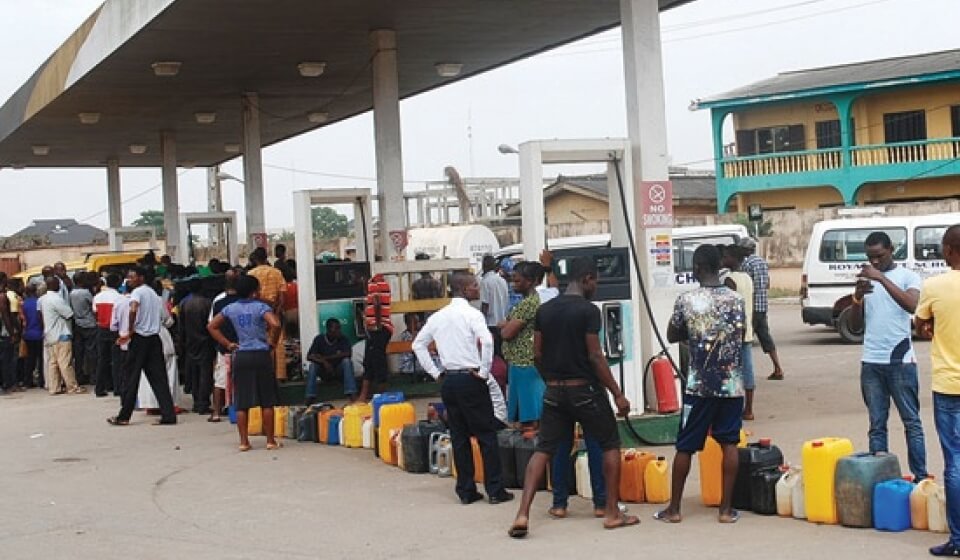
    Fuel queue

    The Central Bank of Nigeria’s 2026 economic forecast, published in January, projected petrol prices hovering around N950 per litre for the year, a projection that has already been significantly exceeded. The CBN acknowledged that heavy reliance on a single dominant refining source exposes the market to volatility, a concern echoed by PETROAN (Petroleum Products Retail Outlets Owners Association of Nigeria) during the March supply disruption when loading at Dangote halted briefly.

    PETROAN’s national president, Dr Billy Gillis-Harry, put it plainly at the time: “The price of crude is not stable; it can go up or come down.”

    Nigeria’s Own Production: A Complicating Factor

    Nigeria continues to fall short of its OPEC production quota of 1.5 million barrels per day. Data from February 2026 showed output at approximately 1.31 million bpd. This matters because the country’s ability to supply the Dangote Refinery with naira-denominated crude, under the crude-for-naira arrangement, is limited when domestic production underperforms.

    When the domestic crude supply falls short, the refinery turns to more expensive dollar-denominated imports, which raises procurement costs and feeds directly into gantry price increases. This structural weakness in upstream output is one of the less-discussed but more significant risks to fuel price stability in Nigeria going into mid-2026.

    Three Scenarios for June 2026

    Scenario 1, Prices hold or ease slightly. If the Strait of Hormuz reopens on schedule and crude prices begin their projected decline toward $89–95 per barrel, Dangote Refinery may hold or reduce its gantry price. In this case, pump prices could remain in the N1,200–N1,320 range through June. The May 8 gantry cut of N75 is a signal that the refinery will pass savings on when crude permits.

    Scenario 2, Moderate increase. If crude stabilises around $106 per barrel through June as the EIA projects, without major new supply disruptions, prices may see a modest upward adjustment of N50–N100 per litre, bringing Lagos pump prices toward N1,350–N1,420 per litre at most retail outlets.

    Scenario 3, Sharp increase. If Middle East tensions escalate further, crude pushes toward $120–125 per barrel, or if Nigeria’s domestic crude output deteriorates further, pump prices could retest and potentially exceed N1,400 per litre. This is the scenario PETROAN and independent marketers were warning about as recently as March 2026.

    What This Means for Nigerian Households and Businesses

    Fuel price increases in Nigeria have downstream consequences that go well beyond the pump. Transportation costs, food prices, and electricity generation costs from generators all move in the same direction as petrol. During the March 2026 surge, logistics companies and food vendors across Lagos and Abuja reported immediate adjustments to their service fees.

    For households in cities like Lagos, Ibadan, Kano, and Port Harcourt that depend heavily on PMS-powered generators, any move above N1,400 per litre would represent a meaningful additional burden on already stretched budgets. The naira has held relatively steady in May 2026, trading around N1,375 at the official NFEM window, providing one stabilising factor, but not enough to neutralise a sharp crude price shock.

    Diesel users, including manufacturers, hospitals, and data centres, face a separate and arguably worse situation. With AGO already around N1,962.50 per litre, any crude-driven increase would push industrial energy costs into territory that some smaller businesses cannot absorb.

    The Bottom Line

    The balance of available evidence points to continued price volatility in June 2026 rather than a decisive move in either direction. The most credible scenario, based on EIA projections, is that crude prices remain elevated in the $100–110 per barrel range through early June, keeping Nigerian pump prices near current levels or marginally higher.

    A significant easing is unlikely until the second half of 2026, when crude prices are projected to soften as Middle East production recovers. The Dangote Refinery’s demonstrated willingness to pass on both increases and decreases means that any sustained drop in crude will eventually reach consumers, but it will not happen overnight.

    For now, Nigerians should plan around a petrol price range of approximately N1,200 to N1,400 per litre through June, with the risk skewed toward the upper end if geopolitical conditions worsen.


  • How to Invest in Solid Minerals in Nigeria: Gold, Lithium and Coal Mining Opportunities

    How to Invest in Solid Minerals in Nigeria: Gold, Lithium and Coal Mining Opportunities

    Nigeria has been an oil economy for decades. The same land that drips with crude also holds gold in its schist belts, lithium in its pegmatite formations, and some of the world’s most environmentally clean coal reserves. For most of that time, those minerals sat largely untouched. That is changing fast. A combination of government reform, surging global demand for battery materials, and rising gold prices has turned solid minerals into one of the more credible investment opportunities in Nigeria’s non-oil economy.

    The numbers reflect the shift. Sector revenue climbed from roughly 6 billion naira in 2023 to over 38 billion naira in 2024. Licensing income alone jumped 107 percent in the same period. More than 1.2 billion dollars in lithium processing investments have been secured or commissioned since 2024. This is no longer a niche conversation for geologists.

    How to Invest in Solid Minerals Nigeria: Gold, Lithium and Coal Mining

    How to Invest in Solid Minerals Nigeria: Gold, Lithium and Coal Mining Opportunities
    Mineral resources

    Investing in solid minerals in Nigeria requires understanding three things: where the deposits are, how the regulatory framework works, and which mineral class matches your capital capacity and risk appetite. This article covers all three, with specific attention to gold, lithium, and coal, the three minerals drawing the most investor attention right now.

    Why Solid Minerals Are Getting Serious Attention Now

    Nigeria holds over 44 commercially viable minerals spread across more than 500 locations in all 36 states. Despite that, the sector’s contribution to GDP has remained well below 1 percent for most of the last two decades. That gap between resource endowment and economic output is precisely what investors are now moving to close.

    The Tinubu administration has made solid minerals one of its stated economic diversification priorities. The Ministry of Solid Minerals Development under Dr. Dele Alake has enforced stricter licensing, cracked down on raw ore exports without value addition, and secured over 800 million dollars in processing plant investments in 2024 alone. The government also allocated 1 trillion naira toward mineral exploration in 2025, a sharp departure from the country’s historically low exploration spend.

    Internationally, demand for critical minerals, particularly lithium and rare earths needed for electric vehicle batteries and solar technology, has made Nigeria’s deposits strategically attractive to the US, UK, Saudi Arabia, the UAE, and China. Nigeria now chairs the African Mineral Strategy Group, which gives it a seat at the table in shaping how the continent positions its mineral wealth in global supply chains.

    Gold: The Accessible Entry Point for Nigerian Investors

    Gold is perhaps the most accessible solid mineral for Nigerian investors who want exposure to the sector without the scale required for industrial mining. Nigeria has both alluvial and primary gold deposits, concentrated in the schist belt running through states like Zamfara, Kebbi, Niger, Kaduna, and Osun.

    Artisanal and small-scale mining already accounts for the bulk of current production, though most of it remains informal. The Presidential Artisanal Gold Mining Development Initiative (PAGMI), managed in part through the Nigeria Sovereign Investment Authority (NSIA), was designed to aggregate gold from small-scale miners under a national gold purchase programme, bringing structure to a historically unregulated space.

    How to Invest in Solid Minerals Nigeria: Gold, Lithium and Coal Mining Opportunities
    Mining site

    From an investment perspective, gold in Nigeria can be approached in several ways. Direct entry through a small-scale mining lease gives an investor extraction rights over an area up to 3 square kilometres for a five-year renewable term. You need to be a Nigerian citizen or a Nigeria-incorporated company, demonstrate proof of capital and technical competence, and submit a pre-feasibility study. The Mining Cadastre Office, operating under the Federal Ministry of Solid Minerals Development, handles all license applications through its online portal.

    A lighter-touch option is setting up a Mineral Buying Centre, which allows you to purchase gold legally from licensed miners and trade it locally or internationally. This requires a Mineral Buying Centre Licence from the Mining Cadastre Office, registration with the Nigerian Export Promotion Council for export activities, and a Mineral Export Permit. This route suits investors who want supply chain exposure without the operational complexity of running a mine.

    Gold prices globally have remained elevated, and Nigeria’s deposits are widely described as underexplored. Many of the gold belts in the country have only been worked at the surface by artisanal operators with limited equipment. That creates a real first-mover gap for licensed investors with better technology and access to capital.

    Lithium: The High-Stakes, High-Reward Opportunity

    Nigeria’s lithium deposits are primarily hosted in pegmatite rock formations concentrated in Nasarawa, Ekiti, Kwara, Kogi, and Plateau states. These reserves have been valued at over 34 billion dollars, making them one of the more significant discoveries in sub-Saharan Africa in recent years.

    The government’s approach to lithium has been deliberately aggressive on value addition. After rejecting Tesla’s bid to mine the deposits in 2022, the Minerals Ministry made it policy that no lithium could be exported as raw ore without local processing. That stance has since attracted major Chinese investment. Avatar New Energy Materials commissioned Nigeria’s first integrated lithium processing plant in Nasarawa in May 2024, with a capacity of 4,000 tons daily and an expected 4,000 jobs. A 600 million dollar plant near the Kaduna-Niger border and a 200 million dollar refinery on the outskirts of Abuja were in advanced development stages as of mid-2025. Additionally, two Chinese-backed facilities from Jiuling Lithium Mining Company and Canmax Technologies, worth over 800 million dollars combined, were expected to open before end of 2025.

    For private investors, entering Nigeria’s lithium space directly at the extraction level requires serious capital. A full Mining Lease, which covers areas up to 50 square kilometres and runs for 25 years with possible renewal, is the appropriate instrument for large-scale operations. Foreign investors are permitted under Nigerian law and are protected from nationalization of mining titles, with compensation provisions in place if public interest acquisition ever occurs.

    The more realistic entry for most Nigerian investors is supply chain participation: logistics, processing support, equipment leasing, or providing services to the growing number of licensed lithium operations. The sector is expanding fast enough that demand for adjacent services is real. Investors with capital in the range of tens of millions of naira can find structured entry points through cooperative arrangements or joint ventures with existing licensees.

    One note of caution: lithium is a globally competitive market and prices have fluctuated significantly. While the long-term outlook tied to electric vehicle adoption remains strong, short-term lithium carbonate and hydroxide prices can swing based on supply decisions by major producers in Australia and Chile. Investors should stress-test projections against price variability rather than using any single price assumption.

    Coal: A Overlooked Sector With Real Industrial Demand

    Coal is the mineral that most people think has no future, and in some respects they are right about the global trend. But Nigeria’s situation is more nuanced. The country has an electricity problem, a cement industry that consumes enormous energy, and industrial operations across sectors that regularly run on expensive diesel. Domestic Nigerian coal, if properly developed, has a ready market inside the country.

    Nigeria holds approximately 3 billion tonnes of indicated coal reserves across 17 identified coalfields, with over 600 million tonnes of proven reserves. The major producing states are Enugu, Kogi, Benue, Nasarawa, and Plateau. Nigerian coal is predominantly bituminous grade with notably low sulphur and ash content, making it cleaner than many global alternatives and valued for blending by international buyers.

    Enugu historically dominated the sector. The Enugu coalfield alone covers roughly 600 square kilometres with an estimated 350 million tonnes of proven reserves. The Ankpa field in Kogi state is potentially Nigeria’s largest untapped deposit, with geological surveys suggesting reserves exceeding 1 billion tonnes. The Lafia-Obi field spanning Benue and Nasarawa states is estimated at around 500 million tonnes and is known for high-quality coking coal suitable for steel production.

    Current demand comes from cement manufacturers, brick kilns, bakeries, foundries, and industrial laundries across the country. None of these buyers want to import coal when domestic supply exists. The challenge has always been the infrastructure gap between the mines and the buyers. There are no functional coal rail networks, road infrastructure in mining areas is poor, and large-scale mechanized coal operations require investment well beyond what most local investors have attempted.

    That said, small-scale coal operations serving local industrial buyers are viable with much lower capital requirements. Coal fetches a price tied to its calorific value and quality; pricing varies by location, season, and buyer category, so investors should obtain quotes directly from cement plants and industrial buyers in target states before committing capital. The government lists coal as one of seven priority minerals in its sector roadmap, which means licensing and infrastructure support, in principle, should be more accessible for coal investors than for lower-priority minerals.

    The Regulatory Pathway: Licences and How to Apply

    All solid mineral investment in Nigeria is governed by the Minerals and Mining Act of 2007 and its 2011 regulations. The Ministry of Solid Minerals Development and the Mining Cadastre Office are the two primary regulatory bodies investors interact with.

    There are several licence types depending on your investment stage. A reconnaissance permit is the starting point for those who want to assess an area’s potential through surface-level sampling. It grants non-exclusive access and does not permit subsurface drilling. An exploration license grants the right to do detailed geological survey work over a defined area for up to three years with renewal options. Once you have confirmed commercial deposits, a small-scale mining lease covers areas up to 3 square kilometres for five years, while a full mining lease covers up to 50 square kilometres for 25 years.

    All applications go through the Mining Cadastre Office portal at portal.minesandsteel.gov.ng. Applicants must be Nigerian citizens or Nigeria-incorporated companies. Foreign investors must therefore establish a Nigerian entity before applying. Successful applicants must also file annual compliance reports, pay prescribed royalties and fees, and rehabilitate mined land. Mineral traders and exporters additionally need a Mineral Buying Centre Licence and a Mineral Export Permit issued in coordination with the Nigerian Export Promotion Council and Nigeria Customs.

    The government also offers a set of investment incentives. These include a 75 percent capital allowance on verified capital expenditure in the first year, 50 percent in subsequent years, exemption from import duties on approved mining equipment and machinery, and a 5 percent investment allowance. Approved expatriate personnel are exempt from expat quota restrictions, which matters for operations that require foreign technical specialists.

    Real Risks That Deserve Honest Assessment

    The opportunity is genuine. So are the risks. Any investor approaching this sector needs to account for them directly rather than around them.

    Infrastructure is the most persistent challenge. Many of Nigeria’s mineral-rich areas, particularly coal and gold zones, are in regions with poor road networks and unreliable power supply. This drives up operational costs significantly, and those costs are not always reflected in projections built on headline mineral prices.

    Security is a real consideration in parts of north-central Nigeria, including areas with significant mineral deposits. Parts of Zamfara state, a key gold belt, have had serious security challenges in recent years that disrupted mining activities and made enforcement of illegal mining difficult. Investors must assess each location independently rather than treating the sector as uniform.

    Policy consistency remains a concern. The current reform trajectory is positive, but Nigeria’s regulatory environment has historically been vulnerable to shifts with changes in administration or ministerial priorities. Frequent policy changes and disputes between federal and state governments over resource control create uncertainty. This is not unique to mining, but it is a structural reality that investors in long-cycle assets like mines must plan around.

    Finally, illegal mining persists despite the government deploying over 2,000 mining marshals and arresting hundreds of unlicensed operators. Artisanal illegal activity competes with licensed operators, creates price distortions in local markets, and complicates due diligence on mineral supply chains.

    How to Start: A Practical Entry Framework

    If you are a Nigerian investor exploring this space for the first time, the most practical starting point is not a mine. It is market research: identify which mineral in which state has a reliable local buyer, check whether that zone has active licensed miners already, and understand what the going rate is for that mineral from mine gate to end buyer.

    From there, options open up. Mineral buying and trading requires far less capital than mining itself and gives you direct exposure to commodity price dynamics and supply chain realities before committing to a licence. If you want to move into extraction, start with the Mining Cadastre Office portal, verify the cadastral status of any target area (whether it is already under licence), and engage a licensed geologist before committing to an exploration licence. The Nigerian Institute of Mining and Geosciences can point you toward registered professionals.

    Joint ventures with existing licence holders are another route, particularly in lithium where Chinese-backed operations have active sites but may need local logistics, labour, and administrative partners. Formalising such arrangements through a Nigerian company structure gives you regulatory standing and protects your interests under the Act.

    Conclusion: An Early-Mover Window With Structural Tailwinds

    Nigeria’s solid minerals sector is not a finished opportunity. It is an emerging one, which means the risk-reward profile still leans toward those willing to do the groundwork rather than those looking for a quick trade. The government’s reform momentum is the most consistent it has been in years. The global demand for lithium and gold is real. The domestic market for coal has never gone away.

    The investors who will benefit most from this window are those who move with proper due diligence, legal compliance, and a realistic understanding of the operational environment. The licensing pathway exists. The geology is documented. What Nigeria’s solid minerals sector has needed, and is now beginning to attract, is structured capital with a long enough horizon to see it through.

  • Insecurity: Forest guards and matters arising

    Insecurity: Forest guards and matters arising

    In the wake of the schoolchildren abductions in Oyo, Borno and Zamfara and the deepening security crisis in other parts of the country, attention again shifted to the forest guards and questions are now being asked about their efficiency, reliability and ability to rid our forests of depraved armed non-state actors and terrorists who have turned them into hideouts and the staging ground of their atrocities.


    On May 15, 2025, President Bola Ahmed Tinubu launched the Presidential Forest Guards Initiative in response to the growing insecurity related to forests in Nigeria. The inauguration of the initiative was met with indifference in some places and mild opposition in some quarters but whatever the reaction of people to it petered out with the passage of time as the initiative itself became overshadowed by other topical issues of relative national significance.

    However, the recent spate of abductions, particularly the attack on schools in the Oriire local government area of Oyo State and the abduction of students and teachers from the schools, has brought into sharp focus the forest guards initiative and thrust it into the centre of intense public discourse and debate.

    The idea of forest guards was conceived in February 2024, following a meeting between the president and state governors, with a directive for states to recruit between 2,000 and 5,000 guards. The primary objective and main goal was to end the nefarious activities of bandits, kidnappers and other illegal groups hiding in the forests and mountains that are hard to reach.

    In the wake of the schoolchildren abductions in Oyo, Borno and Zamfara and the deepening security crisis in other parts of the country, attention again shifted to the forest guards and questions are now being asked about their efficiency and ability to rid our forests of depraved armed non-state actors and terrorists who have turned them into hideouts and the staging ground of their atrocities.

    When he led a delegation to Oriire Local Government Area of Oyo, where 46 school children and members of staff were abducted, the National Security Adviser (NSA), Nuhu Ribadu, disclosed the deployment of an additional 1,000 forest guards to salvage the situation.

    In late December last year, the Office of the National Security Adviser (ONSA) graduated and deployed the first batch of over 7,000 newly recruited forest guards across Borno, Sokoto, Yobe, Adamawa, Niger, Kwara, and Kebbi states, which are the seven frontline states. According to ONSA, the forest guards would be deployed immediately to their assigned duty post once they concluded their training and graduated, adding that there would also be no delay in the payment of salaries and allowances of the guards.

    Ribadu, who spoke at the graduation, noted that the forest guards were not just men in fancy security fatigues but individuals who would be vital and instrumental to the security architecture of the country as they would “serve as first responders, community protectors and crucial elements of Nigeria’s security framework. Their role will be pivotal in ensuring safety, gathering intelligence and assisting other security agencies in reclaiming territories seized by criminals”

    However, almost two years after its launching and nearly six months after the first batch of the guards were graduated, there is no practical sign or proof of improvement in the nation’s security or that the NSA assurance and guarantee of the forest guards preparedness and ability to put an end to the reign of terror of the rampaging terrorists have resulted in visible and tangible gains in the drive to address the nation’s insecurity head-on. In light of this, Nigerians are now questioning the operational efficiency of those who were already recruited and deployed after the president issued an order for more recruitment amidst worsening insecurity.

    Across many states, particularly the frontline states where the initiative was supposed to take off from, the level of recruitment, deployment and operation varied from state to state. The initiative has not been able to achieve the primary objectives it was set up for. One factor that appears to be impeding the entire initiative is the heavy reliance of the forest guards on existing security and agency for funding, strategic coordination and operational strategies. There is little they can do by way of unilateral engagement through well-planned offensives.

    The initiative has turned out to be a perfunctory attempt to be seen as doing something by a government that has reached the end of its wits and is out of depth on how to tackle the insecurity in the country. It is somewhat illogical and counterproductive to task a deluge of dishevelled, hastily trained and poorly equipped individuals with addressing jarring perennial insecurity in the country that the well-funded conventional security operatives have disastrously failed to tackle.

    While the initiative is a laudable and noble one, it must not become a substitute for long-standing conventional security apparatus. At the level they currently are, the forest guards cannot perform the security task and responsibility they are saddled with and it will take much more than the recruitment of more of them to tackle the security crisis in the country.

  • Why Nigeria Imports Gas Despite Having Africa’s Largest Natural Gas Reserves

    Why Nigeria Imports Gas Despite Having Africa’s Largest Natural Gas Reserves

    Every year, Nigeria spends billions of naira importing liquefied petroleum gas, the cooking gas that millions of households depend on, from countries like the United States, Algeria, and Equatorial Guinea. That fact alone would be unremarkable if Nigeria were a small or resource-poor country. But Nigeria holds the largest proven natural gas reserves on the African continent, estimated at over 211 trillion cubic feet as of 2024 according to OPEC. The country ranks eighth globally in proven gas reserves, yet it ranks only twelfth in production. Something is deeply broken in that gap.

    The contradiction runs deeper than simple irony. While Nigeria LNG Limited (NLNG) at Bonny Island exports millions of tonnes of liquefied natural gas to France, Spain, China, and India each year, Nigerians at home queue for cooking gas and absorb price shocks driven by import costs, foreign exchange volatility, and a pipeline network that has never been fully built. Understanding why this happens requires looking at infrastructure failures, policy misalignment, security crises, and decades of prioritising export revenue over domestic supply.

    Reasons Why Nigeria Imports Gas Despite Having Africa’s Largest Natural Gas Reserves

    Why Nigeria Imports Gas Despite Having Africa's Largest Natural Gas Reserves

    The short answer is that reserves underground mean very little without the infrastructure and incentive structures to bring gas from the wellhead to a kitchen stove in Kano or a factory in Ogun State. Nigeria’s gas import problem is not a resource problem. It is a delivery problem, compounded by security threats, regulatory distortions, financing gaps, and a longstanding institutional bias toward LNG export over domestic consumption.

    The Scale of What Nigeria Is Sitting On

    To understand the paradox, start with the numbers. According to OPEC’s 2025 Annual Statistical Bulletin, Nigeria held approximately 211.1 trillion cubic feet of proved natural gas reserves in 2024. The Nigerian Upstream Petroleum Regulatory Commission (NUPRC) put the figure slightly higher at 210.54 Tcf as of January 2025. Either way, only Algeria and Egypt come close on the continent, and both fall well short.

    Total gas production runs at roughly 8 billion cubic feet per day. Of that, about 3 billion cubic feet per day is exported as LNG, and only 1.5 billion cubic feet per day is used domestically. The rest is either re-injected into oil fields, lost to pipeline inefficiencies, or burned off through gas flaring. For a country with over 200 million people and persistent energy poverty, that domestic allocation is nowhere near sufficient.

    Gas Flaring: Burning Wealth in Plain Sight

    Gas flaring is one of the most visible symbols of Nigeria’s gas governance failure. For decades, oil companies operating in the Niger Delta have burned off associated gas, the natural gas that emerges alongside crude oil, because it was cheaper to flare than to capture, process, and transport it. The infrastructure required to do so simply was not built.

    Between 2022 and 2024, Nigeria flared an average of roughly 187 billion standard cubic feet of gas annually, according to energy sector analysts. The National Oil Spill Detection and Remediation Agency (NOSDRA) reported that Nigeria lost approximately $443.8 million to gas flaring in just the first four months of 2025 alone, nearly 20 percent higher than the same period in 2024. That wasted volume, if captured and used, could theoretically generate between 27 and 29 terawatt-hours of electricity per year, dwarfing Nigeria’s current average electricity generation of roughly 4,000 to 4,500 megawatts.

    Why Nigeria Imports Gas Despite Having Africa's Largest Natural Gas Reserves
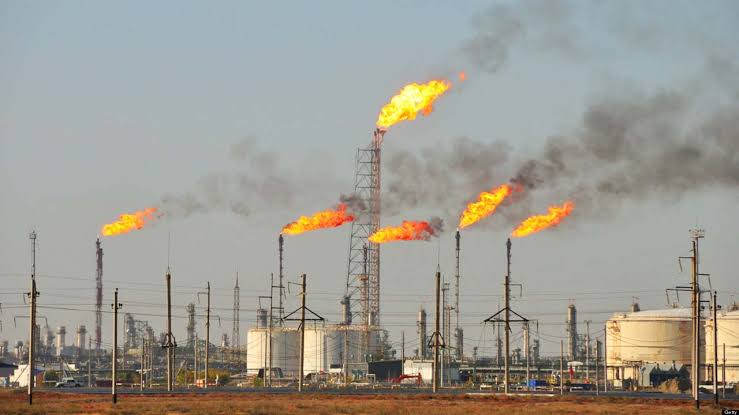
    Gas flaring

    The government has tried. The Nigeria Gas Flare Commercialisation Programme was launched in 2016, targeting an end to routine flaring by 2020. That deadline passed quietly. NUPRC now publicly targets ending routine flaring by 2030. Progress has stalled due to what regulators themselves describe as weak community governance, currency risk, financing barriers, and slow policy execution.

    The Infrastructure Gap That Makes Imports Inevitable

    Reserves underground become usable energy only through processing plants, pipelines, storage facilities, and distribution networks. Nigeria’s domestic gas infrastructure has historically been underfunded, poorly maintained, and geographically concentrated in ways that leave most of the country underserved.

    There are only three major gas transmission networks in Nigeria, all owned by the Nigerian Gas Processing and Transportation Company Limited (NGPTC): the Eastern network, the Western network, and the Ajaokuta-Kaduna-Kano (AKK) pipeline which was still being activated for use into 2026. Many oil fields lack the equipment to capture associated gas at all. Where capture infrastructure exists, it often runs into pipeline bottlenecks before gas reaches processing or distribution points.

    For liquefied petroleum gas specifically, the cooking gas that households buy in cylinders, the situation is particularly stark. Industry analysts have pointed out that Nigeria has only two fully functional LPG landing jetties, both located in Lagos. Bulk storage terminals are inadequate across most of the country, and distribution networks thin out rapidly outside major urban centres. An energy sector expert cited in the Nigerian press noted that Saudi Arabia has a per capita LPG consumption rate of nearly 500 kilograms, while Nigeria’s rate remains a fraction of that, not because demand does not exist, but because supply cannot reach consumers reliably or affordably.

    Pipeline Vandalism and Security: The Hidden Tax on Gas Supply

    Even where gas infrastructure exists, it operates under constant threat. The Niger Delta, where virtually all of Nigeria’s oil and gas production is concentrated, has experienced decades of pipeline vandalism driven by community grievances over resource allocation, poverty, and environmental degradation. Between 2018 and 2023, security researchers documented over 7,000 cases of pipeline vandalism in the region, resulting in substantial losses of crude and gas supply.

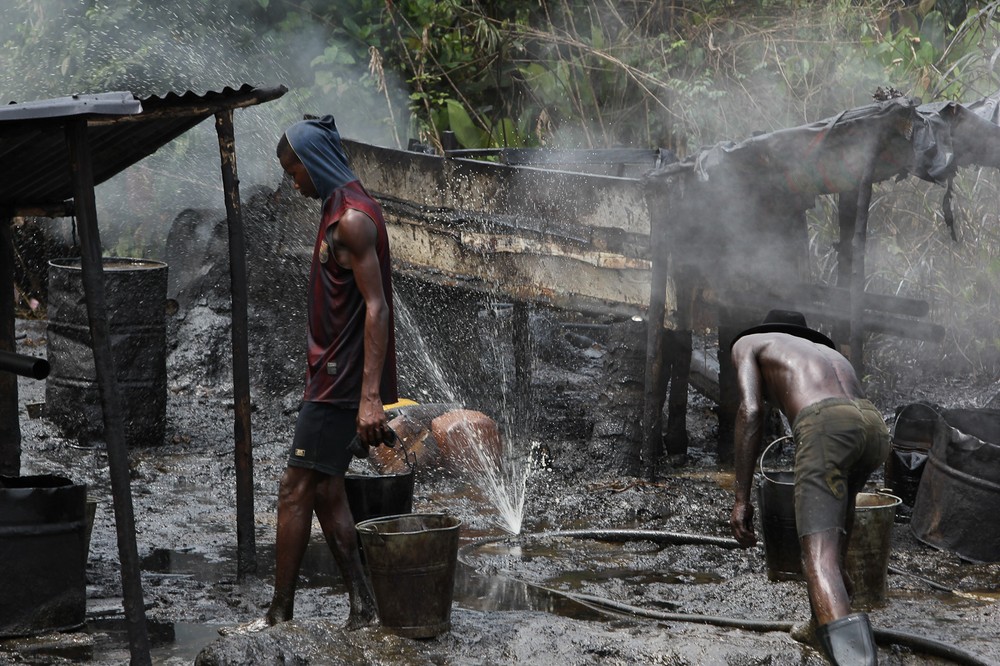
    Illegal oil bunkering and oil theft

    Pipeline attacks do not just reduce volumes. They shut down operations for weeks or months while repairs are completed, deter long-term investment in new infrastructure, and create persistent uncertainty for industrial gas buyers who cannot rely on steady supply. This unreliability pushes manufacturers, power generators, and gas distributors toward imported alternatives or more expensive backup sources.

    The upstream security problem also directly affects LNG output. Unplanned shutdowns and supply interruptions have historically reduced Nigeria’s LNG export volumes below its installed capacity, and when production dips, domestic supply is often the first casualty, since export contracts carry stronger legal and financial enforcement mechanisms than domestic delivery obligations.

    Export Contracts Locked In Before Domestic Needs Were Served

    Nigeria’s primary LNG operator, NLNG Limited, a joint venture between NNPC, Shell, TotalEnergies, and Eni, operates six liquefaction trains at Bonny Island with a combined capacity of 22 million tonnes per year. The facility was built with a clear commercial mandate: export gas to global markets and earn foreign exchange. Its long-term supply agreements are with European and Asian buyers. According to the Energy Institute’s 2025 Statistical Review of World Energy, Nigeria ranked sixth globally among LNG exporters in 2024.

    For years, this export orientation meant that the NLNG facility served as a pipeline to Rotterdam and Tokyo while Nigerians imported cooking gas from Algeria and Equatorial Guinea. The domestic LPG market, which depends on the same natural gas feedstock, received secondary priority. The NLNG does produce LPG as a by-product of its liquefaction process, and the government has in recent years directed NLNG to prioritise the domestic market for its LPG output. But NLNG’s LPG volumes are not sufficient alone to meet national demand, especially as the country’s population and domestic consumption have grown.

    The Pricing Distortion That Discourages Domestic Supply

    Gas producers in Nigeria face a structural disincentive when it comes to selling into the domestic market. International LNG prices, linked to global energy markets, are substantially higher than the regulated domestic base price that Nigerian regulations require producers to offer local buyers. Under the Petroleum Industry Act (PIA) of 2021 and subsequent regulatory determinations, the domestic base price for gas sold to the power sector was set at $2.42 per million British thermal units (MMBTU) for 2024. For industrial users, the floor price can drop as low as $0.9 per MMBTU.

    Compare that with international spot prices or even the long-term contract prices that NLNG commands from European buyers, and the incentive calculation is obvious. Producers earn far more selling to NLNG’s export stream than to domestic buyers. Without sufficiently strong enforcement of domestic delivery obligations or higher domestic pricing that reflects actual market values, producers will rationally orient gas toward export. The PIA did introduce Domestic Gas Delivery Obligations, requiring upstream lessees to meet domestic quotas before export, but enforcement and compliance monitoring remain ongoing challenges.

    The Role of International Oil Company Divestments

    A further complication has been the withdrawal of major international oil companies from Nigerian onshore and shallow water assets. Shell has been divesting its onshore operations as part of a global strategy to shift toward lower-carbon projects. ExxonMobil and Eni have pursued similar moves. These companies have been among the primary operators of gas-producing assets in the Niger Delta.

    As they exit, their assets are acquired by indigenous Nigerian companies, often with less capital, less technical capacity, and limited access to international financing. This transition has created investment gaps that slow the development of gas capture and processing infrastructure. Financing constraints have compounded the infrastructure deficit, particularly for the midstream and downstream facilities needed to move gas from wellheads to consumers.

    What Nigeria Has Done, and What Remains Unfinished

    The Nigerian government has not been passive. The ‘Decade of Gas’ policy, championed under successive administrations, positioned gas as a transition fuel for both domestic industrialisation and export growth. The Petroleum Industry Act of 2021 restructured the regulatory framework, created new enforcement bodies, and formalised domestic delivery obligations. An executive order signed by President Tinubu in February 2024 introduced fiscal incentives for non-associated gas projects, including tax credits for qualifying upstream operators.

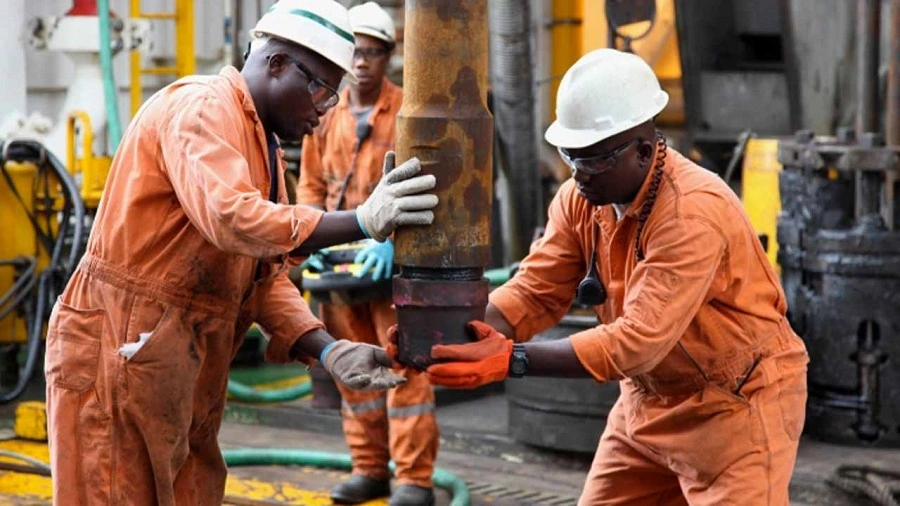
    An engineer working in a refinery

    Infrastructure projects have moved forward, though slowly. The Ajaokuta-Kaduna-Kano (AKK) pipeline, which is designed to carry gas from the Niger Delta into northern Nigeria, was progressing toward full activation into 2026. The Nigeria-Morocco Gas Pipeline project, which would eventually link Nigerian gas to markets across West Africa and potentially into Europe, broke ground in July 2025. NLNG’s seventh liquefaction train, expected to expand capacity from 22 to 30 million tonnes per year, is under construction, though debate continues over how much of that additional output should serve domestic LPG needs versus export contracts.

    The 2024 VAT Modification Order exempted LPG from value-added tax in an effort to reduce retail costs. Gas marketers have set ambitious targets for scaling domestic supply toward six million tonnes annually. These are real policy steps. But infrastructure, physical pipelines, storage depots, filling plants, and distribution networks, takes years and billions of dollars to build. Policy announcements do not move gas.

    What This Means for Ordinary Nigerians

    For the average household in Lagos, Abuja, or Ibadan, the abstract paradox of exporting LNG while importing LPG translates into practical hardship. Retail cooking gas prices are denominated in naira but exposed to dollar-linked import costs, meaning naira depreciation directly inflates what consumers pay at the refilling station. Industry sources cited in Nigerian media in late 2025 put average retail LPG prices at between N1,200 and N1,500 per kilogram, depending on location.

    Supply reliability compounds the price problem. Regional shortages persist because storage infrastructure is thin outside Lagos and Port Harcourt. When supply disruptions hit, whether from upstream security incidents, foreign exchange shortfalls for importers, or logistical breakdowns, households that cannot afford periodic price spikes fall back on firewood and charcoal, with associated health and environmental costs.

    Industrial users face similar constraints. Gas-dependent manufacturers, power generators, and fertiliser producers cannot expand output or plan reliably when gas supply is uncertain. The power sector, Nigeria’s largest domestic gas consumer, has long suffered from gas shortfalls that contribute directly to the country’s chronic electricity crisis. The NUPRC has warned that demand for gas could outpace supply by 2030 even if major infrastructure projects come online on schedule, a timeline that has historically been optimistic.

    The Answer Is Structural, Not Simply Political

    Nigeria imports gas not because it lacks gas, but because decades of underinvestment, security instability, export-oriented infrastructure, regulatory pricing distortions, and institutional inertia have created a domestic supply system unable to efficiently convert vast underground reserves into affordable energy for citizens and industries.

    The resources exist. The production exists, in part. What has not kept pace is the web of physical and institutional infrastructure needed to capture, process, transport, and price gas in a way that makes domestic supply commercially viable and geographically accessible. Fixing that requires capital, security, consistent policy enforcement, and time, not just announcements.

    Until that gap closes, Nigeria will continue the uncomfortable reality of being one of the world’s most gas-rich countries while importing cooking gas from its neighbours. The contradiction is not permanent, but resolving it demands more than policy documents.

  • Borno: Again, terrorists overrun military base, kill nine soldiers

    Borno: Again, terrorists overrun military base, kill nine soldiers

    At least nine soldiers have lost their lives after Boko Haram terrorists launched a deadly attack on a base in Borno.

    The terrorists reportedly attacked the base at Mandara-Girau in the Biu local government area of the North-East State in the early hours of Friday.

    Mandara-Girau is located a few kilometres away from Biu town.

    Security sources disclosed that the attackers stormed the military location in very large numbers and opened fire on the troops, amidst heavy rainfall, inflicting heavy casualties on the soldiers.

    “They killed nine soldiers and injured several others, and they were all beheaded,” a source said.

    He said that part of the formation was overrun by the suspected Boko Haram terrorists.

    In a 1-minute, 38-second video clip obtained by this reporter, the corpses of eight soldiers were seen covered with blankets on the ground.

    The military has not issued an official statement on the matter. This is the second coordinated large-scale attack on Nigerian troops by terrorists in the last couple of months.

    In April, Boko Haram reportedly killed an army General, Brigadier-General O. Braimah, during an attack in Borno state.

    Braimoh was the Brigade Commander of the Joint Task Force in Benesheikh, Kaga Local Government Area of Borno State.

    He was killed alongside many soldiers when the insurgents launched coordinated attacks on Benesheikh town and Pulka Community in Gwoza Local Government Area of the North-East state.

  • Insecurity: Makinde issues executive order, restricts motorcycle operations

    Insecurity: Makinde issues executive order, restricts motorcycle operations

    As part of an effort to address the growing insecurity in Oyo state, Governor Seyi Makinde has issued an Executive Order restricting the movement of motorcycles in the South-West state.

    The order issued on Friday restricts motorcycle operation between 10:30 pm and 5:30 am.

    The governor also disclosed that the state government was working relentlessly and assiduously to secure the release of the kidnapped teachers and school children.

    According to him, each day the victims remain with their captors in the forest is a painful day for their families and the entire state, noting that the safe return of those abducted remains a tough conversation for his administration.

    Makinde added that the victims have not been forgotten and they have not been abandoned.

    “We may not be able to disclose every step being taken because of the sensitive nature of the operations involved, but I ask our people not to mistake our silence for inaction. A great deal of work is being done behind the scenes,” he said.

    Oyo has been beset by a deepening security crisis in recent weeks. Last month over 40 students, teachers and a principal were abducted from three schools in Oriire local government area in Ogbomoso area of the state.

    On Wednesday, the sister of the immediate past minister of power, Adebayo Adelabu, and her twins were kidnapped in the Challenge area of Ibadan.