At a relatively busy kiosk in Garki, Enugu, Enugu state, more than a dozen customers queue to buy one thing or the other.
However, majority of them are there to buy satchet water, a common pre-filled drinking water packaged on a transparent satchet. At the same time, other residents are also there to buy bottled water which majority see as a mark of cleanliness and aristocratic disposition.
In any case, WITHIN NIGERIA gathered that whether at home, on the road or at public events, sachet water has gradually become the most easily accessible, affordable and reliable source of drinking water for millions of Nigerians.
It is also an open secret that for the affluent, bottled water is more than just convenience but represents status and sanitary assurance.
However, both source of drinking water has become a reliable source of water especially on the transit and even at home.
More convenient as these sources of water are, what has become so much worrisome to the citizens and indeed the environmental experts is how these bottles and satchet used to package them are being disposed.
By and large, as the world marks World Environment Day 2026 today WITHIN NIGERIA takes a deep look into the environmental effects of this new found life style in the country.
With the theme, “Inspired by Nature. For Climate. For Our Future,” our reporter gathered that the focus is on clean water, pollution reduction, and sustainable consumption systems.
There is no gainsaying the fact that millions of Nigerians still struggle to access safe drinking water, even at this 21st century.
It is as a result of this yawning gap that the satchet water and bottle water have come handy to bridge the gap.
As the owners of such business continue to cash in on the millions of Nigerians, the environment has also continued to suffer.
The industry has continued to evolve into a multi-billion-dollar industry and an environmental challenge, measured not only in litres consumed but also by tonnes of plastic produced and discarded in form of waste.
The Nigeria booming bottled and satchet water
According to findings, Nigeria consumes an estimated 13.7 million sachets of water daily, amounting to more than 2.5 billion litres annually.
WITHIN NIGERIA gathered that according to the National Environmental Standards and Regulations Enforcement Agency (NESREA), this is also a huge environmental challenge to the country in general and the industry in particular.
Findings also show that the bottled water sector is expanding rapidly, as per capita bottled water consumption reached alarming 26.54 litres in 2025. Demand is expected to rise further, as
Nigeria’s estimated 223 million population is projected to approach 400 million by 2050.
Environmental effects of the waste
The environmental effects of Sachet water (“pure water”) waste are indeed enormous and severe.
For the fact that these plastic sachets are non-biodegradable and improperly disposed of, they accumulate in communities, and indeed towns were waste are not properly managed, leading to blocked drainage systems.
The increasing incident of widespread flooding, soil degradation, and the contamination of aquatic ecosystems in Nigeria owe their sources to satchet and bottled water waste disposal.
Drainage Blockage and Flooding:
Beyond contamination and soil degradation, indiscriminately discarded sachets easily find their way into gutters and drainage channels. They mat together to form solid barriers that clog waterways, thereby increasing the risk of urban flooding and structural damage during the rainy season as we usually see today in Nigeria.
Soil and Land Degradation:
Polyethylene sachets and bottled water container are non-biodegradable. When not properly discarded or openly discarded on the land or buried in shallow landfills, they smother the soil, prevent water percolation, and trap heat, which severely disrupts the natural soil biophysical properties and microbial activity required for agriculture.
Environmental Pollution
Many a time, exposure to sunlight and physical weathering causes the plastic to break down into smaller fragments called microplastics rather than decomposing.
These particles in turn enter local water bodies, negatively impacting water quality and potentially entering the food chain when consumed by aquatic life.
Public Health Hazards
It is also discovered that clogged, stagnant drains created by plastic waste act as ideal breeding grounds for mosquitoes and other disease vectors, exacerbating the prevalence of illnesses like malaria.
Threat to Wildlife and Livestock
Stray animals frequently mistake empty sachets for food. Ingesting the non-digestible plastic leads to intestinal blockages, starvation, and fatalities in livestock and local wildlife.
Emissions from Incineration
Open burning—a common disposal method used to reduce the sheer volume of plastic waste—releases toxic emissions, including oxides of carbon, nitrogen, and sulfur, which degrade local air quality and contribute to greenhouse gas accumulation.
The trust and confidence of many Nigerians in the commission has waned considerably, if not lost completely. Its antecedents and recent actions have left many disillusioned with politics and governance as they no longer believe it is capable of conducting credible polls. For a commission that has not been entirely open and forthright about its dealings and activities, it is hard to believe that Emeka Ike was the only person whose data was retrieved and exposed by this account.
When Lere Olayinka shared the voter card information and data page of Nollywood actor, Emeka Ike from the backend of the Independent National Electoral Commission (INEC), he did it to mock and belittle the political ambition of the thespian who was seeking to secure the Nigerian Democratic Congress (NDC) ticket to represent one of the constituencies in the federal capital territory in the House of Representatives. However, it did not take long for what he thought to be an innocuous cheap shot to score a political point and denigrate the actor to become a scandalous miscalculation.
Olayinka’s revelation of Ike’s voter registration information from INEC’s backend was supposed to be a jab at what he felt was the latter’s political misadventure but it revealed something deeply disturbing and damning, particularly for an organisation that is grappling with serious erosion of public trust and reputational damage. The outrage and condemnation were swift and intense. With outrage comes one big question: How did a lowly media aide of the FCT minister, Nyesom Wike, have access to INEC’s database that should ideally only be accessible to a few top brass of the commission’s information technology (IT) department its figures in the top echelon of its administrative department.
If the outing of the INEC chairman, Joash Amupitan, as an apologist of the ruling party and staunch supporter of president Bola Tinubu last month via his digital footprint on X raised serious questions about his legitimacy, the optics of his continued stay in the position and his ability to conduct a free, fair, and credible election, then the unfettered access to the database of voter by the media aide of Wike — the henchman of the president, a man that has acquired a reputation for perverting democracy and violently subverting the will of the people — has cleared the doubt as to where INEC allegiance truly lies and also shattered whatever tinge of hope many had that INEC is an independent arbiter capable of conducting credible polls.
Expectedly, following the widespread reproach that greeted Lere’s action, the commission, like it did last month during the scandal that rocked it over its chairman’s affiliation with the APC, issued a tame, weak and perfunctory press release on Tuesday. The commission confirmed that the voter information was accessed using valid staff details and subsequently released without authorisation. It assured the public that there was no external hacking or breaching, no system-wide compromise, and that the incident concerned only one specific voter record.
But that reassurance elicited more questions than it answered. The critical question INEC has not answered is this: how many other voter records and information did the user account in question access and subsequently release to Olayinka and others? The commission’s statement identifies a specific user account through its audit trail and confirms that authorised INEC registration officers were provided with controlled access to certain elements of the CVR system to process registrations, transfers, and updates.
That access is elaborate and strikes at the heart of data protection which has become a controversial subject in recent years. If a single authorised account could pull up Ike’s application number, VIN, registration centre, profile photograph, and date of application — all the personal information displayed in the screenshots — what other information does it have access to and to whom is he or she providing it? It is not enough for INEC to tell us that only one voter was affected by the egregious betrayal of public trust, it has to show it.
The trust and confidence of many Nigerians in the commission has waned considerably. Its antecedents and recent actions have left many disillusioned with politics and governance as they no longer believe it is capable of conducting credible polls. For a commission that has not been entirely open and forthright about its dealings and activities, it is hard to believe that Emeka Ike was the only person whose data was retrieved and exposed by this account. In fact, the consensus among many Nigerians, particularly opposition members, is that if Ike Data information can be accessed by Olayinka, then the ruling party has unrestricted access to the data of millions of Nigerian voters.
This is not an insignificant oversight or a negligible administrative lapse. It is an issue that goes to the core of INEC’s credibility and public confidence. Nigeria’s data protection framework, under the Nigeria Data Protection Act 2023, imposes obligations on data controllers and processors. INEC is a data controller. The unlawful disclosure of a registered voter’s personal information — and its continued public availability — demands a response beyond an internal audit.
The questions that need answers are pretty simple and straightforward: Was the purported user account suspended immediately upon identification? Was access to the CVR portal by non-INEC personnel — including political appointees and their staff — ever formally authorised, and under what authority? And critically, will INEC publish the full scope of what was accessed from that account, not just the one record it has admitted to?
A voter database is among the most sensitive and critical central storage of citizen data a government can have. Its integrity is not merely a technical matter, it is a democratic one. INEC’s statement, as it stands, tells Nigerians what did not happen. What they need to know is the full account of what happened. This saga is the latest in the growing list of episodes of troubling incidents at INEC that further deepens many Nigerians’ distrust of the commission. If anything, many now see the body as an appendage of the ruling party.
This is indeed not the best of time for Nigerians following the rising cost of Liquefied Natural Gas, LNG and other essential commodoties and services in the country.
WITHIN NIGERIA gathered that this sudden price increase has given rise many households and users of the product looking for possible alternatives.
However, when our reporter visited one of the LNG seller in Enugu, it was gathered that the price of one kilogram has skyrocketed from N1400 to N1800, leaving the users in harsh economic condition.
A litre of kerosene also sells at between N3500 and N4000 at many filling stations.
Findings by our reporter equally showed due to this rising domestic energy crisis, many families in both rural and urban areas are gradually returning to primitive method of using firewood for cooking.
In any case, data from the National Bureau of Statistics (NBS) showed that the cost of refilling a 12.5kg cooking gas cylinder has surged to an average of N22,382.20.
WITHIN NIGERIA gathered that many households in rural and semi urban areas trying to improve their lifestyle by using cooking gas for cooking have abandoned their gas cylinder because the retail prices for LPG has risen into a cut-throat price level of between N1700 to N2,000 per kilogram.
Also in its latest NBS Household Kerosene Price Watch, the average retail price of kerosene has approached N4,000 per litre in states like Sokoto, Kebbi, and Lagos.
This unprecedented astronomical rise in price has led to rapid financial squeeze which has forced a sharp shift in consumer behavior of so many families in Nigeria.
Felicia Ugwueke has a restaurant at Abakiliki, Ebonyi state capital. She told our reporter that the situation is quite frustrating as it painful.
According to her, the current price of cooking gas is indeed driving the cost food high for her customers.
“Before now, I used to refill my 12.5kg. But today, with the excruciating price of N2,000 per kilogram, it can not be sustained any more.
“I can’t buy it and still sell at the same quantity and price. Some meals which last long time to cook like local delicacies or even beans are no longer in our menu.”
”For now, we are using making use of dust stove and firewood to cook some food to curtail this high cost of domestic energy crisis.”
Further checks reveal that roadside food vendors, locally known as “Mama Put,” who for long have relied on the speed and cleanliness of LPG, are moving their operations back to woodpiles to protect their lean profit margins.
Roland Chikere is food seller at Awka where she runs a small restaurant with provision shop.
In a telephone chat with our reporter, he said that ” I can not afford cooking with cooking gas again.”
According to him, “I used to spend N10,000 on cooking gas for two weeks. But today, cooking gas of N10,000 can hardly last for five days. For now, I am using firewood to cook and use gas to warm the soup in my restaurant.
“This is indeed very hard on us who use it to run business. Our government should something fast to ameliorate this suffering. It is really getting out of hand.”
On her part, Mrs. Roda Ugwu is a private school teacher. She told our reporter that nobody is ashamed of returning to firewood because life is really hard for Nigerians.
“With price at N2000 per kilogram, who ashamed of using firewood? Who can blame anybody for that? The problem is that firewood is not all that cheap.”
.
Lamenting further, she said that “My monthly salary cannot even refill a 12.5kg cylinder twice again as it used to.”
Marketers give reasons for increasing
However, LNG marketers attribute the persistent price hikes to structural gaps within the energy value chain.
It was gathered even with Nigeria possessing largest natural gas reserves, the bane of the country is that lack of local processing infrastructure has forced the country to import a large percentage of its domestic LPG.
However, this ugly situation has inadvertently exposed local retail markets to international price shocks, high vessel charter costs, and foreign exchange volatility which which characterized such market.
WITHIN NIGERIA findings showed that wholesale terminal prices have climbed sharply, with marketers now paying up to N26.2 million or more for a single 20-metric-tonne truck of gas.
As Nigerians watch this ugly trend helplessly and to some extent hopelessly they are gradually returning to biomass fuels.
The situation, to say the least has continued to threaten the reverse decades of progress in clean cooking initiatives.
The environment effect of the ugly trend is increased logging to satisfy the rising urban demand for firewood and charcoal which has continued to accelerate deforestation, drives soil erosion, and destroys natural wildlife habitats.
Analysts have continued to warn that the continuous exposure to thick firewood smoke will in turn trigger a sharp rise in chronic respiratory diseases, cardiovascular issues, and optical complications among women and children.
How such situation will be handled is open to conjecture. But what is now clear is that Nigerians have to pay more for use of cooking gas, a trend that has now become a vicious cycle.
The Christian Association of Nigeria, CAN, has set aside a day to mourn and honour millions of Nigerians who are victims of terrorist attacks and other forms of violence across the country.
The association designated Sunday, June 14, 2026, for the exercise and called it a nationwide “Black Sunday”
The announcement was made at the National Church Denominational Leadership Summit 2026 on Tuesday where the association also announced a three-day national prayer programme scheduled to run from June 12 to June 14.
Speaking after the summit, CAN President, Archbishop Daniel Okoh, noted that Nigeria’s deepening security crisis is beyond what prayer alone can solve.
He said swift and practical measures are needed to tackle the crisis and restore safety and sanity across the nation.
Okoh implored the Federal Government to declare a state of emergency on insecurity, describing the situation as critical and requiring immediate attention.
He also called for the speedy establishment of state police and the decentralisation of the country’s security architecture to enable faster and more effective responses to threats.
The CAN president further demanded the unconditional release of all kidnapped victims and urged authorities to ensure justice for those affected by insecurity.
A contemporary of the abducted general, a retired military officer himself, according to reports, identified the occupants as Major General Batsari (rtd) and his wife, sparking widespread apprehension and concern and also evoking the spectre of the nation’s military top brass exposure to the heinous and sadistic tendencies of marauding violent non-state actors.
On Saturday, Major General Rabe Abubakar Batsari (rtd), and his wife were abducted in Katsina State by bandits, marking the latest in high-profile kidnapping and a fresh ordeal for the Nigerian military whose high-ranking men, whether serving or retired, have been at the receiving end of violent attacks, killings and other criminal activities by rampaging armed non-state actors wreaking havoc across the country.
It is the second time in a year that an attack on a retired military General will be abducted in Katsina State with the kidnapping of retired Brigadier General Maharazu Tsiga in 2025 being the first. Tsiga, a former Director-General of the National Youth Service Corps (NYSC), spent 56 days in captivity after he and nine other residents were abducted by bandits.
Batsa, who was the former Director of Defence Information of the Nigerian Army, and his wife, Hajiya Amina Abubakar, and their driver, Abdullahi Sa’idu, were ambushed along the Marabar Musawa–Kafinsoli road near Zakin Baure village in Matazu Local Government Area. Locals with intimate knowledge of the attack said the suspected bandits suddenly emerged from hiding, barricaded the road and opened fire on the vehicle, forcing the driver to bring the vehicle to a halt before abducting the retired officer and his wife into a nearby forest.
Marabar Musawa–Kafinsoli road is said to be one of the most dangerous and deadly in the state and has largely been abandoned for more than three years due to the activities of bandits and other criminals, forcing people entering and leaving Katsina state to opt for secure but longer routes. Locals said the general may have been oblivious to the perilous security conditions on the road before his abduction.
Sources familiar with the incident disclosed that the gunmen spared the driver and let him go after he was shot in the hand during the attack. “They shot him in the hand and abandoned him, but took the General and his wife away. He was bleeding seriously but managed to get help and has since been treated,” a source told newsmen.
Security operatives have since recovered the victims’ vehicle and moved it to the Matazu Divisional Police Headquarters as investigations and rescue operations intensified. A local, who spoke in confidence with newsmen, said the attack appeared to be a well-coordinated and thoroughly planned ambush, noting that the assailants came in numbers and the operation happened very fast.
“The gunmen blocked the road and waited for vehicles. Everything happened very fast. They were many and heavily armed. People around could not intervene because of fear,” he said.
Another source said the armed men first attacked a phone-charging stall in the village, where they made away with several mobile phones and power banks, adding that a villager’s motorcycle was seized after which they proceeded to the main road where they laid an ambush for the general’s vehicle and fiercely shot at it.
The incident drew widespread attention and sparked uproar after villagers shared photographs of the abandoned red Peugeot vehicle on social media with a caption seeking information about its owner. “Who knows the owner of this car? The occupants were just abducted by bandits along the Matazu road,” the post read.
A contemporary of the abducted general, a retired military officer himself, according to reports, identified the occupants as Major General Batsari (rtd) and his wife, sparking widespread apprehension and concern and also evoking the spectre of the nation’s military top brass exposure to the heinous and sadistic tendencies of marauding violent non-state actors.
However, locals in the Matazu area believe that there is a good chance that the assailants are not aware that one of the abductees was a retired senior military officer. They also noted that the retired officer may have embarked on the journey because Batsari had become significantly safer and more peaceful in recent months, compared to other parts of the state that have long been overrun by bandits. Many indigenes of the area attested to the improvement in its security, citing their safe travel to and from Batsari during the just concluded Sallah festivities.
Suspected mastermind
Sources within the area have claimed that the retired army General and his wife may have been abducted by men of a bandit leader known as Muhammadu Fulani. He was said to have been wreaking havoc in communities around the Kuki and Sayaya axis.
A source disclosed that the assailants were after a high-profile individual from whom they could demand a significant ransom. However, there is growing uncertainty and doubts on if Fulani’s camp carried out the abduction as there is no concrete and irrefutable evidence to substantiate their involvement in the incident.
The source said Muhammadu Fulani has operated in the area in recent months following a deadly security operation conducted in May this year which decimated his ranks. During the operation, joint security forces reportedly killed five bandits and rescued 32 kidnapped victims in coordinated raids targeting the bandits’ lynchpin camp.
The source noted that the operation considerably hampered the group’s ability to continue its sinister and nefarious activities in the area and this engendered the relative peace that communities around the Batsari axis have enjoyed in recent weeks.
He further asserted that Muhammadu Fulani is notorious for carrying out terrifying large-scale attacks that are usually designed to attract attention and instil fear among residents.
Police reaction deepens confusion
The Katsina State Police Command has also confirmed the attack and abduction but they identified someone else as the victims not the retired army General and his wife.
The police confirmation was contained in a statement issued by the Police Public Relations Officer (PPRO), DSP Abubakar Sadiq Aliyu.
According to the statement, the attack and abduction happened at about 11:00 am on Saturday when armed bandits ambushed a red Peugeot 406 saloon car travelling along the Karaduwa–Matazu road. The occupants were identified as Abdullahi Sa’id, the driver, who sustained a gunshot wound to his right arm, Abdullahi Batsari and Amina Abdullahi.
However, the police failed to mention whether the individuals named in the statement were the same persons widely reported to be the retired General and his wife.
According to the police, the Commissioner of Police in Katsina State, CP Ali Umar Fage, visited the site of the attack shortly after the incident and ordered the immediate deployment of additional personnel and operational assets to strengthen ongoing search-and-rescue efforts.
The command said security operatives were intensifying efforts to rescue the abducted victims unharmed and bring the perpetrators to justice. It added that further updates would be provided as investigations and rescue operations continue.
Local government authorities also expressed concern over the growing insecurity along major and rural roads in the area.
On Tuesday, May 19, 2026, former Nigerian Head of State, General Yakubu Gowon (rtd) presented his decades-long-awaited memoir, My Life of Duty and Allegiance.
WITHIN NIGERIA gathered that the event which was held in Abuja was indeed a gathering of those who govern memory, and of course who had have one political assignment or the other in Nigerian political space
The memoir, My Life of Duty and Allegiance is Gowon’s personal narration of his journey from military officer to Head of State.
It is also his sudden emergence as head of state after the crises of 1966, his prosecution of the Nigerian Civil War.
Gen. Yakubu Gowon: Former Head of state
It also captured his overthrow in 1975, exile, academic life and, later, peace-building initiatives. Its central argument is familiar.
The message the octogenarian former head of state wants to pass across is simple; that throughout his military regime which was indeed characterized with 30 months of civil war of Nigeria/Biafra, he acted out of duty, not malice; allegiance, not ambition; national necessity, not ethnic hatred.
The memoir presented Gen. Gowon as a mere tool to stabilize Nigeria in time of political crisis which eventually degenerated into full blown war which saw millions of Easterners lost their life.
However, since the presentation of the memoir, there has been a lot criticism and divergent views on the issues raised by the retired general.
In any case, while many see the memoir as a living tissue of facts and figure presented by an actor in the whole scene of horror especially during the Nigeria/Biafra war, others saw it as at best, a failed attempt to open an old wound by the retired general.
As a matter of fact, many Nigerians have continued to question the relevance of this memoir, almost sixty years after the war.
Be that as it may, some many prominent Nigerians have also made their opinions known about the memoir.
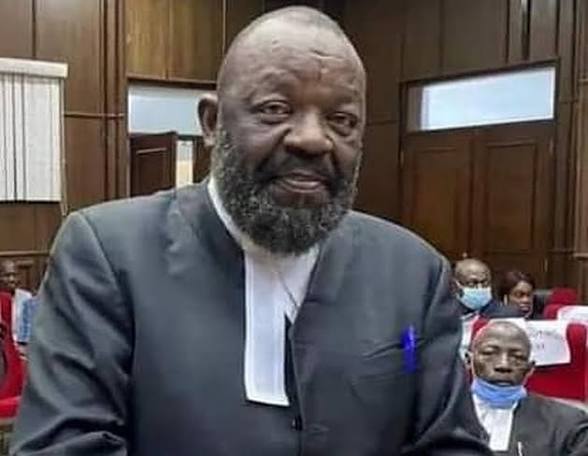
Gowon is distorting the history-Aloy Ejimakor
Nnamdi Kanu’s lawyer has criticised the memoir especially his account if civil war.
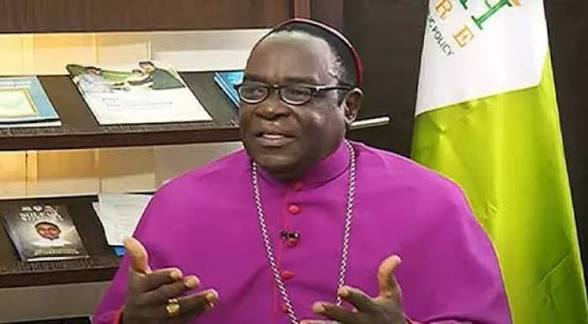
Bishop Kukah: Hails Gowon
Ejimakor said the publication had resurrected debates surrounding the conflict and the collapse of peace efforts before the outbreak of war.
In a statement shared on Thursday, the lawyer accused Gowon of presenting a distorted version of history by blaming Biafra leader, Chukwuemeka Odumegwu Ojukwu entirely for the failure of peace negotiations.
“The publication of Yakubu Gowon’s memoir has predictably reignited debates over the Nigerian Civil War. By claiming that Odumegwu Ojukwu ‘deliberately and effectively thwarted every effort’ at peace, Gowon presents a false history,” he said.
Ejimakor argued that Gowon’s government failed to implement the Aburi Accord reached in Ghana in January 1967.
He said the agreement represented the best opportunity to prevent the civil war following the anti-Igbo killings of 1966.
“In January 1967, both leaders met in Aburi, Ghana, agreeing to a loose confederation to de-escalate tensions following the horrific 1966 anti-Igbo pogroms.
“Upon returning to Lagos, Gowon succumbed to pressure from federal civil servants and British diplomats who feared a loss of central power. Gowon unilaterally issued Decree No. 8, which stripped the core elements of the Aburi agreement.
“By reneging on this signed framework, Gowon destroyed political trust, leaving the Eastern Region isolated and handing Ojukwu the political capital to declare secession in good faith,” he said.
Criticising the post-war policies of the Federal Government, including the flat payout given to former Biafran bank depositors, Ejimakor stressed that this is a mark of stigmatization
“Post-war economic policies — such as the controversial £20 flat-payout given to Biafran bank depositors regardless of their pre-war savings — deeply alienated the Igbo population, institutionalizing a sense of marginalization,” he said.
The lawyer said the continued ethnic tensions and pro-Biafra agitations in Nigeria reflect unresolved structural issues from the civil war era.
“The persistent ethnic tensions and neo-Biafran agitations that convulse Nigeria today serve as living proof that the underlying structural defects of the federation were never resolved,” he said.
He went further to say that Gowon’s memoir appeared more focused on defending his administration than presenting an objective historical account.
“All in all, Gowon’s memoir reads less like an objective historical record and more like an effort to absolve his administration of its broken promises and strategic blunders.
“By placing the entire burden of failure on Ojukwu, Gowon dodges accountability for a war that saved the map but fractured the soul of the Nigeria forever,” he stated.
At the same time, Pat Onukwuli, a political analyst has said that the memoir lacks coherence and consistence especially with the event Nigeria/Biafra war.
“Yet, for Ndigbo, this memoir arrives not merely as literature, but as a moral summons. It is not simply the recollection of an old soldier; it is the delayed testimony of the Commander-in-Chief under whose authority Biafra was bombed, blockaded, starved, defeated and then rhetorically embraced. Gowon had, at over 90 years of age, perhaps his last great opportunity to move from explanation to expiation, from defence to repentance, from national heroism to moral courage. He reneged.”
Explaining further, Mr. Onukwuli stated that “here lies the painful contradiction. Gowon has spent decades praying for Nigeria, but prayer without atonement is a ceremony without cleansing. In both Christian and traditional moral imagination, supplication must be accompanied by restitution. The gods do not heed libation poured over concealed bones. Heaven does not accept incense rising from an altar beneath which injustice remains buried. Nigeria may pray, but Nigeria must also confess.”
Tinubu, Kukah, others hail Gowon
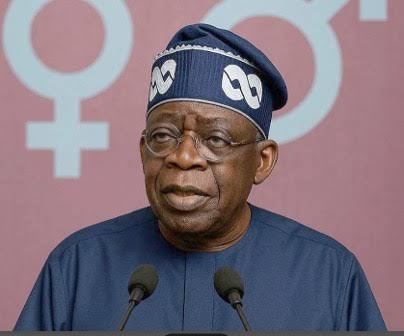
President Bola Ahmed Tinubu, described the autobiography as a vital national document that offers enduring lessons on leadership, reconciliation, regional cooperation and the preservation of Nigeria’s unity.
He particularly praised Gowon’s post-civil war reconciliation policy, especially the declaration of “No victor, no vanquished,” describing it as one of the defining principles that helped preserve Nigeria’s unity after the civil war.
Tinubu also called for the memoir to be widely circulated across the country, describing it as part of Nigeria’s civic inheritance that should guide future generations.
Speaking at the public presentation of the book at the Bola Ahmed Tinubu International Conference Centre, Abuja, the President, represented by Vice President Kashim Shettima, said the reflections of leaders who witnessed defining moments in the country’s history remain crucial to strengthening democratic stability and national cohesion.
He warned that nations that fail to preserve their historical memory risk repeating past mistakes and drifting into uncertainty and division.
Ejimakor: Faults Gowon
“A nation that misplaces its memory soon begins to quarrel with its own reflection. A society without memory becomes an orphan in time,” the President said.
Citing the National Youth Service Corps(NYSC) as one of the enduring legacies of Gowon’s administration, Tinubu noted that the scheme helped bridge ethnic, cultural and religious divides across generations.
Earlier, Gowon had said he wrote the memoir to tell his side of history rather than sit in judgment over events or individuals.
He said his personal story became inseparable from Nigeria’s history, making it necessary to document his experiences and stewardship.
Reviewing the book, Bishop of the Catholic Diocese of Sokoto, Matthew Kukahdescribed it as a vivid account of Nigeria’s turbulent history, the civil war and Gowon’s personal journey through periods of national crisis.
He noted that while autobiographies reflect personal perspectives, the memoir offered valuable insights into events during Gowon’s administration and remains important as Nigeria navigates similar challenges.
Kukah also prayed for Nigeria’s continued unity and progress, expressing optimism about the country’s future.
Former Chelsea manager Enzo Maresca, who worked under Guardiola at City, is the leading candidate to take over from the 56-year-old tactician.
Manchester City manager, Pep Guardiola, will leave the club at the end of the season after ten years at the helms.
According to BBC, the club are preparing for the Spaniard imminent departure with Sunday’s Premier League match against Aston Villa expected to be his last.
However, City insist Guardiola, who joined the club in 2016, has a contract for next season and are hopeful he will see it out.
BBC reports that members of the staff and players also believe their iconic boss will leave after the final game of the season againt Villa, while the club are now focusing on how best to celebrate his sterling, glorious and trophy-laden period at the club.
Former Chelsea manager Enzo Maresca, who worked under Guardiola at City, is the leading candidate to take over from the 56-year-old tactician.
Guardiola has led City to 17 major trophies – and 20 in all – including six Premier League titles, the Champions League, three FA Cups and five EFL Cups during his 10 years at City.
The club’s greatest boss is widely regarded as one of the best managers of all time, and could yet still cap his stellar spell at Etihad Stadium with a seventh Premier League title, having already won the FA Cup and the Carabao Cup this season.
Speculation about the manager’s future has been rife for months, with the question about his tenure at Manchester City often coming up in news conferences.
When asked before the FA Cup final if his trip to Wembley would be his last would be his last to stadium, “No way,” he said, reminding reporters he had “one more year” on his contract
On Saturday, May 16, 2026 President Bola Tinubu announced the killing of a senior Islamic State leader, Abu-Bilal Al-Manuki, also known as Abu-Mainok.
According to the president, the ISIS leader was killed during a joint operation carried out by Nigerian and United States forces in the Lake Chad Basin.
In a release personally signed, President Tinubu said the operation marked “a significant example of effective collaboration in the fight against terrorism” between both countries.
He further said that “a daring joint operation that dealt a heavy blow to the ranks of the Islamic State.”
He added that “early assessments confirm the elimination of the wanted IS senior leader, Abu-Bilal Al-Manuki, also known as Abu-Mainok, along with several of his lieutenants, during a strike on his compound in the Lake Chad Basin.”
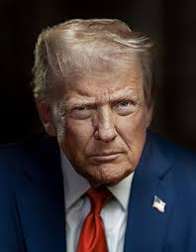
Donald Trump: US President
Appreciating the effort of the United States of America, USA, Tinubu said “Nigeria appreciates this partnership with the United States in advancing our shared security objectives. I extend my sincere gratitude to President Trump for his leadership and unwavering support in this effort,” the statement read.
He praised military personnel from both countries, saying, “I commend the personnel involved on both sides for their professionalism and courage, and I look forward to more decisive strikes against all terrorist enclaves across the nation.”
Donald Trump Corroborates Tinubu’s statement
However, corroborating the statement, the US president, Donald Trump said that the operation was made possible through joint collaboration of the two countries.
“Tonight, at my direction, brave American forces and the Armed Forces of Nigeria flawlessly executed a meticulously planned and very complex mission to eliminate the most active terrorist in the world from the battlefield,” Trump wrote on Truth Social on Friday.
According to Trump, the slain militant leader, whom he described as the “second in command of ISIS globally,” had believed he could evade capture in Africa.
“Abu-Bilal al-Minuki, second in command of ISIS globally, thought he could hide in Africa, but little did he know we had sources who kept us informed on what he was doing,” he said.
Explaining further, the US leader added that Al-Minuki, who was placed under American sanctions in 2023 over his ties to the Islamic State group, would “no longer terrorize the people of Africa, or help plan operations to target Americans.”
He stressed that “with his removal, ISIS’s global operation is greatly diminished,” while thanking the Nigerian government for its “partnership” in the operation.
The joint operation underscores growing security cooperation between Nigeria and the United States as both countries intensify efforts to weaken extremist networks operating across the Lake Chad Basin and the wider West African region.
Controversy trail the reported killing
Following the reported killing of ISIS leader, instead of the usual jubilation by the Nigerians and other affected countries, it has been enmersed in controversies.
However, since Mr Mainok was announced killed on Saturday in a joint operation, many Nigerians have raised concerns that the Nigerian military had claimed it had killed the same man in 2024.
A case of mistaken identity
By and large, on Saturday the presidency said the 2024 report, claiming Abu-Bilal Al-Minuku, ISIS’ second-in-command, had been killed was a case of mistaken identity.
The presidency insisted that the latest operation targeting the insurgent leader was “100 percent certain.”
However, reacting in a statement, Bayo Onanuga, special adviser to the president on information and strategy, said security officials had clarified that the earlier report linking Al-Minuki to a 2024 military operation in Kaduna state was a “case of mistaken identity or misattribution”.
According to the statement, “It is acknowledged within military and intelligence circles that Al-Manuki’s name had appeared among lists of suspected ISWAP/Boko Haram commanders reportedly killed in 2024 during operations around the Birnin Gwari forest axis in Kaduna State,” the statement reads.
“However, security officials now clarify that the earlier listing was a case of mistaken identity or misattribution in the fog of sustained counterinsurgency operations.”
Onanuga noted that intelligence later showed that Birnin Gwari was never within Al-Manuki’s operational territory, casting doubt on the earlier assessment.
“Security officials said efforts were initially aimed at capturing him alive before the final operation was carried out,” he said.
Stressing further, he said, “Unlike the previous report, security authorities insist that the latest strike was executed with a significantly higher degree of precision, target validation, and multi-source intelligence confirmation.”
Onanguga added that officials maintain that multiple layers of verification were applied before authorisation of the final kinetic action, making the last operation distinct from earlier incidents in which battlefield assessments later required revision.
“In their assessment, ‘this time, there is no ambiguity,’” he said.
He also defended public announcements of counterterrorism operations, noting that mistaken reports of killings had occurred in previous global anti-terror campaigns involving figures such as Abubakar Shekau and former ISIS leader Abu Bakr al-Baghdadi.
“Such cases highlight not failure but rather the evolving, often imperfect nature of intelligence gathering in asymmetric warfare,” he added.
“While public scrutiny remains an essential part of democratic accountability, security experts caution that premature dismissal of military claims can inadvertently undermine operational morale and strategic messaging,” the presidential spokesperson said.
Tinubu: Nigerian President
“For now, military authorities remain firm in their position: The latest operation that targeted Abu-Bilal Al-Manuki represents a validated, intelligence-driven success against a senior figure of the Islamic State network. And in their words, this time, they are “100 per cent certain.”
Recall that in April 2024, the Defence Headquarters revealed some of the identities of terrorist commanders killed in Northern Nigeria, including the head of the Is-Al Furqan Province (ISGS and ISWAP), Abu Bilal Minuki also known as Abubakar Mainok.
The then Director, Defence Media Operations, Edward Buba while addressing the press said Mainok, who operated along Birnin Gwari Forest in Kaduna State and the Abuja-Kaduna Highway, was killed by troops on February 21.
Buba explained that one of Mainok’s gang members, popularly known as Haruna Isiya Boderi was also killed by troops alongside Kachallah Damina, another terrorist on March 24.
The military high command said Damina was killed alongside over 50 other terrorists including Kachallah Alhaji Dayi, Kachallah Idi (Namaidaro), Kachallah Kabiru (Doka), Kachallah Azarailu (Farin-Ruwa), Kachallah Balejo, Ubangida, Alhaji Baldu.
Buba said the terrorist commanders were among no fewer than 2,351 terrorists killed, and 2,308 arrested by troops in the first quarter (Q1) of 2024.
In his words, “The armed forces are fighting a vicious enemy in the ongoing operations across the country. Nevertheless, the military is ready, prepared, equipped and focused on what to do with these terrorists and their cohorts.
“Surely, we have been collecting intelligence, hunting them and striking them where they may be hiding and hibernating. Our aim is to kill this terrorist and the infrastructure that supports them,” he said.
The Defence Headquarters credited the achievements to the synchronised airstrikes of both ground and air troops, carried out on terrorists’ enclaves.
He said, “For instance, immediately upon acquisition of vital targets, fighter jets are scrambled to carry out major bombarding raids on significant terrorist enclaves.
“Troops equally conducted ambushes, raids, fighting patrols and offensive against the terrorist. The attacks and offensive actions by troops during the period Jan – Mar 2024 resulted in 2,351 terrorists neutralised, 2,308 persons arrested and 1,241 kidnapped hostages rescued.
But the military has now said that the terrorist killed in 2024 is actually not Mr Mainok.
According to the military, similarities in names and aliases are common within insurgent networks operating across the Lake Chad region.
The Defence Headquarters (DHQ) provided a different explanation from the Presidency on the controversy surrounding the killing of Abubakar Mainok.
As the controversy continued to rage, the Defence Headquarters issued a statement on Saturday that appears to contradict the presidency’s statement.
Trying to defend itself and prove to the doubting public that, indeed, the ISIS leader is no more, the Defence Headquarters did not directly describe the 2024 report as an intelligence error or mistaken identity.
Instead, it emphasised that the use of identical aliases among insurgents remains common in the region.
Samaila Uba, the spokesperson for the Defence Headquarters, explained the apparent contradiction stemmed from the widespread use of similar names and aliases among fighters of the Islamic State West Africa Province (ISWAP) and Boko Haram.
In his words, “it is important to state that within the North East region and across the Lake Chad Basin, the use of similar or identical names, aliases and nom de guerres is common among ISWAP and Boko Haram terrorists,” Mr Uba, a major general, stated.
According to him, the practice forms part of the insurgents’ indoctrination process aimed at deliberately obscuring identities and complicating counterterrorism operations.
He said the Mr Mainok killed in the latest strike had been positively identified through human intelligence and technical surveillance.
“The Abu-Bilal Al-Minuki eliminated on 16 May, 2026, has been positively identified through human intelligence and technical surveillance as a senior global operative within the Islamic State network, with direct links to international terrorist coordination, funding and operations across the Sahel. There is therefore no ambiguity in his identity,” he added.
Something has been building quietly across timelines, comment sections, public discussions, and economic conversations in Nigeria, something that did not begin with a single moment but gathered weight over time until it spilled into global attention, especially on the pages of the World Bank, where Nigerians suddenly appeared in large numbers expressing anger, concern, and demand for a pause on fresh borrowing discussions tied to Nigeria’s financial future under President Bola Tinubu.
The spark that pulled attention was a reported proposed $1.25 billion loan package linked to development programs expected to support sectors such as electricity expansion, digital infrastructure, agriculture, economic reforms, and job creation, with discussions circulating around an approval timeline projected for June 26 2026.
What made the moment stand out was not only the existence of the loan discussion but the intensity of public reaction that followed online, where Nigerians turned social media platforms into a pressure point, questioning the direction of borrowing, the visibility of past projects, and the long term implications of rising debt.
The story is not just about a loan request, it is about accumulated frustration, economic pressure felt at household level, and a widening trust gap between policy announcements and lived reality, which is why the reaction quickly grew beyond commentary into something far louder and more coordinated in appearance.
Trigger Point Behind Loan Announcement Pressure
Reports circulating in public discourse suggested that the Nigerian government entered discussions for a new financial package worth $1.25 billion aimed at supporting national development programs framed under investment and job acceleration initiatives.
These discussions were linked to sectors that often dominate Nigeria’s economic agenda, including power supply challenges, digital expansion strategies, agricultural support systems, and broader macroeconomic reform plans designed to stabilize growth indicators.
The proposed structure of the program, reportedly tied to long term development financing, placed it within the category of multilateral lending conversations that Nigeria has engaged in repeatedly over the years with international financial institutions, particularly the World Bank.
Public attention intensified when the details spread across social platforms, where many Nigerians interpreted the timing of another large borrowing discussion as part of a pattern rather than an isolated policy decision, especially given existing concerns around national debt levels.
This interpretation became the emotional trigger that pushed online users from passive reading into active participation, resulting in widespread engagement directed at official social media pages associated with the lending institution.
Digital Outcry Across Social Platforms
Once the loan discussion became widely circulated, Nigerian users began to flood comment sections under posts shared by the World Bank on Instagram and other platforms, creating a visible wave of coordinated digital expression that quickly drew attention.
Comments were centered around demands to reconsider further lending, with repeated concerns about repayment burden, project transparency, and the perceived cycle of borrowing without visible proportional development outcomes.
Many users expressed frustration using direct language that called for a halt to additional loans, while others framed their messages around accountability for previous financial assistance already extended to the country over past years.
The scale of engagement became so large that it was described in multiple reports as overwhelming to standard comment moderation systems, creating the impression of a digital protest that was sustained over time rather than a short burst of activity.
This wave of reactions did not emerge from a single organized group but appeared as a convergence of individual sentiments shaped by shared economic anxiety and long standing public debate on national borrowing practices.
Comment Restriction Response Pattern Observed
Following the surge in comments, the World Bank reportedly implemented restrictions on comment sections under certain posts, a move that was interpreted by observers as a response to unusual volume and repeated messaging patterns.
While no official statement explicitly confirmed that Nigerian users were the sole reason for the restriction, the timing of the limitation aligned closely with the peak of online engagement related to the loan discussions.
Some observers interpreted the restriction as a moderation response designed to manage spam like activity, while others viewed it as a necessary step to maintain platform stability during sudden spikes in engagement.
The lack of a direct explanatory statement created space for speculation, which further fueled online conversation and deepened public interest in the broader issue of Nigeria’s borrowing trajectory.
Despite the restrictions, engagement did not disappear entirely, instead shifting across other platforms and continuing through discussions on debt sustainability and governance accountability.
Debt Pressure Rising Public Concern
A major driver behind the online reaction is Nigeria’s ongoing debt profile, which has become a recurring point of national debate among economists, policymakers, and citizens.
Public discussions often reference figures placing Nigeria’s total debt burden in the range of ₦159 trillion, a number that has become symbolic in conversations about fiscal pressure and long term repayment obligations.
Debt servicing projections have also contributed to concern, with estimates suggesting that a significant portion of government revenue may be directed toward repayment obligations, including figures around $11.6 billion projected for 2026 in some analyses.
For many citizens, these numbers are not abstract statistics but indicators of reduced fiscal space for domestic investment in infrastructure, healthcare, education, and employment generation programs.
The perception that a large share of national income is allocated to servicing existing debt has strengthened skepticism toward additional borrowing proposals, especially when visible outcomes are not clearly felt at community level.
Public Trust Crisis – Governance Memory
The reaction toward new borrowing discussions is also shaped by a broader trust issue that has developed over years of economic policy cycles in Nigeria, where loans are often announced with development objectives but later questioned in terms of execution.
Many citizens express concern that repeated borrowing does not always translate into proportional infrastructure delivery or measurable improvement in living standards, creating a gap between policy intention and public perception.
This gap has gradually influenced how new financial announcements are received, with skepticism becoming a default reaction rather than optimism, especially when tied to external lenders such as the World Bank.
Social memory of past projects, unfinished infrastructure, and delayed reforms contributes to this sentiment, reinforcing the idea that accountability mechanisms are not sufficiently visible or reassuring to the public.
As a result, each new borrowing discussion becomes part of a larger narrative rather than a standalone event, which intensifies reaction even before official approval processes are completed.
Political Climate Borrowing Debate
The broader political environment under President Bola Tinubu has also influenced how borrowing discussions are interpreted, particularly as economic reforms and fiscal adjustments continue to shape national discourse.
Debates around subsidy reforms, currency adjustments, and infrastructure funding have created a backdrop where financial decisions are closely watched and frequently debated in public spaces.
Within this climate, any announcement involving external borrowing is quickly connected to wider questions about economic direction, debt sustainability, and long term national planning strategies.
Opposition voices and civic commentators often use these moments to highlight concerns about fiscal responsibility, while supporters emphasize development needs and structural investment gaps.
This tension creates an environment where financial policy is not only technical but also highly emotional and politically sensitive.
Global Lending Context Nigeria Position
Nigeria’s relationship with international financial institutions, including the World Bank, has historically involved multiple cycles of borrowing, repayment, and renewed engagement for development financing.
These arrangements are typically framed around long term development goals such as infrastructure expansion, economic diversification, and social sector investment, reflecting structural needs within the economy.
However, public interpretation of these arrangements often differs from official framing, especially when visible outcomes are slow to materialize or unevenly distributed across regions.
This difference in perception plays a significant role in how new loan discussions are received by the public, contributing to skepticism and active online response.
As global financial systems continue to offer structured lending pathways, domestic reception remains heavily influenced by lived economic experience and trust in governance outcomes.
Timeline Sequence Emerging -Public Narrative
The reported sequence begins with discussions around a proposed $1.25 billion loan package tied to development programs aimed at economic reform and infrastructure support.
Attention increased as details circulated publicly, leading to heightened engagement across social platforms where citizens began reacting to perceived implications of additional borrowing.
By the period leading up to June 26 2026, the discussion had already expanded beyond policy circles into mainstream public discourse, especially online communities.
The surge in comments on official pages of the World Bank marked a visible peak in digital reaction, followed by moderation measures that limited comment visibility in some instances.
This sequence reflects how modern policy debates now move rapidly from official announcements to global public engagement within short timeframes.
Reality Check: Official Position Status
Despite the intensity of online reactions, there has been no official indication that lending activities to Nigeria have been halted, and discussions at institutional level remain within formal negotiation frameworks.
Nigeria continues to engage with international partners on development financing, with borrowing discussions forming part of broader fiscal planning strategies rather than immediate final approvals.
The online reaction therefore represents public sentiment and pressure expression rather than a decisive policy outcome or termination of financial engagement.
While digital protests can influence conversation and draw attention to public concerns, final lending decisions remain subject to institutional review, government negotiation, and project approval processes.
This distinction is important in understanding the gap between social media momentum and formal economic policy execution.
Reflection On Public Voice
The widespread reaction directed at the World Bank reflects a deeper national conversation about debt, trust, and economic direction under President Bola Tinubu, where citizens are increasingly using digital platforms to express concern over financial decisions that shape their daily realities.
What appears as a viral online moment is actually the surface of a longer running debate about sustainability, accountability, and the future cost of repeated borrowing in a developing economy.
The strength of the reaction shows that public engagement with economic policy is no longer passive, as citizens now actively respond to global institutions in real time when national decisions are announced or discussed.
Whether this digital pressure will influence future borrowing conversations remains part of an unfolding story, but what is already clear is that the conversation around Nigeria’s debt is no longer confined to official rooms, it now lives openly in public spaces where every voice competes for attention.
Former Minister of Power, Saleh Mamman, has been sentenced to 75 years in prison over financial impropriety and fraud when he served under the administration of late former, president Muhammadu Buhari.
He was convicted and sentenced on Tuesday by
The Federal High Court sitting in Abuja for stealing and embezzling public funds totalling about ₦33.8 billion.
The presiding judge, Justice James Omotosho, while delivering his judgment found Mamman guilty of all 12 counts of fraud and money laundering charges brought against him by the Economic and Financial Crimes Commission (EFCC).
While he was sentenced to seven years each on 10 counts of the charge which are expected to run concurrently, the court jailed him for three years and two years on counts four and five of the charge without the option of fine except on count four, for which he was allowed to pay a N10 million fine.
Furthermore, the court ordered the forfeiture of various foreign currencies that were recovered from the convict, as well as four choice properties in Abuja that were traced to him.
The court had on court had on May 7, convicted the former minister in absentia.
Justice Omotosho averred that the anti-graft agency proved its case beyond a reasonable doubt as it successfully established the former Minister’s culpability.
He convicted him on all grounds of the charge marked FHC/ABJ/CR/273/2024.
The court found that he made a cash payment of $655,700 (equivalent to ₦200 million) for landed property in Abuja, without recourse to a financial institution.
He was also found guilty of criminal breach of trust in relation to funds released by the federal government for the Mambilla and Zungeru Hydroelectric Power Plant projects.
The court noted that most of the funds were moved through Bureau de Change operators (BDCs), who converted the money into foreign currencies and handed it over to the defendant.
“The evidence of the prosecution is overwhelming against the scanty and almost absent defence of the defendant.
“The defendant did not offer any credible evidence to rebut the prosecution’s case,” Justice Omotosho held.
The trial judge castigated the defendant over his flamboyant and ostentatious lifestyle while totally abandoning his primary responsibility of addressing the nation’s power challenges.
“Rather than creating a legacy to tackle the epileptic power supply in the country, the defendant was living large at the expense of ordinary citizens.
“Little wonder that Nigerians have remained in darkness till today,” the judge added.
Meanwhile, the defendant who was absent when he was convicted by the court, was also not present when the sentence was passed.
The court had issued a warrant for his arrest.
A lawyer, Mr Mohammed Ahmed, who represented the convict, told the court that he did not know where he was and he had become incommunicado.
After the sentencing, Justice Omotosho ordered all the security agencies to collaborate with the Interpol to ensure that the convict is apprehended.
He ruled that the sentence should start running from the day of his arrest